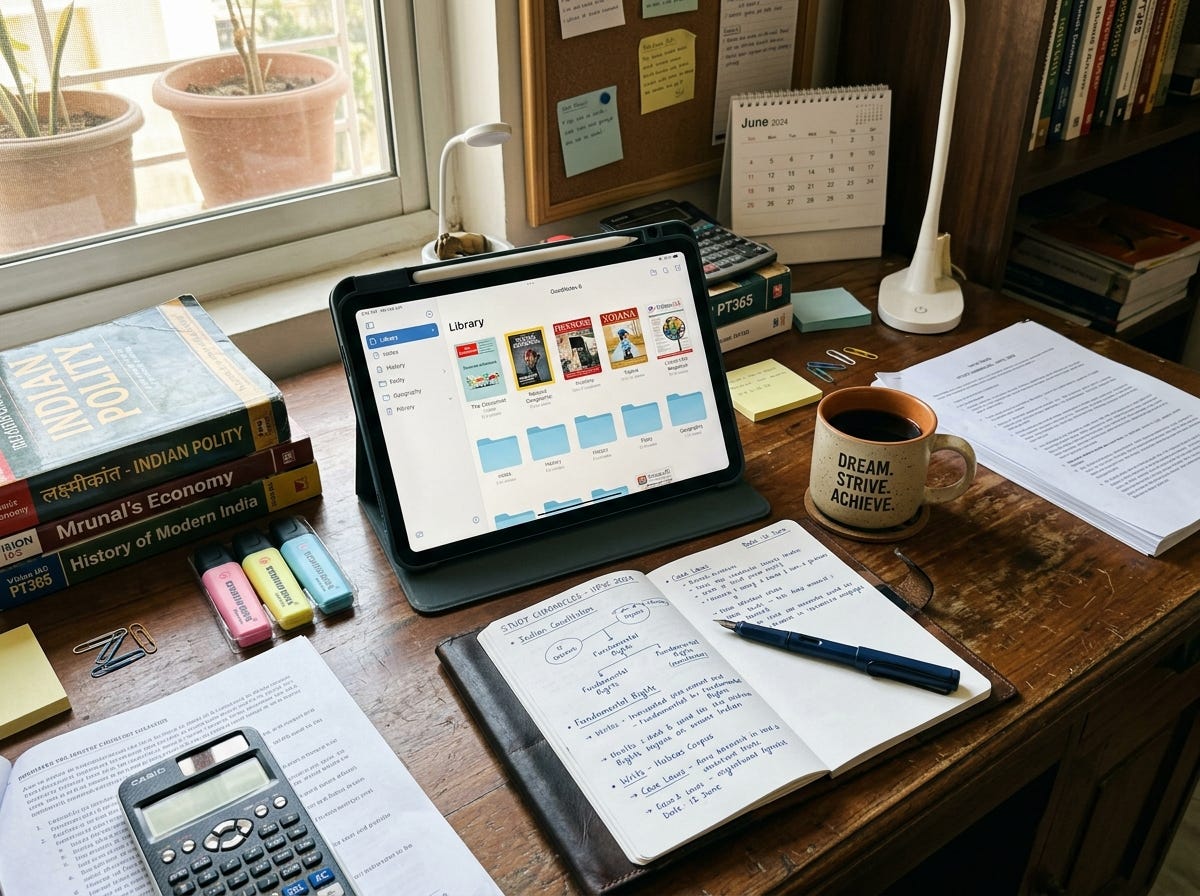
Arizon Network review: Finally, one place to read all my favorite magazines
People usually start their day wanting to read something, not wanting to subscribe to something. They want the new issue of a car magazine…
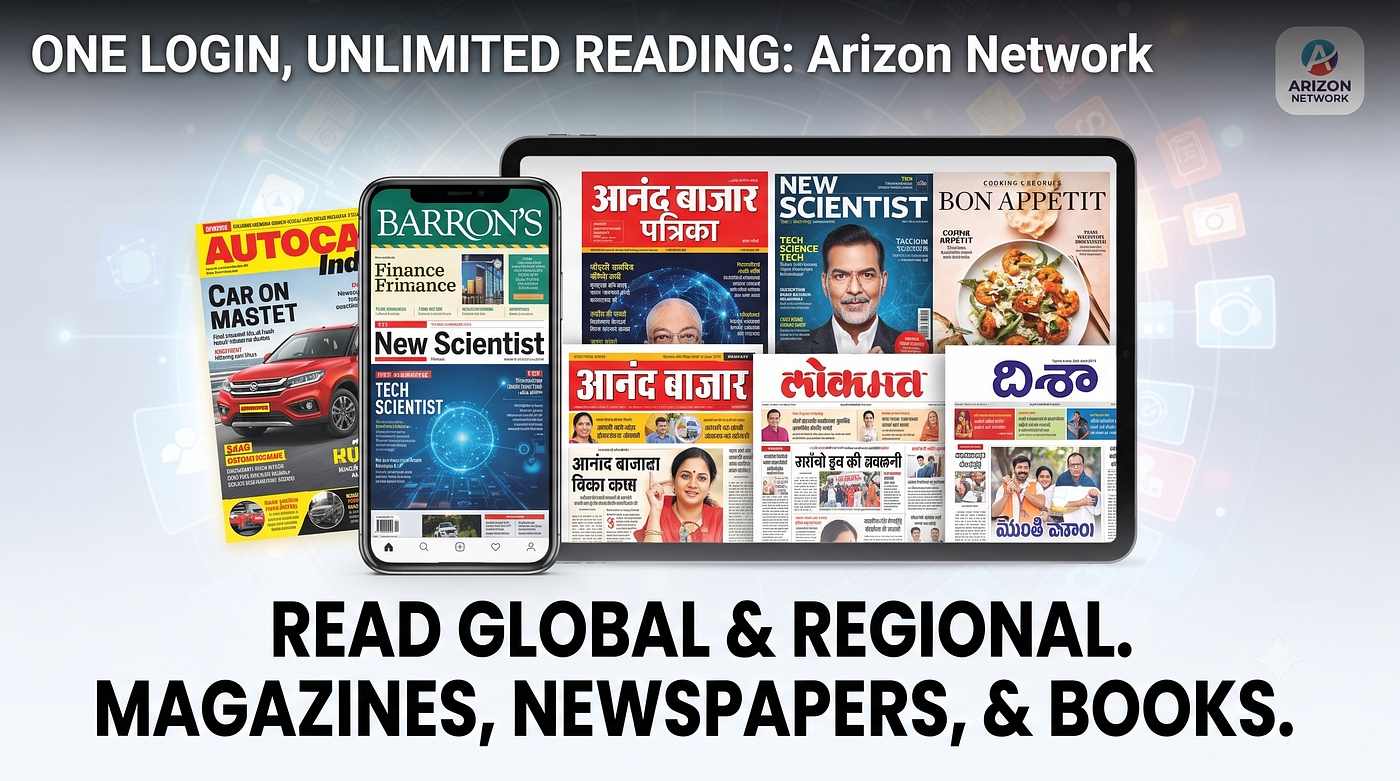
Arizon Network review: Finally, one place to read all my favorite magazines
People usually start their day wanting to read something, not wanting to subscribe to something. They want the new issue of a car magazine before it hits newsstands, or a newspaper from a city they don’t live in anymore, or just something good to get through on a commute. The itch to read comes first. The platform is just how that itch gets met.
That’s really the gap Arizon Network is built to fill.
At a glance: Consolidates thousands of global and regional magazines, daily newspapers, and books into a single, cloud-based reading platform with zero storage footprints. Who it’s for: Multi-genre readers, households, small teams, and regional-language audiences who want unified access without paying for separate apps. Compares to: Readly, Kindle Unlimited, Magzter, PressReader.
Why Readers are Switching to Arizon Network:
- All-in-One Catalog: Ditch individual apps — get magazines, books, and daily newspapers under one dashboard.
- Shared Across 4 Devices: One base subscription covers up to four devices simultaneously without an expensive “family plan” markup.
- Zero Storage Drag: Read everything instantly directly through the cloud platform — no heavy PDF downloads eating your phone’s memory.
- True Regional Inclusion: Extensive content libraries in Hindi, Bengali, Marathi, Gujarati, Kannada, Malayalam, and Telugu.
What Arizon Network Actually Is
Arizon Network is a subscription-based digital platform out of Ghaziabad, Uttar Pradesh, offering access to magazines, newspapers, and books across a genuinely wide spread of genres — everything from Business/Finance and Technology to Cooking/Food, Photography, History, and regional-language titles in Hindi, Bengali, Marathi, Gujarati, Kannada, Malayalam, and Telugu. That last part matters more than it might seem. A lot of digital reading platforms treat “global” as a synonym for “English-language,” and quietly leave regional readers out of the pitch entirely.
The platform’s own framing is straightforward: it wants to be the place where “reading is the gateway to discovery, inspiration, and growth” — and where that access doesn’t depend on which device you happen to be holding.
The Genre Spread: What You Can Actually Read
Scroll through the catalog and the range starts to make sense fast. Automobile readers get Autocar and Motor Trend. Business and finance readers get Barron’s. Food and lifestyle readers get Bon Appétit, Food & Wine USA, and Taste of Germany. History buffs get Archaeology and History of War. Sports fans get Baseball America. Comics and pop-culture readers get SFX and Empire. Science readers get New Scientist USA. Home and design readers get Kitchen & Bath Design News. Photography enthusiasts get Photography Week and Pet Projects.
Layered on top of that mainstream spread are the inspiration and self-development titles — You Can, 100 Ways to Motivate Yourself, Energize Your Mind, Ignited Minds, Mindset by Carol Dweck, and As a Man Thinketh by James Allen — sitting comfortably next to niche practical guides like The Complete Home Guide to Herbs, Natural Healing & Nutrition and Hunting Mastery.
What that tells you is the catalog isn’t built around one imagined “typical reader.” It’s built around the idea that the same subscriber might read a business magazine on a Monday, a cooking magazine before a dinner party on Friday, and a self-development book in between. Few platforms commit to that kind of range without diluting quality in at least one category, which makes it worth actually browsing the catalog rather than assuming it’s the usual homepage padding.
Why This Matters More Than It Used To
Print magazines aren’t dying because people stopped wanting to read them. They’re dying because the economics stopped making sense — printing costs, shipping, the fact that a magazine bought in April is basically garbage by June. Digital reading platforms exist because they solve a real logistics problem, not because “digital” sounds modern.
Where a platform like this earns its subscription fee is in what it does with that solved problem. A few things stood out looking Why This Matters More Than It Used To
The facts that a magazine bought in through Arizon Network’s full magazine catalog:
- Breadth over token variety. You’ll find recognizable global titles like Autocar, Barron’s, New Scientist, and Bon Appétit sitting next to niche picks like Hunting Mastery or The Complete Home Guide to Herbs, Natural Healing & Nutrition. That’s the difference between a platform padding out a homepage and one that’s actually trying to cover how differently people read.
- No download tax on your storage. Everything reads directly on the platform, so you’re not sacrificing phone storage for a magazine you’ll finish once. An offline option exists for when you actually want it, which is the right way around — offline as a choice, not a requirement.
- Four devices, one login. For a household or a small team, this quietly changes the math on whether a subscription is worth it. Most platforms treat “family plan” as a premium upsell. Arizon Network builds shared access into the base experience.
Newspapers: The Half of the Catalog People Forget to Ask About
When most people think “digital reading platform,” their mind jumps straight to magazines. Fair enough — magazines are the flashiest part of the catalog, with covers designed to grab attention. But the newspaper section is where a platform like this quietly proves whether it’s serious or just filling out a homepage.
A newspaper archive only matters if it’s current and if it’s broad enough to cover more than one region’s version of the news. Scrolling through Arizon Network’s newspaper listings, the same pattern from the magazine catalog repeats itself: a mix of well-known mastheads sitting next to smaller regional papers, rather than three or four token titles propping up a category tab. For anyone who’s ever tried to keep up with news from a hometown they’ve since left, or wanted a second country’s perspective on the same global story, that kind of range is the actual value proposition — not the word “newspaper” appearing in the nav bar.
Books: Rounding Out the Reading Habit
The book section doesn’t get talked about as much as the magazine grid, probably because book catalogs are a much more crowded market — everyone from Amazon to your local library app is competing there. But it’s worth noting that Arizon Network doesn’t treat books as an afterthought bolted onto a magazine subscription. Titles span self-help and inspiration (you’ll spot names like Mindset by Carol Dweck and As a Man Thinketh by James Allen alongside more niche picks), which suggests the book catalog is being curated with the same “something for every mood” logic as the rest of the platform.
This matters for one practical reason: habit formation. A reader who finishes a magazine issue and immediately has a book waiting in the same app, under the same login, is a reader who doesn’t have to go open a different app and start a different subscription just to keep reading. That’s a small design choice with a real effect on whether people actually stick with a platform past the first free trial.
Newspapers and Books: Beyond Just Magazines
Magazines get most of the attention in any conversation about digital reading, mostly because their covers are visually easy to showcase. But Arizon Network’s ***Read Unlimited*** model spans three separate content types, not one — Magazines, Newspaper, and Books all sit as equal tabs on the platform, not an afterthought bolted onto a magazine app.
The newspaper section matters for a specific kind of reader: someone who wants a paper from a region they don’t live in anymore, or one covering an industry or city that local newsstands simply don’t stock. The book section, meanwhile, leans into the same inspiration and self-development category that shows up in the magazine catalog — titles like Mindset and As a Man Thinketh work as both, depending on how the platform chooses to file them.
Treating all three as one unified library, accessible through a single login, is the part of the pitch that’s easy to skim past but actually does the most work. It’s the difference between “a magazine app” and “a reading platform,” and it’s why comparing Arizon Network only against other magazine apps undersells what it’s actually offering.
How Magazines Gain Visibility Through a Platform Like This
There’s a side to this worth mentioning that has nothing to do with subscribers and everything to do with publishers. Any individual magazine — especially a niche one like Hunting Mastery or a regional-language title — has a visibility problem that has nothing to do with quality. Newsstand shelf space is finite. Search visibility for a standalone magazine website is a slow, expensive climb. Getting discovered by a reader who wasn’t already looking for that exact title is genuinely hard.
Aggregation solves a real part of that problem. When a title sits inside a browsable catalog next to recognizable names like Autocar or New Scientist, it inherits some of the platform’s own discoverability — a reader who came for one magazine ends up two clicks away from five others they’d never have searched for by name. That’s the same logic that makes bookstore placement valuable for a debut author: proximity to attention is its own kind of promotion.
For smaller or regional publishers specifically, that arrangement can matter more than the subscription revenue itself. A title with a small dedicated readership offline can pick up a meaningfully larger discovery audience simply by sitting inside a platform that’s already doing the work of ranking for ***read magazines online*** and similar searches. It’s promotion by proximity, and it’s one of the quieter reasons digital aggregation platforms exist at all.
The Part Most Reading Platforms Get Wrong
Here’s an honest gripe with the category in general, Arizon Network included in some corners: content discovery. A vast library is only as good as your ability to actually find something in it. The platform leans on personalized recommendations, bookmarking, and highlighting tools to help with this — solid fundamentals — and it’s also building out a blog section where the community itself contributes articles, not just curated magazine covers.
That user-generated layer is worth watching. A magazine catalog is a static asset. A blog where readers are contributing lifestyle pieces and commentary is a living one — and it’s usually the difference between a platform people check occasionally and one they come back to daily.
Who Actually Gets the Most Out of It
Arizon Network doesn’t pitch itself only at casual readers. Institutions, corporates, educators, professionals, and creators all show up in how the platform positions itself, and each group uses it a little differently in practice:
- *Educators and institutions* can point students toward a single library instead of managing multiple subscriptions or physical copies that go missing or go out of date.
- Corporates get a shared-access model that’s cheap to scale — one login covering four devices means a small team can share business and industry titles without buying four separate subscriptions.
- Professionals get to keep up with an industry publication (Barron’s for finance, Autocar for automotive, Kitchen & Bath Design News for design) without a print subscription that piles up unread on a desk.
- Creators get the blog and user-generated content layer as a place to actually publish and be read, rather than shouting into a personal blog with no built-in audience.
That range is worth knowing about before assuming this is only a “read some magazines on the train” product. The pricing and access model are built with more than one use case in mind.
The Sustainability Angle Nobody Asks About, But Should
There’s an environmental case here that rarely gets its due weight in these comparisons. A single print magazine involves paper sourcing, ink, printing, shipping, and eventual disposal — most of it for a publication that’s read once and recycled or binned within a week. Multiply that by every subscriber, every issue, every year, and print media’s paper footprint adds up fast.
A digital-first model doesn’t eliminate the environmental cost of hosting and streaming content, but it does remove the physical production and distribution chain almost entirely. For a subscriber who reads a dozen or more titles a month, that’s a genuinely different footprint than the print equivalent — not a marketing talking point, just arithmetic. It’s one more reason the shift toward platforms like this isn’t purely about convenience.
Where It Fits If You’re Choosing Between Platforms
If you’re comparing digital reading subscriptions right now, the honest way to think about it is this: platforms built around a narrow content type (just newspapers, just comics, just business magazines) tend to be deeper in that one lane. Arizon Network’s bet is breadth — one login covering magazines, newspapers, and books, in both English and major regional Indian languages, at what the platform positions as a genuinely affordable price point compared to stacking three separate subscriptions.
For readers who bounce between genres depending on mood — business news one week, a novel the next, a cooking magazine before a dinner party — that’s a real advantage over juggling logins across three apps.
For readers who want one specific niche done exceptionally well, it’s worth checking their catalog directly before committing, the way you’d check any subscription before signing up.
The Sustainability Angle Nobody Subscribes For, But Everyone Benefits From
Nobody signs up for a reading app because they’re worried about paper consumption. That’s just not how subscription decisions get made — people subscribe because they want to read something, not because they want to save a tree. But it’s worth naming the sustainability angle anyway, because it’s a real byproduct of the business model rather than a marketing add-on.
Every issue read on a platform like Arizon Network is an issue that didn’t get printed, shipped, and eventually thrown out. At the scale of thousands of readers across hundreds of titles, that adds up to a genuinely meaningful reduction in paper and shipping waste compared to a physical subscription model. It’s not the reason to sign up. But it’s a decent reason to feel fine about the decision once you have.
What You’re Actually Paying For
It’s worth being blunt about how to evaluate a subscription like this, because “affordable” is a word every platform uses and it means nothing on its own. The real math is simple: take whatever you currently spend across separate magazine, newspaper, and book subscriptions — including the ones you forgot you were still paying for — and compare that total to a single Arizon Network subscription covering all three categories under one login, shareable across up to four devices.
For a single reader with one or two favorite titles, a dedicated subscription to just those titles might still work out cheaper. But for anyone reading across genres, or a household where three or four people all want access, the math tends to favor the consolidated platform pretty quickly. That’s the actual value question to ask before signing up — not “is it cheap,” but “is it cheaper than what I’m already stitching together.”
Who This Platform Is Actually Built For
Not every reading platform is for every reader, and it’s worth being honest about that instead of pretending one product fits everyone. Arizon Network’s design — breadth across genres, shared multi-device access, regional-language titles, a growing blog layer — points toward a specific kind of user: someone who reads across categories rather than sticking to one, someone sharing a household or small office where multiple people want access, and someone who values having options in more than one language rather than English-only content.
If that sounds like your reading habits, or your household’s, it’s a stronger fit than a platform built around one narrow niche. If you’re a single-genre reader who only ever wants, say, business news and nothing else, it’s still worth a look, but the breadth that makes Arizon Network valuable for some readers will matter less to you specifically.
The Bottom Line
Digital reading platforms live or die on one question: does opening the app feel like a chore or a habit? Arizon Network’s answer is to remove as much friction as it can — no downloads unless you want them, shared access across devices, a catalog wide enough that boredom isn’t really an excuse, and a blog layer that turns the platform into more than a magazine rack.
If you’ve been holding onto a physical subscription out of habit, or juggling three different reading apps because none of them cover everything you actually read, it’s worth spending ten minutes with Arizon Network’s sign-up page and seeing whether one login can replace the stack you’re currently paying for.
FAQ
Do I need to download anything to read on Arizon Network?
No. Content reads directly on the platform, so nothing eats into your phone or tablet storage. An offline download option exists for anyone who specifically wants it, but it’s optional rather than required.
Can more than one person use the same subscription?
Yes. One user ID and password can be used across up to four devices at the same time, which makes it a realistic option for a household or a small team rather than a single-user-only plan.
What kind of content is actually on the platform?
Magazines, newspapers, and books across a wide genre spread — business, technology, lifestyle, cooking, photography, history, sports, and more — plus regional-language titles in Hindi, Bengali, Marathi, Gujarati, Kannada, Malayalam, and Telugu, alongside global English-language titles.
Is there a community or blog element, or is it just a magazine archive?
Both. Alongside the catalog, the platform runs a blog section where users contribute their own articles, which adds a layer of fresh, community-driven content on top of the licensed magazine and newspaper library.
***Lets explore the library!***
Thanks for reading.
Affiliate Disclaimer: I put a lot of effort into my posts. To support my work, I share affiliate links for tools and services. If you click and buy, it helps me create unbiased content at no extra cost to you. Thank you!
메타데이터
- post_id
- 1f273c159b49
- slug
- arizon-network-review-finally-one-place-to-read-all-my-favorite-magazines-1f273c159b49
- url
- https://medium.com/@CASSIANBLOG/arizon-network-review-finally-one-place-to-read-all-my-favorite-magazines-1f273c159b49
- canonical_url
- https://medium.com/@CASSIANBLOG/arizon-network-review-finally-one-place-to-read-all-my-favorite-magazines-1f273c159b49
- author_url
- https://medium.com/@CASSIANBLOG
- status
- ok
- fetched_at
- 2026-07-11 10:19:22