Reducing Dry Phase to the Minimum for Coffee Roasting
Minimizing to the maximum
Coffee Data Science
Reducing Dry Phase to the Minimum for Coffee Roasting
Minimizing to the maximum
Initial experiments showed a shorter dry phase was beneficial to taste, so I wanted to try going even shorter. The dry phase occurs before 150 C bean temperature, and my baseline had a 4 minute dry phase. Reducing to 2 minutes helped, so why not 1 minute?
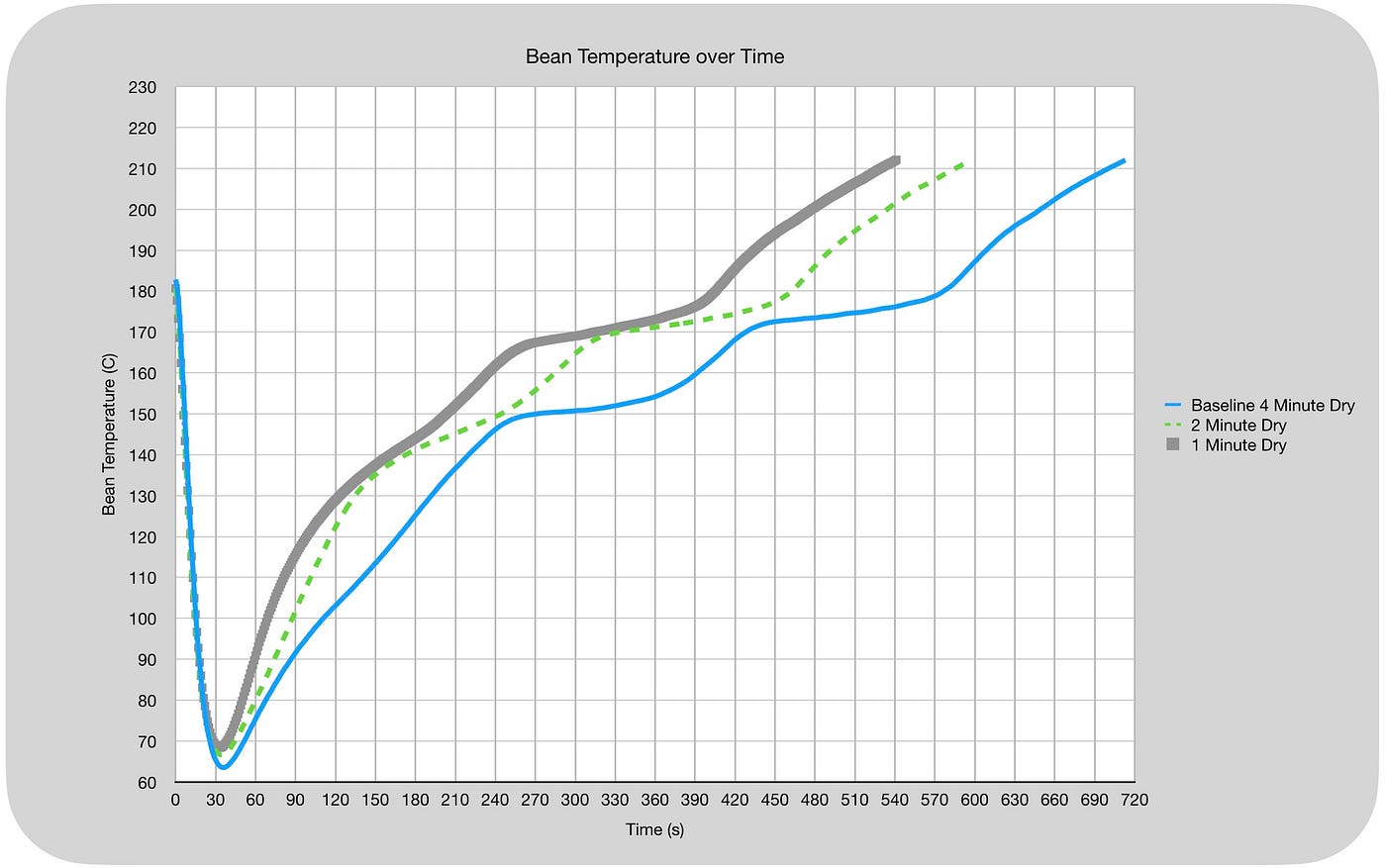

Left: Bean temperature by time, Right: Bean temperature shifted to be anchored on the end temperature
The challenge is that even with 2 minutes as an aim, the dry phase ends at 3 minutes instead of 4 minutes. While the target time was reduced, it still takes a certain time to get the bean temperature high enough.
I shifted all the roast times to the end time, and there was a shift in the maillard before 180 C. I’m not sure if that was part of the improvement in taste or something else.


Post-Roast Metrics
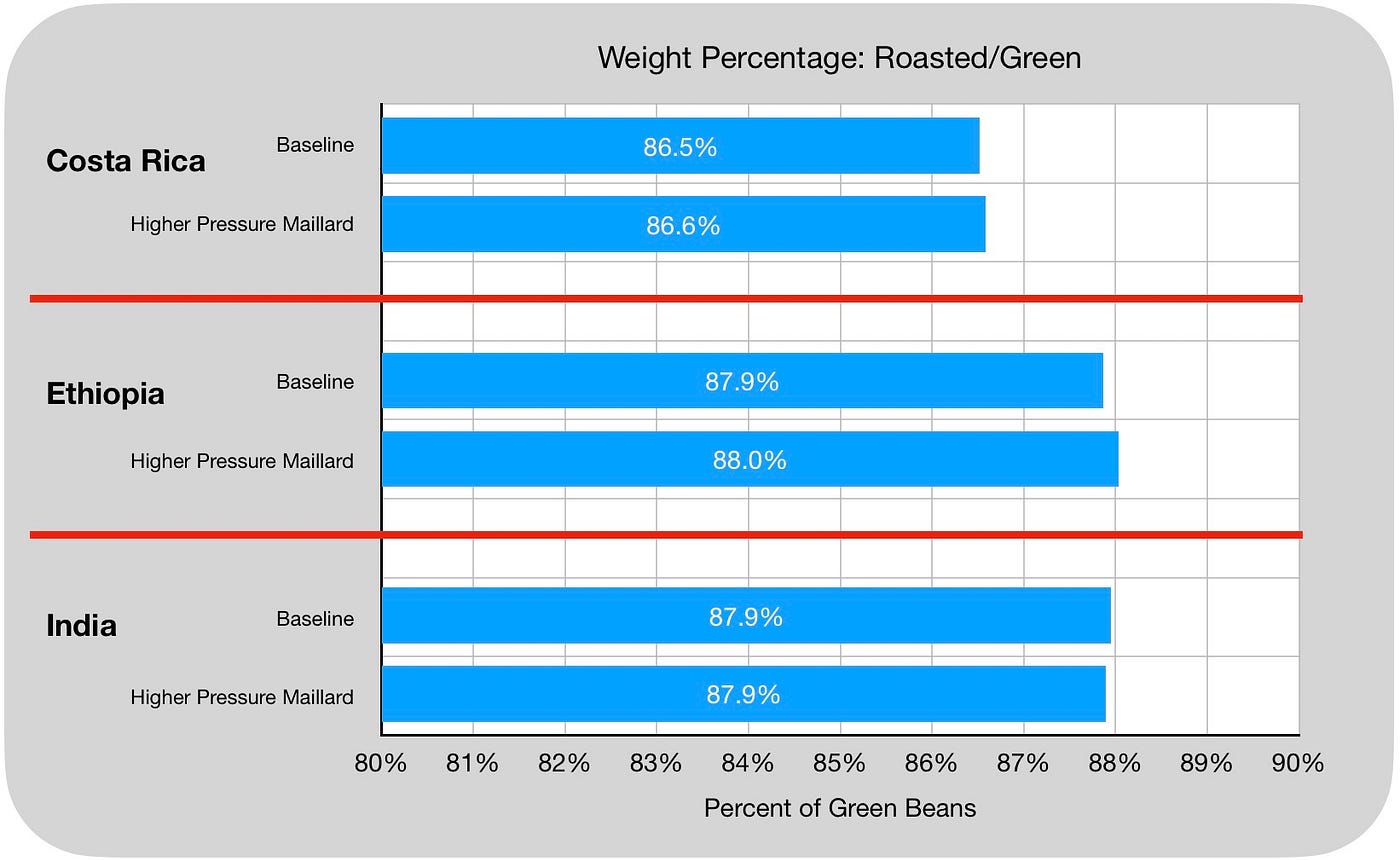
These roasts had similar metrics with a possible trend in density.


Moisture showed a slight increase, but it is tricky to understand if 0.1% is significant. An increase in coffee color was also apparent, and it was a bit higher than I would typically prefer for a fair comparison.


Metrics of Performance
I used two sets of metrics for evaluating the differences between techniques: Final Score and Coffee Extraction.
**Final score **is the average of a scorecard of 7 metrics (Sharp, Rich, Syrup, Sweet, Sour, Bitter, and Aftertaste). These scores were subjective, of course, but they were calibrated to my tastes and helped me improve my shots. There is some variation in the scores. My aim was to be consistent for each metric, but some times the granularity was difficult.
**Total Dissolved Solids (TDS) is measured using a refractometer, and this number combined with the output weight of the shot and the input weight of the coffee is used to determine the percentage of coffee extracted into the cup, called Extraction Yield (EY)**.
Shot Data
The shorter dry roasts tasted better, but going from 2 minutes to 1 minute did not seem to help.


This was also apparent in the individual taste components.

EY remained unaffected.

This test helped put some data to optimizing the dry phase of my high pressure profile.
If you like, follow me on YouTube and Instagram where I post videos of espresso shots on different machines and espresso related stuff. You can also find me on LinkedIn. You can also follow me on Medium and Subscribe.
Further readings of mine:
My Second Book: Advanced Espresso
My First Book: Engineering Better Espresso
메타데이터
- post_id
- 1f29bed8df97
- slug
- reducing-dry-phase-to-the-minimum-for-coffee-roasting-1f29bed8df97
- url
- https://medium.com/@rmckeon/reducing-dry-phase-to-the-minimum-for-coffee-roasting-1f29bed8df97
- canonical_url
- https://medium.com/@rmckeon/reducing-dry-phase-to-the-minimum-for-coffee-roasting-1f29bed8df97
- author_url
- https://medium.com/@rmckeon
- status
- ok
- fetched_at
- 2026-07-14 21:16:29