Should Organizations Eliminate VPNs and Move to Zero Trust?
A manufacturing company recently experienced a ransomware incident despite enforcing MFA on its VPN. The attacker compromised a…
Should Organizations Eliminate VPNs and Move to Zero Trust?
A manufacturing company recently experienced a ransomware incident despite enforcing MFA on its VPN. The attacker compromised a contractor’s credentials through a phishing campaign, authenticated successfully, and gained broad network visibility once connected. Although the VPN verified the user’s identity, it failed to continuously validate device health, session risk, and least-privilege access. The result was lateral movement across multiple systems before detection.
This scenario highlights a growing question in cybersecurity.
Should organizations eliminate VPNs and move entirely to Zero Trust?
Traditional VPNs were designed around a network-centric security model. Once authenticated, users often receive implicit trust and broad network access. This architecture was effective when applications resided inside corporate data centers and employees worked primarily from office locations. However, today’s environments consist of cloud workloads, SaaS applications, remote workers, contractors, APIs, and non-human identities.
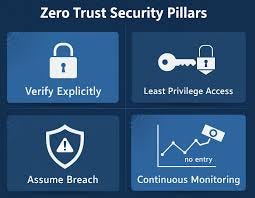
Zero Trust fundamentally changes this model by adopting the principle of “never trust, always verify.” Access decisions are continuously evaluated using identity, device compliance, geolocation, behavioral risk signals, and resource sensitivity. Technologies such as Conditional Access, Privileged Identity Management (PIM), workload identities, and Continuous Access Evaluation reduce the attack surface by granting only the minimum access required.
However, organizations should not rush to eliminate VPNs overnight. Legacy applications, industrial systems, and network-dependent workloads may still require VPN connectivity. The more practical strategy is a phased transition to Zero Trust Network Access (ZTNA), in which identity becomes the primary security perimeter rather than the network itself.
From an identity security perspective, the future is clear. Security teams should prioritize identity-driven access controls, risk-based authentication, and least-privilege authorization while gradually reducing dependence on traditional VPN architectures. The goal is not to remove VPNs. it is to eliminate implicit trust.
IdentitySecurity #ZeroTrust #CyberSecurity #MicrosoftEntra #IAM #CloudSecurity #ConditionalAccess #IdentityGovernance
메타데이터
- post_id
- 1f2ed250f5e8
- slug
- should-organizations-eliminate-vpns-and-move-to-zero-trust-1f2ed250f5e8
- url
- https://medium.com/@railsdevabam/should-organizations-eliminate-vpns-and-move-to-zero-trust-1f2ed250f5e8
- canonical_url
- https://medium.com/@railsdevabam/should-organizations-eliminate-vpns-and-move-to-zero-trust-1f2ed250f5e8
- author_url
- https://medium.com/@railsdevabam
- status
- ok
- fetched_at
- 2026-06-09 15:37:30