When Spirituality Becomes a Way to Avoid Ourselves
Sometimes the most spiritual words we can speak are not profound at all
When Spirituality Becomes a Way to Avoid Ourselves
Sometimes the most spiritual words we can speak are not profound at all
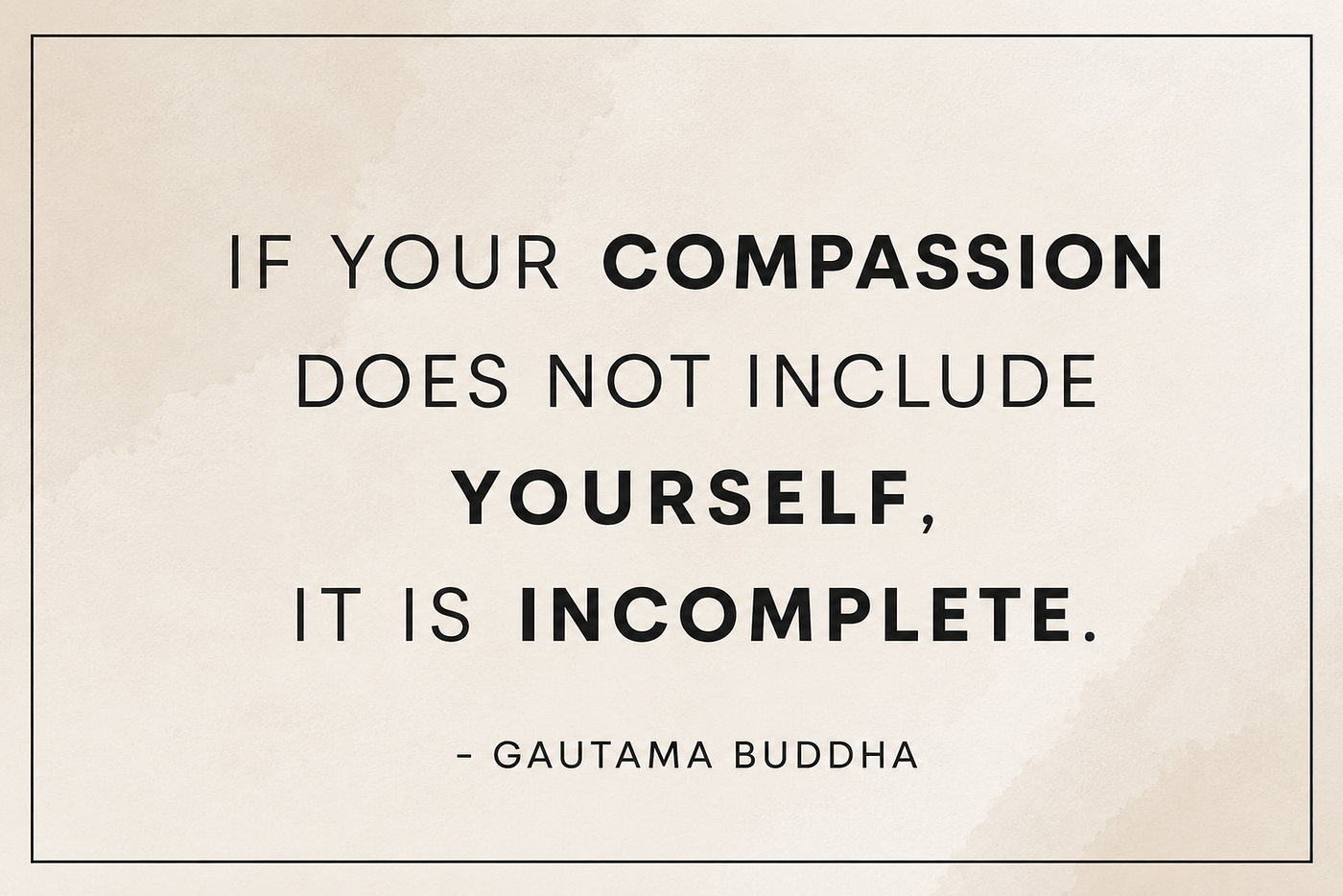
Buddha quote created by the author
Spiritual bypass is one of the many challenges people can encounter on their spiritual journey. While the term may sound critical, it is important to understand that spiritual bypassing is rarely intentional. More often, it is an unconscious attempt to protect ourselves from emotional pain we don’t yet know how to face.
I first became aware of spiritual bypass while attending a contemplative men’s group. As part of my spiritual practice, I sit in a circle with other men, and together we explore questions about life, purpose, relationships, suffering, and spirituality. The group is designed to be a safe space where men can practice vulnerability and grow through contemplation.
One of our foundational agreements is that we are not there to fix one another. We are there to listen, share our experiences, and hold space for whatever emerges. We talk about our fears, disappointments, heartaches, hopes, victories, and struggles. In many ways, the circle serves as a reminder that healing often happens not through advice, but through connection.
Participating in a contemplative circle requires courage. It asks us to be honest with ourselves and others. It requires empathy, trust, humility, compassion, and a willingness to be seen as we are. The depth of growth available in the group is often proportional to the level of vulnerability each person is willing to bring.
Over the years, many men have come and gone. Some attended once or twice and never returned. Others stopped by occasionally when life felt particularly challenging. A handful became regular participants.
One man stands out in my memory.
He possessed an extraordinary knowledge of spiritual teachings. Rumi, Eckhart Tolle, Ram Dass, Wayne Dyer, Marianne Williamson, Esther Hicks, Joe Dispenza, along with countless others, and he could quote them almost verbatim. His memory was impressive, and the insights he shared were often thoughtful and relevant.
Whenever someone shared a personal struggle, he would frequently respond with, “You know what so-and-so says about that…” and then offer a teaching or quote. While the wisdom he shared was valuable, I gradually noticed that he rarely shared anything about himself. He seldom spoke about his fears, disappointments, doubts, grief, or personal struggles. He was comfortable discussing spirituality, but not necessarily experiencing it in a vulnerable way.
At first, I found myself puzzled by this, even a little judgmental. I wanted him to experience the same freedom and connection that vulnerability had brought to me and others in our circle. But over time, my confusion and judgement turned into compassion.
I began to recognize something that I had experienced in my own life:
It is often easier to talk about our beliefs than our wounds.
It is easier to discuss spiritual concepts than to sit with painful emotions.
It is easier to quote wisdom than to reveal our own truth.
The more I reflected on it, the more I realized that what I was witnessing wasn’t a lack of spirituality. It was self-protection.
Like many of the men in this group, he had likely learned that vulnerability carried risks. Perhaps sharing his truth felt unsafe. Perhaps he feared judgment, rejection, shame, or simply the discomfort of facing feelings he had spent years avoiding. Whatever the reason, I recognized a pattern that many sincere spiritual seekers experience.
This pattern is known as “spiritual bypass”.
Spiritual bypass is not a character flaw. It is not evidence of hypocrisy or spiritual failure.
It is a coping strategy.
It’s the axis of our human and spiritual nature.
It occurs when we use spiritual ideas, practices, or beliefs to avoid uncomfortable emotions, unresolved wounds, or difficult aspects of our humanity.
In its simplest form, spiritual bypass is avoidance.
Instead of allowing ourselves to fully experience grief, anger, loneliness, shame, fear, or heartbreak, we move toward concepts, philosophies, affirmations, or teachings that help us escape those feelings. The intention is rarely malicious. Most often, it is an attempt to find relief.
The challenge is that healing requires us to feel what we are trying to avoid.
When spirituality becomes a way to distance ourselves from our emotions, it can unintentionally create distance between us and our authentic selves. We may sound spiritual, think spiritual thoughts, and even engage in spiritual practices, while remaining disconnected from the very experiences that are inviting us to grow.
Spirituality is not about transcending our humanity. It is about embracing it with awareness, compassion, and courage.
The paradox is that many of the emotions we work so hard to avoid are actually carrying important information. Anxiety, shame, anger, loneliness, grief, jealousy, and heartbreak often reveal places where we have become disconnected from ourselves, abandoned our needs, or lost touch with our truth.
Rather than viewing these emotions as obstacles to spirituality, we can begin to see them as invitations, or opportunities to deepen our understanding of ourselves and strengthen our connection to what is most authentic within us.
True spirituality is not measured by how many teachings we can quote or how much wisdom we can accumulate. It is reflected in our willingness to be honest, vulnerable, and present with our own experience.
Our spiritual potential begins with self-acceptance.
And sometimes the most spiritual words we can speak are not profound at all. Sometimes they are simply:
“This is what I am feeling.”
메타데이터
- post_id
- 1f60d764c2b4
- slug
- when-spirituality-becomes-a-way-to-avoid-ourselves-1f60d764c2b4
- url
- https://medium.com/mystic-minds/when-spirituality-becomes-a-way-to-avoid-ourselves-1f60d764c2b4
- canonical_url
- https://medium.com/mystic-minds/when-spirituality-becomes-a-way-to-avoid-ourselves-1f60d764c2b4
- author_url
- https://medium.com/@jeff-bullion
- status
- ok
- fetched_at
- 2026-07-18 04:41:07