How Nvidia’s Autonomous Robots Are Rewriting the Rules of Manufacturing
Gone are the days of painstakingly hard-coded robot arms. The chip giant is ushering in a new era of production with AI that learns to…
How Nvidia’s Autonomous Robots Are Rewriting the Rules of Manufacturing
Gone are the days of painstakingly hard-coded robot arms. The chip giant is ushering in a new era of production with AI that learns to assemble hardware through pure trial and error.
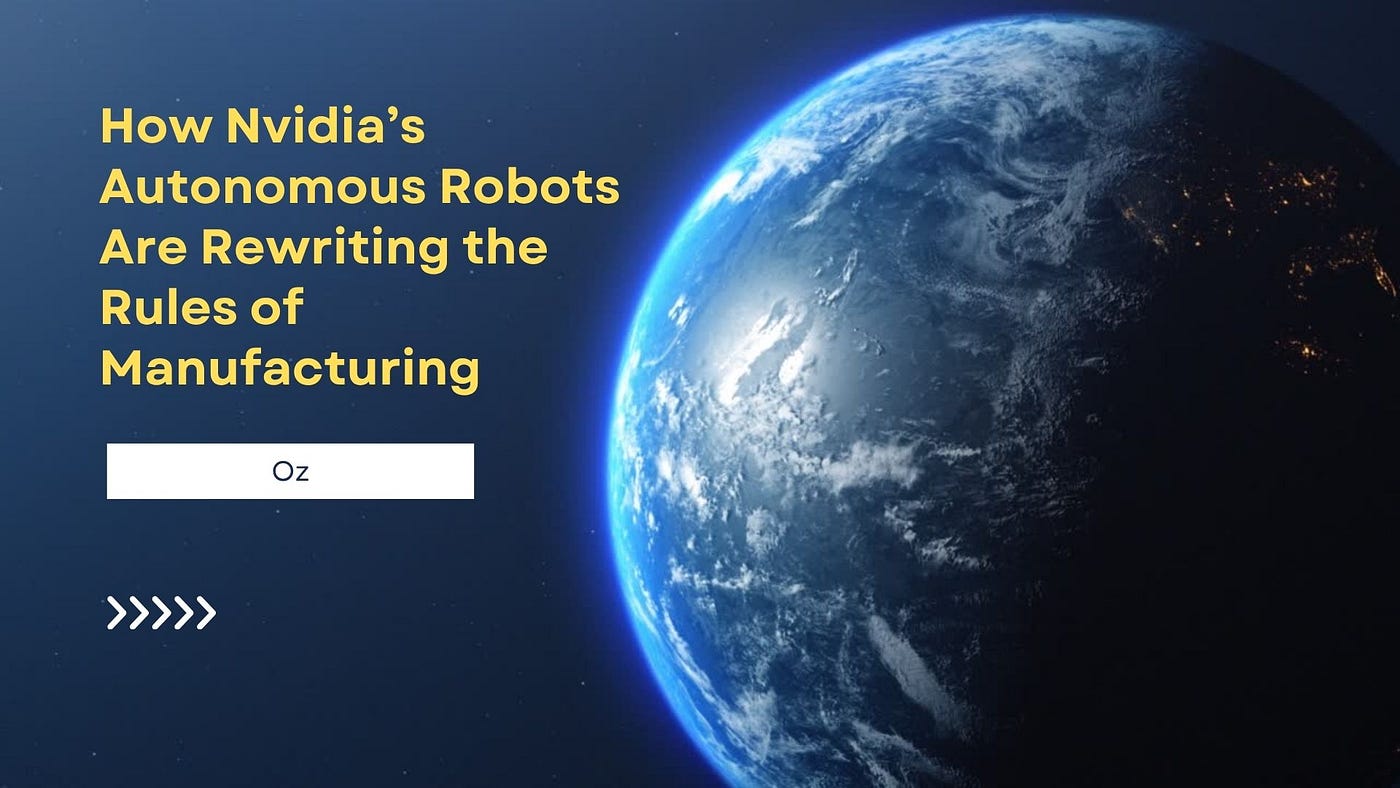
For decades, there has been an unbreakable rule in the tech world: No matter how smart computers get, you still have to tell them exactly what to do in the physical world. For a robotic arm on a factory floor to move a part from point A to point B, it has to be programmed by engineers using millimeter-perfect coordinates. The slightest deviation, and the entire assembly line comes to a grinding halt.
Until today.
Nvidia, the undisputed king of the artificial intelligence revolution, just threw that rule out the window. By demonstrating next-generation robots capable of learning how to slot a graphics card (GPU) into a motherboard completely on their own — without external human intervention or pre-written code blocks — Nvidia just gave us a hyper-realistic trailer for the factories of the future.
But how does a hunk of metal teach itself to perform such a delicate operation? And more importantly, how will this move shake up the global manufacturing landscape?
The End of Coding and the Dawn of Learning
At the heart of the technology Nvidia showcased is not traditional programming, but Reinforcement Learning (RL). Think of it like a toddler trying to fit the right shape into the right hole in a puzzle box.
Initially, the robot doesn’t fully understand what a motherboard or a GPU is. It only has one goal: fit that card into that slot. In its first attempts, it fails miserably — it gets the angle wrong or applies pressure in the wrong place. But with every failure, much like the human brain, it receives feedback and refines its next move. These virtual trial-and-error sessions, repeated millions of times inside simulation environments (specifically Nvidia’s Omniverse and Isaac robotics platforms), eventually translate into flawless physical action.
Here is the real magic: The robot isn’t being programmed; it is being trained.
Think about it: A machine is using feel and intuition to perform an operation that requires millimeter precision, where the slightest miscalculated pressure could destroy thousands of dollars worth of hardware. And it’s doing this without an engineer stepping in to type, move 3 cm to the right on the x-axis.
The Great Disruption in Blue-Collar Work and Automation
If you think this development is just a flashy tech demo for geeks, you are missing the big picture. Nvidia’s leap forward will trigger massive economic consequences for global supply chains and factory automation:
- Hyper-Flexible Assembly Lines: Today, retooling a car or smartphone factory for a new model takes months because every robot must be reprogrammed and recalibrated from scratch. With self-learning robots, this turnaround time could plummet from months to days, or even hours.
- The True Rise of Dark Factories: The concept of factories operating 24/7 in the dark, without the need for human labor, lighting, or breaks, has long been a pipe dream. Until now, humans were still required for maintenance, precision assembly, and anomaly detection. Self-learning robots are poised to eliminate this final human touch.
- Machines Breeding Machines: There is something incredibly profound — and slightly ironic — about Nvidia using its own AI to train robots that will manufacture and assemble its own hardware (GPUs). Artificial intelligence has finally acquired the physical hands needed to build its own infrastructure.
The Bottom Line: Sci-Fi is Now History
By taking its monopoly in the chip market a step further, Nvidia is no longer just a hardware and software vendor; it is positioning itself as the primary architect of the future’s physical workforce.
This robotic arm, slotting a GPU into a motherboard all by itself, sends a crystal-clear message to the world: AI is no longer just a virtual assistant trapped behind our screens. It has stepped onto the factory floor, picked up its toolkit, and figured out exactly what needs to be done.
메타데이터
- post_id
- 1f7bfa3a373d
- slug
- how-nvidias-autonomous-robots-are-rewriting-the-rules-of-manufacturing-1f7bfa3a373d
- url
- https://medium.com/the-tech-notes/how-nvidias-autonomous-robots-are-rewriting-the-rules-of-manufacturing-1f7bfa3a373d
- canonical_url
- https://medium.com/the-tech-notes/how-nvidias-autonomous-robots-are-rewriting-the-rules-of-manufacturing-1f7bfa3a373d
- author_url
- https://medium.com/@ozwizard
- status
- ok
- fetched_at
- 2026-06-23 17:05:31