Homam Explained: Significance, Benefits, and How to Do It at Home.
Homam, also known as Havan or Yajna, is an ancient Vedic ritual involving the offering of various materials into a sacred fire while…
Homam Explained: Significance, Benefits, and How to Do It at Home.
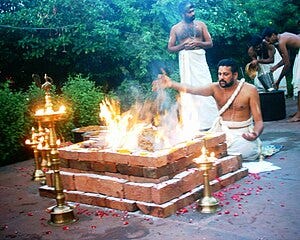
Homam, also known as Havan or Yajna, is an ancient Vedic ritual involving the offering of various materials into a sacred fire while chanting specific mantras. It is a form of fire worship aimed at invoking divine blessings, purifying the environment, and eliminating negative energies. The term “Homam” comes from the Sanskrit word Homa, which means “offering.”
Homams are traditionally performed to honor deities, seek prosperity, health, and success, or eliminate obstacles in one’s life. The fire used in the ritual is considered a sacred medium that carries the offerings and prayers to the gods. It’s believed that the fire transforms the physical offerings into subtle energies, which are then received by the divine forces.
Homam cleanses the atmosphere, body, mind, and soul, removing negative energies and enhancing positive vibrations. It helps align one’s energies with cosmic forces, fostering spiritual growth and peace. Homams for specific deities (e.g., Ganapathi, Lakshmi) are said to bestow health, wealth, and prosperity. Certain homams, like the Ganapathi Homam, are performed to remove obstacles and clear the path for success. The offerings, particularly herbs and clarified butter (ghee), purify the air and create an environment conducive to health and well-being.
How to Perform Homam at Home
Performing a Homam at home requires proper preparation, devotion, and an understanding of the ritual steps. Here’s a simple guide to help you conduct a basic homam at home:
1. Prepare the Altar
- Choose a Suitable Place: A clean, quiet, and sacred space is essential. Ideally, choose a well-ventilated area in your home.
- Set Up the Homam Kundam (Fire Pit): You will need a small homam kundam, usually made of copper or clay, to contain the fire.
- Arrange the Deity’s Image: Place a picture or idol of the deity you are worshipping near the homam kundam.
2. Collect the Required Materials
- Firewood or Dried Cow Dung Cakes: Small pieces of wood or cow dung cakes are the primary fuel for the fire.
- Ghee (Clarified Butter): This is the main offering in most homams, used to sustain the fire and purify the environment.
- Samith (Twigs of Sacred Trees): Twigs of specific trees like Peepal, Banyan, or Mango are considered sacred and are often used.
- Navadhanyam (Nine Types of Grains): Grains such as rice, barley, sesame seeds, and others may be offered.
- Mantra or Hymn Book: A book or guide for chanting the mantras required for the specific homam.
3. Steps to Perform the Homam
a. Sankalpam (Intention Setting)
- Begin by sitting near the homam kundam and meditating for a few minutes. Clear your mind and set a clear intention for the ritual (e.g., peace, prosperity, removing obstacles).
- Chant a simple prayer or mantra to invoke Lord Ganapathi, as He is considered the remover of obstacles and is traditionally invoked at the start of any ritual.
b. Agni Pratisthapana (Fire Invocation)
- Light the fire in the homam kundam using camphor and incense sticks. Once the fire is steady, offer ghee into the fire while chanting mantras or the name of the deity you are invoking (e.g., “Om Gan Ganapataye Namaha” for Lord Ganapathi).
- Invoke the fire god (Agni) by chanting “Om Agnaye Namaha” and offer ghee thrice.
c. Offering of Samagri (Materials)
- Ghee Offering (Aahuti): Continuously pour ghee into the fire using a spoon while chanting the designated mantra or the Gayatri mantra, if no specific deity is invoked.
- Offer the Sacred Grains (Navadhanyam): After ghee, offer grains, herbs, and other materials into the fire, one by one.
- Offer Fruits and Flowers: These symbolize the surrender of desires to the divine.
d. Chanting of Mantras
- During the homam, chant sacred mantras associated with the deity or the specific purpose of the homam. For general purposes, the Gayatri mantra or the Maha Mrityunjaya mantra can be recited.
- If you are not familiar with the Sanskrit mantras, you can simply chant “Om” or offer silent prayers of devotion and gratitude.
e. Purnahuti (Final Offering)
- The final offering is usually made by placing a small coconut or a mix of all the materials into the fire, symbolizing the culmination of the ritual.
- Offer your prayers for peace, prosperity, and blessings.
f. Pradakshina and Completion
- After the fire has consumed the offerings, circumambulate (walk around) the fire pit three times, praying for the fulfillment of your desires and blessings for all.
- Once the fire subsides, sprinkle a little water around the homam kundam and offer flowers to the fire as a final act of devotion.
4. Post-Homam Rituals
- Distribution of Prasad: If you have prepared any prasad (food offering), distribute it among family members.
- Cleaning: After the homam, allow the ashes to cool and respectfully dispose of them in your garden or near a tree.
- Thanksgiving Prayer: Conclude with a prayer thanking the deities and the divine fire for their blessings.
메타데이터
- post_id
- 1ff3bfc4fb5e
- slug
- homam-explained-significance-benefits-and-how-to-do-it-at-home-1ff3bfc4fb5e
- url
- https://medium.com/@KarunaAstrology/homam-explained-significance-benefits-and-how-to-do-it-at-home-1ff3bfc4fb5e
- canonical_url
- https://medium.com/@KarunaAstrology/homam-explained-significance-benefits-and-how-to-do-it-at-home-1ff3bfc4fb5e
- author_url
- https://medium.com/@KarunaAstrology
- status
- ok
- fetched_at
- 2026-06-27 07:40:21