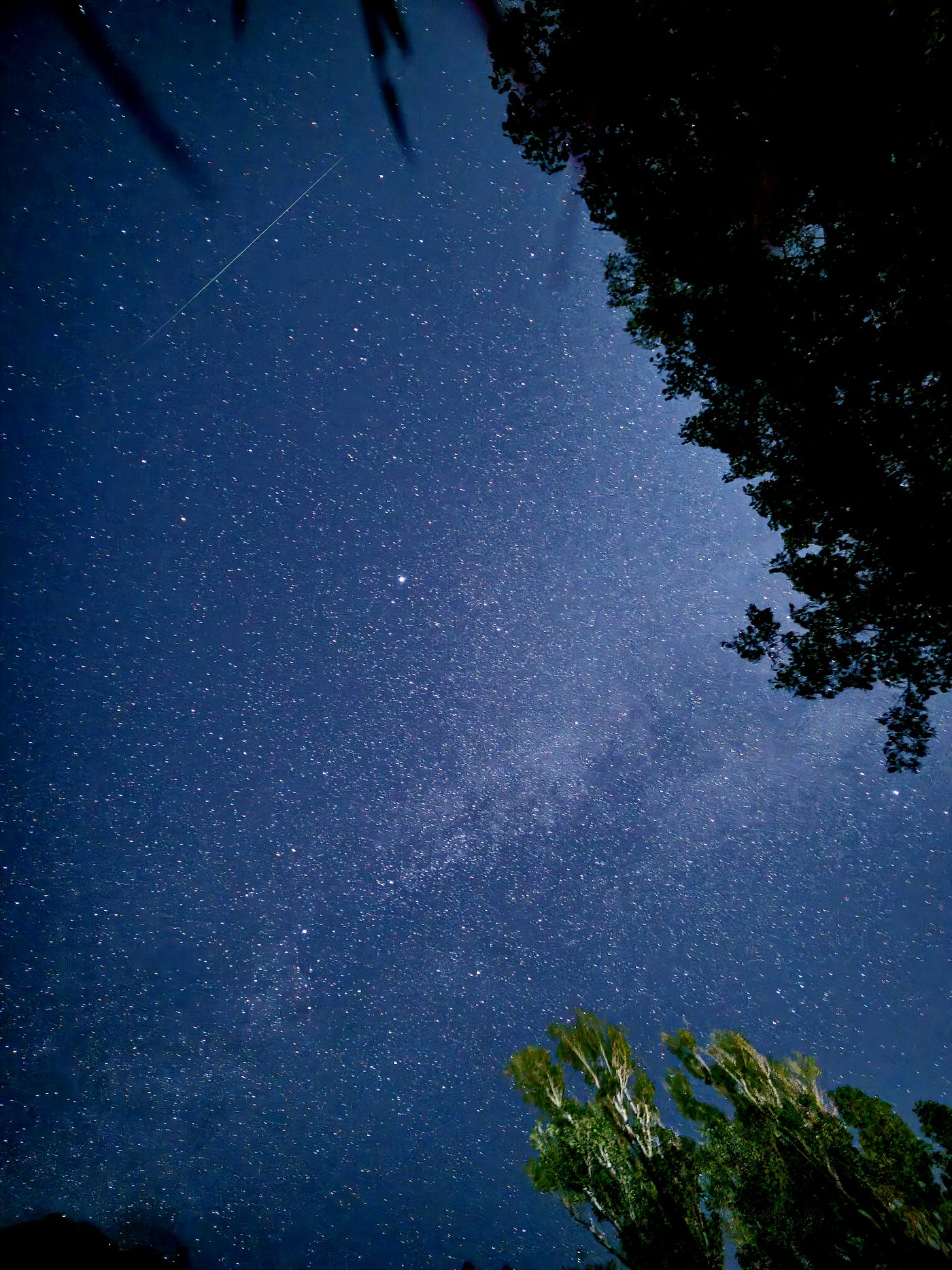
What the Geminids Meteor Shower Reveals About Time, Attention, and Wonder
Beyond the science, the Geminids quietly expose how the mind relates to time itself.
What the Geminids Meteor Shower Reveals About Time, Attention, and Wonder
Beyond the science, the Geminids quietly expose how the mind relates to time itself.
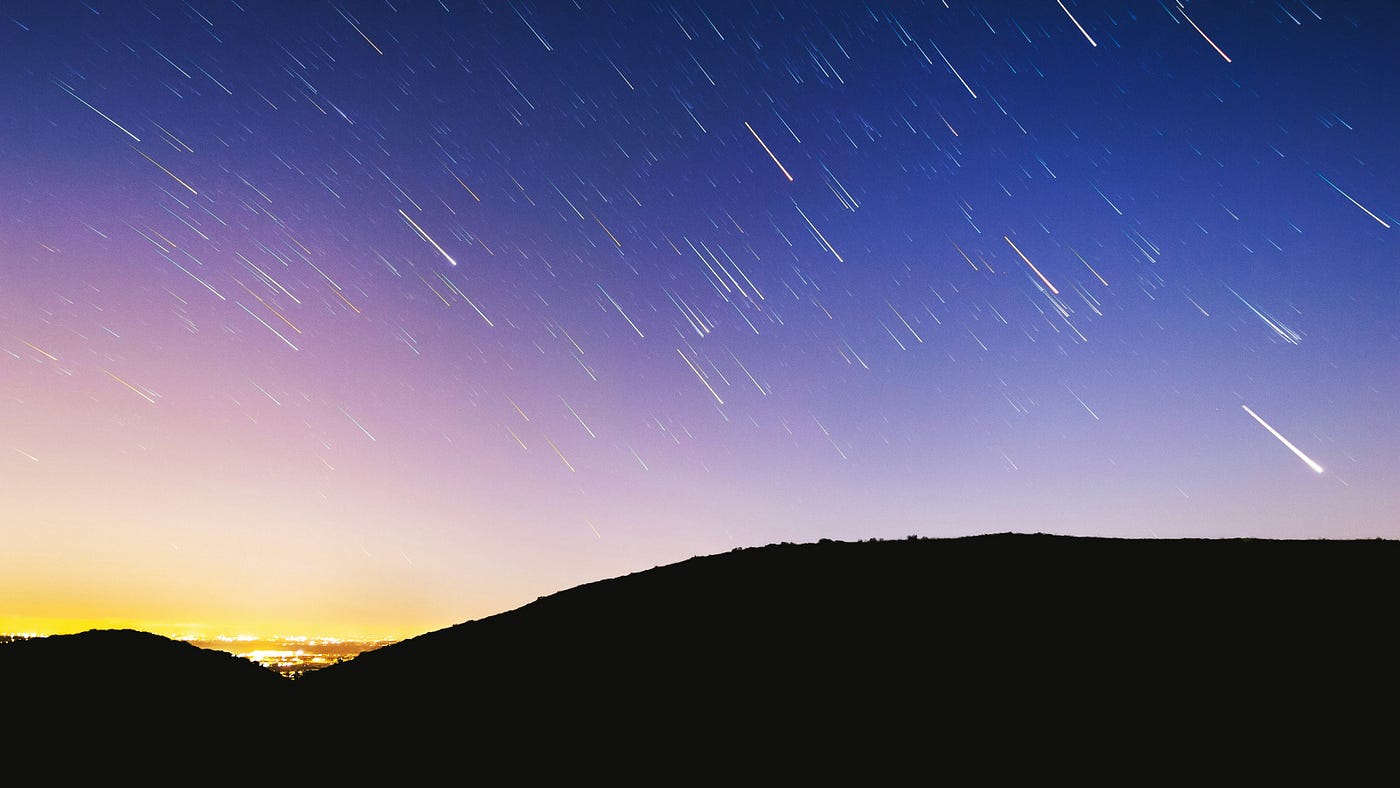
Photo by Austin Schmid on Unsplash
As searches spike for “what is the Geminids meteor shower”, most explanations follow a familiar structure:
An asteroid. Debris. Earth’s orbit. A predictable annual event.
All accurate. All useful.
And yet, none of that explains why people willingly stand in the cold, stare into darkness, and wait — sometimes for hours — for brief flashes that last less than a second.
What’s really happening during moments like this has less to do with astronomy than with attention.
What Is the Geminids Meteor Shower?
The Geminids meteor shower occurs every December as Earth passes through debris left behind by the asteroid 3200 Phaethon. As those particles enter the atmosphere, they burn up, creating the bright streaks we see as meteors.
In 2025, viewing conditions are especially favorable, making the Geminids one of the most visible and widely discussed astronomical events of the year.
That’s the explanation people search for.
But explanation alone doesn’t explain experience.
Why People Are Willing to Wait
What’s striking about meteor showers isn’t their duration — it’s their pacing.
Nothing happens for long stretches. Then suddenly, something does. Then nothing again.
This rhythm quietly conflicts with how the modern mind is trained to operate.
We’re used to:
- Continuous stimulation
- Instant feedback
- Constant updates
The Geminids offer none of that.
And that’s precisely why they hold attention.
The Mind’s Relationship With Time
Most of daily life is experienced through anticipation or memory.
What’s next. What just happened. What should be happening instead.
But while watching the night sky, anticipation changes.
You’re not waiting for something the way you wait for a notification or result. You’re simply open to what might appear.
This subtle shift matters.
It moves attention out of psychological time and into something quieter.
Why Wonder Feels Different Than Excitement
Excitement is future-oriented. Wonder is present.
Excitement asks:
- When will it happen?
- How many will I see?
- Is this the peak?
Wonder doesn’t ask. It watches.
And in that watching, the internal clock slows — not because time itself changes, but because the mind stops measuring every moment.
Attention Without Demand
One of the most overlooked qualities of experiences like the Geminids is how undemanding they are.
Nothing is required. Nothing is achieved. Nothing is improved.
You don’t become better for watching meteors. You don’t gain insight by force. You don’t need to understand anything.
Attention rests because it’s not being used.
This is rare.
The Space Between Moments
Meteor showers are mostly empty sky.
The beauty isn’t constant. It’s punctuated.
And oddly, the stillness between meteors becomes just as noticeable as the flashes themselves.
This mirrors something internal.
When attention isn’t occupied, the gaps between thoughts become more obvious too.
Not silence as an achievement. Silence as something already there.
Why This Feels Meaningful Without Meaning
People often describe these moments as meaningful even though they can’t explain why.
That’s because meaning, here, isn’t conceptual.
It’s experiential.
There’s no takeaway. No lesson. No narrative.
Just a sense that something real is being encountered — without needing to name it.
The Difference Between Knowing and Noticing
You can know exactly what causes the Geminids and still miss the experience entirely.
Knowing stays in thought. Noticing happens before thought claims the moment.
This distinction sits at the heart of Proof That You’re God: that awareness isn’t something we understand our way into — it’s what’s present when understanding relaxes.
When Time Loses Its Grip
During moments of sustained attention — watching the sky, listening deeply, walking without distraction — time doesn’t disappear.
But it loses urgency.
Minutes stretch. Waiting stops feeling like waiting. Nothing feels late.
And when the mind returns, it often returns gently.
After the Sky Goes Quiet Again
The Geminids meteor shower will pass, as it always does.
But the quality of attention it briefly reveals doesn’t belong to the sky.
It belongs to awareness itself.
The sky just gave permission to stop rushing through the moment.
A Final Reflection
If you watched the Geminids this year, consider this:
The most striking thing may not have been the meteors — but the way time softened while you waited.
That softening isn’t rare. It’s just usually drowned out by thought.
If This Resonates
*Proof That You’re God* explores this same recognition — not through cosmic events, but through everyday moments where attention quietly returns to itself.
No belief required. No experience to chase.
Just an invitation to notice what’s already here.
👉 Proof That You’re God https://www.amazon.com/dp/B0DKCMR183/
메타데이터
- post_id
- 2016aa69df13
- slug
- what-the-geminids-meteor-shower-reveals-about-time-attention-and-wonder-2016aa69df13
- url
- https://medium.com/@dualisticunity/what-the-geminids-meteor-shower-reveals-about-time-attention-and-wonder-2016aa69df13
- canonical_url
- https://medium.com/@dualisticunity/what-the-geminids-meteor-shower-reveals-about-time-attention-and-wonder-2016aa69df13
- author_url
- https://medium.com/@dualisticunity
- status
- ok
- fetched_at
- 2026-07-27 09:50:22