The Medical Discovery That Sat Unused for 20 Years
How a Life-Saving Breakthrough Was Ignored Until Millions Needed It
The Medical Discovery That Sat Unused for 20 Years
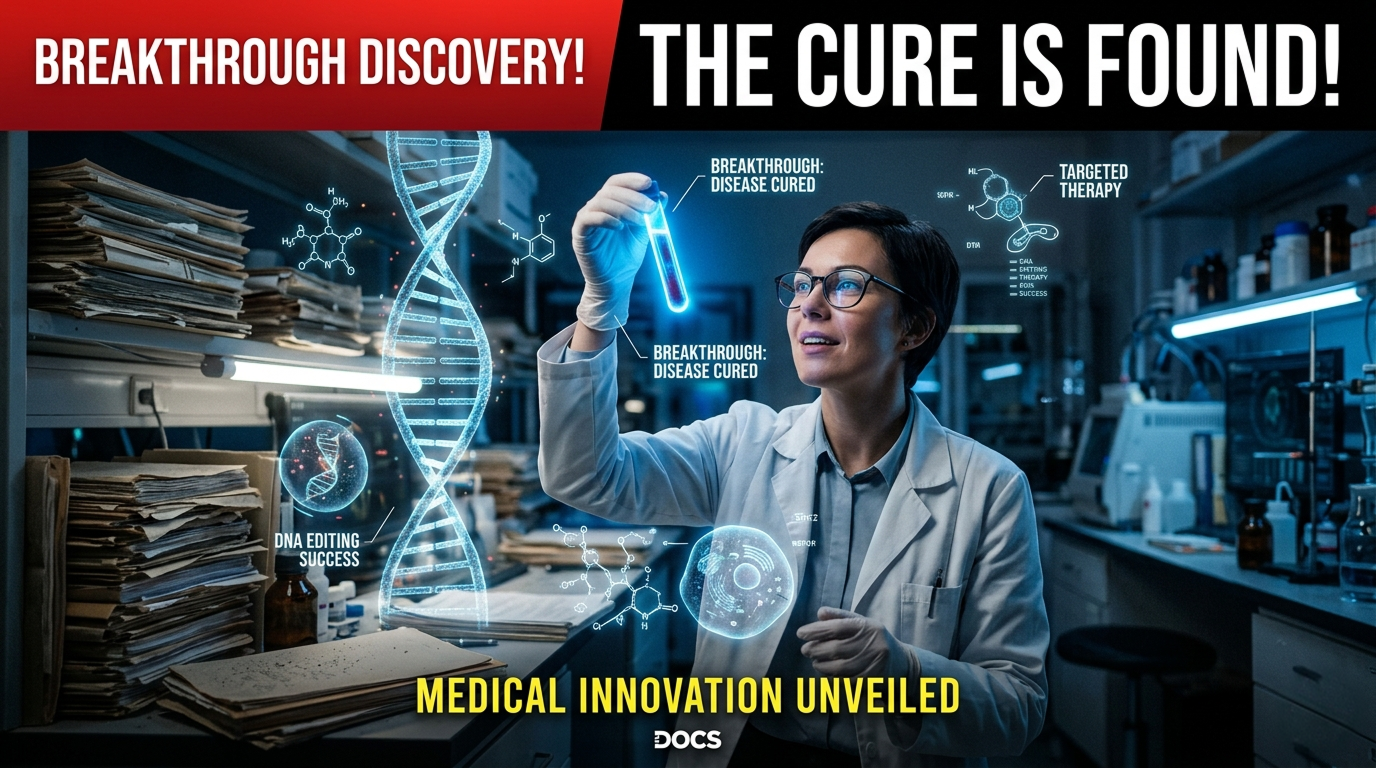
How a Life-Saving Breakthrough Was Ignored Until Millions Needed It
In the early 1990s, a group of medical researchers discovered a promising technology that could identify diseases by analyzing tiny fragments of genetic material circulating in a person’s blood.
The idea sounded revolutionary.
Instead of performing invasive procedures, doctors could potentially detect diseases through a simple blood sample.
However, most experts were skeptical.
The technology was expensive. The equipment required was not widely available. Data processing capabilities were limited. Many healthcare organizations believed the approach would never become practical in real-world medicine.
As a result, the research received little attention outside academic circles.
A Discovery Ahead of Its Time
The researchers continued publishing studies demonstrating the potential of the technology.
Their findings suggested that doctors might one day detect cancer earlier, monitor treatment effectiveness, and identify genetic abnormalities without surgery.
Yet funding remained difficult to secure.
Healthcare providers were focused on existing diagnostic methods that were already established and profitable. Many decision-makers viewed the new approach as experimental and unnecessary.
For years, the breakthrough remained largely confined to research laboratories.
Technology Finally Catches Up
Everything changed when advances in DNA sequencing dramatically reduced costs.
Machines that once required days to analyze genetic material could now perform the same work in hours. Computing power became faster, more accessible, and significantly cheaper.
Suddenly, the old research looked remarkably practical.
Hospitals and diagnostic companies began exploring the technology at scale. Clinical trials produced encouraging results, and healthcare providers started integrating blood-based genetic testing into patient care.
A concept that had once seemed futuristic was becoming reality.
The Rise of Liquid Biopsy
Today, the technology is commonly known as “liquid biopsy.”
Instead of relying solely on invasive tissue sampling, doctors can analyze fragments of DNA circulating in the bloodstream to gain valuable information about certain diseases.
Researchers continue investigating new applications, including:
- Earlier cancer detection
- Monitoring treatment response
- Detecting disease recurrence
- Personalized medicine strategies
- Genetic screening programs
What was once dismissed as impractical has become one of the most exciting areas of modern medical innovation.
Why Medical Innovations Are Often Delayed
Medical breakthroughs face unique challenges.
Unlike consumer technology, healthcare innovations must demonstrate safety, accuracy, and effectiveness before widespread adoption. Regulatory approval, clinical validation, and physician acceptance can take years.
As a result, many important discoveries spend decades moving from laboratory research to everyday patient care.
The science may be correct long before the healthcare system is ready to use it.
Lessons for Researchers and Healthcare Leaders
The story serves as a reminder that transformative medical advances rarely happen overnight.
Progress often requires patience, persistence, and a willingness to invest in ideas that may not show immediate commercial value.
Some discoveries fail.
Others quietly wait for the right moment.
And occasionally, a forgotten research paper becomes the foundation of a technology that helps save lives around the world.
Conclusion
The greatest medical breakthroughs are not always the ones making headlines today.
Sometimes they begin as overlooked research studies, ignored because the world lacks the tools, infrastructure, or imagination to appreciate their potential.
Years later, those same discoveries can redefine how diseases are detected, treated, and prevented.
The future of medicine often starts long before anyone notices.
메타데이터
- post_id
- 202a5e9bd2f1
- slug
- the-medical-discovery-that-sat-unused-for-20-years-202a5e9bd2f1
- url
- https://medium.com/@immurlivijay/the-medical-discovery-that-sat-unused-for-20-years-202a5e9bd2f1
- canonical_url
- https://medium.com/@immurlivijay/the-medical-discovery-that-sat-unused-for-20-years-202a5e9bd2f1
- author_url
- https://medium.com/@immurlivijay
- status
- ok
- fetched_at
- 2026-06-09 15:37:30