Shopify Development Partner: Shopify SEO Tips for Higher Rankings
Launching a Shopify store is only the first step toward building a successful e-commerce business. The real challenge begins when you try…
Shopify Development Partner: Shopify SEO Tips for Higher Rankings
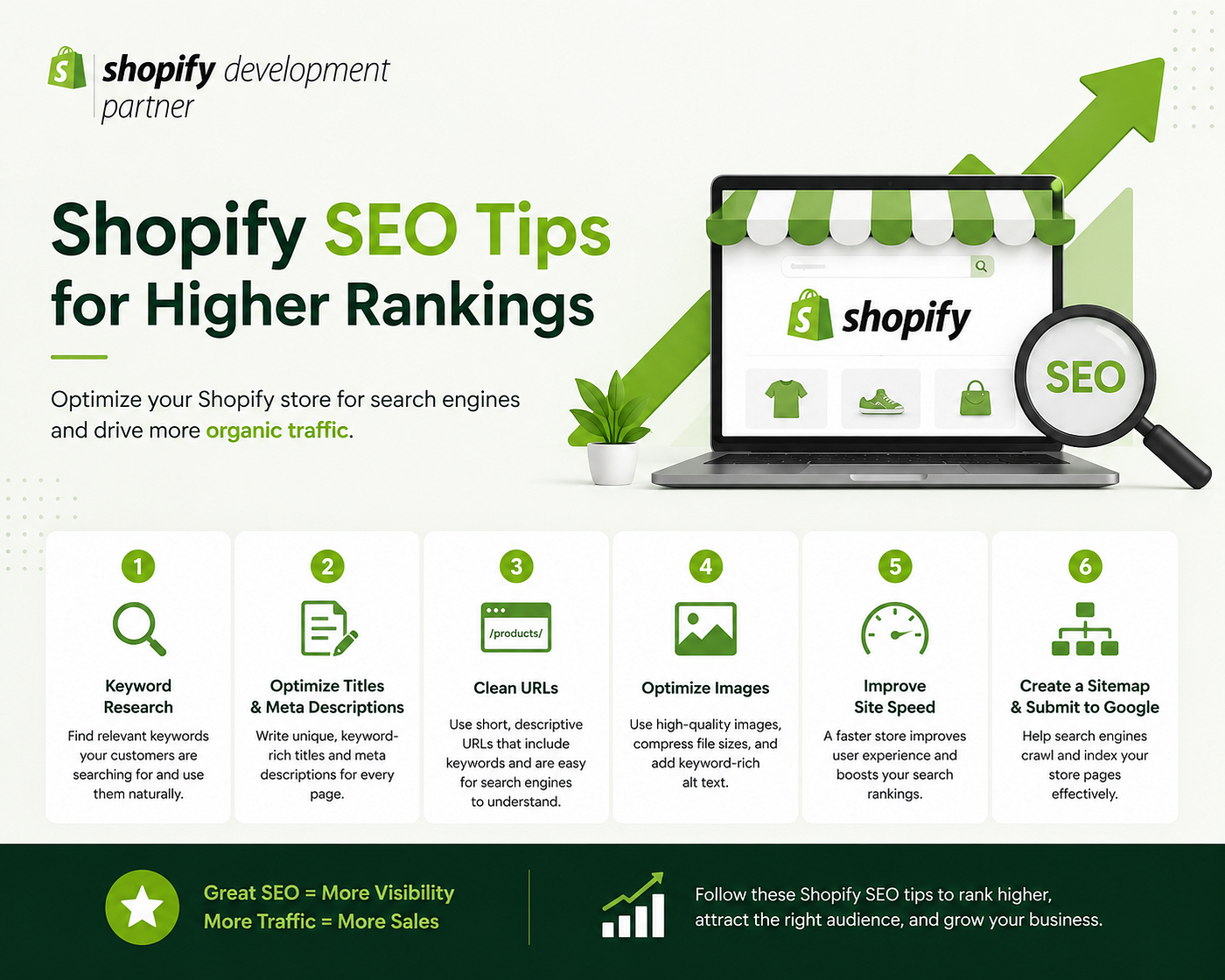
Launching a Shopify store is only the first step toward building a successful e-commerce business. The real challenge begins when you try to attract visitors and convert them into customers. Thousands of online stores compete for the same audience every day, making search engine visibility more important than ever. Working with a **Shopify development partner** helps businesses create an SEO-friendly store that performs well in search results while providing an excellent shopping experience. By combining technical expertise with proven optimization strategies, businesses can improve rankings, increase organic traffic, and generate more sales without relying entirely on paid advertising.
Why Shopify SEO Matters
Search engine optimization helps potential customers discover your products when they search on Google or other search engines. Unlike paid advertisements, organic traffic continues to generate visitors over time without requiring continuous advertising expenses.
A well-optimized Shopify store provides several advantages:
- Higher rankings for valuable keywords
- Increased organic website traffic
- Better user experience
- Faster page loading speed
- Improved conversion rates
- Greater long-term return on investment
SEO is not simply about adding keywords. Modern search engines evaluate website quality, page speed, mobile responsiveness, content relevance, internal linking, and user engagement before deciding where a website appears in search results.
Optimize Site Structure for Better Crawling
One of the first SEO improvements begins with organizing your Shopify store properly. Search engines need a logical structure that makes every page easy to discover and understand.
Your navigation should remain simple and organized. Categories should clearly describe products, while collections should group similar items together.
Good website structure also helps visitors locate products quickly, reducing bounce rates and improving customer satisfaction.
Important structural elements include:
- Clean navigation menus
- Logical product collections
- Descriptive URLs
- Breadcrumb navigation
- XML sitemap
- Proper internal linking
These elements allow search engines to crawl your website efficiently while making shopping easier for customers.
Create High-Quality Product Pages
Many Shopify stores struggle because product pages contain very little original content. Copying manufacturer descriptions often results in duplicate content, reducing ranking opportunities.
Instead, write unique product descriptions that explain:
- Key features
- Customer benefits
- Practical use cases
- Technical specifications
- Frequently asked questions
Adding original images, videos, customer reviews, and buying guides makes each page more valuable.
Every product page should include:
- A descriptive page title
- Meta description
- Optimized image alt text
- Relevant headings
- Clear product information
Rich product pages improve both SEO performance and customer trust.
Improve Website Speed
Page speed has become one of Google’s important ranking factors. Slow websites often experience higher bounce rates because visitors leave before pages finish loading.
Several techniques can improve Shopify performance:
- Compress large images
- Remove unnecessary applications
- Enable browser caching
- Minify CSS and JavaScript
- Use modern image formats
- Limit third-party scripts
A faster website creates a better shopping experience while increasing the likelihood of higher rankings.
Focus on Mobile Optimization
Most e-commerce traffic now comes from smartphones. Google primarily evaluates websites using mobile-first indexing, meaning your mobile experience directly influences rankings.
Ensure your Shopify store provides:
- Responsive layouts
- Easy navigation
- Large touch-friendly buttons
- Fast mobile loading
- Readable text
- Simple checkout process
Customers should complete purchases comfortably without excessive zooming or scrolling.
Perform Keyword Research Carefully
SEO begins with understanding how customers search online.
Rather than targeting only broad competitive keywords, focus on long-tail search phrases that match customer intent.
For example:
- Best wireless headphones for travel
- Organic skincare products online
- Luxury leather wallets for men
These keywords often generate visitors who are closer to making a purchase.
Include keywords naturally in:
- Titles
- Headings
- Product descriptions
- Collection pages
- Blog articles
- Meta descriptions
Avoid excessive keyword repetition because modern search engines prioritize natural language.
Publish Helpful Blog Content
Blogging remains one of the most effective ways to attract consistent organic traffic.
Educational content answers customer questions before they decide to purchase.
Popular blog topics include:
- Buying guides
- Product comparisons
- Industry trends
- Maintenance tips
- Frequently asked questions
- Seasonal shopping advice
Every article creates additional opportunities to rank for relevant search terms while building authority within your industry.
Internal links from blog articles to product pages also strengthen overall website SEO.
Optimize Images for Search
Images contribute significantly to e-commerce SEO.
Every uploaded image should include:
- Descriptive file names
- Optimized alt text
- Proper compression
- High-quality visuals
Instead of uploading a file called “IMG001.jpg,” use descriptive names such as:
premium-leather-backpack.jpg
Search engines use alt text to understand image content, improving accessibility and creating opportunities to appear in image search results.
Build Quality Backlinks
Backlinks remain one of the strongest ranking signals.
Focus on earning links through:
- Guest blogging
- Industry directories
- Business listings
- Resource pages
- PR publications
- Social bookmarking
- High-quality blog content
Avoid purchasing low-quality backlinks because they may negatively affect search performance.
Quality always outweighs quantity in modern SEO.
Monitor SEO Performance Regularly
SEO requires continuous monitoring rather than one-time optimization.
Useful tools include:
- Google Search Console
- Google Analytics
- Shopify Analytics
- Keyword tracking software
Monitor important metrics such as:
- Organic traffic
- Keyword rankings
- Click through rate
- Conversion rate
- Bounce rate
- Indexed pages
Regular analysis helps identify new opportunities while solving technical issues before they impact rankings.
Conclusion
Artificial intelligence is transforming ecommerce by helping businesses automate operations, personalise customer experiences, and make smarter business decisions. From AI-powered customer support and product recommendations to predictive analytics and marketing automation, intelligent tools help online stores operate more efficiently while improving customer satisfaction. Businesses looking to implement **Shopify AI automation can accelerate growth by choosing solutions that match their operational goals and customer needs. Companies seeking expert Shopify automation and e-commerce development services can benefit from the professional solutions offered by MAQ Computer Services LLC**.
메타데이터
- post_id
- 208d27dff37a
- slug
- shopify-development-partner-shopify-seo-tips-for-higher-rankings-208d27dff37a
- url
- https://medium.com/@abhinav.galtech/shopify-development-partner-shopify-seo-tips-for-higher-rankings-208d27dff37a
- canonical_url
- https://medium.com/@abhinav.galtech/shopify-development-partner-shopify-seo-tips-for-higher-rankings-208d27dff37a
- author_url
- https://medium.com/@abhinav.galtech
- status
- ok
- fetched_at
- 2026-07-07 10:08:12