Frédéric Chopin: The Poet of the Piano
Frédéric Chopin (1 March 1810–17 October 1849) is universally celebrated as one of the most transformative figures in Romantic music. His…
Frédéric Chopin: The Poet of the Piano
Frédéric Chopin (1 March 1810–17 October 1849) is universally celebrated as one of the most transformative figures in Romantic music. His virtuosic command of the piano, coupled with a lyrical sensibility that could make a single note sing, reshaped the instrument’s repertoire and inspired generations of composers and performers.
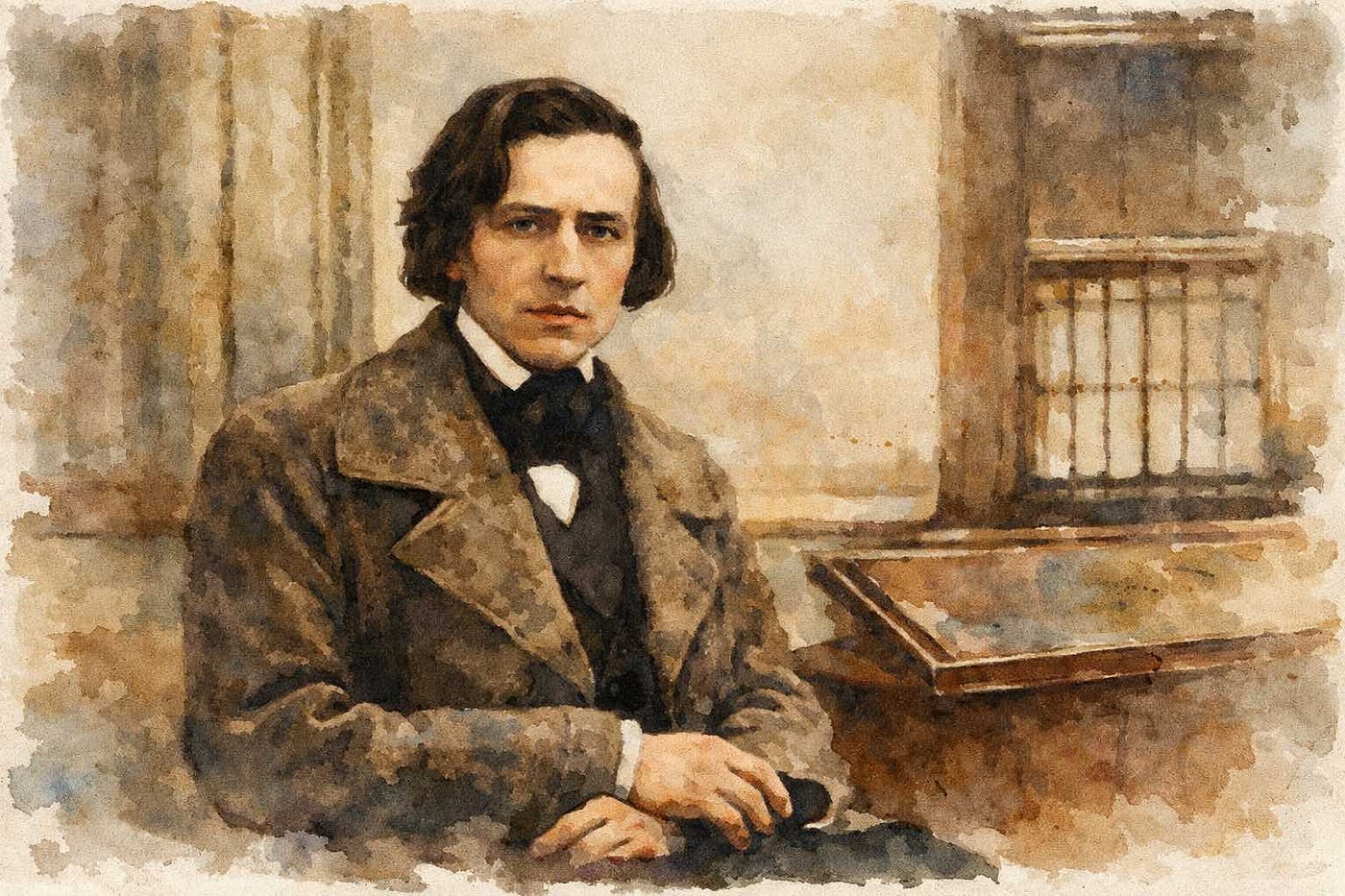
Frédéric François Chopin was born into a modest family in the Polish‑Prussian borderland of Żelazowa Wola, Chopin’s early exposure to folk melodies and church music planted the seeds of his lifelong fascination with melody and harmonic color. Though he spent only a few years in a formal conservatory, he developed a self‑taught style that blended Polish dance rhythms with advanced harmonic and rhythmic techniques. By the time he settled in Paris in 1831, Chopin had already begun to publish some of his most influential works, including the famous Nocturnes and Preludes. Over the next decade, he became a celebrated figure in Parisian society, performing for royalty and aristocracy while also refining his unique musical voice.
Early Life, Education, and First Musical Influences
Birth and Family Background
- Date of Birth: March 1, 1810
- Place: Żelazowa Wola (now in Poland), then part of the Duchy of Warsaw
- Parents: Nicolas Chopin (a French‑Polish businessman) and Justyna Krzyżanowska (a Polish housewife)
The Chopin family was not aristocratic, but they valued music. Nicolas, a shopkeeper, purchased a small piano for the children when they were young. This instrument became the first teacher in Frédéric’s life.
Early Musical Education
- Self‑Instruction and Early Lessons (1815–1825) Frédéric Chopin began playing at the age of five, quickly mastering simple scales and folk tunes. By seven, he was composing brief pieces. His first formal lessons came from Tadeusz Głowiński, a local teacher who introduced him to classical forms.
- The Warsaw Conservatory (1825–1827) Chopin entered the Warsaw Conservatory at 15. The curriculum focused on counterpoint and traditional theory, but the political turbulence of the time (the 1830 November Uprising against Russian rule) disrupted his studies. Despite limited resources, he gained exposure to works by Bach, Mozart, and early Romantic composers.
- Influence of Polish Folk Music and Nationalism The Polonaise and Mazurka dance forms, popular among the Polish gentry and peasantry, became a defining part of Chopin’s melodic vocabulary. His sense of “national style” the incorporation of folk rhythms and modes, was shaped during his teenage years, influenced by the works of contemporaries like Józef Elsner and the broader Romantic trend of “musica folk”.
- The 1827 Warsaw Concerts In 1827, Frédéric Chopin gave a public performance that caught the attention of Klemens Janicki, a patron who would later help him secure a scholarship to study in Vienna. Though the scholarship was never realized (politics intervened), this period cemented his reputation as a promising young virtuoso.
Read the full article on Tunitemusic magazine!
FrédéricChopin #Piano #RomanticMusic #PolishMusic #MusicHistory #ClassicalMusic #Nocturne #Etude #Ballade #Polonaise #MusicInfluence #ChopinLegacy
메타데이터
- post_id
- 20b80a88d4d3
- slug
- frédéric-chopin-the-poet-of-the-piano-20b80a88d4d3
- url
- https://medium.com/@tunitemusic/fr%C3%A9d%C3%A9ric-chopin-the-poet-of-the-piano-20b80a88d4d3
- canonical_url
- https://medium.com/@tunitemusic/fr%C3%A9d%C3%A9ric-chopin-the-poet-of-the-piano-20b80a88d4d3
- author_url
- https://medium.com/@tunitemusic
- status
- ok
- fetched_at
- 2026-07-13 06:23:13