The Day My Money Vanished On-Chain
It was supposed to be a quick move. I had some USDC sitting on Arbitrum and wanted to try a promising new yield protocol on Base. Everyone…
The Day My Money Vanished On-Chain
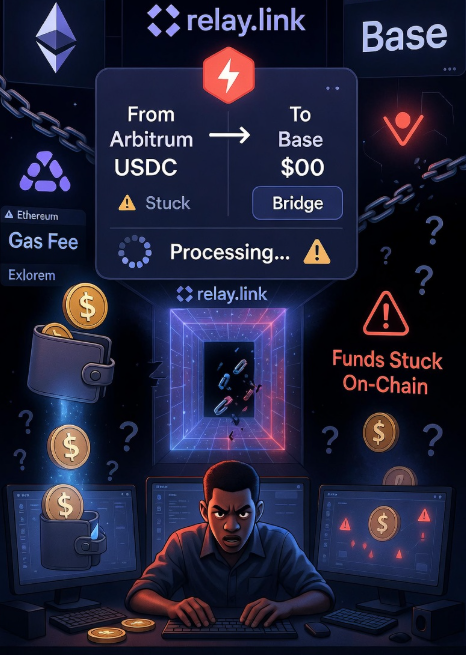
It was supposed to be a quick move. I had some USDC sitting on Arbitrum and wanted to try a promising new yield protocol on Base. Everyone was talking about it, so I opened relay.link a popular cross-chain bridging tool used by wallets like Rabby and MetaMask.
“Fast and cheap,” they said. I selected the amount, approved the transaction, paid the gas, and hit bridge.
At first, everything looked fine. The status showed “Processing.” Then… nothing. Hours turned into a full day. My funds were neither on Arbitrum nor on Base. They were just… gone into the on-chain void.Had no choice but to turn to support tickets, called a friend for help, check reviews online for similiar issues and scanning explorer non stop.
I eventually recovered them after multiple failed attempts and extra gas fees, but by then, the excitement was dead. I never deposited into that yield protocol. I closed the tab and didn’t open another DeFi app for weeks.
That frustrating experience was unique to me, a typically “deposit problem”, one of those web3 problems.
Why Deposits Are the Real Entry Point to Any App
Most founders obsess over beautiful UIs, fancy features, or tokenomics. But the truth is, users judge your app the moment they try to put money in.
Before they can even click stake, lend, or approve transactions they face a gauntlet:
***- Switching chains in their wallet
- Finding a bridge (like relay.link)
- Dealing with gas tokens on the destination chain
- Managing approvals, slippage, and unpredictable fees
- Jumping between tabs and explorers***
If any step feels off, they drop off. Forever. In my case, the bridge fail technically and the experience did. The waiting, the fear of losing funds on-chain made me question whether it was worth it. Many users don’t even bother recovering; they just leave.
Where Users Struggle and Drop Off
The drop-off points are painfully predictable:
1. Chain switching fatigue-“Why do I need to switch to this random L2 just to try your app?” 2. Bridging anxiety-Will it arrive? How long? What if it gets stuck like mine did with relay.link? 3. No gas on arrival-Finally bridged, but can’t do anything because you have zero native tokens for fees. 4. Too many apps and steps-Wallet → Bridge → Swap → Manual deposit. By step 3, most are gone.
Current bridging tools (even good ones like Relay) solve the technical transfer but not the user experience. They still require users to think about routes, risks, and manual follow-ups.
Why the Current Experience Feels Broken
Web3 still treats deposits like 2021 DeFi, but normal people the ones we need for mass adoption don’t want to become blockchain experts. They want to click “Deposit” and see their money working, not play Shelocke Holmes with transaction hashes. My relay.link incident highlighted the core issue: bridges move assets, but they don’t onboard users seamlessly. One hiccup (delays, failed confirmations, or missing gas) and the entire user journey collapses before it begins.Developers often overlook this because they test with perfect conditions and multiple wallets.
The Solution - Avail Deposits
With Avail users don’t need to bridge manually or worry about gas on the destination chain. Avail Deposits turns the painful multi-step process into a smooth, one-flow experience. Users can pay with almost any token from any supported chain and land directly with funds ready in your app including gas on the destination.No more “where did my money go?” moments. No more losing users at the deposit stage.
It acts as cross-chain deposit infrastructure that handles the heavy lifting behind the scenes: bridging, swaps, and gas provisioning. Your users just choose an amount and source token, and it works.
This is especially powerful for multi-chain deposit flow bringing liquidity from Ethereum, Arbitrum, Base, or wherever directly into your dApp without forcing users through external bridges. For teams building dapps, it means simplifying deposits across chains and dramatically better conversion rates. Users actually make it past the entry point and start using your product.
What is Avail Deposits?
Avail Deposits is a cross-chain deposit infrastructure for dApps powered by Avail Nexus. It lets users fund your app or contract directly from any chain, in any token, while automatically handling bridging, swaps, and destination gas all non-custodially. Users get a simple, reliable deposit experience instead of wrestling with bridges.
Final Thoughts
My money didn’t truly vanish on relay.link, but the frustration it caused made me vanish as a user. If we want mainstream adoption, we must fix the deposit problem first. Tools like **Avail Deposits** are a massive step toward making on-chain actions feel as easy as Web2 payments.
The next time you’re building or using a dApp, ask yourself: How easy is it for someone to actually put money in? because the apps that solve this will win.
IMPORTANT LINKS
Avail Deposits— https://availproject.org/nexus/deposit
Avail Blog -https://blog.availproject.org/
Website- http://availproject.org/
Discord — https://discord.com/invite/AvailProject
메타데이터
- post_id
- 20c4a7f13c6e
- slug
- the-day-my-money-vanished-on-chain-20c4a7f13c6e
- url
- https://medium.com/@edineroemmanuel/the-day-my-money-vanished-on-chain-20c4a7f13c6e
- canonical_url
- https://medium.com/@edineroemmanuel/the-day-my-money-vanished-on-chain-20c4a7f13c6e
- author_url
- https://medium.com/@edineroemmanuel
- status
- ok
- fetched_at
- 2026-06-22 12:55:45




