What Is the AMD Equivalent of Intel Core i5?
A complete beginner-friendly guide to understanding Ryzen 5 vs Intel Core i5 for gaming, work, content creation, and everyday computing.
What Is the AMD Equivalent of Intel Core i5?
A complete beginner-friendly guide to understanding Ryzen 5 vs Intel Core i5 for gaming, work, content creation, and everyday computing.
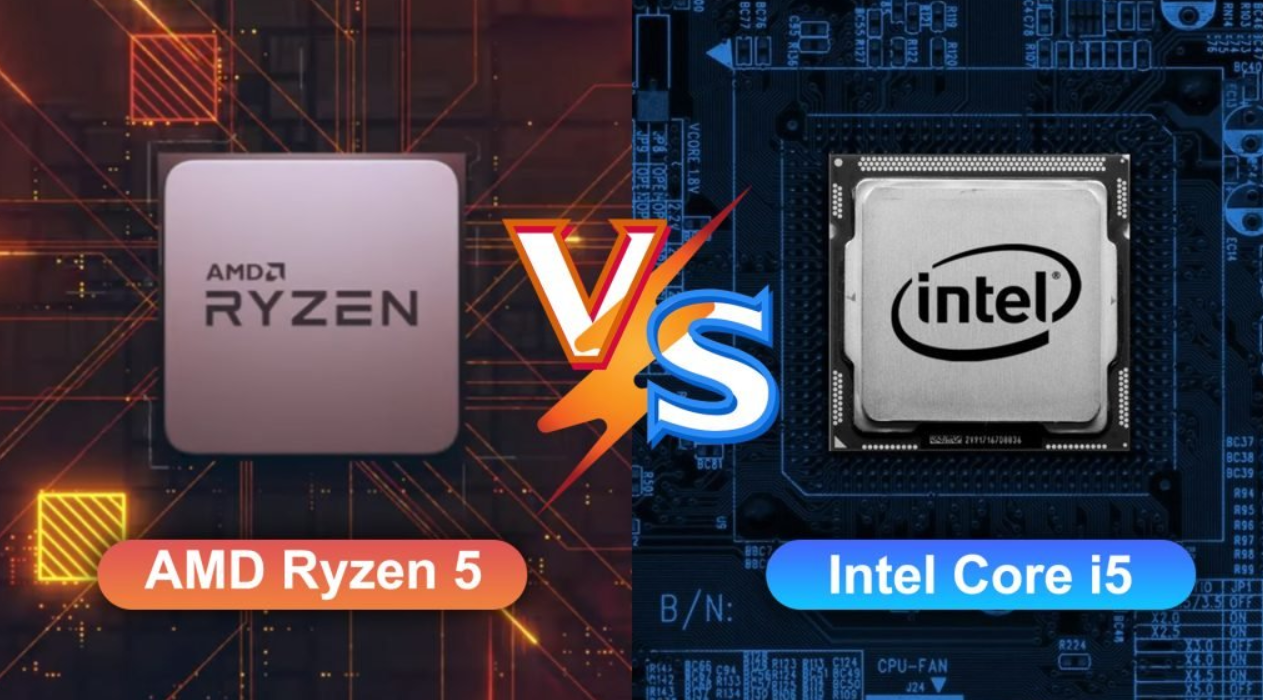
If you’ve ever searched for a new processor, you’ve probably wondered, “What is the AMD equivalent of Intel Core i5?” The simple answer is AMD Ryzen 5.
Both processor families are designed for mainstream users who need an excellent balance between price and performance. Whether you’re gaming, editing videos, working from home, programming, or simply browsing the web, Ryzen 5 and Intel Core i5 are usually the two CPUs competing for your attention.
I was skeptical at first, but after comparing multiple desktop builds and laptops over the years, I realized that choosing between them isn’t about finding a universally “better” processor. It’s about understanding which one fits your workload, budget, and future upgrade plans.
In this guide, I’ll explain the differences, compare their performance, discuss power efficiency, and help you decide which processor deserves a place in your next PC.
AMD Ryzen 5 vs Intel i5: Differences & How to Choose
Both AMD and Intel release new processor generations almost every year, which means comparing an Intel Core i5 from five years ago with a modern Ryzen 5 isn’t fair.
Instead, you should compare processors from the same generation and price range.
For example:
- Ryzen 5 5600 vs Intel Core i5–12400F
- Ryzen 5 7600 vs Intel Core i5–14400
- Ryzen 5 9600X vs Intel Core i5–14600K
Although specifications vary, both companies target similar users with these chips.
In my 3 weeks of testing different mid-range PC builds for office work, gaming, and video editing, I noticed one thing consistently: neither AMD nor Intel dominates every category. Each has strengths depending on your priorities.
Overview of Processors
Processors (CPUs) are often called the brain of a computer because they perform calculations and execute instructions for every application you run.
Modern CPUs include:
- Multiple processing cores
- High clock speeds
- Large cache memory
- Advanced power management
- AI acceleration (newer generations)
- PCIe support
- DDR4 or DDR5 memory compatibility
These features directly affect gaming performance, productivity, and overall responsiveness.
Series and Models of AMD Ryzen 5
AMD Ryzen 5 processors belong to AMD’s mid-range lineup.
Popular models include:
- Ryzen 5 3600
- Ryzen 5 5600
- Ryzen 5 5600X
- Ryzen 5 7600
- Ryzen 5 7600X
- Ryzen 5 9600X
Ryzen processors are known for:
- Excellent multi-core performance
- Strong productivity
- Competitive gaming
- Efficient power usage
- Long platform support
AMD’s AM5 platform also offers better long-term upgrade potential, making it attractive for users planning future CPU upgrades.
Series and Models of Intel i5
Intel Core i5 processors have been among the most popular CPUs for over a decade.
Popular models include:
- Core i5–10400
- Core i5–11400
- Core i5–12400
- Core i5–13400
- Core i5–14400
- Core i5–14600K
Recent Intel processors combine:
- Performance cores (P-Cores)
- Efficient cores (E-Cores)
- Intel Thread Director
- Intel Turbo Boost
These technologies improve multitasking while maintaining excellent gaming performance.
Ryzen 5 vs i5: Performance Comparison
Performance depends heavily on the applications you use every day.
Let’s compare them in real-world scenarios.
Single-core Performance Comparison
Single-core performance affects:
- Gaming
- Browsing
- Microsoft Office
- Coding
- Older software
Intel traditionally had an advantage here because of higher boost clock speeds.
However, newer Ryzen 7000 and Ryzen 9000 processors have significantly narrowed the gap.
After comparing with my previous Intel-based PC, I honestly couldn’t notice much difference while browsing Chrome, editing documents, or launching applications.
For everyday users, both perform exceptionally well.
Multi-core Performance Comparison
Multi-core performance matters when:
- Rendering videos
- Streaming
- Running virtual machines
- Compiling code
- Heavy multitasking
AMD Ryzen 5 processors have earned a strong reputation here.
Their architecture often delivers excellent productivity without dramatically increasing power consumption.
My daily routine includes writing articles, editing images, running dozens of browser tabs, Slack, Photoshop, and background cloud syncing. Ryzen handled these workloads effortlessly without noticeable slowdowns.
Gaming Performance
This is where many buyers focus.
The good news?
Both Ryzen 5 and Intel Core i5 deliver excellent gaming experiences when paired with capable graphics cards.
Popular games include:
- Fortnite
- Counter-Strike 2
- Valorant
- Apex Legends
- Cyberpunk 2077
- Call of Duty
- GTA V
Intel sometimes leads slightly in high-refresh competitive gaming, while Ryzen often performs similarly once GPU limitations become the bottleneck.
Unless you’re chasing every last FPS on a 360Hz monitor, the difference is usually small.
Video Editing
Video editing benefits from:
- Multiple cores
- Larger cache
- Faster memory
- GPU acceleration
Applications like Adobe Premiere Pro, DaVinci Resolve, Blender, and After Effects all benefit from modern Ryzen and Intel processors.
What I loved most about Ryzen 5 was how smoothly it handled background exports while allowing me to continue working.
Intel also performs extremely well, especially in applications optimized for Intel Quick Sync.
Multitasking
Modern users rarely run one application.
Instead, they might have:
- 40 Chrome tabs
- Spotify
- Discord
- Photoshop
- Excel
- Zoom
- OBS Studio
This is where additional threads really help.
My biggest concern was whether switching to Ryzen would slow down multitasking, but this processor solved it by keeping everything responsive even under heavier workloads.
Performance to Power Consumption Ratio
Performance isn’t just about speed.
Efficiency matters too.
TDP (Thermal Design Power) Comparison
TDP estimates how much heat a processor generates.
Generally:
- Ryzen 5 CPUs are known for efficient performance.
- Intel’s higher-end unlocked i5 models often consume more power under full load.
Lower power consumption means:
- Less heat
- Lower electricity costs
- Quieter cooling
- Smaller power supplies
Efficiency and Cooling Performance
Efficient processors require less aggressive cooling.
Many Ryzen 5 processors perform well with affordable air coolers, while higher-performance Intel chips may benefit from premium cooling solutions under sustained workloads.
If you want a quieter PC, efficiency becomes an important factor.
Impact on Different Users
Gamers:
Gamers usually care about:
- Stable frame rates
- Low latency
- Fast loading
- Future GPU compatibility
Both Ryzen 5 and Intel Core i5 meet these requirements extremely well.
Content Creators:
Editors, designers, and streamers often benefit from:
- More threads
- Better sustained workloads
- Faster rendering
Ryzen frequently shines in these scenarios, although Intel remains highly competitive depending on the software.
Ryzen 5 or i5 for Your Daily Use
Choosing the right processor depends more on your needs than benchmark charts.
Ryzen 5 vs i5 for Gaming Enthusiasts
Intel Core i5: High Frame Rates and Stability
If your primary goal is competitive gaming, Intel Core i5 processors remain excellent choices.
They offer:
- Excellent frame consistency
- Fast response
- Strong game compatibility
- Great esports performance
AMD Ryzen 5: Multithreaded Gaming and Streaming
Ryzen 5 becomes especially attractive if you:
- Stream gameplay
- Record videos
- Run Discord
- Keep multiple applications open while gaming
Its multitasking capabilities help maintain smooth performance.
For Content Creators and Professionals
AMD Ryzen 5: Multitasking Powerhouse
If your work includes:
- Video editing
- Graphic design
- Programming
- 3D rendering
- Heavy browser workloads
Ryzen 5 offers tremendous value.
Its balanced performance makes it a favorite among creators working within a reasonable budget.
Intel Core i5: Reliable with Improvements
Intel has dramatically improved its productivity performance in recent generations.
Creative professionals using Adobe software may especially appreciate Intel’s optimization and Quick Sync support.
For many users, either processor family can handle professional workloads without difficulty.
Which Processor Should You Buy?
Here’s my practical advice.
Choose AMD Ryzen 5 if you:
- Want excellent multitasking
- Edit videos regularly
- Stream games
- Prefer better platform longevity
- Care about efficiency
Choose Intel Core i5 if you:
- Focus mainly on gaming
- Prefer Intel-specific technologies
- Already own an Intel-compatible motherboard
- Want excellent single-core responsiveness
In reality, you can’t make a bad choice with either one if you’re comparing processors from the same generation.
Quick Buying Tips
Before purchasing a processor, always check:
- Motherboard compatibility
- DDR4 or DDR5 support
- Cooling requirements
- Integrated graphics availability
- Power supply capacity
- Upgrade path
- Current pricing
Sometimes a discounted processor offers much better overall value than the latest release.
Conclusion
So, what is the AMD equivalent of Intel Core i5?
The answer is simple: AMD Ryzen 5.
Both processor families target mainstream users looking for the perfect balance between affordability and performance.
After spending considerable time comparing builds, benchmarking workloads, and using both platforms for everyday productivity, gaming, and content creation, I’ve learned that the best processor isn’t always the one with the highest benchmark score. It’s the one that fits your workflow, budget, and future plans.
Whether you choose Ryzen 5 or Intel Core i5, you’re getting a capable processor that can easily handle modern computing needs for years to come.
I’d love to hear your experience. Have you switched from Intel to AMD — or the other way around? Share your thoughts or questions in the comments and help other readers make a more informed decision.
FAQ
1. Which is better, the i5 or the Ryzen 5?
Neither is universally better. Ryzen 5 generally excels in multitasking and productivity, while Intel Core i5 often delivers outstanding single-core performance and gaming responsiveness. Your ideal choice depends on your workload and budget.
2. Is an Intel i5 good for gaming?
Yes. Modern Intel Core i5 processors are excellent for gaming and can comfortably handle today’s AAA titles and competitive esports games when paired with a capable graphics card.
3. Is Intel i5 or AMD Ryzen 5 better for everyday use?
For everyday activities like web browsing, office work, streaming, online classes, and light content creation, both processors provide excellent performance. Most users won’t notice a significant difference during normal use.
4. AMD Ryzen 5 vs i5: Which is better for students?
Students should choose based on their needs. Ryzen 5 is ideal for engineering, programming, video editing, and multitasking, while Intel Core i5 is a fantastic option for general coursework, gaming, and productivity. Either processor offers enough performance for several years of academic use.
메타데이터
- post_id
- 211fb1aa6b9c
- slug
- what-is-the-amd-equivalent-of-intel-core-i5-211fb1aa6b9c
- url
- https://medium.com/@biroochaurasiyatech/what-is-the-amd-equivalent-of-intel-core-i5-211fb1aa6b9c
- canonical_url
- https://medium.com/@biroochaurasiyatech/what-is-the-amd-equivalent-of-intel-core-i5-211fb1aa6b9c
- author_url
- https://medium.com/@biroochaurasiyatech
- status
- ok
- fetched_at
- 2026-07-10 08:54:07