Stop Waiting for Nature to Inspire You. Your Next Haiku Is Already Here
How a car wash taught me that haiku isn’t about where you are — it’s about how you see.
Stop Waiting for Nature to Inspire You. Your Next Haiku Is Already Here
How a car wash taught me that haiku isn’t about where you are — it’s about how you see.
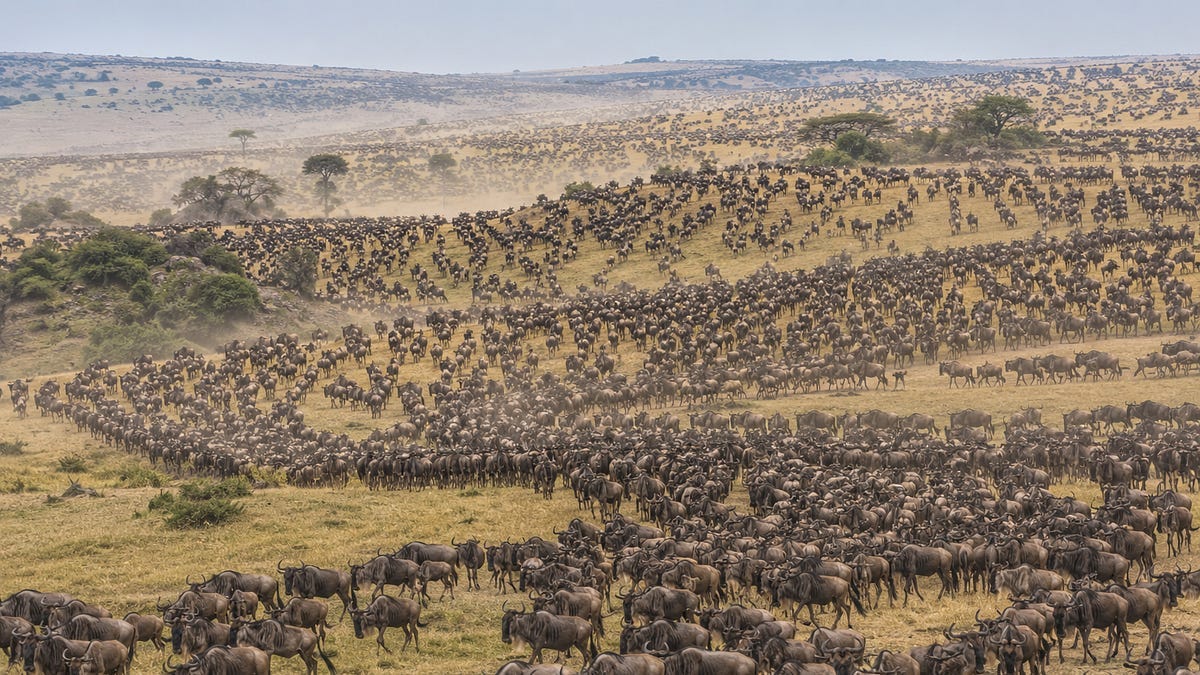
Public domain image created by ChatGPT
I wanted to show you how I recently used my Three-Minute Haiku System (3MHS) to turn an everyday observation into a published haiku.
The Observation
It all began when my girlfriend and I took our car to one of those automated car washes.
*Not A Member? Read This For Free On Substack*
At some point during the process, I noticed hundreds of tiny droplets of water moving across the windscreen.
But what caught my eye was the way they moved: separate but together, sweeping first one way and then the other.
So, I made a note on my phone to remind me of what I’d seen:
Water droplets being blown around on the windscreen during the drying phase of an automated car wash.
As per my 3MHS, I then jotted down the two primary elements — windscreen and water droplets.
Next, I turned my note into a slightly longer, more detailed description:
Strong blasts of hot air during the drying phase of an automated car wash blow tiny droplets of water around on the windscreen in strange, cohesive movements.
And, finally, I wrote down what I’d seen as a simple three-line poem (which is not intended to be, and clearly is not, a haiku at this stage):
windscreen water droplets dance as one
I let it simmer in my brain for a couple of weeks before I returned to it.
The Haiku
My first draft of what was now intended to become a haiku was this:
wildebeest — raindrops dancing across the windscreen
You’ll notice the first line has added a new element to the poem.
What I had in mind was the way wildebeest migrate, as a group, in almost swirling patterns. They move at speed, twisting and turning, but somehow never colliding, with what seems to be a shared goal in mind.
But then the “raindrops dancing” line seemed too prosaic, and while I know that haiku typically do not use poetic language, it felt too ordinary and too overused a concept.
So, I changed the second line and came up with this:
wildebeest — a murmuration of raindrops across the windscreen
A murmuration is usually applied to starlings:
You’ll notice how all those individual birds seem to move as one — still individuals but somehow managing to behave as one cohesive group.
I realize that the word “murmuration” is not a common word, and is probably not found in haiku too often, but it seemed to fit what I had seen on the windscreen.
In fact, it’s perhaps the only word that describes the way the water droplets moved.
Also, I use the word “raindrop” even though it wasn’t rain but water from a car wash.
Does that matter?
I would argue, not really in this case.
The poem is about how the water moved across the windscreen, and not specifically about going through the car wash. If the car had been parked outside a grocery store, for example, and actual raindrops had behaved like that, it wouldn’t have altered how I experienced what was going on.
So, maybe a bit of poetic licence, or maybe not, because “water droplets” has a sort of technical or clinical feel to it that “raindrops” does not.
And while I hadn’t deliberately used the technique, it occurred to me later that I was using the zoom technique: the poem begins with the immensity of a herd of migrating wildebeest, then narrows down the focus to a flock of starlings, and then finishes with an even tighter focus on tiny water droplets.
Unusually for me, these days, that was my second and final iteration of a haiku that began with the simplest of observations. And, maybe ironically, I wasn’t even out in nature at the time — just sitting in a car waiting for the automatic wash mechanism to finish its job.
The Closing Thoughts
But that’s the thing about haiku.
It’s not about detailed visuals (which is good for me, given I have aphantasia) or even anything dramatic.
It’s about paying attention to the smallest details. Everyday occurrences seen, perhaps, through a different lens. And then making connections to create the juxtaposition and the ma.
This is the main theme of my book *Haiku Without A Mind’s Eye*.
Finally, remember that potential haiku are all around us — all you have to do is pause for a moment and notice the extraordinary in the seemingly ordinary.
Originally published at https://17onji.substack.com.
메타데이터
- post_id
- 2129f9990fbb
- slug
- stop-waiting-for-nature-to-inspire-you-your-next-haiku-is-already-here-2129f9990fbb
- url
- https://medium.com/17-onji/stop-waiting-for-nature-to-inspire-you-your-next-haiku-is-already-here-2129f9990fbb
- canonical_url
- https://medium.com/17-onji/stop-waiting-for-nature-to-inspire-you-your-next-haiku-is-already-here-2129f9990fbb
- author_url
- https://medium.com/@markfarrar
- status
- ok
- fetched_at
- 2026-06-22 07:15:07