From Ego to Eco: Postmodernism and the Death of the Autonomous Subject
How postmodern thought shifted philosophy from human-centered rationality toward interconnected structures, ecology, language, and networks…
Another characteristic of postmodernism is a shift from an ego-logical framework of thought toward what could be called eco-logical thinking. If modernity was characterized by an ego-logical pattern of thought, then postmodernism moves toward eco-logical thinking.
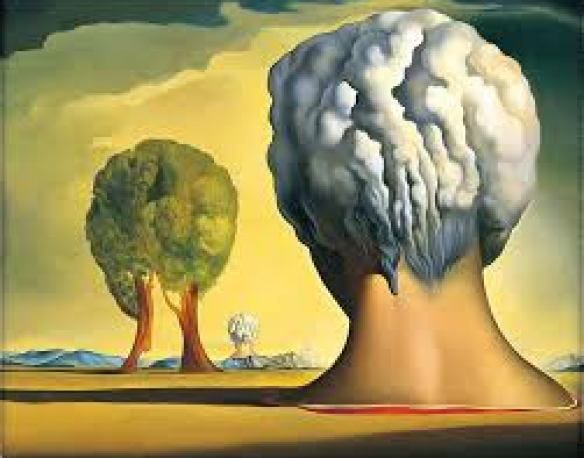
Illustration from againstprofphil.org
For example, Stephen Toulmin emphasized this shift. The modern framework of thought was subject-centered. Since the Renaissance, human beings were placed at the center. This produced many variants of metanarratives centered on humanity itself. Existentialism, and almost every major modern Western ideology, can ultimately be seen as variants of humanism, either explicitly or implicitly. Marxism, communism, Protestantism in certain forms, and many other large intellectual traditions are all, in one way or another, grounded in humanism.
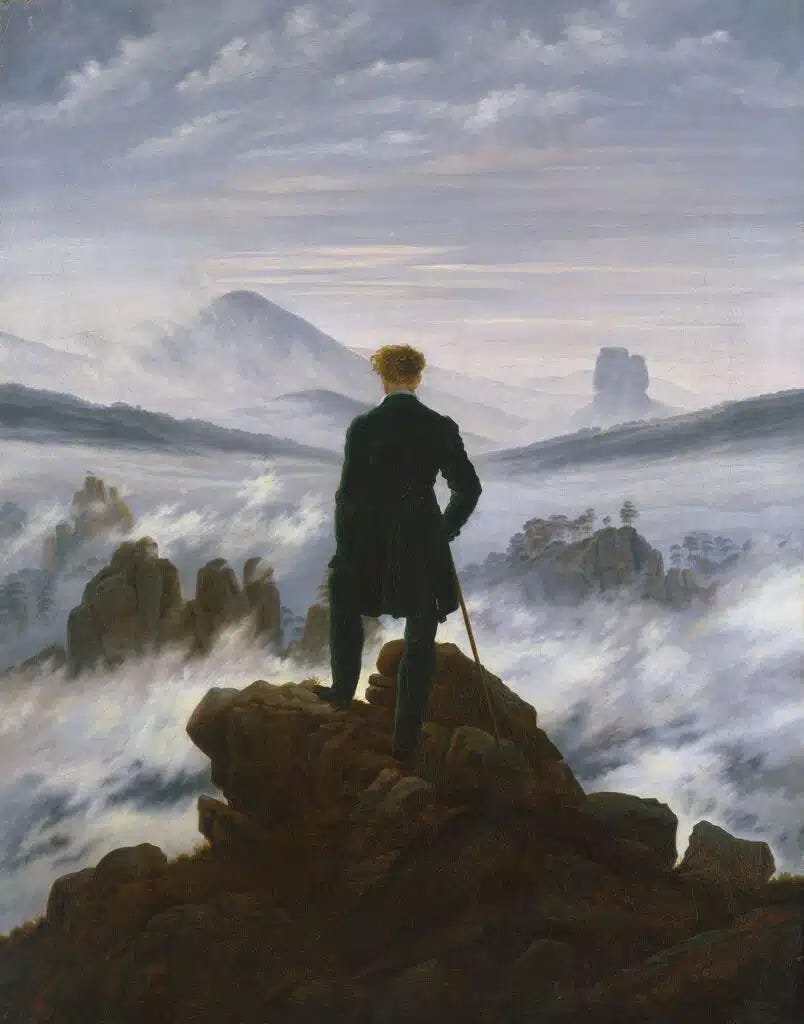
In modern Western philosophy, the tendency was to place the ego at the center. Everything revolved around the subject. This traces back to Descartes: Cogito ergo sum — “I think, therefore I am.” Since then, modern thought became ego-logical: the ego became the center.
In postmodernism, however, the emphasis shifts from ego to eco — to environment, surroundings, and especially the structures that shape human beings. Human beings are no longer seen as autonomous creators of meaning, but rather as products of multiple surrounding structures. This idea is commonly associated with poststructuralist thinkers such as Michel Foucault, although similar ideas also appear in thinkers like Jacques Derrida and others.
This is why poststructuralism often speaks about the “death of man as subject.” Human beings are not sovereign subjects after all; they are products of language, economics, politics, culture, and social systems. From childhood onward, we are shaped by language structures, economic systems, political institutions, and cultural patterns. We imagine ourselves to be independent subjects creating everything, but in reality we are also created by these structures.
Take language, for example. Did we create language? Humanity did, perhaps, over thousands of years. But individually, we did not create language; rather, language created and shaped us. We are formed by language before we consciously use it.
Poststructuralism therefore reminds us that, in reality, we are products of structures. Even our lifestyle choices are heavily conditioned by capitalism, advertising, and consumer systems. Why do we choose certain clothes, watches, or styles? Much of that is shaped by external structures and cultural production. We should not be too easily deceived into believing that we are fully autonomous subjects.
Religion functions similarly. We may produce religious knowledge in small ways — for example by writing research papers or theological reflections — but overwhelmingly we ourselves are shaped by religious institutions, doctrines, and traditions.
Likewise, we are shaped by natural structures: geography, climate, ecological systems, and environmental conditions. Climate change today demonstrates this clearly. Human beings influence nature, yet we are also deeply conditioned by natural systems beyond our control.
Eco-logical thinking therefore emphasizes interconnectedness. Postmodern thought highlights networks, interdependence, and relationality. Terms such as “interrelatedness,” “interdependence,” and “holism” became important keywords. Reality is viewed not as isolated entities but as networks of relations.
Thus postmodernism often favors holistic approaches — ways of thinking that see the broader interconnected web of existence rather than isolated individuals. Ecological thinking is not merely about environmentalism; it is about recognizing that everything exists within networks of relations.
At this point, however, someone like Friedrich Nietzsche becomes relevant again. Nietzsche did not want human beings to become passive products of religion, morality, or society. He believed that many structures weaken human creativity and vitality. So although postmodernism recognizes that humans are products of structures, Nietzsche still insisted that individuals must actively shape themselves.
This resembles, in some respects, the later work of Michel Foucault. Foucault acknowledged that we are products of disciplinary systems and structures of power, yet he also argued that human beings should create themselves. We should not simply allow ourselves to be determined by external structures. Life itself should become a work of art.
In that sense, Foucault is not entirely postmodern in the strict sense. He can also be seen as “late modern.” Some thinkers therefore argue that postmodernism is not a total break from modernity, but rather an extension or radicalization of certain modern tendencies.
Thinkers such as Jürgen Habermas, Anthony Giddens, and others argue that postmodernism is not a complete rupture from modernity. Habermas famously described modernity as “an unfinished project.” From this perspective, postmodernism may simply represent the climax or transformation of certain aspects of modernity rather than a total departure from it.
So postmodernism can be understood in two ways: either as continuity with modernity, or as a discontinuity and break from it. Both interpretations remain possible.
메타데이터
- post_id
- 2160b32bf75b
- slug
- from-ego-to-eco-postmodernism-and-the-death-of-the-autonomous-subject-2160b32bf75b
- url
- https://medium.com/@shrimpmindparadox/from-ego-to-eco-postmodernism-and-the-death-of-the-autonomous-subject-2160b32bf75b
- canonical_url
- https://medium.com/@shrimpmindparadox/from-ego-to-eco-postmodernism-and-the-death-of-the-autonomous-subject-2160b32bf75b
- author_url
- https://medium.com/@shrimpmindparadox
- status
- ok
- fetched_at
- 2026-06-09 15:37:30