Fact and Historical Analysis: Is Lumajang the Oldest Islamic Kingdom in Java?
Let’s take a relaxed dive into a historical debate that’s got some serious intrigue: the claim that Lumajang, a regency in East Java, holds…
Fact and Historical Analysis: Is Lumajang the Oldest Islamic Kingdom in Java?
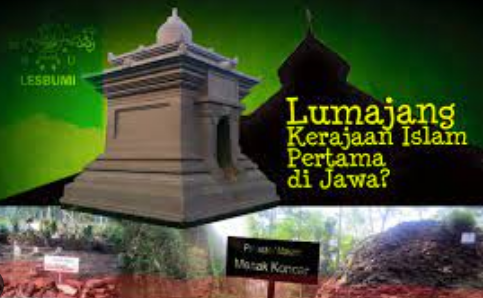
Lumajang is the oldest islamic kingdom in Java
Let’s take a relaxed dive into a historical debate that’s got some serious intrigue: the claim that Lumajang, a regency in East Java, holds the title of Java’s oldest Islamic kingdom, as argued by Kyai Agus Sunyoto in his book Atlas Walisongo. This idea challenges the mainstream narrative that points to Demak as the first Islamic sultanate in Java. So, what’s the deal? Let’s unpack the facts, analyze the evidence, and see if Lumajang really deserves this crown, all while keeping things chill and curious.
The Claim: Lumajang as Java’s First Islamic Kingdom
In Atlas Walisongo, published in 2012, Kyai Agus Sunyoto, a respected Nahdlatul Ulama scholar and historian, shakes up conventional history. He argues that Lumajang was the earliest Islamic kingdom in Java, dating back to the early 12th century during the Singasari period under King Kertanegara. This is a bold statement, considering most history books peg Demak, established in the late 15th century, as Java’s first Islamic powerhouse. Sunyoto’s evidence hinges on a mix of archaeological artifacts, historical texts, and reinterpretations of key figures like Arya Wiraraja, who he claims was a Muslim and a pivotal figure in Lumajang’s Islamic identity.
Sunyoto points to the Mula Malurung inscription (1255 CE) as a starting point. This artifact mentions Nararya Kirana, ruler of Lumajang, under the Tumapel (Singasari) kingdom. Sunyoto interprets Nararya Kirana as a figure connected to Islamic influences, suggesting that his son, Arya Wiraraja, was a Muslim who laid the groundwork for Lumajang’s Islamic identity. He also cites the arrival of a Persian ulama, M. Syekh Abdurrahman Assyaibani, around 1250 CE, who allegedly spread Islam in Lumajang under orders from the Ottoman Sultanate. Sunyoto argues that these early interactions made Lumajang a hub of Islamic activity long before Demak’s rise.
Moreover, Sunyoto ranks Lumajang as the first in a sequence of Islamic kingdoms in Java, followed by Surabaya, Tuban, Giri, and then Demak (which he places fifth). He backs this up with references to European accounts, like those of Tome Pires (1513 CE) and Antonio Pigafetta (1522 CE), as well as archaeological data and historiographies from scholars like H.J. de Graaf and Th.G.Th. Pigeaud. He also suggests that colonial narratives skewed history to downplay early Islamic kingdoms like Lumajang, favoring Demak to fit their agendas.
The Counterargument: Demak’s Dominance
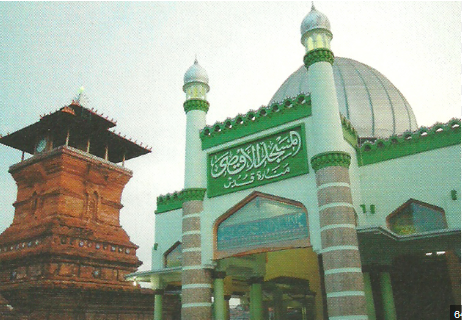
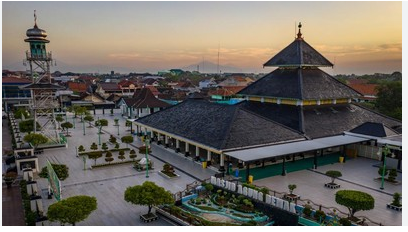
Now, let’s flip the coin. The traditional view, taught in most Indonesian schools, crowns Demak as Java’s first Islamic kingdom, founded around 1478 CE by Raden Patah, a Majapahit prince who converted to Islam. Demak’s Great Mosque, one of Indonesia’s oldest, and its role in toppling Majapahit cement its status as a game-changer in Java’s Islamization. Historians like Merle Ricklefs argue that Demak’s political and military might, coupled with its coastal trade networks, made it the epicenter of Islamic power by the early 16th century.
Critics of Sunyoto’s thesis, like the historian Siwi Sang, question the Lumajang claim. Sang argues that Sunyoto’s interpretation of the Mula Malurung inscription and Arya Wiraraja’s lineage lacks solid evidence. For instance, the inscription doesn’t explicitly mention Islam, and Nararya Kirana’s era aligns with Singasari’s Hindu-Buddhist dominance. Sang also disputes Sunyoto’s claim that Arya Wiraraja was Nararya Kirana’s son, citing the Serat Pararaton, which describes Wiraraja as a descendant of a village head from Nangka, not a royal heir. Furthermore, there’s no clear record of Wiraraja being Muslim while in Singasari, and his later role as adipati of Sumenep doesn’t explicitly tie to an Islamic kingdom.
The broader historical context also leans toward Demak. Islam’s spread in Java was gradual, with early Muslim communities — like the 1085 CE tomb of Fatimah binti Maimun in Gresik — existing as pockets rather than organized kingdoms. By the 15th century, coastal ports like Gresik, Tuban, and Surabaya had Muslim rulers, but Demak was the first to consolidate power as a sultanate, leveraging the Walisongo’s influence to spread Islam inland. Lumajang, while significant, lacks the documented political or religious infrastructure to claim kingdom status in the 12th century.
Analyzing the Evidence
Let’s break it down critically. Sunyoto’s argument is compelling because it challenges colonial-era biases that may have erased early Islamic narratives. His use of diverse sources — artifacts, European accounts, and local traditions — shows a multidisciplinary approach. The idea of a Persian ulama arriving in Lumajang in 1250 CE is intriguing, but it’s shaky without corroborating records. The Ottoman connection feels speculative, as the Ottoman Sultanate’s global influence was still nascent in the 13th century. The Mula Malurung inscription, while a key piece, doesn’t explicitly reference Islam, and Sunyoto’s interpretation of Arya Wiraraja’s faith relies heavily on oral traditions and family claims rather than primary documents.
On the other hand, Demak’s case is stronger due to its well-documented history. Babad Tanah Jawa, Kitab Walisana, and archaeological evidence (like Demak’s mosque) provide a clearer timeline. The Walisongo, active in the 15th–16th centuries, were tied to Demak’s rise, not Lumajang’s. While Lumajang may have had early Muslim interactions, calling it a “kingdom” in the 12th century stretches the definition, as it was a subordinate region under Singasari, not an independent Islamic polity.
That said, Sunyoto’s work isn’t without merit. He highlights Lumajang’s overlooked role in Java’s early Islamic history, especially in the Tapal Kuda region, where cultural syncretism was rife. His emphasis on Arya Wiraraja’s tomb in Biting, Lumajang, with Islamic features, suggests some Muslim presence, but it’s not enough to dethrone Demak. The debate underscores how history can be shaped by who tells the story — colonial records, local babads, or modern scholars like Sunyoto.
Conclusion: Lumajang’s Place in History
So, is Lumajang Java’s oldest Islamic kingdom? Probably not. While Sunyoto’s Atlas Walisongo offers a provocative rethinking, the evidence for Lumajang as a 12th-century Islamic kingdom is thin compared to Demak’s robust record. Lumajang likely had early Muslim influences, possibly through traders or figures like Arya Wiraraja, but it didn’t function as a formal Islamic kingdom before Demak’s rise in the 15th century. Still, Sunyoto’s work is a valuable reminder to question established narratives and dig deeper into Java’s complex Islamic past. Lumajang may not wear the crown, but it’s a fascinating piece of the puzzle.
Next time you’re sipping coffee in East Java, swing by Lumajang’s historical sites. The whispers of its past — Hindu, Buddhist, and maybe even early Islamic — are still there, waiting to be explored.
References
Sunyoto, Agus. Atlas Walisongo. Mizan, 2012.
Siwi Sang. “ATLAS WALISONGO Soal Tafsir Sejarah Lumajang Kerajaan Islam Tertua di Jawa Harus Dikaji Ulang.” Siwi Sang Nusantara, 2017, siwisangnusantara.blogspot.com.
“Kerajaan Islam Tertua di Pulau Jawa Bukan Demak.” Jejak, jejak.co, 2019.
“Tahukah Kamu, Kerajaan Islam Tertua di Jawa adalah Lumajang?” Bincang Syariah, bincangsyariah.com, 2019.
“Ternyata Kerajaan Lumajang, Merupakan Kerajaan Islam Tertua Di Indonesia.” Sekilas Media, sekilasmedia.com, 2019.
“Kesultanan Demak Ternyata Bukan Kerajaan Islam Pertama di Jawa, Ini Fakta Sebenarnya.” *KalamκαφέςΑποκτήστε το βιβλίο: Atlas of the Wali Songo: The First Book to Reveal the Wali Songo as Historical Facts από τον/την Agus Sunyoto σε μορφή PDF, ePub, mobi και άλλες μορφές.
메타데이터
- post_id
- 21b4e25b6aa2
- slug
- fact-and-historical-analysis-is-lumajang-the-oldest-islamic-kingdom-in-java-21b4e25b6aa2
- url
- https://medium.com/@unforgettablehistory/fact-and-historical-analysis-is-lumajang-the-oldest-islamic-kingdom-in-java-21b4e25b6aa2
- canonical_url
- https://medium.com/@unforgettablehistory/fact-and-historical-analysis-is-lumajang-the-oldest-islamic-kingdom-in-java-21b4e25b6aa2
- author_url
- https://medium.com/@unforgettablehistory
- status
- ok
- fetched_at
- 2026-06-26 03:39:16