Bohdan Vorontsov: GFRP Reinforcement — The Construction Innovation That Changes Infrastructure…
Not a premium material. The rational economic choice when lifecycle costs are properly modeled.
Bohdan Vorontsov: GFRP Reinforcement — The Construction Innovation That Changes Infrastructure Economics in the Tropics
Not a premium material. The rational economic choice when lifecycle costs are properly modeled.
I want to make a direct argument about a construction material — and explain why I consider it one of the most practically significant infrastructure investment opportunities in the markets where VILNI Business Platform operates.
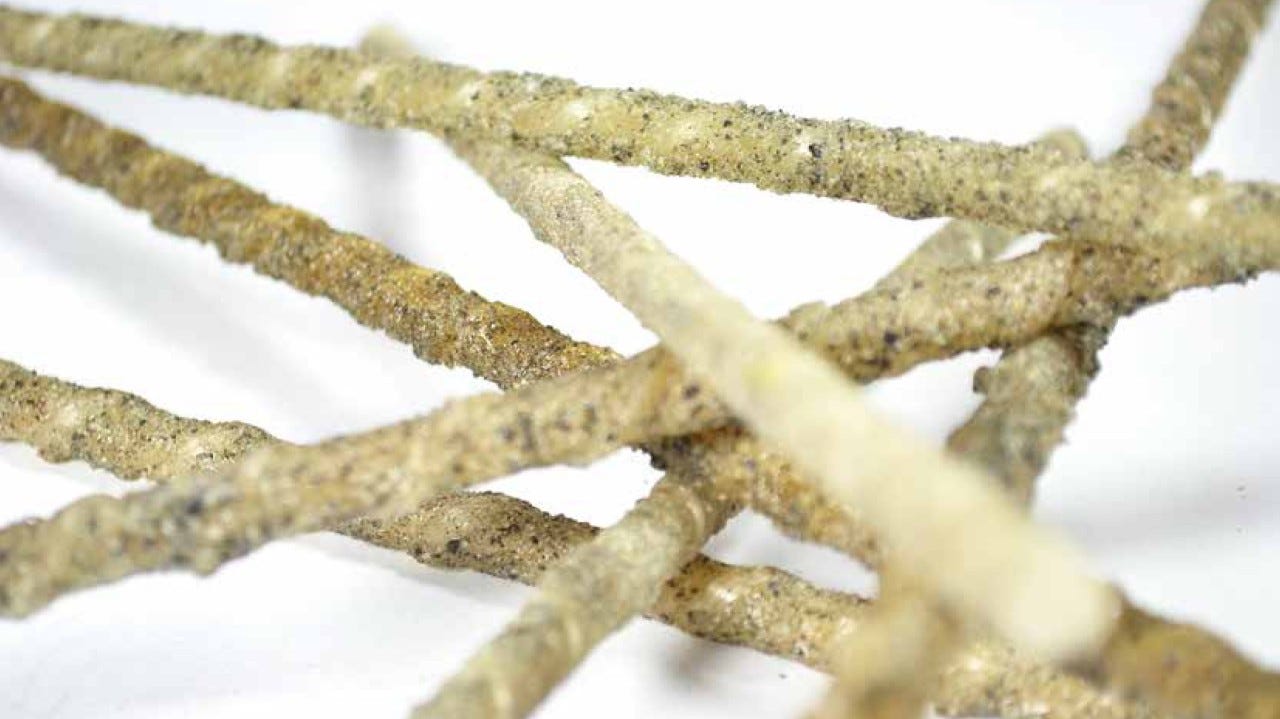
The material is Glass Fiber Reinforced Polymer — GFRP bars that replace steel in reinforced concrete construction. The argument is not that GFRP is better than steel in some abstract sense. It is that in specific environments — tropical, coastal, humid, chemically aggressive — GFRP changes the economics of infrastructure investment in ways that conventional cost modeling consistently fails to capture.
Starting with first principles: what infrastructure actually costs
Most infrastructure cost analysis focuses on construction cost — the capital required to build the structure. This is the number that appears in procurement documents, investment analyses, and project budgets.
The number that matters more for the economics of infrastructure investment is lifecycle cost — the total cost of the structure across its operational life, including maintenance, repair, and eventual replacement.
In temperate climates, with well-maintained infrastructure programs, the gap between construction cost and lifecycle cost is manageable and relatively predictable. Standard engineering assumptions produce reasonable lifecycle cost projections.
In tropical and coastal environments, the gap is larger and less predictable — primarily because of corrosion.
The corrosion gap in tropical infrastructure economics
Steel reinforcement corrodes. The rate at which it corrodes depends on environmental conditions — moisture, temperature, oxygen availability, chloride exposure. In tropical humid climates and coastal environments, these conditions accelerate corrosion significantly beyond temperate-climate engineering assumptions.
The structural consequence of steel corrosion in reinforced concrete is well documented: the expanding rust products crack the concrete cover, expose the reinforcement to further corrosion, reduce the structural cross-section, and eventually compromise structural integrity. The timeline to significant maintenance intervention is shorter in tropical environments than standard engineering assumptions project.
Governments and infrastructure investors who build with steel reinforcement in tropical and coastal contexts are, in effect, accepting a maintenance liability that conventional cost modeling underestimates — and that materializes as unexpected budget pressure over the structure’s operational life.
This is not a theoretical risk. It is the documented experience of infrastructure programs across Africa, South Asia, and Latin America that are now managing the maintenance consequences of steel-reinforced structures built in previous decades under construction cost assumptions that didn’t adequately account for tropical corrosion rates.
What GFRP eliminates from this calculation
GFRP bars are chemically inert in the alkaline environment of concrete. They don’t corrode through the electrochemical process that degrades steel — not slowly, not eventually. The corrosion liability that steel reinforcement creates in tropical and coastal environments simply doesn’t exist for GFRP-reinforced structures.
This elimination changes the lifecycle economics of reinforced concrete construction in these environments fundamentally. The maintenance interventions that dominate the lifecycle cost of steel-reinforced infrastructure in tropical contexts don’t appear in the lifecycle cost projection of GFRP equivalents. The concrete cover requirements that add material cost to steel-reinforced structures can be reduced. The cathodic protection systems that highly corrosive environments require for steel are unnecessary.
When the full lifecycle cost is modeled — construction cost plus maintenance plus eventual replacement — GFRP structures in tropical and coastal environments are frequently less expensive than steel-reinforced equivalents over a fifty-year horizon, despite higher upfront material cost.
This is not a marginal advantage. It is a fundamental change in the economic case for infrastructure investment in the environments where most of the Global South’s infrastructure program is concentrated.
The additional properties that extend the case
The corrosion resistance argument alone is sufficient to justify FRP specification in most tropical and coastal infrastructure contexts. Several additional properties extend the case to a wider range of applications.
Weight — GFRP bars weigh approximately one-quarter of equivalent steel reinforcement. Transportation is cheaper. Site handling is simpler. In seismic design, reduced structural mass is a direct engineering advantage.
Electromagnetic neutrality — GFRP is non-conductive and electromagnetically transparent. For infrastructure near electrical systems, medical facilities, and telecommunications equipment, this eliminates interference constraints that steel reinforcement creates.
Thermal conductivity — GFRP’s lower thermal conductivity reduces the thermal bridging effect in reinforced concrete structures, improving both structural performance and energy efficiency in buildings in hot climates.
The adoption gap and the opportunity it creates
If the economic case for FRP in tropical and coastal environments is as strong as I’ve described — and I believe it is — why hasn’t adoption been faster in the Global South?
Three factors have historically constrained it. Production costs that made GFRP material significantly more expensive than steel per unit. Engineering education and design standards that reflected steel-reinforced concrete assumptions. And supply chain limitations that made GFRP unavailable in many markets except through complex and expensive importation.
Each of these constraints is diminishing. Production costs are falling as global capacity expands. GFRP-specific design standards are developing and being adopted. Supply chain availability is improving.
The markets where GFRP would produce the greatest value — tropical and coastal infrastructure contexts across Africa, the Middle East, South Asia, and Latin America — are at an inflection point: the economic case is clear, the adoption barriers are reducing, and the governments and investors that move now will be positioned ahead of a transition that the underlying economics will drive regardless of when mainstream adoption follows.
What VILNI Business Platform offers
VILNI Business Platform works with an investor who has successfully built a factory producing a GFRP bars — already in industrial production and deployed in major infrastructure projects. This is not a concept or a pilot. It is operational manufacturing capacity with a verified production track record.
We offer two pathways for markets interested in GFRP:
Direct supply — GFRP delivered to construction projects, with end-to-end logistics handled by VILNI Business Platform. This pathway is available immediately for projects where the lifecycle economic case justifies the decision.
Local production — for markets with sufficient construction demand to justify it, we are ready to support the establishment of a local GFRP manufacturing facility. This pathway reduces ongoing import costs, creates local manufacturing employment, and positions the country as a potential regional supplier to neighboring markets.
If you are involved in infrastructure investment, government construction procurement, or construction materials manufacturing — the GFRP economic case is specific enough to evaluate for your context.
Reach out directly.
Bohdan Vorontsov — President, VILNI Business Platform
메타데이터
- post_id
- 21c8d20c14ca
- slug
- bohdan-vorontsov-gfrp-reinforcement-the-construction-innovation-that-changes-infrastructure-21c8d20c14ca
- url
- https://medium.com/@bohdanvorontsov/bohdan-vorontsov-gfrp-reinforcement-the-construction-innovation-that-changes-infrastructure-21c8d20c14ca
- canonical_url
- https://medium.com/@bohdanvorontsov/bohdan-vorontsov-gfrp-reinforcement-the-construction-innovation-that-changes-infrastructure-21c8d20c14ca
- author_url
- https://medium.com/@bohdanvorontsov
- status
- ok
- fetched_at
- 2026-08-11 12:16:23