What No One Tells You About Android Development in 2026
The ecosystem has matured — but the hidden complexity has only gotten deeper. Here’s what senior Android devs are actually talking about…
What No One Tells You About Android Development in 2026
The ecosystem has matured — but the hidden complexity has only gotten deeper. Here’s what senior Android devs are actually talking about right now.
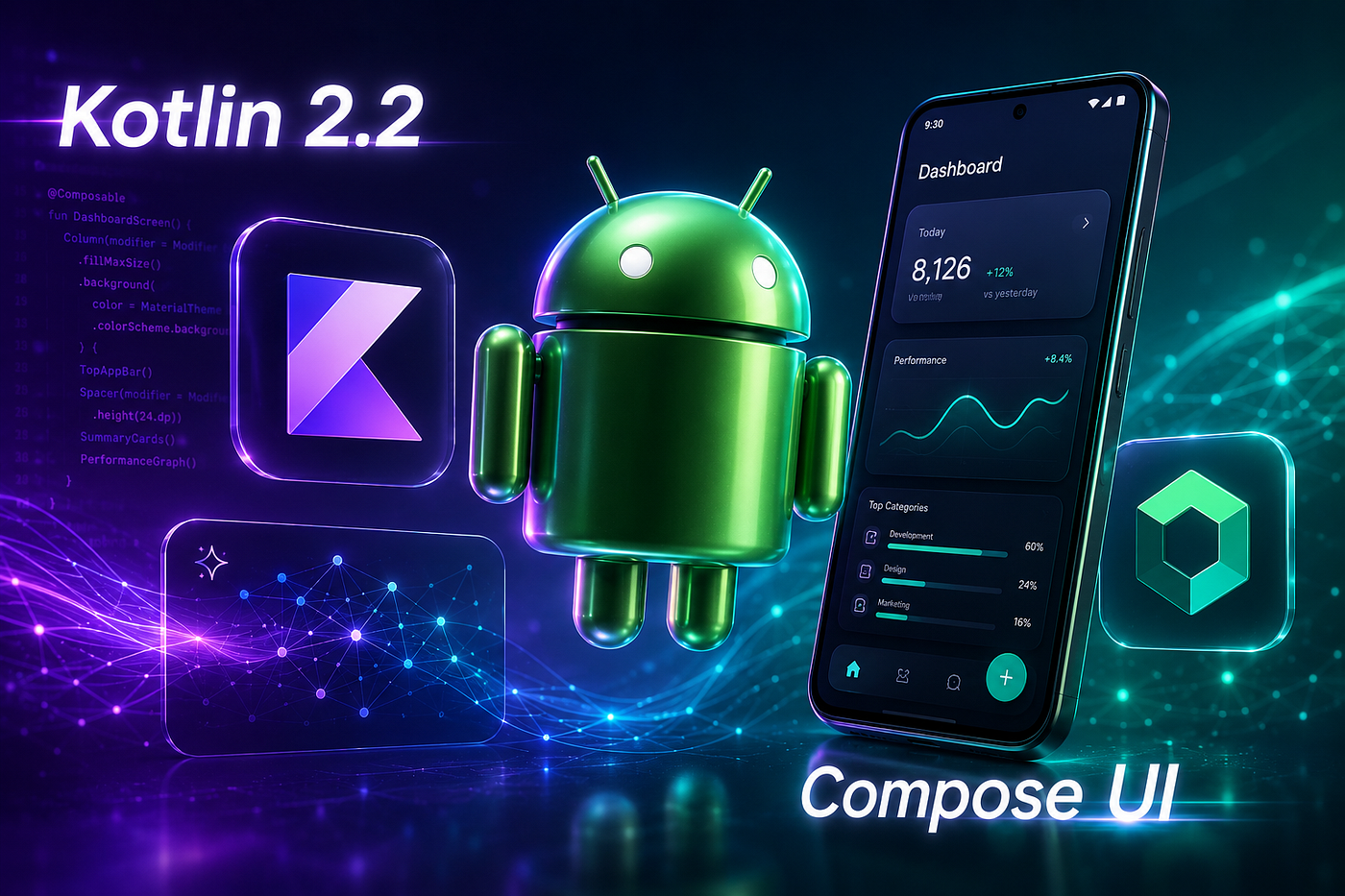
Most of tutorial, teach you to create a screen in Jetpack compose Few of them will even let you know why your production app is still janking at 60fps or why your Kotlin Coroutines are silently leaking memory behind the scenes.
Isn’t 2026 Android Development is hard — because the tools are just bad. That’s difficult because the surface is shiny and the inside has gone off like a bomb.
Compose is Battleship-Level Mature — But You Probably Sure Are Using It Wrong
Jetpack Compose passed the “stable and boring” mark ages ago. That’s good news. The bad news? Many teams adopted it early and rarely revisited patterns that Compose has now rendered obsolete.
The most common mistake — abuse of remember and derivedStateOf without understanding the scope of recomposition. A LazyColumn misconfigured with lambda-captured state will cause your entire list to recompose on every keystroke.
This is what a real developer writes:
// Don't do this — entire item recomposes on every state change
@Composable
fun NoteItem(note: Note, onDelete: () -> Unit) {
    val isExpanded = remember { mutableStateOf(false) }
    // ...
}

// Do this instead — hoist state, isolate recomposition
@Composable
fun NoteItem(
    note: Note,
    isExpanded: Boolean,
    onToggle: () -> Unit,
    onDelete: () -> Unit
) {
    // Clean, testable, minimal recomposition
}
State hoisting isn’t only a pattern — in 2026, it’s the difference between 50ms and 300ms interaction latency on mid-range devices.
Kotlin 2.2 Changed More Than You Think
Kotlin 2.2 was shipped with a K2 compiler which will behave in fundamentally faster manner, but also made some silent changes to the behavior of contracts and inline functions. Some teams upgrading cold from 1.9 see subtle runtime differences (notably around sealed class exhaustiveness and context receivers now coming stable.)
So what does this mean in the day to day for you?
- The context() functions are finally production-ready — leverage that to eliminate deep parameter drilling in your ViewModels
- The K2 compiler finds more nullability problems at compile time — some of your!! operators will break
- Not worth the upgrade friction alone — Build times on modular projects are 30–40% slower in real benchmarks
“This is the K2 compiler, part of your correctness win standing for performance too — as you can see by Game boy colour games!” It catches things which we used to only discover in production.” — Márton Braun, Google Developer Expert (GDE) for Android
AI Tooling Is a First Class Citizen
Gemini Nano is sewn into Android and in 2026, on-device AI can’t be skipped. The android.app.ai. We have trained on stable ai APIs that are in production apps shipping across productivity, health and e-commerce.
What no article mentions, thermal throttling is very real when doing inference on device from oct 2023. Place a model in between scrolling and you’ll see frame drops that are never caught by your unit tests.
Best practices teams are adopting:
- Run inference on a background Dispatcher. IO coroutine, never on Main
- Use
LifecycleScopewithrepeatOnLifecycle(STARTED)to cancel inference when app background - Cash your models outputs — prompts ingested even on device will save you battery over and over
The Backend Shift : Kotlin everywhere
Kotlin Multiplatform (KMP) is not an experimental energy anymore It is in production now at Netflix, Philips and dozens of mid-sized product companies. But more importantly — Ktor + GraphQL + gRPC is now a real Android/backend stack with decent documentation.
2026 is the year your team still constructing siloed networking layers for Android vs iOS becomes a hire NO.
Key Takeaways
- Recomposition scope is the number one invisible performance killer in Compose apps
- It’s time to upgrade to Kotlin 2.2 / K2 — but audit your sealed classes and inline functions first
- The task of on-device AI is thermal and lifecycle awareness, not API calls.
- KMP also seems ready for production — sharing business logic across platforms has become table stakes
- Don’t optimize for benchmarks. Optimise for p95 experience on a ₹15,000 device
The future of Android in 2026 is really amazing — but it also punishes developers who only scratch the surface. You will learn the API via the tutorials. Experience teaches you the cost.
Go build something. Then profile it. That is where the real learning lie.
메타데이터
- post_id
- 21d41019808f
- slug
- what-no-one-tells-you-about-android-development-in-2026-21d41019808f
- url
- https://medium.com/@androidlab/what-no-one-tells-you-about-android-development-in-2026-21d41019808f
- canonical_url
- https://medium.com/@androidlab/what-no-one-tells-you-about-android-development-in-2026-21d41019808f
- author_url
- https://medium.com/@androidlab
- status
- ok
- fetched_at
- 2026-06-20 20:29:01