The Vibe Code Trap: Why Your AI Product Needs an OOUX Blueprint, Not Just Good Feelings
“Vibe coding.” It’s the seductive promise of modern product development: skip the heavy documentation, trust the intuition, and ship an MVP…
The Vibe Code Trap: Why Your AI Product Needs an OOUX Blueprint, Not Just Good Feelings
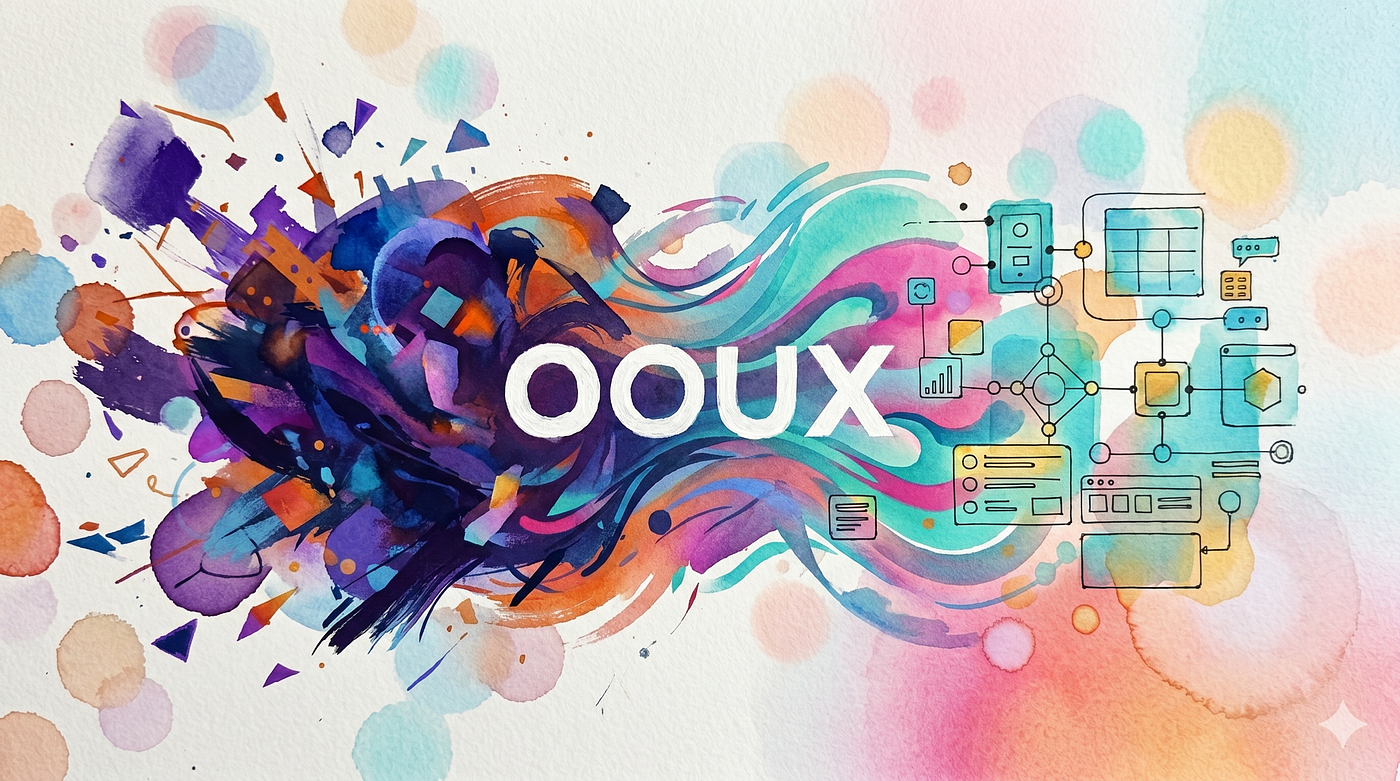
“Vibe coding.” It’s the seductive promise of modern product development: skip the heavy documentation, trust the intuition, and ship an MVP based on pure momentum. For early iterations, it feels fast. It feels agile. It feels, well, vibey.
But in the age of generative AI, relying solely on “vibe” is a direct path to technical debt, unmanageable complexity, and ultimately, product failure.
The Illusion of Speed
Vibe coding thrives on the absence of upfront structural thinking. Teams move directly from a loose idea to a conversational interface or a quick prototype, often powered by an LLM. The immediate output can be impressive. An AI can generate text, draft code, or even conjure UI elements with astonishing speed.
However, this speed comes at a brutal cost. Without a rigorously defined underlying system, these AI-integrated products rapidly degrade into what the industry calls “feature soup.” They lack logical coherence. They lose contextual awareness. The same core entity behaves differently depending on the specific user flow, creating a disjointed, frustrating experience.
AI Demands Structure, Not Sentiment
Artificial intelligence, particularly Large Language Models, processes information through semantic relationships and tokenized entities. If your product’s core entities — what constitutes a “Customer,” a “Project,” or a “Transaction” — are merely implicit “vibes” in a designer’s head, your AI system cannot operate safely or predictably.
It will hallucinate impossible connections. It will generate data in inconsistent formats. It will become a black box that no one truly understands or can reliably scale. Vibe coding, by its very nature, starves the AI of the precise, ontological framework it desperately needs.
Object-Oriented UX: The Antidote to Chaos
This is where Object-Oriented UX (OOUX) becomes not just useful, but an absolute architectural imperative. OOUX flips traditional design thinking on its head: it prioritizes nouns (objects) over verbs (actions).
Instead of slicing your product by user stories or task flows, you slice it by the fundamental “things” within the system. This mirrors how humans naturally understand the world, and crucially, how backend engineers have built scalable software for decades.
The ORCA framework, a core OOUX methodology, provides the blueprint:
- Objects: Cataloging all core entities. For an LLM, these are the primary entities it must learn to recognize and track.
- Relationships: Defining how these objects connect. This establishes the semantic knowledge graph that prevents AI hallucinations.
- Calls-to-action: Specifying what actions users (or autonomous AI agents) can take with an object. This sets operational boundaries.
- Attributes: Outlining the specific properties of an object. This directly informs JSON schemas and structured outputs for predictable AI generation.
From “Vibe” to Value: The Scalability Imperative
The “documentation” OOUX produces isn’t just static paperwork. It’s a living, structural blueprint that directly translates into the data schemas, knowledge graphs, and prompt engineering strategies that make AI products robust.
When you define these parameters early, you prevent the “blank canvas” anxiety that plagues complex tech projects. You illuminate conditional logic and roadblocks before a single pixel is placed. This ensures the data feeding into the AI is highly organized, making the system inherently more flexible and scalable.
Consider Generative UI. If an AI is tasked with creating interfaces on the fly, it cannot invent core objects. It must rely on an OOUX framework that dictates exactly what properties a “Contact” or a “Project” possesses. The AI becomes an orchestrator, not a chaotic inventor.
The Future Belongs to Architects, Not Just Artists
Vibe coding might deliver a quick thrill, but it builds products on shifting sands. For any product aiming for quality, maintainability, and true scalability — especially those leveraging the immense, yet chaotic, power of AI — a structural foundation is non-negotiable.
Object-Oriented UX provides that foundation. It transforms product development from a gamble on intuition into a deliberate, architectural endeavor. The future of product design belongs to those who define the objects of reality before allowing the AI to dream.
메타데이터
- post_id
- 21e0bbf2d6b4
- slug
- the-vibe-code-trap-why-your-ai-product-needs-an-ooux-blueprint-not-just-good-feelings-21e0bbf2d6b4
- url
- https://medium.com/@lex.konovalov/the-vibe-code-trap-why-your-ai-product-needs-an-ooux-blueprint-not-just-good-feelings-21e0bbf2d6b4
- canonical_url
- https://medium.com/@lex.konovalov/the-vibe-code-trap-why-your-ai-product-needs-an-ooux-blueprint-not-just-good-feelings-21e0bbf2d6b4
- author_url
- https://medium.com/@lex.konovalov
- status
- ok
- fetched_at
- 2026-06-20 20:29:01