A Critical Examination of Three Related Studies on SARS-CoV-2 Origins
Methodological Limitations, Interpretive Biases, and Implications for the Zoonotic versus Laboratory Origin Debate
A Critical Examination of Three Related Studies on SARS-CoV-2 Origins
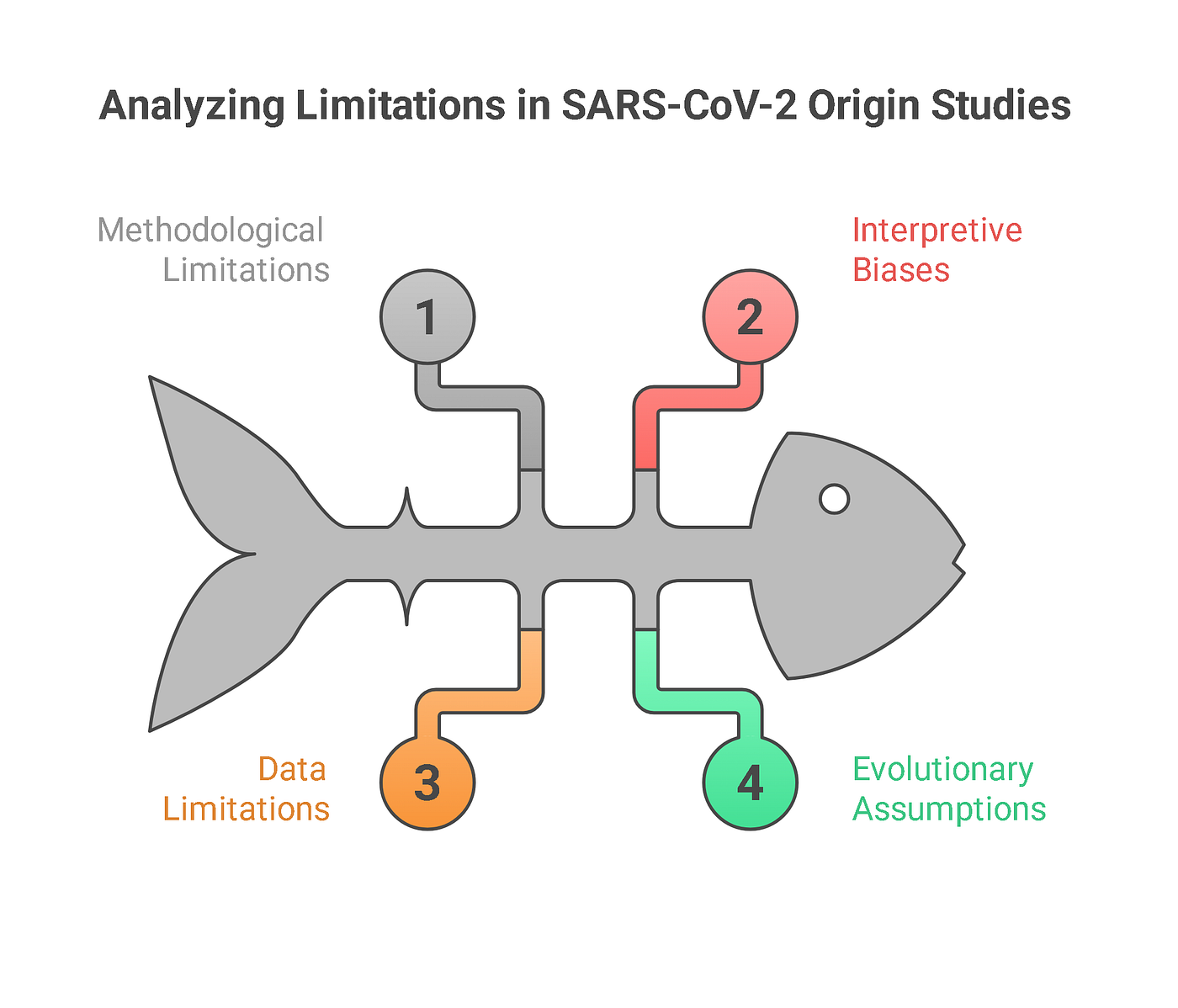
Methodological Limitations, Interpretive Biases, and Implications for the Zoonotic versus Laboratory Origin Debate
Author: William Bostickson
Date of Publication: 12/03/2026
Affiliation: DRASTIC (Decentralized Radical Autonomous Search Team Investigating Covid-19) Website: drasticresearch.org
ABSTRACT
A trio of interlinked studies, MacLean et al. (2021), Pekar et al. (2025), and Havens et al. (2026), has attempted to shape the prevailing zoonotic narrative for SARS-CoV-2 origins, claiming that bat sarbecoviruses evolved a “generalist” virus capable of efficient human transmission without significant pre-zoonotic adaptation or prolonged intermediate hosts.
Employing phylogenetic tools (HyPhy, GARD, BEAST, RELAX), these papers infer minimal evolutionary change prior to emergence and attribute geographic gaps to wildlife trade.
This critical examination reveals recurring methodological flaws, arbitrary parameter choices, selective data exclusion, unvalidated priors, and underpowered short-branch analyses, alongside interpretive biases that convert phylogenetic silence into affirmative zoonotic evidence.
Notable flaws include the exclusion of MERS-CoV as a comparator despite its clear intermediate signals, the undervaluation of synonymous/codon biases that could mask lab optimization, and the absence of simulations testing engineered “minimal adaptation” scenarios.
A further tension arises between Pekar et al. (2025), which mandates intermediates to bridge spatial distances, and Havens et al. (2026), which downplays their evolutionary role due to undetectable signals, effectively shifting goalposts from “find the intermediate” to “it was too brief to matter.”
Contextual factors, including authors’ prior commitments and documented proposals like DEFUSE, compound these concerns. Collectively, the trilogy reinforces a zoonotic consensus through selective inference rather than conclusive disproof of alternatives.
A balanced investigation demands multidisciplinary integration, including virological, epidemiological, and biosafety scrutiny, to resolve what still remains an open scientific question.
1. INTRODUCTION
The COVID-19 pandemic began in Wuhan, over 1,000 km from natural bat habitats for SARS-CoV-2-like viruses, yet Wuhan housed the world’s largest bat SARS-coronavirus research program at the Wuhan Institute of Virology (WIV). From 2015–2017, experts warned that WIV’s gain-of-function and enhanced-pathogen research posed serious lab-accident risks. In 2017–2018, WIV (with NIH funding) built genetically modified SARS-like viruses showing massively enhanced infectivity and lethality in humanized models. In 2018, WIV proposed (in NIH and DARPA DEFUSE grants) creating novel SARS-like viruses with furin cleavage sites at the spike S1-S2 junction and assembling genomes from six synthetic segments using restriction enzymes, features matching SARS-CoV-2. WIV conducted this work at inadequate biosafety level 2 (2017–2019).
In late 2019, a virus with high human ACE2 affinity, a furin site, and six-segment assembly signatures emerged near WIV. SARS-CoV-2 is the only known sarbecovirus with an FCS, and its codon usage is atypical for bats but typical of lab constructs, while restriction sites seem to reflect DEFUSE’s strategy.
No reservoir or intermediate host has been found, and Huanan market spillover claims lack virological support and contradict early case data. Since 2020, WIV and collaborators have withheld data, deactivated databases, and obstructed investigations, all actions inconsistent with innocence. These facts, drawn from grants, publications, interviews, and congressional records, make a research-related incident more parsimonious than natural spillover (Ebright, 2024).
Yet, a small cluster of publications from a recurring group of agenda driven authors continues to exert disproportionate and malign influence on the debate over the origins of SARS-COV-2. MacLean et al. (2021) in PLOS Biology, Pekar et al. (2025) and Havens et al. (2026) in Cell, form a tightly interlinked trilogy. Collectively, they argue that bat sarbecoviruses evolved a virus capable of efficient human transmission with minimal pre-zoonotic adaptation, no prolonged intermediate host, and no detectable signature of laboratory passage. The studies employ sophisticated phylogenetic and selection analysis frameworks, yet persistent patterns in tool selection, parameter tuning, data exclusion, and interpretive extrapolation demand our close scrutiny.
2. MacLean et al. (2021): Laying the Groundwork with the Generalist Virus Narrative
MacLean et al. (2021) assert that natural selection acting within horseshoe bats generated a “relatively generalist virus” already competent for human-to-human transmission.
The authors apply the HyPhy suite, tools developed in part by co-author Sergei Kosakovsky Pond, including BUSTED for episodic diversifying selection, MEME for site-specific positive selection, and aBSREL for branch-site analysis. These detect signals at the base of the SARS-CoV-2 clade lineage, specifically an adaptive depletion of CpG dinucleotides presumed to reflect evasion of bat innate antiviral responses (e.g., zinc-finger antiviral protein, ZAP). In contrast, early human SARS-CoV-2 sequences display only limited episodic positive selection (concentrated in Spike and RdRp) and markedly weaker purifying selection than bat sarbecovirus backgrounds.
Their interpretive stance is strikingly simplistic: the near-absence of strong adaptation signals in the human phase is presented as affirmative evidence that substantial adaptation was never required. This is rather ironic, as extensive global sampling since late 2019 has failed to recover a direct progenitor or unambiguous intermediate host, yet rather than viewing this as an evidentiary gap, the authors reframe it as proof that bat-lineage evolution had already done the heavy lifting.
The authors addressed the problem of recombination, a common process in coronaviruses where genetic material from different viral lineages can mix, by dividing the genome into 20 non-recombinant regions. This approach builds on earlier work by Boni et al. (2020) and is intended to ensure that each region has a single, clean evolutionary history without recombination artifacts confusing the analysis. However, these 20 segments are still quite large and coarse. Because the partitions are broad, the method can easily miss smaller, more localized recombination events that occur within a single segment. Such fine-scale recombination could subtly change the shape of the phylogenetic tree at the base of the SARS-CoV-2 clade, leading to incorrect inferences about when and where key evolutionary changes happened.
Compounding this issue is the very limited sampling of bat sarbecoviruses. The analysis relies on only 69 sequences from bats, a tiny fraction of the viral diversity likely present in nature. With so few sequences available, any apparent bursts of positive selection (the “episodic bursts” detected at the base of the SARS-CoV-2 lineage) could simply be an artifact of under sampling rather than evidence of real adaptive evolution. In other words, the model may be mistaking gaps in our knowledge of bat viruses for strong signs of natural selection shaping a “generalist” virus ready to infect humans. Sparse data like this makes it difficult to confidently distinguish genuine evolutionary signals from statistical noise or missing information.
The “generalist virus” hypothesis neatly explains SARS-CoV-2’s unusually high binding affinity for human ACE2 receptor compared with many bat or pangolin homologues, yet it lacks any direct functional validation, for example, there has been no experimental reconstruction of ancestral spike proteins to test binding phenotypes.
The paper concedes, almost parenthetically, that “an undiscovered facilitating intermediate species cannot be discounted,” before proceeding to emphasize their preferred stance of bat-only evolution. This brief and begrudging acknowledgement of uncertainty functions more as rhetorical insurance than genuine engagement, quietly attempting to shift the explanatory burden away from the need for empirical intermediate hosts (which have as yet to be identified).
The result is an elegant but essentially circular narrative. Bat selection created human competence; the lack of human adaptation confirms it.
3. Pekar et al. (2025): Phylogeographic Reconstruction and the Necessity of Intermediates
Pekar et al. (2025) extended the argument by reconstructing the spatiotemporal history of bat sarbecovirus ancestors. They used GARD to delineate non-recombinant regions (31 for SARS-CoV-1-like, 44 for SARS-CoV-2-like), BEAST for Bayesian divergence dating with Continuous-Time Markov Chain (CTMC) priors, and the Prisoner of War (PoW) model to correct for time-dependent rate variation.
The authors infer that the closest bat ancestors diverged only years to a decade before human emergence and resided in regions geographically distant from outbreak sites (Western China/northern Laos for SARS-CoV-2). Bat dispersal alone, they conclude, cannot account for the leap to Wuhan or Guangdong wildlife trade and intermediate hosts are therefore required.
Detailed critiques, including a thorough analysis by the ever-vigilant and underpaid author of this review (Bostickson, 2025), have uncovered several serious problems with how Pekar et al. (2025) carried out their work.
First, the way they used GARD, a computer program that tries to identify parts of the viral genome that haven’t been scrambled by recombination, relies on arbitrary rules. Specifically, the authors accepted a recombination “breakpoint” (a spot where the evolutionary history changes) if it appeared in only one-third or one-half of the statistical models they tested, and they merged any breakpoints that were less than 100 nucleotides apart. These choices are not based on any strong biological justification and tend to keep genome segments that look very similar to the human SARS-CoV-2 virus.
As a result, when the authors stitched these “clean” segments together to reconstruct what they call the “recombinant common ancestor” (recCA), it ended up appearing more than 98% identical to SARS-CoV-2. However, this high similarity is misleading, as the method deliberately downplays or excludes more divergent parts of the genome, especially in the critical Spike gene, which controls how the virus attaches to human cells. By cherry-picking the most matching pieces, the authors created an artificially close “ancestor” that supports their story of a recent bat origin.
Second, the BEAST software they used to estimate when the bat ancestors diverged is built on very loose (“diffuse”) statistical assumptions (called priors) that were never properly tested or validated for coronaviruses like sarbecoviruses. These viruses frequently recombine and jump between hosts, so their evolution is far from the simple, steady “memoryless” process that the Continuous-Time Markov Chain (CTMC) model assumes.
When the authors ran their calculations, they needed extremely long simulations (millions of generations) to get barely acceptable statistics (effective sample sizes of just 100–200). This is a red flag, suggesting that the model was struggling to produce stable, trustworthy results rather than converging on a solid answer.
Finally, some of their tweaks, such as arbitrarily dividing the standard deviation of certain rate estimates by five for SARS-CoV-1, have no clear scientific justification. They appear to be ad hoc adjustments made to force the results to look more reasonable, rather than being grounded in the actual biology of how these viruses evolve in bats.
In short, these methodological choices don’t just introduce uncertainty, they systematically tilt the analysis toward the authors’ preferred conclusion of a recent, bat-only origin.
Data curation introduces further selectivity, as pangolin and human sarbecovirus sequences were excluded from phylogeographic analyses “to avoid bias,” a decision that curiously mirrors the exclusion of inconvenient evidence. Genome ends are trimmed, HMMCleaner is applied to remove poorly aligned segments, and hypothetical taxa are inserted into sensitivity tests without empirical sequence support.
The resulting phylogeographic maps, emphasizing millennial circulation in under sampled Yunnan/Laos regions yield implausibly high dispersal velocities that persist even after hypothetical taxa are added, undermining the claim that bat movement alone is insufficient.
The insistence on Huanan-market spillover via raccoon dogs relies on epidemiological correlation rather than virological substantiation. No genomic or serological evidence confirms infection in market animals; experimental studies show limited raccoon-dog susceptibility (Freuling et al., 2020), and the conspicuous lack of secondary outbreaks expected from wildlife-trade chains (Berche, 2023) remains unexplained.
Independent assessments (Gifford, 2025; Holtz, 2025) challenge the dual-lineage emphasis for SARS-CoV-2 and emphasize the ease of laboratory recombination. Marc Eloit’s observation in the New York Times (Zimmer, 2025) that laboratory recombination is “just as plausible” as market-mediated transmission captures the irony succinctly: having constructed a narrative that demands intermediates to explain geographic distance, the paper provides no direct evidence for those intermediates while systematically sidelining laboratory alternatives.
4. Havens et al. (2026): RELAX and the Rhetorical Power of Phylogenetic Silence
Havens et al. (2026) used an updated version of a tool called RELAX, one that now takes recombination (the mixing of genetic material between viruses) into account, to search for signs of changes in natural selection pressure just before viruses jumped from animals to humans.
They looked at five different viruses: Ebola, Marburg, mpox, influenza A, and SARS-CoV-2. For SARS-CoV-2 specifically, they examined what is called the “stem branch”, the short stretch of evolutionary history right before the virus appeared in humans. Their analysis found no meaningful increase in selection intensity on that branch (a statistic called K was about 1.1, with a p-value of 0.23, meaning the result was not statistically significant).
Based on this, the authors concluded that SARS-CoV-2 did not need extensive adaptation in an animal host (or through repeated laboratory passaging) before it could spread efficiently among people. In other words, they argue the virus was already “ready” for humans without major evolutionary tweaks.
As a check on whether their method can actually detect signs of laboratory manipulation, they pointed to the 1977 H1N1 influenza pandemic. That virus is widely accepted to have come from a long-frozen lab strain that was re-released, and their RELAX analysis did show a clear “relaxation” of selection pressure — a pattern consistent with a virus that had been preserved and passaged in a lab rather than evolving naturally in the wild.
The authors perhaps deserve some credit for improving RELAX to better handle recombination, a serious complication in coronavirus evolution, by splitting the genome into smaller non-recombining pieces using tools called GARD or 3seq. However, serious problems remain.
The most important one is that the “stem branch” for SARS-CoV-2 is very short, with very few genetic changes along it. Short branches like this make it extremely hard for any statistical test, including RELAX, to detect real but subtle changes in selection pressure.
The authors acknowledge this lack of statistical power, but they do not carry out deeper or more rigorous sensitivity tests to see how much the short branch might be hiding genuine signals. This weakness undermines their confident claim that “no change means no adaptation was needed.”
In short, while the technical upgrade is interesting, the core limitation, weak power to detect anything on short evolutionary branches, means the method may simply be too blunt an instrument to reliably rule out pre-emergence adaptation or brief laboratory manipulation.
The RELAX model assumes there is no positive (adaptive) selection in the bat reservoir populations (the “background” branches). This means it expects bat viruses to evolve mostly neutrally or under purifying pressure, with little or no beneficial changes being favored.
That assumption is convenient, but it creates a blind spot: if there were occasional bursts of adaptive evolution already happening in bats, the model isn’t built to detect them properly. As a result, any subtle adaptive changes on the short stem branch leading to SARS-CoV-2 could be hidden or misinterpreted, weakening the claim that “no change detected = no adaptation needed.”
Validation itself is curiously limited to overt passage scenarios (e.g., extreme relaxation in attenuated vaccine strains), but fails to consider subtler gain-of-function strategies that could mimic natural evolutionary trajectories (Sirotkin & Sirotkin, 2020). This core interpretive move by the authors, from failure to detect a shift in selection pressure to claiming strong evidence of “no adaptation being required”, exemplifies the pernicious absence of evidence-based reasoning so characteristic of their tedious papers.
A brief, undiscovered intermediate host is posited ad hoc to preserve consistency with zoonosis, while distinctive SARS-CoV-2 features (the furin cleavage site insertion, exceptional ACE2 affinity) are given minimal discussion. Associated public statements (Sankaran, 2026) (e.g., Wertheim’s assertion that the findings deliver a “nail in the coffin” to laboratory-manipulation hypotheses) extend the phylogenetic results beyond their legitimate scope, inviting questions about restraint and objectivity.
5. Methodological Gaps in Havens et al. (2026)
Selective Comparators, Synonymous Oversight, and Statistical Underpowering
Several specific limitations in the 2026 study merit yet closer attention.
By excluding MERS-CoV the authors avoid having to confront a clear counter-example where their own RELAX method does detect the very kind of prolonged intermediate-host adaptation they claim is unnecessary for SARS-CoV-2, thereby protecting their broader conclusion that “no adaptation needed” applies cleanly across zoonotic viruses, and conveniently sidestepping any awkward requirement to explain why the tool works for MERS but apparently sees nothing for SARS-CoV-2.
By cherry picking which viruses to include in their comparison, the authors only picked ones with “clean” and simple evolutionary histories. They left out MERS-CoV, even though it has a well-documented intermediate host (camels) where RELAX does clearly detect adaptation signals. This selective choice lets them claim “no adaptation needed” applies broadly across zoonotic viruses, but it’s a convenient shortcut. It hides a potential weakness in their method and suggests confirmation bias; indeed, they clearly shaped the dataset to support the conclusion they already wanted.
RELAX mainly looks at dN/dS ratios, basically, it compares changes that alter proteins (non-synonymous) to changes that don’t (synonymous). But it largely ignores the synonymous changes, even though these “silent” mutations can still be important: they can affect how efficiently the virus makes proteins, how stable its RNA is, or how it dodges the immune system, all without changing the protein sequence itself.
Previous research (for example, Hou et al., 2022) showed that across the SARS-CoV-2 genome there was mostly purifying selection (weeding out harmful mutations), but certain key genes like Spike showed signs of positive selection, and some of that could have come from these silent synonymous changes. Yet Havens et al. (2026) never specifically checked for unusual codon usage patterns (the way the virus chooses which “synonyms” to use for the same amino acid).
These patterns could hint at lab optimization, for instance, early SARS-CoV-2 isolates sometimes used human-preferred codons more than expected for a bat virus. That’s been debated in origins discussions for years.
The irony is obvious, while the authors dismiss the possibility of lab passage, their method is blind to the very kind of quiet, silent engineering tweaks that could look completely natural.
Finally, the statistics themselves are shaky. The key result for SARS-CoV-2, a K value of about 1.1 with a p-value of 0.23 on the stem branch, is not statistically significant, so they say “no intensification.” But if we look closer, the confidence intervals are wide, and there are very few genetic changes on that short stem branch. That means the test simply lacks the power to reliably detect small or rare adaptive events.
Other studies (e.g., Kang et al., 2021) found clear selective sweeps in the Spike protein (like the T372A mutation that improves ACE2 binding), which suggests there were episodic bursts of adaptation, but RELAX can easily spread those signals so thin across branches that they disappear. Borderline or non-significant results therefore risk hiding real but subtle pre-emergence changes, especially in a scenario with only a few lab passages, where the evolutionary footprint would be minimal anyway. In plain terms, the method used by the authors is too blunt, the comparisons too selective, and the statistics too weak to confidently rule out adaptation, whether natural or lab-assisted.
6. Additional Methodological Shortfalls
Simulation Absence and Post-Emergence Interpretation
The validation rests on historical cases (1977 H1N1, overt passages like WSN33) but omits simulations of contemporary gain-of-function techniques (e.g., directed evolution in humanized models or CRISPR edits). Such methods could indeed have yielded natural like phylogenies.
Without blinded simulations assessing RELAX’s detection of engineered “minimal adaptation” (e.g., furin cleavage site insertion without broad ω shifts), the subsequent dismissal of a possible lab origins appears rather premature, which is quite an ironic shortfall for a tool positioned as a forensic one!
The observed relaxation in early outbreak sequences (K=0.56 worldwide, p<0.01) is framed as a host switch signature, yet it could alternatively reflect release of a virus from laboratory constraints (e.g., cell-culture optimization relaxing in vivo). This interpretation also misses another possibility, that the observed relaxation of selection pressure in early SARS-CoV-2 outbreak sequences could actually reflect a virus escaping from laboratory conditions (e.g., optimized growth in cell culture suddenly relaxing when it starts spreading in real people).
The authors fail to consider how this pattern might align with the rapid emergence of new variants, such as Omicron, which showed heavy recombination and fast evolution. Research on prolonged infections in immunocompromised patients (e.g., Chaguza et al., 2023) has shown that intrahost (within-patient) selection can drive exactly this kind of rapid diversification and recombination, changes that branch-level RELAX analysis often fails to fully capture.
By ignoring these alternative explanations, the claim that “no pre-zoonotic change means natural origins” overlooks how a lab-derived strain could show similar relaxation after release into the human population. The claim that absent pre-zoonotic change predicts natural origins thus ignores how lab strains may actually show similar post-release relaxation.
7. Contextual and Bias Considerations in Havens et al. (2026)
We note yet again that co-authors Andersen and Wertheim carry prior commitments: Andersen’s 2020 “Proximal Origin” paper (Andersen et al., 2020) dismissed the likelihood of a lab leak but drew significant criticism after 2023 congressional revelations of private emails in which the authors expressed initial concerns about a possible laboratory origin (U.S. House Committee on Oversight and Accountability, 2023).
This history of public certainty versus private doubts — potentially predisposing toward zoonosis. ties directly into the 2026 paper’s rhetoric (e.g., “another nail in the coffin” for laboratory-manipulation hypotheses. (Sankaran, 2026).
Recent commentary (e.g., March 2026 analyses) reaffirms persistent intelligence-community divisions on the question of natural versus laboratory origin, with SAGO experts in 2025–2026 still urging greater transparency (Scientific Advisory Group for Origins of Novel Pathogens [SAGO, 2025). Such context highlights how the claims in these papers may reflect long-standing predispositions rather than data alone.
The lab leak dismissal assertion also sidesteps documented proposals like DEFUSE, which planned furin site insertions in bat coronaviruses, a feature unique to SARS-CoV-2 among close relatives. While not proof, this context suggests RELAX might miss viruses from brief passage research.
This glaring evidential gap, again rather ironic for a “forensic” tool, underscores the need for non-phylogenetic evidence (e.g., Wuhan Institute of Virology records).
8. Emerging Debate Momentum and Isolation from Broader Evidence
As of March 12, 2026, formal peer critiques remain limited, with this humble critique being hopefully the first of many to come, but the broader debate continues based on UK intelligence (British intelligence services publicly updated their assessment in 2021 to consider a lab leak “feasible” (BBC, 2021), and CIA, FBI, DoE, BND, and early DIA intelligence assessments, the lack of conclusion of SAGO reports, and multiple and ongoing calls for transparency.
The paper’s phylogenetic isolation from interdisciplinary evidence, e.g., hints of late October/early November 2019 circulation potentially predating market clusters further limit its conclusiveness (Bostickson, Demaneuf & Ghannam, 2021), UC San Diego Health (2021), Pekar et al. (2021), Canuti et al. (2022).
9. Overarching Patterns, Cumulative Bias, and Unanswered Questions
It is indeed ironic that Pekar et al. (2025) insist that intermediate hosts are essential to bridge the glaring geographic gap between bat virus ancestors in distant southwest China or northern Laos and the Wuhan outbreak site, arguing that wildlife trade must have ferried the virus via animals because bats alone couldn’t cover the distance. Yet Havens et al. (2026), using the same phylogenetic toolkit, find no selection intensity shift pre-emergence and declare extensive pre-zoonotic adaptation unnecessary, allowing only a fleeting, undetectable intermediate. Perhaps an unfortunate Chinese tree shrew or Syrian golden hamster, that conveniently has left no evolutionary trace.
This quiet pivot, from demanding intermediates to explain spatial logistics, to downplaying their role because no signals appear, effectively moves the goalposts. “Find the intermediate” in 2025 has one year later become “It was so brief and insignificant it couldn’t possibly show up anyway.”
The trilogy of papers actually shows striking continuity, a heavy dependence on interconnected tools (HyPhy ecosystem, GARD, RELAX), recurrent exclusionary practices (non-bat hosts omitted, divergent regions down weighted), and a consistently biased interpretive pattern that magically converts phylogenetic silence into affirmative zoonotic support, which is of course their known and stated agenda. Cross-citations create a self-reinforcing circuit and only serve to bamboozle gullible journalists who were never educated in the sacred art of critical thinking or even, dare I say, elementary logic.
As we have seen, across all three studies, the authors repeatedly make arbitrary decisions about key settings in their analyses, such as which recombination breakpoints to accept, which statistical priors to use, and how far to push their sensitivity tests. These choices are not firmly grounded in biology or evidence, yet they keep appearing and conveniently shape the results in favour of the authors’ preferred conclusion.
At the same time, the same ecological mismatch curiously shows up in every paper, as they apply mutation rates and evolutionary models calibrated from human viruses (or human-derived data) directly to bat sarbecoviruses. Bat viruses evolve under very different conditions, different host immune systems, different generation times, different ecological pressures, so using human calibrated rates to date or model bat virus evolution is scientifically questionable and tends to produce misleading timelines and divergence estimates that support a recent, bat-only origin story.
In short, the methods are tuned with flexible, subjective choices that recur across the papers, and they consistently apply the wrong evolutionary “ruler” (human based) to bat viruses, leading to results that look more convincing for zoonosis than the underlying biology might justify.
Logical tendencies include post hoc rationalization of missing intermediates, subtle goalpost shifting (from “intermediate required” to “intermediate unnecessary”), and straw man validation against rather obvious and crude laboratory cases, such as H1N1. Even granting the technical validity of some of the inferences, the papers constrain only a narrow subset of laboratory scenarios, prolonged serial passage or overt host-switching signals.
Targeted genetic engineering, such as cell-culture recombination fusing a pangolin like receptor binding domain to a bat backbone followed by furin site insertion, could produce phylogenetically natural-like outcomes without eliciting broad dN/dS shifts detectable by RELAX or HyPhy. (Bostickson, 2025b).
The geographic coincidence of the outbreak with the Wuhan Institute of Virology, that institute’s pre-2019 sarbecovirus collections (including RaTG13 and pangolin derived sequences), and ongoing restrictions on database access and sample sharing remain conspicuously unaddressed (Small, Bostickson & Demaneuf, 2021)
In conclusion, while for some, these three studies may help enrich the phylogenetic toolkit for studying viral emergence in the future, their cumulative effect is to consolidate a zoonotic consensus through selective inference rather than conclusive disproof of alternatives.
The pattern is unmistakable, selective inference dressed as science, entrenching a zoonotic consensus while dodging multidisciplinary scrutiny. Until virological, epidemiological, and biosafety evidence is transparently examined, the origins question remains wide open, and these papers do nothing to close it.
A genuinely balanced inquiry would integrate epidemiological mapping, virological surveillance of potential intermediates, functional assays of ancestral proteins, and transparent biosafety auditing. Until such multidisciplinary transparency is achieved, the question of SARS-CoV-2 origins retains its proper scientific openness, however inconvenient that openness may prove for certain entrenched narratives.
While intelligence assessments, congressional inquiries, and independent scientific panels continue to treat a laboratory associated origin as a credible hypothesis requiring further investigation, reliance on phylogenetic inference alone, however elegant, cannot close what remains an open and consequential scientific question.
I would like to conclude this latest critique yet again with a quote from Dr. Eloit, the former director of the Pathogen Discovery Laboratory at Pasteur Institute in Paris, who pointed out to the New York Times, when discussing the flawed paper by Pekar et al., (2025):
“I maintain that the possibility of a recombination event, whether accidental or deliberate, in a laboratory setting remains just as plausible as the hypothesis of emergence via an intermediate host on the market” (Zimmer, NYT, 2025).
Nothing has changed since then.
NOTES
Length: 4536 words
Funding
This research received no specific grant from any funding agency in the public, commercial, or not-for-profit sectors.
Competing Interests
The author, William Bostickson declares no competing interest apart from critical thinking.
Reference List
Andersen, K. G., Rambaut, A., Lipkin, W. I., Holmes, E. C., & Garry, R. F. (2020). The proximal origin of SARS-CoV-2. Nature Medicine, 26(4), 450–452. https://www.nature.com/articles/s41591-020-0820-9
Baele, G., Li, W. L. S., Drummond, A. J., Suchard, M. A., & Lemey, P. (2013). Accurate model selection of relaxed molecular clocks in Bayesian phylogenetics. Molecular Biology and Evolution, 30(2), 239–243. https://academic.oup.com/mbe/article/30/2/239/1018357
BBC. (2021, May 29). Newspaper headlines: PM “weds in secret” and Wuhan lab leak “feasible.” https://www.bbc.com/news/blogs-the-papers-57296743
Berche, P. (2023). Gain-of-function and origin of Covid19. La Presse Médicale, Volume 52, Issue 1, 2023,104167 https://www.sciencedirect.com/science/article/abs/pii/S0755498223000040
Bloom, J. D. (2023). Association between SARS-CoV-2 and metagenomic content of samples from the Huanan Seafood Market. Virus Evolution, 9(2), vead050. https://academic.oup.com/ve/article/9/2/vead050/7249794
Bloom_Lab. (2023, April 27). Market data analysis. X. https://x.com/jbloom_lab/status/1651428639676960769 Archived: https://threadreaderapp.com/thread/1651428639676960769.html
Boni, M. F., Lemey, P., Jiang, X., Lam, T. T.-Y., Perry, B. W., Castoe, T. A., Rambaut, A., & Robertson,D. L. (2020). Evolutionary origins of the SARS-CoV-2 sarbecovirus lineage responsible for the COVID- 19 pandemic. Nature Microbiology, 5(11), 1408–1417. https://www.nature.com/articles/s41564- 020–0771–4
Bostickson, W. (2023a, March 21). Eight inconvenient facts about raccoon dogs as intermediate hosts. X. https://x.com/BillyBostickson/status/1638085551197945857 Archived: https://threadreaderapp.com/thread/1638085551197945857.html
Bostickson, W. (2023b, March 18). Raccoon dogs as intermediate hosts? X. https://x.com/BillyBostickson/status/1637116596245381121
Bostickson. (2025a). Critical evaluation of the methodological and evidential shortcomings in Pekar et al. (2025). ResearchGate. https://www.researchgate.net/publication/391807760_Critical_Evaluation_of_the_Methodological_and_Evidential_Shortcomings_in_Pekar_et_al_2025
Bostickson, W. (2025b). The Pangolin Coronavirus Papers Report. ResearchGate. https://www.researchgate.net/publication/390743356_The_Pangolin_Coronavirus_Papers
Chaguza, C., Hahn, A. M., Petrone, M. E., Rothman, J. E., Breban, M. I., Fauver, J. R., Billig, K., Kelly, J. P., Omer, S. B., Brackney, D. E., & Grubaugh, N. D. (2023). Accelerated SARS-CoV-2 intrahost evolution leading to distinct genotypes during chronic infection. Cell Reports Medicine, 4(2), Article 100943. https://www.cell.com/cell-reports-medicine/fulltext/S2666-3791(23)00035-6
Drummond, A. J., & Rambaut, A. (2007). BEAST: Bayesian evolutionary analysis by sampling trees. BMC Evolutionary Biology, 7, 214. https://bmcecolevol.biomedcentral.com/articles/10.1186/1471-2148-7-214
Dudas, G., & Bedford, T. (2019). The ability of single genes vs full genomes to resolve time and space in outbreak analysis. BMC Evolutionary Biology, 19, 232. https://bmcecolevol.biomedcentral.com/articles/10.1186/s12862-019-1567-0 and github: https://github.com/blab/genomic-horizon/blob/master/genomic-horizon.tex
Ebright, R. H. (2024, June 18). Written testimony of Richard H. Ebright, Board of Governors Professor of Chemistry and Chemical Biology, Rutgers University; U.S. Senate Committee on Homeland Security and Governmental Affairs, hearing: “Origins of COVID-19: An Examination of Available Evidence.” https://www.hsgac.senate.gov/wp-content/uploads/Testimony-Ebright-2024-06-18.pdf
Freuling, C. M., Breithaupt, A., Müller, T., Sehl, J., Balkema-Buschmann, A., Rissmann, M., Klein, A., Wylezich, C., Höper, D.,. (2020). Susceptibility of raccoon dogs for experimental SARS-CoV-2 infection. Emerging Infectious Diseases, 26(12), 2982–2985. https://wwwnc.cdc.gov/eid/article/26/12/20-3733_article
Gadboit, G. (2025, May 9). Thread on the new SARS2 origins paper by Pekar et al. X. https://x.com/gadboit/status/1920883503333257502 Archived: https://threadreaderapp.com/thread/1920883503333257502?refresh=1747211476
Gifford, R. (2025, May 9). SARS-CoV-1’s emergence selectively reframed to reinforce the wildlife- market hypothesis preferred for SARS-CoV-2. X. Archived: https://threadreaderapp.com/thread/1920551531696251099?refresh=1747211476
Havens, J. L., Kosakovsky Pond, S. L., Zehr, J. D., Pekar, J. E., Parker, E., Worobey, M., Andersen, K. G., & Wertheim, J. O. (2026). Dynamics of natural selection preceding human viral epidemics and pandemics. Cell. Advance online publication. https://www.cell.com/cell/fulltext/S0092-8674(26)00171-6
HMMCleaner. (2024) ‘HmmCleaner is a tool to remove alignment and sequencing error containing segments from multiple sequence alignments (MSA)” https://bioinformaticshome.com/tools/msa/descriptions/HmmCleaner.html
Holtz, D. (2025, May 10). Secondary outbreaks. X. https://x.com/Biorealism/status/1921053214918521110
Hou, Y. J., Chiba, S., Halfmann, P., Ehre, C., Kuroda, M., Dinnon, K. H., Leist, S. R., Schäfer, A., Nakajima, K., & Baric, R. S. (2022). SARS-CoV-2 D614G variant exhibits efficient replication ex vivo and transmission in vivo. Science, 369(6509), 1603–1607. https://www.science.org/doi/10.1126/science.abe8499
Kang, L., He, G., Sharp, A. M., Wang, X., Brown, A. M., Michalak, P., & Weger-Lucarelli, J. (2021). The SARS-CoV-2 spike protein has a broad tropism for mammalian ACE2 proteins. PLoS Biology, 19(3), e3001016. https://journals.plos.org/plosbiology/article?id=10.1371/journal.pbio.3001016
Kimura, M., & Weiss, G. H. (1964). The stepping stone model of population structure and the decrease of genetic correlation with distance. Genetics, 49(4), 561–576. https://pmc.ncbi.nlm.nih.gov/articles/PMC1210594/
Kosakovsky Pond, S. L., Posada, D., Gravenor, M. B., Woelk, C. H., & Frost, S. D. W. (2006). GARD: A genetic algorithm for recombination detection. Bioinformatics, 22(24), 3096–3098. https://academic.oup.com/bioinformatics/article/22/24/3096/208339
MacLean, O. A., Lytras, S., Weaver, S., Singer, J. B., Boni, M. F., Lemey, P., Kosakovsky Pond, S. L., & Robertson, D. L. (2021). Natural selection in the evolution of SARS-CoV-2 in bats created a generalist virus and highly capable human pathogen. PLOS Biology, 19(3), e3001115. https://journals.plos.org/plosbiology/article?id=10.1371/journal.pbio.3001115
Massey, S. (2023, April 23). New coronaviruses in raccoon dog sample Q61. X. https://x.com/stevenemassey/status/1649837163033530368 Archived: https://threadreaderapp.com/thread/1649837163033530368.html
Massey, S. (2024, December 4). On the claimed immune activation of raccoon dogs at Huanan Seafood Market. X. https://x.com/stevenemassey/status/1864348559178391594
Oaks, J. R., Cobb, K. A., Minin, V. N., & Leaché, A. D. (2019). Marginal likelihoods in phylogenetics: A review of methods and applications. Systematic Biology, 68(5), 681–697. https://academic.oup.com/sysbio/article/68/5/681/5298739
Pekar, J. E., Lytras, S., Ghafari, M., Magee, A. F., Parker, E., Havens, J. L., Katzourakis, A., Vasylyeva, T. I., Suchard, M. A., Hughes, A. C., Hughes, J., Robertson, D. L., Dellicour, S., Worobey, M., Wertheim, J. O., & Lemey, P. (2023). The recency and geographical origins of the bat viruses ancestral to SARS- CoV and SARS-CoV-2 [Preprint]. bioRxiv. https://www.biorxiv.org/content/10.1101/2023.07.12.548617v1
Pekar, J. E., Magee, A., Parker, E., Nath, P., Smith, M. A., Wertheim, J. O., Hughes, J., Hughes, A. C., Vasylyeva, T. I., Katzourakis, A., Lytras, S., Robertson, D. L., Dellicour, S., Suchard, M. A., Lemey, P., & Worobey, M. (2025). The recency and geographical origins of the bat viruses ancestral to SARS-CoV and SARS-CoV-2. Cell, 188(5), 1051–1064. https://www.cell.com/cell/fulltext/S0092-8674(25)00353-8
Scientific Advisory Group for Origins of Novel Pathogens (SAGO). (2025). SAGO report on the origins of SARS-CoV-2: Second phase. World Health Organization. https://www.who.int/publications/i/item/9789240094481
Sankaran, V. (2026). Many pandemic viruses emerged naturally — but there’s one that most likely came from a lab. The Independent. https://www.independent.co.uk/news/science/pandemic-virus-lab-leak-natural-b2935264.html
Sigman, K. (2009). Continuous-time Markov chains. Columbia University Stochastic Processes Course Notes. https://www.columbia.edu/~ks20/stochastic-I/stochastic-I-CTMC.pdf
Sirotkin, K., & Sirotkin, D. (2020). Might SARS-CoV-2 Have Arisen via Serial Passage through an Animal Host or Cell Culture?: A potential explanation for much of the novel coronavirus’ distinctive genome. BioEssays : news and reviews in molecular, cellular and developmental biology, 42(10), e2000091. https://doi.org/10.1002/bies.202000091
Slatkin, M. (1993). Isolation by distance in equilibrium and non-equilibrium populations. Evolution, 47(1), 264–279. https://www.jstor.org/stable/2410134
Small, C., Bostickson, B., & Demaneuf, G. (2021, February). An investigation into the WIV databases that were taken offline. ResearchGate. DOI: 10.13140/RG.2.2.28029.08160 https://www.researchgate.net/publication/349073738_An_investigation_into_the_WIV_databases_that_were_taken_offline
U.S. House Committee on Oversight and Accountability. (2023). The proximal origin of a cover-up: Did the “Bethesda Boys” downplay a lab leak? https://oversight.house.gov/release/hearing-wrap-up-suppression-of-the-lab-leak-hypothesis-was-not-based-in-science/
Zhang, D. (2023, April 29). Raccoon dog analysis. X. https://x.com/zijizhanchu_5/status/1652136642428432384 Archived: https://archive.md/yyX0Z
Zimmer, C. (2025, May 7). Genetic study retraces the origins of coronaviruses in bats. The New York Times. Retrieved May 8, 2025, from https://archive.ph/joANJ Archived from: https://www.nytimes.com/2025/05/07/science/covid-coronavirus-bats-genetics.html
Bostickson, G., Demaneuf, G., & Ghannam, R. (2021). The October surprise in Wuhan. ResearchGate. DOI: 10.13140/RG.2.2.30910.00328 https://www.researchgate.net/publication/355373689_The_October_Surprise_in_Wuhan
UC San Diego Health. (2021, March 18). Novel coronavirus circulated undetected months before first COVID-19 cases in Wuhan, China [Press release]. https://health.ucsd.edu/news/press-releases/2021-03-18-novel-coronavirus-circulated-undetected-months-before-first-covid-19-cases-in-wuhan-china/
Canuti, M., Bianchi, S., Kolbl, O., Pond, S. L. K., Kumar, S., Gori, M., Fappani, C., Colzani, D., Borghi, E., Zuccotti, G., Raviglione, M. C., Tanzi, E., & Amendola, A. (2022). Waiting for the truth: is reluctance in accepting an early origin hypothesis for SARS-CoV-2 delaying our understanding of viral emergence?. BMJ global health, 7(3), e008386. https://doi.org/10.1136/bmjgh-2021-008386
Pekar, J. E., Worobey, M., Moshiri, N., Scheffler, K., & Wertheim, J. O. (2021). Timing the SARS-CoV-2 index case in Hubei province. Science, 372(6540), 412–417. https://www.science.org/doi/10.1126/science.abf8003
메타데이터
- post_id
- 2200575c082e
- slug
- a-critical-examination-of-three-related-studies-on-sars-cov-2-origins-2200575c082e
- url
- https://medium.com/@billybostickson/a-critical-examination-of-three-related-studies-on-sars-cov-2-origins-2200575c082e
- canonical_url
- https://medium.com/@billybostickson/a-critical-examination-of-three-related-studies-on-sars-cov-2-origins-2200575c082e
- author_url
- https://medium.com/@billybostickson
- status
- ok
- fetched_at
- 2026-07-11 10:34:25