Nine years ago today, I met my mother for the first time.
Naming is power. And it’s time we called things what they truly are.
Nine years ago today, I met my mother for the first time.
Naming is power. And it’s time we called things what they truly are.
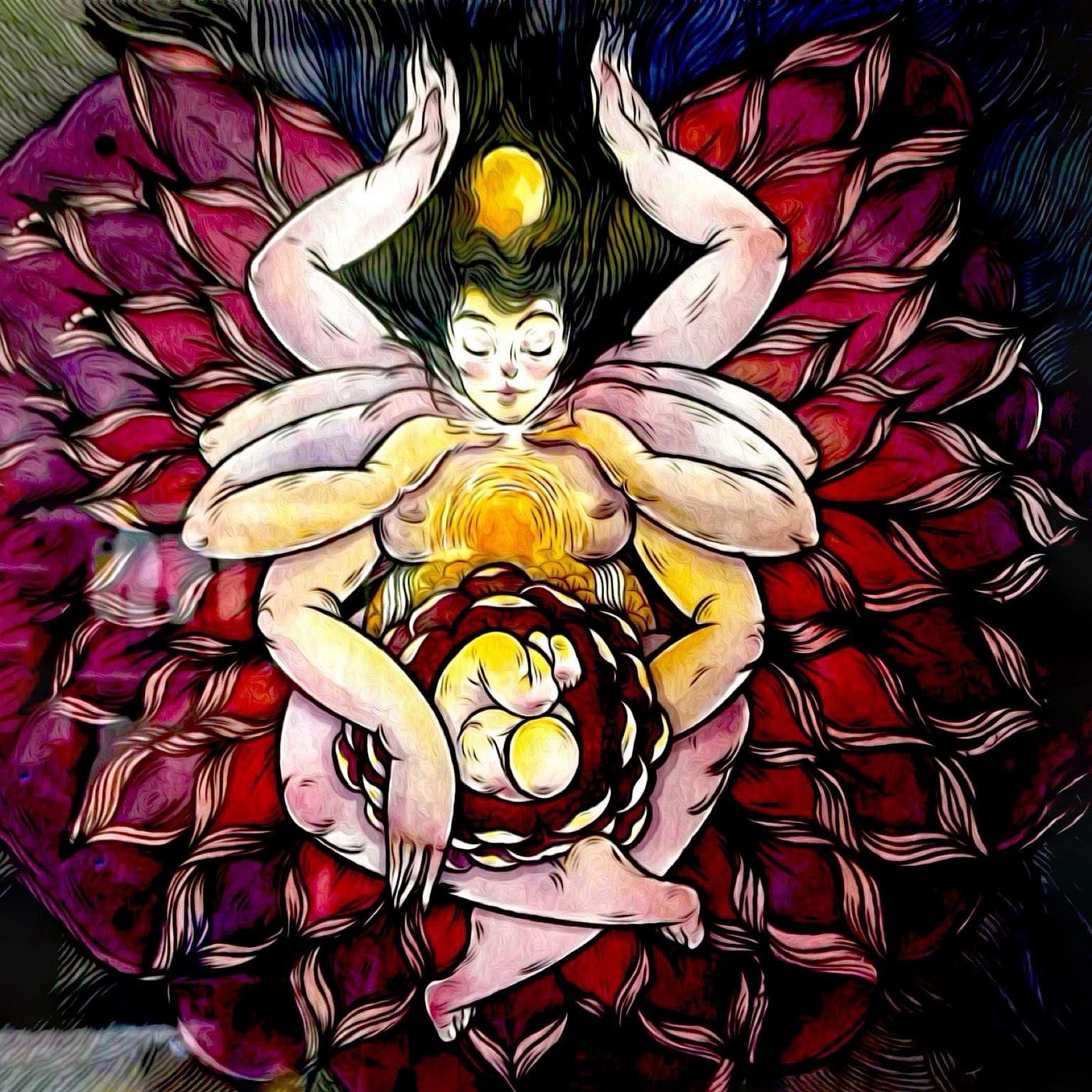
Illustration by Tanya Hempson
The Empty Vessel That Is Me: A Mother’s Post, a Nation’s Silence
It changed everything I thought I knew about myself — and revealed everything this country still refuses to reckon with.
Today, for the first time, she posted her story publicly. Her truth, in her words. It’s not just a personal history. It’s a national one — hidden in plain sight, buried beneath layers of policy, shame, and silence.
What follows is her post. It speaks for itself. It should speak for many.
The Empty Vessel That Is Me
(Originally posted 2018, 5th anniversary of the Object Exhibition)
“GET THAT GIRL AWAY FROM THAT WINDOW. SHE’S NOT TO SEE THAT BABY.” Yes it was screamed at me as I stood at the nursery window trying to get a glimpse of MY baby. Days before I was made to sign any paperwork, so legally he was still my son and I had every right to see and to hold him.
I knew what the paperwork was, but nothing was explained to me. I didn’t find out about the revocation period until 2–3 months after the birth. My heart broke all over again.
Forty four years of emptiness, silenced by shame and guilt. My only crime being single, young, and pregnant, in 1972. No advocacy and no options is not a “choice”. No mementos, no photos, no crib card, no hug, no memories, no baby. No support, no information, no antenatal classes ….
…. just ignorance, lies and deception …. and a great gaping hole in my heart and soul.
It was forty four years before I finally got to see and to hug my child that I had nurtured in my womb for 8 months, for the very first time.
Two more years trying to find out what was done to me and my baby, coming out of the fog, and figuring out the illegality of much of my child’s adoption.
And still it goes on. When will adoptees (the experts in adoption) be listened to? When will Stewardship or Permanent Guardianship be the preferred option? When will we work towards a “family for a child” rather than “a child for a family”? When will adoption along with the loss of identity, become a last resort?
They say empty vessels make the loudest noise …
Language, Power, and the Lie of “Adoption”
The reason we must no longer use the word “adoption” without serious scrutiny is because what happened to her — and to thousands of others — was not adoption as people imagine it.
It was forcible removal. It was identity theft. It was state-sponsored emotional genocide, veiled in the soft-focus language of “care” and “opportunity.”
To call it adoption is to participate in the euphemism. To call it “closed” or “necessary” is to allow the harm to go unnamed.
We must name it for what it was: removal without consent, legalised coercion, and in many cases, a violation of human rights.
Nine Years After Reunion, A Lifetime Before Justice
Meeting my mother nine years ago gave me a history I never knew. But it also gave me a responsibility: to amplify her voice, to fight for language that tells the truth, and to disrupt the narratives that keep this machinery running.
She is not an empty vessel. She is a full archive — of pain, of love, and of resistance.
And so, to every institution that still calls this practice “adoption,” To every government that refuses to issue formal apologies, To every social worker or judge who thinks the past is past —
We’re still here. We’re still loud. And we remember.
From Adoption to Severance: Reclaiming the Language of Forced Removal
The language we use to describe history shapes how we understand it — and whether we are willing to change it.
In Australia, the word adoption has long been used as a neutral or even benevolent term to describe the removal of children from their birth families. But in truth, this word hides more than it reveals.
Particularly when discussing the Stolen Generations, the forced removal of children from unmarried mothers, and broader colonial practices of child displacement, “adoption” becomes a euphemism — sterile, administrative, and emotionally disarming. It sanitises violence. It misnames trauma.
This article argues that we must retire adoption as a catch-all and replace it with terms that reflect the true nature of what occurred — words like severance, dispossession, erasure, and state-sanctioned removal. These are not just semantic choices; they are acts of truth-telling and linguistic justice.
1. “Adoption” as a Cloak for Violence
The word adoption implies a process that is consensual, compassionate, and in the best interest of the child. It invokes images of chosen families, safety, and new beginnings.
But for tens of thousands of Indigenous children, unmarried mothers, and working-class families in Australia, the process was anything but voluntary.
From the early 20th century to the 1970s — and continuing in disguised forms today — children were taken under the pretext of “welfare” or “civilisation.” These removals were often coercive, racialised, and traumatising.
Calling these practices “adoption” is like calling a land grab “urban planning.” It is a lie that cushions the settler psyche and silences the pain of the victims.
2. The Power of Words in Settler-Colonial Systems
Language is never neutral in a settler colony. It does ideological work.
Just as terra nullius erased Indigenous sovereignty, adoption erases the violence of removal. It reframes an act of displacement as one of care.
This is why we must be precise. Words like:
- Severance — emphasises the forced rupture of familial and cultural bonds.
- Dispossession — captures the loss of not only children, but of land, identity, and belonging.
- Erasure — reflects how entire kinship systems and matrilineal lines were obliterated.
- State-sanctioned removal — centers institutional culpability, not parental “deficiency.”
These are not rhetorical flourishes. They are necessary shifts in perspective. They restore agency to the people harmed and accountability to the systems responsible.
3. The Psychology of Euphemism
Why does the term adoption persist? Because euphemisms protect power.
As long as we use comforting words, settler Australians can avoid confronting the emotional horror of what actually happened: infants stolen from birthing tables, children renamed and reprogrammed, mothers told to forget and move on.
Euphemism is a tool of psychological avoidance. It allows denial to masquerade as compassion. To continue using “adoption” is to participate in a national act of forgetting.
4. Listening to Survivors
Survivors of forced adoption have never passively accepted the word “adoption.”
In testimonies to the 2012–2013 Senate Inquiry, countless mothers, adoptees, and First Nations families described the experience not as adoption, but as theft, kidnapping, and abduction.
Many said they had no legal representation, were drugged during labor, coerced into signing papers, or never even told where their children went. For these survivors, calling what happened “adoption” is a secondary trauma — a repetition of erasure.
By adopting their language — severance, violation, displacement — we validate their truth.
5. Linguistic Decolonisation is Political Decolonisation
Changing the words we use is not a symbolic act. It is part of a broader decolonial project.
Just as land must be returned and treaties honoured, language must be reclaimed to tell the truth of history.
Insisting on accurate terms is a refusal to let the state write the final chapter. It is a demand that the grammar of power be replaced with the vocabulary of justice.
Conclusion: Language as a Weapon and a Salve
As Australians reckon with the legacies of the Stolen Generations, forced child removals, and cultural genocide, we must dismantle not just the policies but the words that uphold them.
“Adoption,” when used to describe forced removals, is a linguistic fig leaf. It hides systemic violence behind a veil of kindness. Replacing it with language that reflects the truth — no matter how painful — is a first step toward genuine reconciliation.
Words matter. Naming is power. And it’s time we called things what they truly are.
메타데이터
- post_id
- 2319fc7bfea2
- slug
- nine-years-ago-today-i-met-my-mother-for-the-first-time-2319fc7bfea2
- url
- https://medium.com/thoughtless-delineation/nine-years-ago-today-i-met-my-mother-for-the-first-time-2319fc7bfea2
- canonical_url
- https://medium.com/thoughtless-delineation/nine-years-ago-today-i-met-my-mother-for-the-first-time-2319fc7bfea2
- author_url
- https://medium.com/@thoughtless-del
- status
- ok
- fetched_at
- 2026-08-06 13:06:17