Diesel Injector Nozzle Comparison: Fuel Economy, Power & Reliability
🔥 The Hidden Cost of “Interchangeable” Nozzles
Diesel Injector Nozzle Comparison: Fuel Economy, Power & Reliability
🔥 The Hidden Cost of “Interchangeable” Nozzles
Many fleet operators assume that if a nozzle thread fits and the spray angle looks similar, it will work. This can cost thousands in extra fuel and premature engine wear.
Key performance gaps from minor nozzle design differences:
- Fuel efficiency at light, medium, and high loads
- Combustion smoothness and torque consistency
- Exhaust gas temperature and emissions
- Injector durability and service intervals
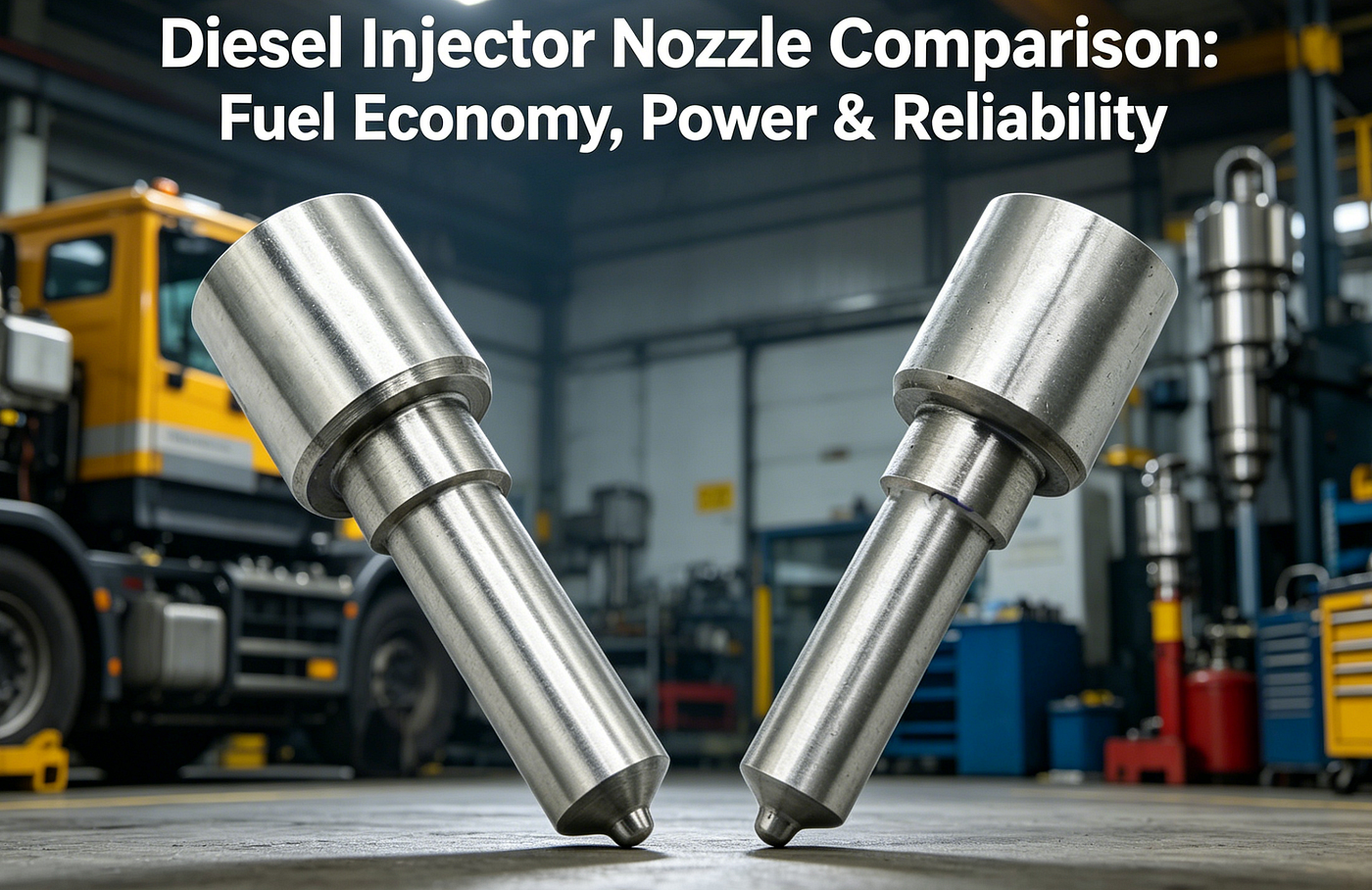
Even small variations matter. Below, we compare popular nozzle families (DLLA, DSLA, and others) and provide a practical framework for selection.
1️⃣ Fuel Efficiency — Small Differences, Big Costs
Fuel consumption is the most visible metric. Tests on a 4-cylinder 2.8L common-rail diesel revealed surprising differences.
Light-Load Efficiency (≤25% engine load, 1500 rpm)
Fuel Efficiency Ranking:
- DLLA150P1076 → +1.8% (best) ✅ Stable pilot injection, minimal post-injection
- DLLA158P854 → +0.9% Slightly higher opening pressure, minor dribble
- DSLA143P970 → -0.3% (worse) ⚠ Spray tip wetting at low rail pressure
Insight: Idle fuel consumption can vary 2–3% across “compatible” nozzles. Over 5,000 hours, this equals hundreds of liters of diesel.
Medium-Load Efficiency (50% load, 2000–2500 rpm)
- DLLA146P1339: -2.2% (lowest consumption) ✅ Longer tip improves air-fuel mixing without wall wetting
- DSLA145P300: +1.5% ⚠ Slower needle lift causes slightly delayed injection
- DSLA156P1114: Matches DLLA146P1339 only after thermal equilibrium (>15 min) ⏱
High-Load Efficiency (85–100% load, sustained)
Fuel Consumption vs Ideal:
- DLLA160P50: +0% ✅ Reference, consistent across cylinders
- DSLA154P1320: +3.9% ⚠ Cyclic variation at high rail pressure (1800+ bar)
- Generic DLLA152P1768 copy: +7.2% ❌ Uneven hole finishing → inconsistent flow
Real-world impact: A long-haul truck covering 200,000 km/year could spend $2,500 more annually due to poor nozzle choice.
2️⃣ Combustion Stability & Driveability
Rough idle is just the tip of the iceberg. Instability affects torque, engine mounts, and drivetrain harmonics.
Idle Stability (CoV of IMEP)
- DLLA150P1076: <2.1% ✅ (excellent)
- DSLA143P970: 3.3% ⚠ (satisfactory)
- DLLA158P854: 4.8% ❌ (noticeable vibration at idle)
Medium-Load Transition (25% → 75% load)
- DLLA146P1339: seamless transition, no torque dip ✅
- DSLA145P300: mild hesitation (~0.5 sec), ECU compensates, driver feels “flat spot” ⚠
- Mixing DLLA + DSLA in same engine: 15% torque imbalance, misfire codes ❌
High-Load Stability
- DSLA156P1114: ±1.2% cylinder-to-cylinder fuel delivery ✅
- Generic DLLA152P1768: ±5%, visible exhaust smoke, EGT imbalance ~80°C ❌
Spray pattern consistency under heat is critical; cylinder balance affects head gasket and piston ring life.
3️⃣ Injection Characteristics That Matter
Even same-series nozzles can behave differently. Key factors:
- Hole Diameter & Edge Roundness: ±2 µm → ~4% flow difference; poor edges → asymmetric spray, incomplete combustion
- Sac Volume (Mini-Sac vs VCO): Mini-sac → stable idle, slightly higher HC; VCO → reduces unburned fuel, requires higher pressure
- Needle Lift: Faster opening → smoother combustion; 0.07 mm variation can increase NOx by 12%
Pro Tip: Inspect nozzle batches, not just part numbers.
4️⃣ Case Study: Fuel Economy Recovery
Vehicle: 2019 delivery truck, 4.5L diesel, 180,000 km Issue: +18% fuel consumption vs fleet average
Investigation:
- Compression & turbo OK
- Two cylinders had mismatched nozzles (OEM DLLA + aftermarket DSLA)
- Aftermarket nozzle: 8% lower flow at 1600 bar, wider spray angle → wall impingement
Solution: Replace all nozzles with DLLA146P1339
Result:
- Fuel consumption –15.5% ✅
- Idle vibration eliminated ✅
- DPF regeneration reduced (12h → 28h) ✅
Lesson: One mismatched nozzle can ruin efficiency. Always replace as a matched set.
5️⃣ Selecting the Optimal Nozzle
Step 1 — Define Load Profile
- Light / stop-go: Focus on idle stability → DLLA150P1076, DLLA158P854 ✅
- Mixed medium: Focus on smooth transition → DLLA146P1339, DSLA145P300 ⚠
- Heavy / continuous: Focus on thermal stability → DLLA160P50, DSLA156P1114 ✅
- High-performance / tuned: Focus on fast response → Proprietary racing nozzles 🏎
Step 2 — Verify on Test Bench
- Measure flow at 800, 1400, 1800 bar
- Compare spray patterns at 1000 & 1600 bar
- Check needle lift curve
Step 3 — In-Vehicle Verification
- Fuel trim within ±3%
- EGT spread ≤40°C
- Idle vibration test (vibration meter or water on valve cover)
6️⃣ FAQ
- Q: Can I install a “higher flow” nozzle for more power? A: Only with ECU recalibration. Unmatched higher flow → overfueling, high EGT, risk of engine damage.
- Q: How long before nozzle performance degrades? A: Genuine nozzles ❤% flow shift for 4000–6000 hours or 250,000–350,000 km.
- Q: Can DLLA and DSLA be mixed? A: No. Hydraulic & spray differences cause imbalance, smoke, and engine damage.
- Q: Most overlooked factor? A: Spray angle vs piston bowl geometry. Too wide → cylinder wall wetting → oil dilution & wear.
✅ Conclusion
- Fuel consumption varies 2–7% across similar-looking nozzles
- Combustion stability affects torque, idle, and engine lifespan
- Poor high-load nozzle choices → EGT imbalance, soot, premature wear
Best Practice: Match nozzle design to load profile, bench-test, and replace as a balanced set. Data beats guessing.
👉 Explore diesel engine components and fuel injection systems: **Common Rail Injector Nozzle**
👉 Related technical reading: **Diesel Injector Nozzle Troubleshooting: What Engine Symptoms Are Really Telling You**
메타데이터
- post_id
- 231ff64ad9bc
- slug
- diesel-injector-nozzle-comparison-fuel-economy-power-reliability-231ff64ad9bc
- url
- https://medium.com/@pioneerdieselparts/diesel-injector-nozzle-comparison-fuel-economy-power-reliability-231ff64ad9bc
- canonical_url
- https://medium.com/@pioneerdieselparts/diesel-injector-nozzle-comparison-fuel-economy-power-reliability-231ff64ad9bc
- author_url
- https://medium.com/@pioneerdieselparts
- status
- ok
- fetched_at
- 2026-07-26 21:14:45


