MCCB Working Principle: A Complete Guide to Molded Case Circuit Breakers
If you have ever wondered how MCCBs work or why they are among the most important components in electrical protection systems, you’re in…
MCCB Working Principle: A Complete Guide to Molded Case Circuit Breakers
If you have ever wondered how MCCBs work or why they are among the most important components in electrical protection systems, you’re in the right place. In this guide, we break down the **working principle of MCCBs**, their key components, and the different types available for modern electrical installations. Whether you are an engineer, technician, or simply someone exploring electrical protection devices, this article will help you clearly understand how MCCBs safeguard circuits from dangerous fault conditions.
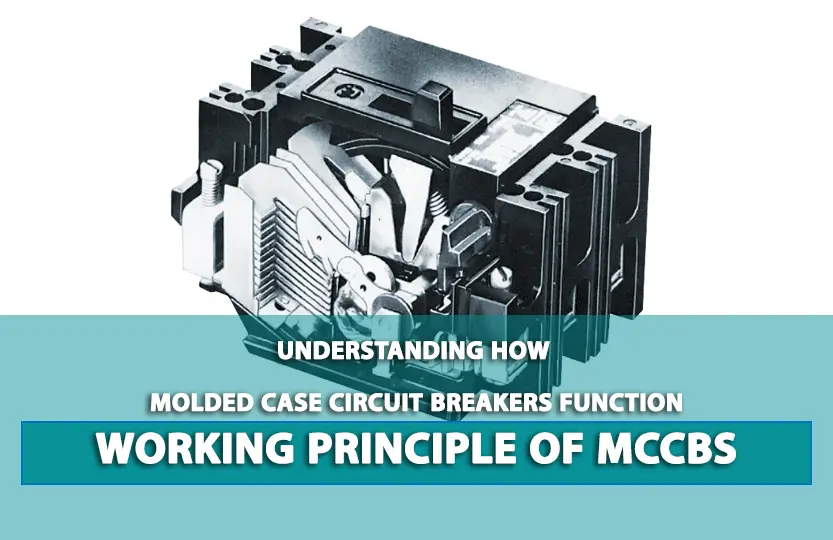
What Is an MCCB?
An **MCCB (Molded Case Circuit Breaker)** is a protective device designed to automatically disconnect a circuit when unsafe current levels occur. It protects against:
- Overload
- Short circuit
- Fault currents
- Manual switching operations
Unlike oil or gas circuit breakers, MCCBs use air as the insulating medium, making them cost-effective, reliable, and ideal for low-voltage applications in residential, commercial, and industrial environments.
Brands such as **Schneider MCCB and [Siemens MCCB](https://geetech.com.tr/siemens-mccb/)** are widely trusted for their durability and advanced trip technologies.
Why MCCBs Are Essential in Electrical Systems
The primary role of an MCCB is to maintain electrical safety by disconnecting circuits the moment unsafe current levels are detected. This helps:
- Prevent electrical fires
- Protect motors and equipment
- Ensure operator and system safety
- Reduce downtime and operational losses
MCCBs are designed for high breaking capacity, meaning they can safely interrupt even extremely high fault currents within milliseconds.
MCCB Working Principle Explained
The **working principle of an MCCB is based on thermal and magnetic tripping mechanisms** that identify abnormal current levels.
1. Thermal Trip (Overload Protection)
A bimetallic strip inside the MCCB heats up when excessive current flows for a prolonged period. As it bends, it triggers the trip unit, disconnecting the circuit before the wires or equipment are damaged.
2. Magnetic Trip (Short Circuit Protection)
During a short circuit, the current rises extremely fast. A magnetic coil inside the breaker produces a strong magnetic field, pulling a plunger that instantly opens the breaker contacts — usually in 0.04 seconds or less.
3. Arc Extinguishing Mechanism
When the contacts separate, an electrical arc forms. The arc chute divides this arc into smaller sections to extinguish it quickly, preventing damage and ensuring safety.
Together, these three mechanisms ensure the MCCB reacts appropriately to both slow-building overloads and sudden, dangerous faults.
Main Components of an MCCB
Here are the essential parts that enable an MCCB to function effectively:
✔ Molded Case
A strong insulated frame that houses all internal components.
✔ Operating Mechanism
Allows manual or automatic opening/closing of the breaker.
✔ Contacts
Connect and disconnect the electrical circuit.
✔ Arc Chute
Safely extinguishes the arc created during interruption.
✔ Trip Unit
The “brain” of the MCCB that detects faults using thermal/magnetic or electronic sensors.
✔ Terminals
Used to connect the MCCB to the external wiring of the system.
These components work in combination to ensure reliability, long life, and safe operation.
Types of MCCBs (Based on Tripping Curves)
Different applications require different characteristics. MCCBs are classified into several common types:
1. Type B
Trips at 3–5 × rated current Best for: resistive loads, sensitive equipment
2. Type C
Trips at 5–10 × rated current Best for: small motors, transformers, light inductive loads
3. Type D
Trips at 10–20 × rated current Best for: heavy motors, machinery with high inrush currents
4. Type K
Trips at 10–12 × rated current Best for: inductive loads with moderate inrush
5. Type Z
Trips at 2–3 × rated current Best for: electronics, sensitive semiconductor equipment
Choosing the correct type ensures proper protection and prevents nuisance tripping.
How to Set MCCB Protection Values
To ensure correct operation, MCCBs allow adjustments to match the load:
1. Overload Setting (Ir)
Example: For a 1000A MCCB, if your load is 800A: Ir = 0.8 × 1000A = 800A
2. Short Circuit Trip Setting (Ii)
Typically set as a multiple of the rated current, depending on system fault levels.
3. Ground Fault Protection
Used to detect leakage currents that may lead to equipment damage or fire hazards.
Always verify settings according to system requirements and manufacturer instructions.
Advantages of Using MCCBs
MCCBs offer several significant benefits:
⭐ Superior Protection
- Overload prevention
- Fast short-circuit response
- Arc suppression for improved safety
⭐ Long Service Life & Durability
MCCBs can withstand over a million mechanical operations, outperforming many other breakers.
⭐ Adjustable Trip Settings
Allows customization based on the specific electrical environment.
⭐ Easy Reset & Maintenance
Unlike fuses, MCCBs can be reset and reused.
⭐ Wide Application Range
Suitable for:
- Industrial machinery
- Commercial buildings
- Electrical distribution panels
- Motors and automation systems
Conclusion
Understanding the **working principle of MCCBs** is essential for maintaining safe and reliable electrical installations. With their combination of thermal and magnetic trip mechanisms, advanced arc-extinguishing systems, and durable molded case design, MCCBs offer robust protection against both overloads and short circuits.
If you’re designing or upgrading an electrical system, choosing the right MCCB — such as Schneider or Siemens MCCB — ensures proper protection, long-term reliability, and peace of mind for your entire operation.
Contact GeeTech Group :
Call US : +90 (342) 502 22 62
메타데이터
- post_id
- 232b0efa0ccf
- slug
- mccb-working-principle-a-complete-guide-to-molded-case-circuit-breakers-232b0efa0ccf
- url
- https://medium.com/@geetech/mccb-working-principle-a-complete-guide-to-molded-case-circuit-breakers-232b0efa0ccf
- canonical_url
- https://medium.com/@geetech/mccb-working-principle-a-complete-guide-to-molded-case-circuit-breakers-232b0efa0ccf
- author_url
- https://medium.com/@geetech
- status
- ok
- fetched_at
- 2026-07-13 06:23:13