Nigeria Doesn’t Have a Wheat Problem. It Has an Execution Problem.
Nigeria knows how to grow more wheat.
Nigeria Doesn’t Have a Wheat Problem. It Has an Execution Problem.
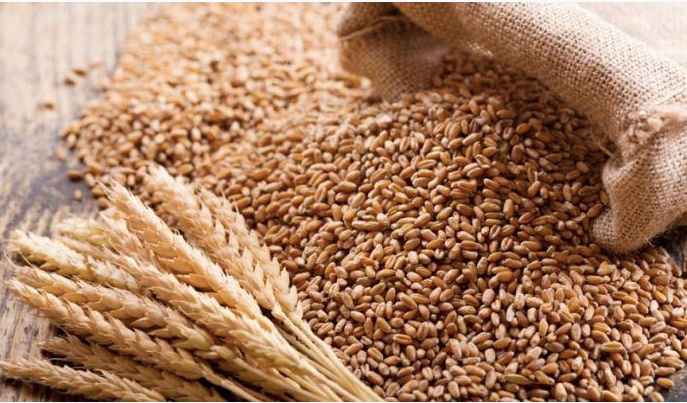
Wheat
Nigeria knows how to grow more wheat.
The financing exists.
The technology exists.
Development partners are willing to support the sector.
Government programmes have been designed.
Yet Nigeria still imports the vast majority of the wheat it consumes.
This week, reports that funding secured for a major wheat development programme has remained undisbursed brought a deeper issue into focus.
The story is not really about wheat.
It is about execution.
And that may be one of the most important challenges facing Nigerian agriculture today.
The Promise of Wheat Self-Sufficiency
For years, Nigeria has pursued the goal of reducing its dependence on imported wheat.
The reasoning is straightforward.
Wheat is one of the country’s most important food commodities. It forms the foundation of products consumed daily by millions of Nigerians, including bread, noodles, pasta, biscuits, and other flour-based foods.
Yet despite its importance, domestic production remains significantly below national demand.
As a result, Nigeria spends billions of naira importing wheat every year, exposing the country to foreign exchange pressures and global market shocks.
The disruptions caused by the Russia-Ukraine conflict provided a stark reminder of this vulnerability. As global wheat supplies tightened and prices rose, countries dependent on imports found themselves increasingly exposed to events beyond their control.
In response, Nigeria intensified efforts to expand local wheat production.
Development partners came on board.
Financing was secured.
Programmes were designed.
The objective was clear: increase domestic production and reduce dependence on imports.
On paper, it was exactly the type of intervention needed to strengthen food security.
When Funding Approval Is Not Enough
However, agriculture does not run on policy documents.
It runs on implementation.
According to recent reports, financing intended to support Nigeria’s wheat expansion efforts has faced delays in deployment.
Whether viewed as an administrative bottleneck, institutional challenge, or coordination issue, the result is the same.
Time is lost.
And in agriculture, time matters.
A delayed decision can affect input procurement.
Delayed inputs can affect planting schedules.
Delayed planting can affect harvests.
And reduced harvests can affect food availability months later.
This is why execution is so critical.
Agriculture operates on biological timelines, not bureaucratic timelines.
Crops cannot wait for paperwork.
Farmers cannot postpone seasons.
Rainfall does not adjust itself to accommodate administrative processes.
Every delay has consequences that extend far beyond the original decision.
The Bigger Challenge Facing Nigerian Agriculture
The wheat story reveals a broader pattern that appears across multiple agricultural value chains.
Nigeria is not suffering from a shortage of ideas.
There is no shortage of:
Agricultural policies.
Development programmes.
Donor-funded interventions.
Research institutions.
Private-sector interest.
Financing initiatives.
In fact, many of the solutions needed to strengthen the sector are already known.
The challenge increasingly lies elsewhere.
The challenge is moving from intention to execution.
Across the agricultural sector, significant effort is often spent designing interventions.
Far less attention is given to ensuring those interventions move efficiently from approval to implementation.
This gap between planning and execution may be one of the biggest obstacles to agricultural transformation.
Why This Matters Beyond Wheat
It would be easy to view this development as a problem affecting only wheat farmers.
That would be a mistake.
The implications extend much further.
Food security is not determined solely by how much food a country can produce.
It is also determined by the efficiency of the systems supporting production.
Financing systems.
Extension systems.
Input distribution systems.
Logistics systems.
Market systems.
When any one of these systems becomes inefficient, the entire value chain feels the impact.
This is why agricultural transformation is increasingly becoming a systems challenge rather than simply a production challenge.
The conversation is gradually shifting from:
“How do we produce more food?”
to
“How do we build systems that consistently support food production at scale?”
The difference is significant.
Because production can increase temporarily.
Strong systems create sustained growth.
The Cost of Delayed Execution
Every year Nigeria remains heavily dependent on wheat imports, the country remains exposed to:
Global supply disruptions.
Foreign exchange volatility.
International price fluctuations.
Geopolitical shocks.
Import dependence is not merely a trade issue.
It is a food security issue.
The longer local production struggles to scale, the longer these vulnerabilities remain.
This is why financing delays matter.
Not because of the money itself.
But because of what the money was supposed to enable.
More production.
Greater resilience.
Reduced dependence.
Improved food security.
When implementation slows, progress slows with it.
The Real Lesson
The most important lesson from this week’s development is not about wheat.
It is about the future of agricultural transformation in Nigeria.
For years, discussions about agriculture focused on identifying solutions.
Today, many of those solutions already exist.
The technologies exist.
The financing mechanisms exist.
The development partnerships exist.
The policy frameworks exist.
The increasingly important question is whether implementation can keep pace with ambition.
Because in agriculture, execution is not a secondary consideration.
It is the difference between plans and outcomes.
A delayed decision can become a missed planting season.
A missed planting season can become a lost harvest.
A lost harvest can become another year of import dependence.
Nigeria’s agricultural future may depend less on discovering new solutions and more on executing existing ones effectively.
The wheat story is simply a reminder of that reality.
And perhaps that is the bigger story hidden behind this week’s headline.
메타데이터
- post_id
- 233e0090dc67
- slug
- nigeria-doesnt-have-a-wheat-problem-it-has-an-execution-problem-233e0090dc67
- url
- https://medium.com/@adedokunjuliusayobami/nigeria-doesnt-have-a-wheat-problem-it-has-an-execution-problem-233e0090dc67
- canonical_url
- https://medium.com/@adedokunjuliusayobami/nigeria-doesnt-have-a-wheat-problem-it-has-an-execution-problem-233e0090dc67
- author_url
- https://medium.com/@adedokunjuliusayobami
- status
- ok
- fetched_at
- 2026-07-09 21:48:21




