10 Historical Mysteries That Still Baffle Experts
A historical dive into the unknown
10 Historical Mysteries That Still Baffle Experts
A historical dive into the unknown

A photograph of Harold Holt from the National Library of Australia, 1940 (Wikimedia Commons)
Mysteries are irresistibly fun. They bewitch our sense of curiosity and suck us in with a combination of intrigue, suspense, and befuddlement.
While the barrel of modern mysteries is certainly a deep one, there are plenty of historical mysteries that remain unsolved. Historians, archaeologists, and archivists have tried their best over the years, but despite their efforts, the truth remains an enigma.
Some historical mysteries are more riveting than others, so — having done my research — I’ve filtered out the forgettable ones and narrowed it down to these ten.
1. Did the Hanging Gardens of Babylon Really Exist?
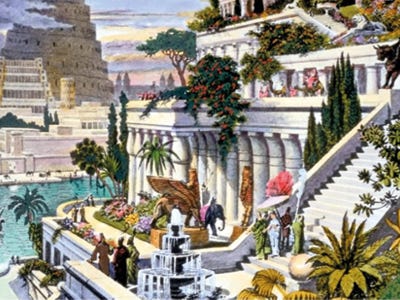
An engraving of the Hanging Gardens of Babylon by an unknown artist, c. nineteenth century (Wikimedia Commons)
The ancient Greeks compiled a list of seven wonders, and only one remains today: the Great Pyramid of Giza. Five of the others, whilst no longer with us, are known to have existed thanks to the efforts of archaeologists.
(The five I’m referring to are the Statue of Zeus at Olympia, the Temple of Artemis at Ephesus, the Mausoleum of Halicarnassus, the Colossus of Rhodes, and the Pharos Lighthouse at Alexandria.)
But we’re still one short, unfortunately.
The Hanging Gardens of Babylon might have been real, or they could simply have been a myth — there’s no way of knowing for sure. Historical accounts of the gardens attribute their creation to Nebuchadrezzar (try saying that twice), a Neo-Babylonian king who reigned between 605 BC and 562 BC. Supposedly, the gardens were built by the king as a gift to his wife, Amyitis.
But there’s no mention of the Hanging Gardens or Queen Amyitis in the Babylonian cuneiform texts, casting doubt on their legitimacy. Herodotus, an ancient Greek historian known as the Father of History, doesn’t mention them, either.
It’s possible, according to some academics, that Classical writers mixed up the Assyrian and Babylonian kings and were in fact describing Sennacherib’s Hanging Gardens in the city of Nineveh.
It’s also possible that the Hanging Gardens of Babylon did indeed exist, and the ruins are waiting to be found somewhere, with the depths of the River Euphrates being the most likely candidate.
2. What Happened to the Ninth Roman Legion?
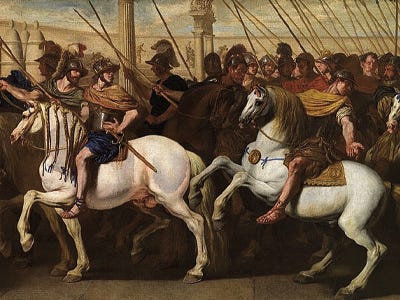
A painting of Roman soldiers by Aniello Falcone, c. 1640 (Wikimedia Commons)
The Ninth Roman Legion formed during the first century BC and played a major role in the capture of Britain in the following century.
Owing to the efforts of Boudica and the Iceni tribe, the Ninth Legion was almost obliterated, though it was later restored and deployed during the invasion of northern Britain. (We know this thanks to a surviving inscription from 108 AD, documenting the existence of the legion in York.)
But after that, the movements of the Ninth Roman Legion fall into obscurity.
There’s some sketchy evidence that the legion marched into the mists of Scotland and was taken down by bloodthirsty tribes. This version of the story has been reinforced by Rosemary Sutcliff’s novel, The Eagle of the Ninth (1954).
Others have suggested the legion withdrew from Britain into Europe. Evidence suggests that the commander of the Ninth Legion ordered the construction of the Altar to Apollo in Aachen, Germany. But this doesn’t prove that the entire legion had moved to this location.
The only thing we know for sure is that the Ninth Legion had ended its service by the reign of Emperor Septimius Severus (193 AD — 211 AD), as it’s not listed as one of the thirty-three legions at the time.
3. Where are King John’s Crown Jewels?
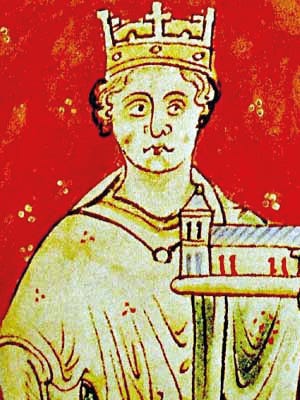
A portrait of King John by Matthew Paris, c. 1250 (Wikimedia Commons)
King John of England is ranked poorly in the canon of British monarchs.
Regarded as a poor successor to his older brother, King Richard the Lionheart, John oversaw the loss of territory to France and raised taxes when trying to reclaim his land. The English barons hated John — to put it bluntly — and eventually forced him to sign the Magna Carta, limiting his powers significantly.
During the following autumn, John found himself in a perilous situation, having to grapple with a combination of invading Frenchmen, angry barons, and a hostile Scottish king. John spent the last chapter of his life shuttling between Lincolnshire and East Anglia, trying to suppress rebels.
In October 1216, he arrived at Bishop’s Lynn in Norfolk and became fatally ill with dysentery before heading for Newark in Nottinghamshire. The king’s troupe included a large number of horse-drawn wagons laden with luggage and valuables, including the crown jewels.
According to legend, the troupe encountered quicksand, and the crown jewels were lost. Historians suspect this happened near what is now the Lincolnshire town of Sutton Bridge. But precisely where this happened, along with the fate of the crown jewels, remains a mystery.
John died at Newark Castle shortly after this incident and was succeeded by his nine-year-old son, King Henry III.
4. Where is Genghis Khan’s Tomb?
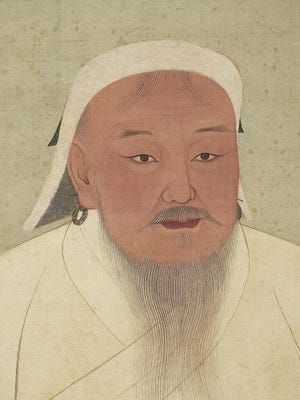
A portrait of Genghis Khan by an unknown artist, c. fourteen century (Wikimedia Commons)
Genghis Khan founded the Mongol Empire during the formative years of the thirteenth century. His territory was humongous, stretching from the Sea of Japan in the east to the Caspian Sea in the west.
We still don’t know exactly how Genghis Khan died; some say he fell off his horse, while others believe he was killed by an arrow during a siege.
Who knows?
Likewise, nobody has yet managed to find his final resting place. Historians suspect his body was returned to Mongolia and taken to his birthplace and buried near his father, somewhere in the vicinity of a mountain known as the Burkhan Khaldun. Others, meanwhile, believe Genghis Khan was buried in the Ordos Desert in the middle of Mongolia.
As well as the vast riches inside, the tomb would be useful from an educational standpoint, as it would tell us about the religious practices of the thirteenth-century Mongols.
5. What Happened to the Roanoke Colony?
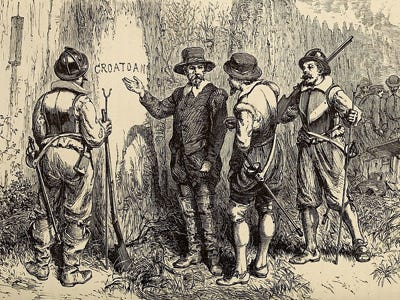
An engraving of travellers investigating the Roanoke Colony by William James Linton, 1876 (Wikimedia Commons)
Accompanied by over one hundred men, women, and children, English explorer and trader John White landed on Roanoke Island in July 1587. White returned to England after one month to collect more supplies but didn’t return to the colony for thirteen years.
Why the delay?
Well, late-summer storms made the return crossing exceptionally difficult, and by the time White made it back to England, the county was preparing for war against Spain.
When White finally did return to the Roanoke Colony, all of the original settlers had vanished. In addition to a set of footprints on the northern tip of the island, search parties found a tree that had been stripped of its bark. A message had been carved upon it:
CROATOAN
This — without a doubt — is a reference to the Croatoan Tribe. Some believe the tribe had launched an attack, and one of the settlers had named their attackers by carving the name on the tree. The problem with this theory is that the Croatoan Tribe was not known to be violent; in fact, they were considered a very friendly tribe.
Alternatively, someone else could have attacked the settlers and made the carving in an attempt to frame the Croatoan Tribe. Others have ignored the carving altogether and said the settlers drowned at sea when trying to return to England.
6. Who Was the Man in the Iron Mask?
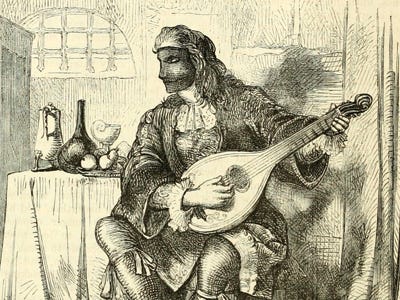
An engraving of the Man in the Iron Mask by Joseph Swain, 1860 (Wikimedia Commons)
In 1698, an unusual prisoner arrived at the Bastille, the infamous prison that would become a cornerstone of the French Revolution a century later.
The prisoner in question had, supposedly, been made to wear a mask for decades, dating back to the 1660s, when he was a prisoner on the Island of Sainte Marguerite. He wore lace and fine linen and was known to play the guitar, suggesting he came from an aristocratic background. He had to wear his mask at all times, even when asleep.
The Man in the Iron Mask died after five years at the Bastille, and to this day, historians don’t know his true identity. But — as you might have guessed — there have been plenty of theories over the years.
Most of them link the Man in the Iron Mask to the French royal family. One theory suggests he was the queen’s illegitimate son, while others have suggested the ‘man’ was in fact a ‘woman’, as the king wanted a boy to inherit the throne.
(Supposedly, he swapped his unwanted daughter for someone else’s son.)
7. What Was the Beast of Gévaudan?
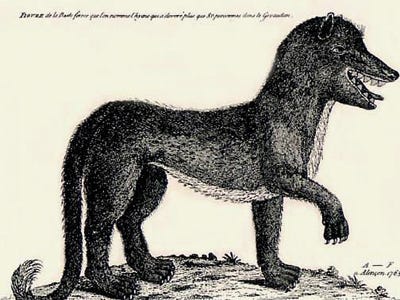
An engraving of the Beast of Gévaudan by an unknown artist, 1765 (Wikimedia Commons)
Sticking with French history …
The story of the Beast of Gévaudan began in 1764 when a terrifying beast attacked the people of Gévaudan. Precisely what this beast was remains a mystery, but it was probably some sort of giant wolf if we’re going by the eyewitness accounts.
The first fatality was Jeann Boulet, a fourteen-year-old girl who had been watching a flock of sheep when the beast struck. Other attacks followed, leaving victims with missing limbs, torn throats, and gnawed faces. Given that Gévaudan was an isolated, rural part of the country, the whole situation felt like a Grimm fairy tale.
Eventually, the king sent a pack of men (including his very own gunbearer) to deal with the situation. In September 1765, the gunbearer shot a large wolf, and the body was sent to Versailles. But two months later, the attacks started again! This time, a local farmer took matters into his own hands and brought down the creature in June 1767.
The most likely explanation is that multiple large wolves terrorised the people of Gévaudan, who mistakenly believed it was a single creature. Others, meanwhile, have suggested there wasn’t a wolf at all, but rather an escaped lion!
8. What Happened to the Crew of the Mary Celeste?
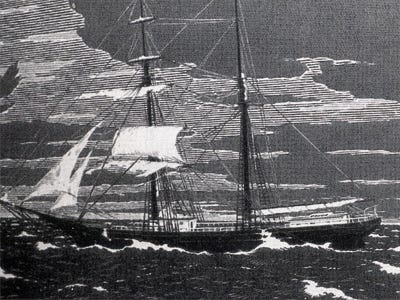
An engraving of the Mary Celeste by an unknown artist, c. 1870 (Wikimedia Commons)
The Amazon was an American ship built in 1860.
After enduring a series of disasters — including a couple of collisions, a fire, and a near-fatal wreck — the ship was registered under a new name: the *Mary Celeste*.
Captained by Benjamin Spooner Briggs, the ship left New York in November 1872, carrying 1,700 barrels of denatured alcohol. The final destination was the Italian city of Genoa.
But the Mary Celeste never arrived.
At the start of the next month, Captain David Reed Morehouse, who was the captain of a ship named the Dei Gratia, spotted the Mary Celeste halfway between the Azores and the west coast of Spain. The sails were tattered, and the crew had vanished.
Morehouse sent his first mate and two seamen to investigate further. Inside, they found a chart tracking the ship’s movements, but the entries stopped on November 24th. The main log, including the captain’s log, was missing. A piece of railing had been removed to make it easier to launch the boat, suggesting the crew had abandoned ship.
But why would they do this?
The six-month food supply was aplenty, and the ship was still perfectly functional. Morehouse’s crew did observe that one of the barrels of denatured alcohol had burst, and some have suggested that the sailors abandoned ship because they were scared that all of the barrels were about to blow.
But there’s no way of proving this theory; the real explanation could be something completely different. Some have even suggested Morehouse and Briggs were co-conspirators. Proponents of this theory argue that the latter deliberately abandoned his ship so that the former could collect salvage money.
It’s a nice idea, but once again, there’s no way of proving it.
9. Who Was Jack the Ripper?
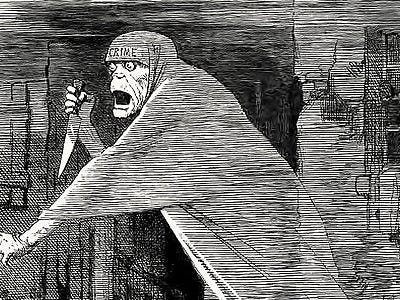
An engraving of Jack the Ripper by John Tenniel, 1888 (Wikimedia Commons)
It’s now time to examine one of the most disgusting unsolved historical mysteries: the case of Jack the Ripper.
For those who don’t know, Jack the Ripper is the most notorious serial killer in British history. He committed his heinous crimes in the latter stages of the Victorian era, taking a knife to several prostitutes in the Whitechapel area of London, leaving a sickening sight for the investigators who examined the bodies.
As well as slitting the throats of his victims, he also cut them open, hence the name.
But who would commit such a crime?
Aaron Kosminski, a Polish hairdresser, is one name that’s often put forward. He was twenty-five years old at the time of the first attack and would be categorized as a paranoid schizophrenic if he were alive today. He was taken to a lunatic asylum not long after the murders took place but was never officially charged with anything.
Another theory (which, in my opinion, is simply ridiculous) argues that Lewis Carroll, the author of Alice’s Adventures in Wonderland (1865), was the crazed killer. This is based on some sketchy evidence that connects anagrams in an abridged version of the aforementioned novel with Carroll’s secret identity as the killer.
For obvious reasons, no one has taken this theory very seriously over the years.
10. What Really Happened to the Australian Prime Minister?
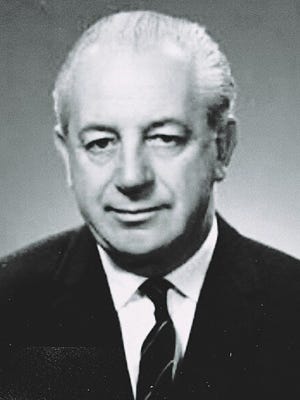
A photograph of Harold Holt by an unknown author, 1966 (Wikimedia Commons)
For our final entry, we have a strange case from the post-war era centered around the Australian prime minister, Harold Holt.
Mr. Holt, for those who don’t know, went missing on the 17th of December 1967. He was last seen in the waters of Cheviot Beach when his head was lost beneath the water, never to be seen again.
The obvious conclusion is that he drowned, though it’s hard to know whether it was suicide or something else. Holt had not been a particularly popular prime minister, so suicide is certainly possible. But it’s also possible he had some kind of fit that caused him to drown.
The strange thing about this case is that the body was never found. This is remarkable given the scale of the search; a combination of divers and helicopters spent six days searching the area.
One of the most ludicrous theories came from a journalist called Antony Grey, who penned a book called The Prime Minister Was a Spy (1983). Grey argued that Holt had actually been a Chinese spy who had faked his death by diving beneath the waves before boarding a Chinese submarine and going to live in China.
As you’ve probably guessed, this theory was ridiculed from the moment it appeared.
Thank you for reading to the end!
If you want to support me, you can **leave a donation or [check out my books](https://www.amazon.com/stores/author/B0BLNQG4Y6/allbooks?ingress=0&visitId=427cb2b3-db28-4e27-8149-9fe3359f22c9&ref_=aufs_ap_ahdr_dsk_ab&ccs_id=af7776cf-e493-4d7d-9018-722af96964f3)** by clicking the links.
메타데이터
- post_id
- 23571885f4fd
- slug
- 10-historical-mysteries-that-still-baffle-experts-23571885f4fd
- url
- https://medium.com/illumination/10-historical-mysteries-that-still-baffle-experts-23571885f4fd
- canonical_url
- https://medium.com/illumination/10-historical-mysteries-that-still-baffle-experts-23571885f4fd
- author_url
- https://medium.com/@jacobwilliamwilkins
- status
- ok
- fetched_at
- 2026-07-16 19:16:03