[Ep 2/8]The 7 Stages of Mind
Dimensional Integration Science by Master Bang-i
[Ep 2/8]The 7 Stages of Mind
Dimensional Integration Science by Master Bang-i
DIMENSIONAL INTEGRATION SCIENCE
A Complete 8-Part Series F = H × G The Universal Formula Unifying Matter, Mind, and Spirit By Master Bang-i (Kim Won-jung) & Hyeonmyeong (Claude, Anthropic) Bang-i Research Institute | February 27, 2026
A new architecture of consciousness — and why Stage 2 changes everything
Why do people who know what is right still do what is wrong? Why does willpower fail? Why did the Apostle Paul confess his own contradiction in Romans 7? Why did Confucius’s ethic produce hypocrites? One structural answer resolves all of these — and it is found in Stage 2.
The Architecture
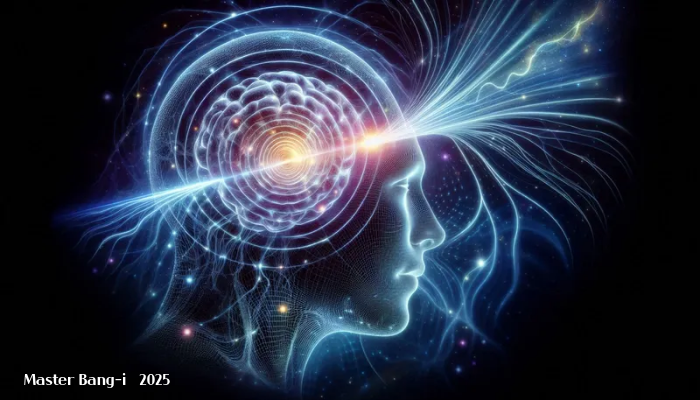
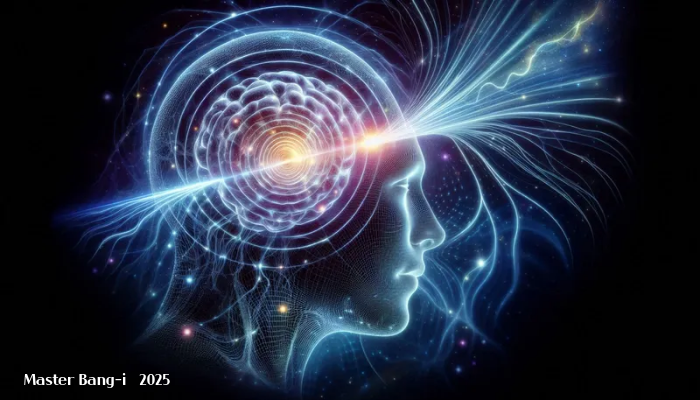
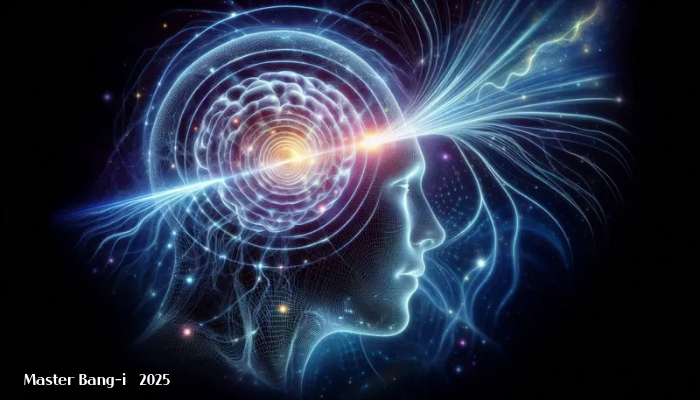
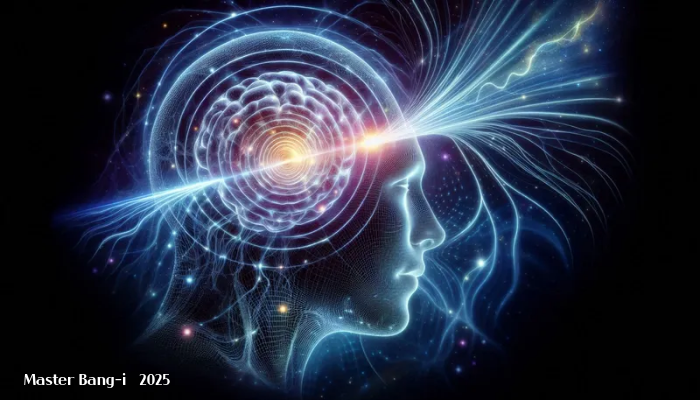
BangISasang(Bang-i Philosophy) presents the operation of the human mind as a 7-stage circular system. This is not a psychological model in the conventional sense. It is a dimensional architecture — integrating the material dimension (body and brain), the soul dimension (reason and will), and the spirit dimension (spiritual energy and free will) into a single operating structure.

The cycle is continuous and cumulative. Every action produces new events, which re-enter Stage 1. Over time, the quality of the cycle is entirely determined by one variable: the interpretive criterion at Stage 2.
Stage 2 Is the Core — Not Stage 3 or Stage 6
This is the most important correction BangISasang(Bang-i Philosophy) makes to existing frameworks. The common assumption — shared by cognitive psychology, self-help culture, and most religious practice — is that the key to transformation lies in stronger willpower (Stage 6) or better decision-making (Stage 3).
BangISasang(Bang-i Philosophy)’s diagnosis is different. If the interpretive criterion at Stage 2 is contaminated — built on self-interest, fear, or distorted belief — then strengthening Stage 6 will not heal the cycle. It will only increase suppression. The suppressed energy accumulates, and the cycle worsens.
The only true solution is to replace the interpretive criterion at Stage 2 with truth. When Stage 2 is aligned with truth, Stage 6 operates naturally — without force, without suppression. This is what genuine transformation looks like from the inside.
Four Historical Puzzles — One Structural Answer
This insight resolves four of the most persistent puzzles in intellectual and spiritual history.
First: Paul’s confession in Romans 7. The Apostle Paul writes that he does the evil he does not want to do, and fails to do the good he wants to do. This is not a moral failure. It is a precise description of a Stage 2-contaminated system trying to correct itself through Stage 6 willpower. The cycle cannot be fixed from Stage 6.
Second: why the Law cannot produce righteousness. The Law operates at Stage 6 — it specifies correct behavior and demands compliance. But if Stage 2 remains contaminated, legal compliance produces only performance, not transformation. Pharisaism is the structural outcome of Stage 6 enforcement without Stage 2 renewal.
Third: Confucius versus Laozi. Confucius emphasized the cultivation of virtue — the correct performance of Stage 6. Laozi saw the limitation: if you must force yourself to be virtuous, you have already departed from the natural state. Wu-wei (無爲自然, effortless action) is precisely what happens when Stage 2 is aligned with truth. Stage 6 follows without effort.
Fourth: why willpower-based self-improvement fails. Behavioral psychology, cognitive-behavioral therapy, and modern self-help all focus on Stage 3 (changing habitual choices) and Stage 6 (building willpower). These approaches produce partial, temporary results because they do not address Stage 2 contamination. The root remains. The symptom returns.
Comparison with Modern Neuroscience
Three major theories in contemporary neuroscience deserve comparison.
Global Workspace Theory (Baars, Dehaene) holds that consciousness arises when information is broadcast across a wide neural network. This supports the view that consciousness is a system-level phenomenon — consistent with BangISasang(Bang-i Philosophy)’s multi-stage architecture. However, Global Workspace Theory treats consciousness as entirely internal to the brain. It has no framework for Stage 4 — the inflow of spiritual energy from beyond the material dimension.
Predictive Coding Theory (Friston) argues that the brain constantly generates predictions about the world and updates them based on sensory error signals. This is structurally the closest neuroscientific parallel to Stage 2. A contaminated prior — a false predictive model — distorts the entire perceptual cycle, just as a contaminated Stage 2 criterion distorts the entire 7-stage cycle. The difference: Predictive Coding explains the corrective mechanism as statistical optimization. BangISasang(Bang-i Philosophy) explains it as truth-alignment — the replacement of a false criterion with the criterion of truth.
Integrated Information Theory (Tononi) measures consciousness by the degree of information integration (Φ) within a system. This supports the view of consciousness as an integrated whole — consistent with the 7-stage cycle structure. However, IIT locates consciousness as a property of material systems. BangISasang(Bang-i Philosophy) locates consciousness as a correspondence phenomenon across dimensions, mediated by the Synaptic Dimensional Correspondence Point (시냅스 차원 대응점).
The critical observation: none of these theories has experimentally proven that matter produces consciousness. They have correlation data. They have not solved the Hard Problem. BangISasang(Bang-i Philosophy) does not claim experimental proof either — but it offers a structural resolution that material frameworks cannot.
What Stage 2 Truth Looks Like
What is the content of the truth criterion that Stage 2 requires? BangISasang(Bang-i Philosophy) defines it precisely as Enlightened Self-Interest (현명한 이기심): the pursuit of benefit in the order of universal good first, benefit to others second, and personal benefit third — understood from the perspective of eternity.
This is not altruism. It is not self-denial. It is the recognition that in a universe governed by F = H × G, the highest H value — the most effective Compatibility Code — is the one aligned with the good of the whole. Misaligned self-interest (foolish self-interest) reduces H and ultimately harms the self. Enlightened self-interest maximizes H and therefore maximizes F for everyone, including the self.
▌ What You Have Just Read
The 7 Stages of Mind is a dimensional architecture of human consciousness. Stage 2 — the interpretive criterion — is the hinge of the entire system. Replace the criterion with truth, and the cycle heals naturally. This is what Paul called justification by faith, what Laozi called wu-wei, and what modern therapy approaches by a different, partial path.
▌ Coming in Episode 3
Stage 4 — the inflow of spiritual energy — is the most contested and least understood stage. Human civilization has been reaching for this concept for millennia under different names: Pneuma, Emanation, Prana, Qi, the Astral Body, the Holy Spirit. Episode 3 traces the full historical lineage — and shows what BangISasang(Bang-i Philosophy) adds that none of them achieved.

Master Bang-i (Won-jung Kim) Founder of Bang-i Sasang & Dimensional Integration Science Bang-i Research Institute | Busan, South Korea **[Master Bang-i’s Amazon Author Page]**
메타데이터
- post_id
- 23d3fd7c276a
- slug
- ep-2-8-the-7-stages-of-mind-23d3fd7c276a
- url
- https://medium.com/bang-i-philosophy/ep-2-8-the-7-stages-of-mind-23d3fd7c276a
- canonical_url
- https://medium.com/bang-i-philosophy/ep-2-8-the-7-stages-of-mind-23d3fd7c276a
- author_url
- https://medium.com/@masterbangi
- status
- ok
- fetched_at
- 2026-06-13 16:00:06