Maker of the Month — Nov ’25: Aksa Rose//Build Before you Figure It Out
You say “I’m fine”.
Maker of the Month — Nov ’25: Aksa Rose//Build Before you Figure It Out
You say “I’m fine”.
Manslater Translates: I am absolutely not fine, and you should have asked a follow-up question.
That’s how Manslater works.
It started as a joke. The idea of a playful translator that tries to decode what women say versus what they actually mean. It’s the kind of idea you laugh at, send to a friend, and forget about five minutes later.
Except people didn’t forget.
They shared it, asked for the link and paid real money just to say, this was worth building.
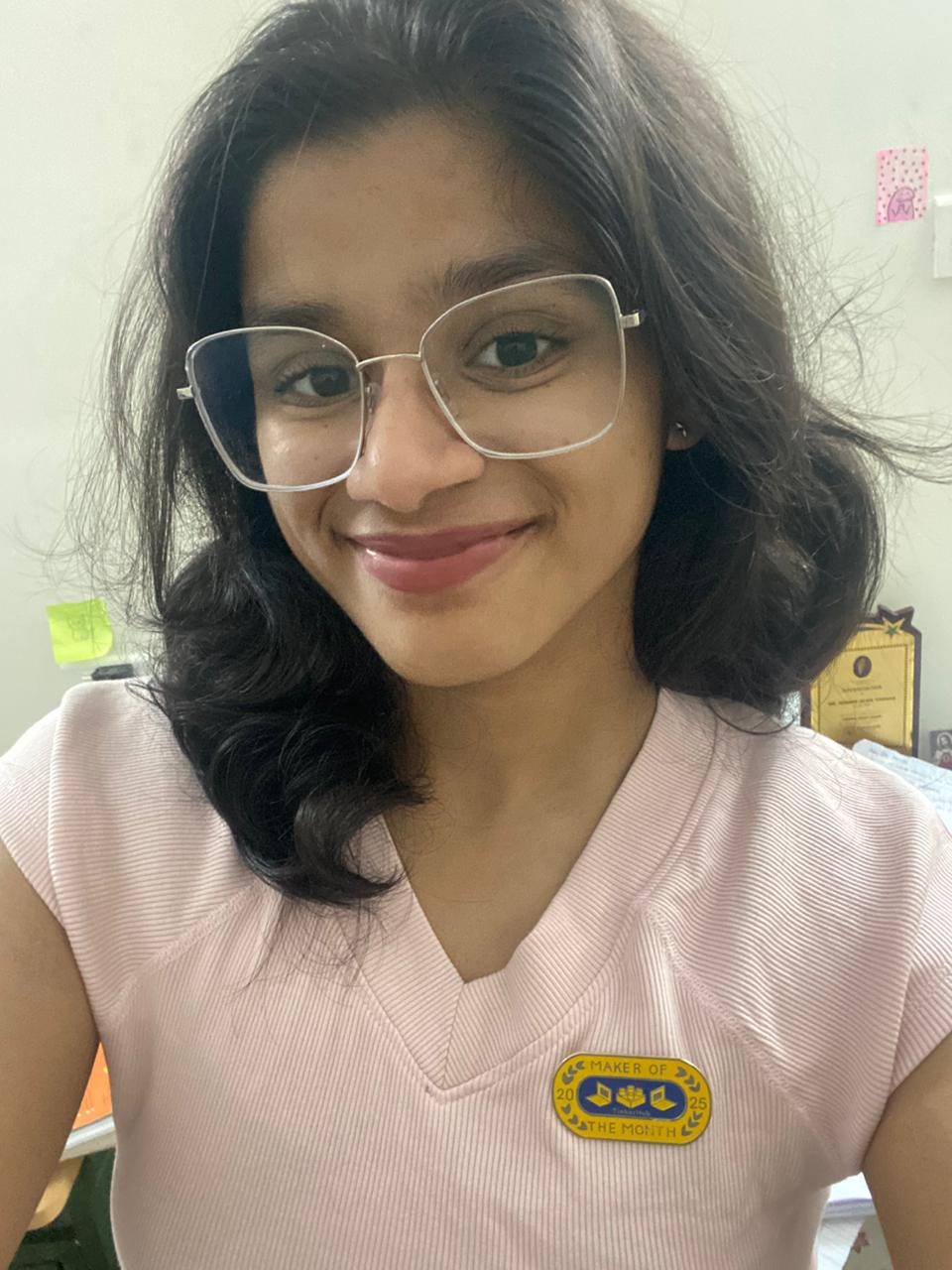
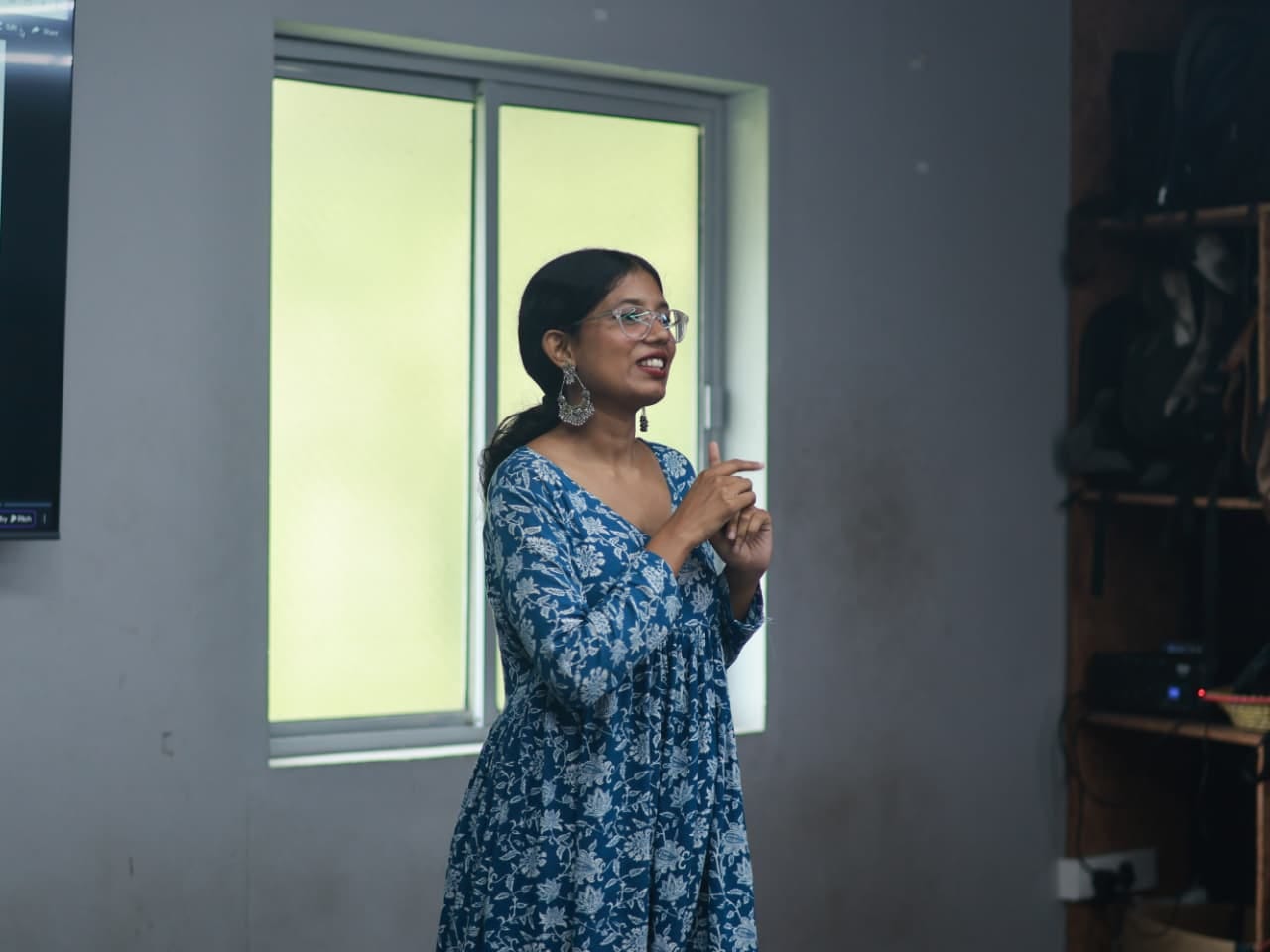
Behind Manslater wasn’t a startup team or a polished pitch deck. It was Aksa Rose, a final year B.Tech student at LBS Institute of Technology for Women, Poojappura, sitting with her laptop, just wanting to build.
Before Tech Became “Tech”
Long before words like AI, LLMs, or fine-tuning entered her vocabulary, Aksa’s relationship with computers was simple and playful. In school she learned Scratch because her sister had to do a project. She didn’t think of it as coding. It was just fun making animations with sprites everywhere. That instinct stayed with her. She then chose computer science in 12th grade because biology didn’t interest her. Computer science felt like the lesser resistance. Her first preference in engineering was EEE, but she landed in Electronics and Computer Engineering instead.
When she joined college, she realised that apart from IEEE, tech communities on campus were largely inactive. Learning felt boxed into syllabi and exam patterns. But Aksa wanted to genuinely understand technology, and for that, she had to step outside the lines and start learning alone. Her process was simple. Read things you don’t fully understand. Try ideas that don’t always work. Slowly, she gathered a few people around her who were equally curious, not to start anything formal, but simply because learning together felt better than learning in isolation.
Then one evening, Aksa met a few seniors who spoke about tech differently. Not in terms of grades or placements, but in terms of what they were building, breaking, and figuring out for themselves. Through them, she heard about TinkerHub. She was pulled in by how people spoke about tech with excitement and not obligation. And when the call for the Women in Tech role for her campus came the following year, she applied without overthinking it and got in.
“It was one of the best choices I have ever made. I’m very lucky for the exposure I had.”
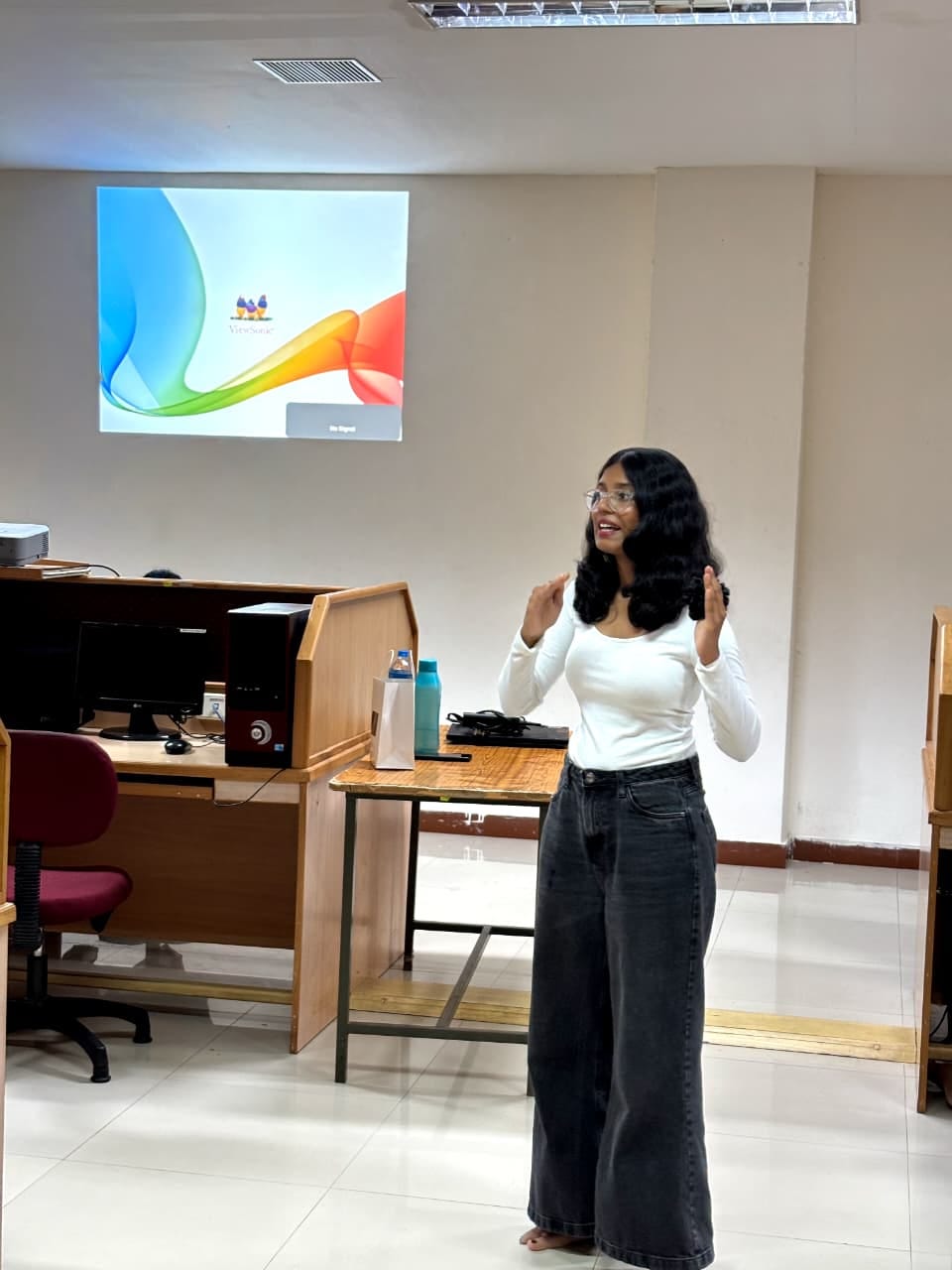
Her first Saturday Hacknight at TinkerSpace showed her something simple and powerful: learning didn’t have to be silent. Feeling inspired she set up her very own Saturday Hacknight in the girls hostel at her college for the girls who couldn’t easily leave the hostel late at night. This idea spread like wildfire. Other colleges started picking up on the same concept. When TinkHerHack rolled around and began running hackathons inside hostels, the inspiration traced back to these early experiments. Aksa didn’t set out to “solve accessibility.” She just removed friction where she saw it. Eventually, she was given the opportunity to be the Project Coordinator for Saturday Hacknight at TinkerSpace.
The Question That Wouldn’t Go Away
By the end of her third year, Aksa had done what most people would consider progress. Leadership roles, responsibility, and visibility within the community. But she was bored. The work mattered to her, but it didn’t go deep enough.
She was more interested in understanding systems than managing them. More curious about why things break than about organising. So she stepped away from managerial roles and focused more on learning and building.
Once while working on frontend projects and using AI tools like Cursor, she noticed something unsettling. When you prompt an AI vaguely, it doesn’t hesitate. It doesn’t pause to say “I’m not sure.” It hallucinates confidently. Why would a system sound so sure when it was wrong? Why didn’t uncertainty show up in its answers? That question lingered in her mind.
She started reading research papers on LLM hallucinations. She learned about prompting behaviour, took Andrew Ng’s machine learning course, and for the first time, the math began to make sense. That led her into deep learning, then RAG, then fine-tuning.
By building small experiments, changing architecture just to see what would happen, and breaking models on purpose, she learned by watching failure closely.
And she shared what she learned openly. She started posting her learnings on LinkedIn and people reached out to discuss neural networks.
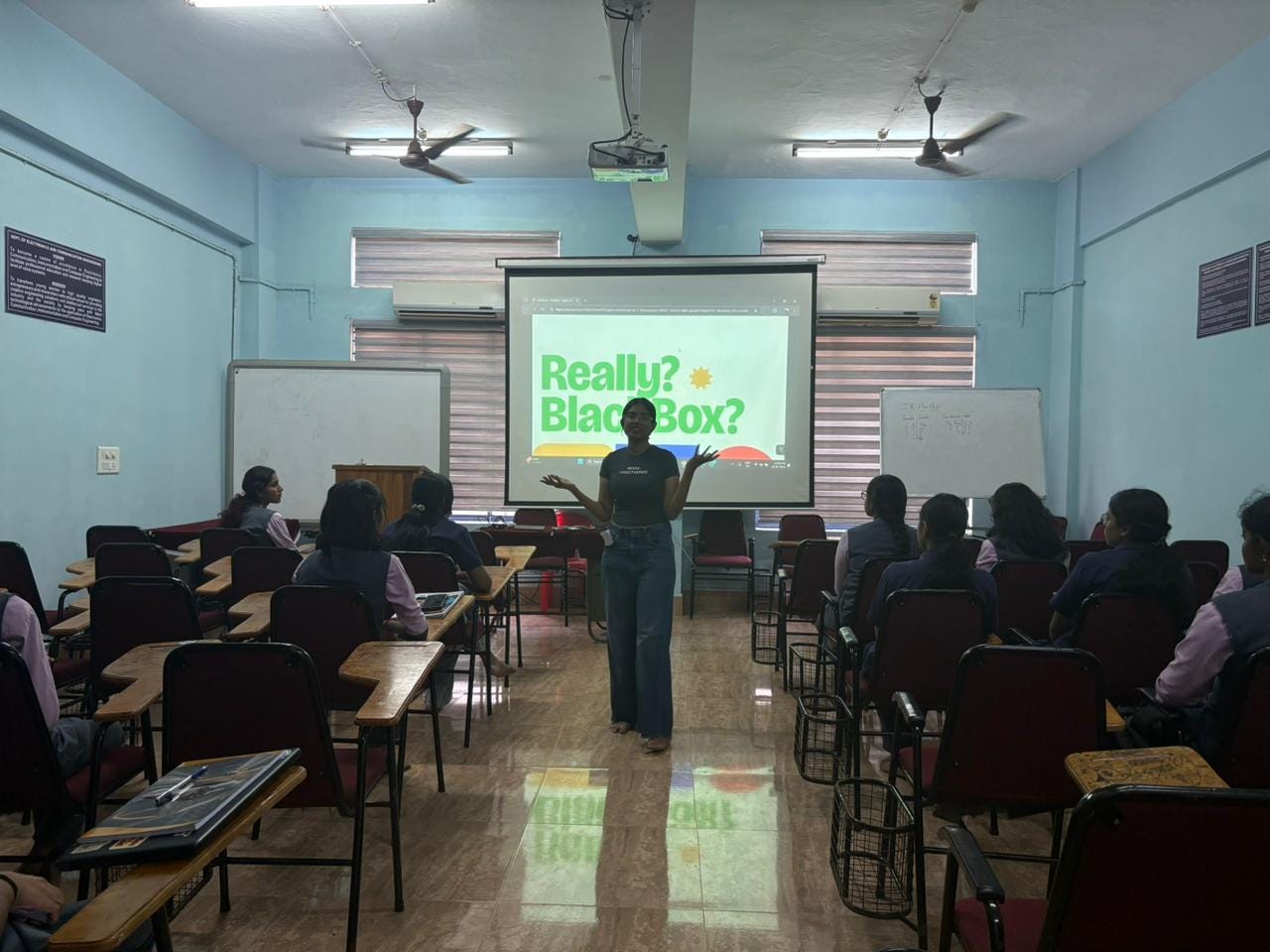
Manslater is Born
Then came her big break. Manslater.
Her idea was born through a video she had watched a while ago. A reel about fake products you wish were real. It was funny, absurd and it sparked a question: what would it take to actually build something like this?
But there was a problem — there was no dataset. So in true Aksa fashion, she became the dataset. Scenarios were imagined. Cases were written and rewritten. At one point, Aksa even deleted everything and started again. On a train ride back home, she curated the data, believing that the dataset wasn’t just input — it was the soul of the project. Fine-tuning on custom data took far more time and effort than she expected.
The next step-back was the lack of credits.
She approached TinkerHub for OpenAI API credits and spent nights at TinkerSpace using GPUs. She stayed late, experimented, iterated, and expanded the dataset to handle edge cases. Manslater slowly stopped being just an idea and started becoming a real system.
When Manslater was finally released, she didn’t expect much from it. But the internet did.
Stories turned into DMs. DMs turned into a LinkedIn post. The post went viral — 1,000+ reactions. Thousands of people used it. Someone shared it in a forum in Kozhikode, and traffic spiked overnight. The domain was sponsored. Model credits were sponsored.
Then came a small notification.
Twenty-five dollars. Her first Buy Me a Coffee.
It wasn’t about the money. It was proof. Proof that building something honest even playful could matter to someone else.
After Manslater, something shifted for Aksa. The excitement of building something people used didn’t push her toward chasing another viral idea, it pushed her inward. She wanted to understand what was happening underneath. Why models behaved the way they did. Why changing one small thing could completely alter an outcome.
So she went deeper into neural networks. She started with a simple neural network to recognise handwritten digits. Then another. Then another version of the same one, slightly altered. She would build it, test it, look at the output, feel dissatisfied, and change the architecture just to see what would happen. Sometimes it worked. Sometimes it broke in ways she didn’t expect. Each time, she learned something new.
Ultimately what fascinated her wasn’t just getting it right, it was watching how systems responded to change.
Aksa has figured out how she learns best. She reads more than she watches videos. Documentation makes more sense to her than endless tutorials. She likes sitting with something she doesn’t fully understand and staying there until it clicks. She learns by building not after she understands, but so that she can understand.
“If the project is interesting enough,” she says, “you’ll learn how to build it.”
That belief has guided almost everything she’s done since.
Her love for math naturally pulled her toward reinforcement learning. When she realised how math-heavy it was, she leaned towards it. She took it as a challenge and built a Blackjack game using reinforcement learning, because honestly, it scared her a little. It demanded patience and it would force her to think differently.
But difficulty is never a warning sign for Aksa. It’s an invitation.
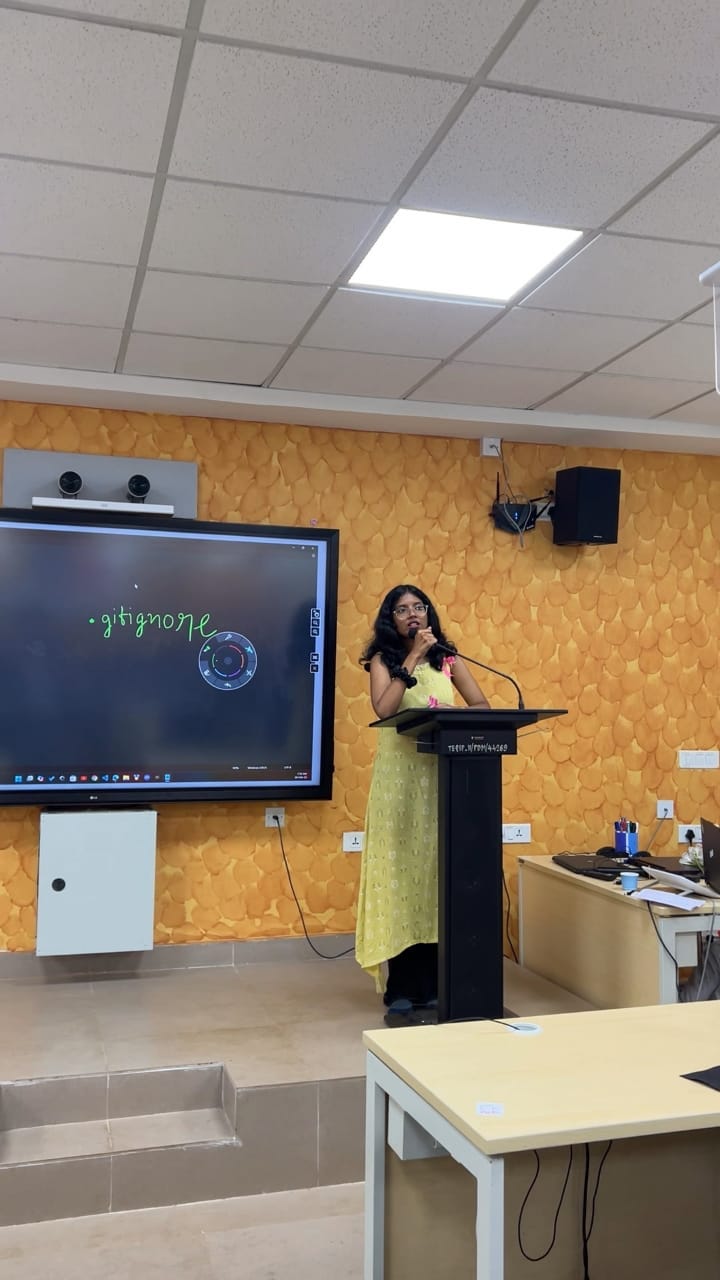
Showing Up Is the Real Hack
Aksa often talks about what she calls “visibility privilege,” but she’s quick to clarify what she means by it. It wasn’t something handed to her. It was the result of showing up consistently for two years.
She volunteered with TinkerHub through her first and second years. She attended sessions. Stayed back. Asked questions. Built things. Helped others. Spent time in spaces where learning was happening. When opportunities like access to GPUs, sponsored domains, API credits came, they didn’t feel random but rather, earned.
“I just showed up,” she says. “I networked, learned, and built constantly. This is how I got results.”
That mindset still shapes how she moves through tech.
Today, Aksa is doing an internship in AI/ML. She’s still learning, still building, still experimenting on the side. Sometimes she has ideas that sound ridiculous at first like predicting breakups from screenshots and sometimes others that feel deeply serious. She doesn’t rush to categorise them. She just lets curiosity lead.
Her advice, when asked, remains refreshingly grounded.
“Build your idea,” she says. “Even if it’s not a billion-dollar startup. Just build it no matter how small.”
Manslater may have started as a joke. But Aksa Rose never gave up on it.
Her journey is a reminder that curiosity compounds steadily. If you stay with something long enough, and are brave enough to keep going when no one is watching, the result will always show.
Watch Aksa’s podcast here to know more about her story
메타데이터
- post_id
- 244e2bcdd8b7
- slug
- maker-of-the-month-nov-25-aksa-rose-build-before-you-figure-it-out-244e2bcdd8b7
- url
- https://medium.com/tinkerhub/maker-of-the-month-nov-25-aksa-rose-build-before-you-figure-it-out-244e2bcdd8b7
- canonical_url
- https://medium.com/tinkerhub/maker-of-the-month-nov-25-aksa-rose-build-before-you-figure-it-out-244e2bcdd8b7
- author_url
- https://medium.com/@feminamerin
- status
- ok
- fetched_at
- 2026-06-10 18:44:10