Expert lecture for Kubernetes/Openshift
On 1st March 2021 we the students of LinuxWorld Informatics Pvt. Ltd. had another great day as we had Mr. Amel Mathai who is Technical…
Expert lecture for Kubernetes/Openshift

LinuxWorld logo
On 1st March 2021 we the students of LinuxWorld Informatics Pvt. Ltd. had another great day as we had Mr. Amel Mathai who is Technical Delivery Manager, RedHat Training — India/South Asia, RedHat , Mr. Daleep Singh Bais who is Senior Technical Instructor, RedHat and Mr. Abid Mattoo who is Partner Sales Manager at RedHat (GLS), RedHat.
In this technical session we learned about Kubernetes, Openshift, container technology and its history, virtual machine and much more.
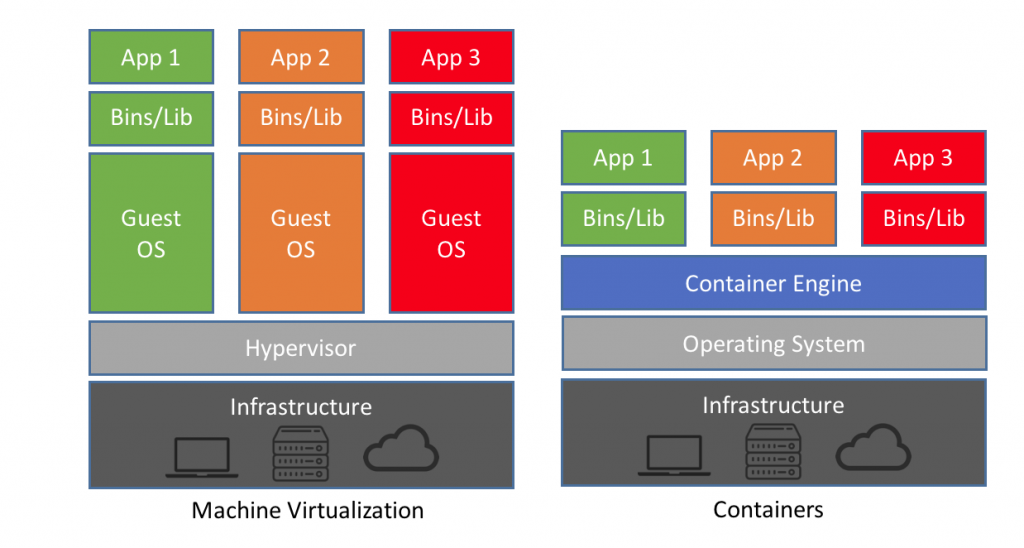
Until a few years back Virtual machines were said to be the way to go for most industry use case as they provided multi tenant option, virtual servers allowed us to run several OSes and applications on the basis of the shared physical hardware, which makes it a more cost-effective option than a physical server.
VMs were designed for running software on top of physical servers to emulate a particular hardware system. A hypervisor, or a virtual machine monitor, is software, firmware, or hardware that creates and runs VMs. It’s what sits between the hardware and the virtual machine and is necessary to virtualize the server.
Hypervisors are a way to manage virtual machines (VMs) on processors that support the virtual replication of hardware. Not all processors have this type of hardware — it’s typically found in mid- to high-end microprocessors.
But then came in containers with their ability to boot within a few seconds and their light weighted-ness and has ever since taken the world by storm…
Container sits on top of a physical server and its host OS — for example, Linux or Windows. Each container shares the host OS kernel and, usually, the binaries and libraries, too. Shared components are read-only. Containers are thus exceptionally “light” — they are only megabytes in size and take just seconds to start, versus gigabytes and minutes for a VM.
Containers also reduce management overhead. Because they share a common operating system, only a single operating system needs care and feeding for bug fixes, patches, and so on. This concept is similar to what we experience with hypervisor hosts: fewer management points but slightly higher fault domain. In short, containers are lighter weight and more portable than VMs.
Kubernetes
Kubernetes is a portable, extensible, open-source platform for managing containerized workloads and services, that facilitates both declarative configuration and automation. It has a large, rapidly growing ecosystem. Kubernetes services, support, and tools are widely available. Click here to learn more.
Limitations
While Kubernetes offers portability, scalability, and automated, policy-driven management to its users, it is an incomplete solution. It does not include all of the components needed to build, run, and scale containers in production, such as the operating system, continuous integration/continuous delivery (CI/CD) tooling, application services, or storage. A large amount of work also needs to be done to set roles, access control, multitenancy, and secure default settings. Kubernetes does provide pluggable interfaces for many of these components and services, offering flexibility and choice for users.
Hence to overcome this we require a solution which is as great as Kubernetes and is easy to use as well…
Openshift
OpenShift brings added-value features to complement Kubernetes, and that’s what makes it a turnkey platform, readily usable in production, and significantly improving the developer experience, as will be shown throughout the post. That’s what makes it both the successful Enterprise Platform-as-a-Service (PaaS) everyone knows about from a developer perspective, but also the very reliable Container-as-a-Service from a production standpoint. Since Kubernetes is great at container orchestration and management, these features of Kubernetes are directly used, as Kubernetes is a feature of Openshift.

With OpenShift, Red Hat has decided to shield this complexity and deliver a comprehensive platform, including not only Kubernetes at its core, but also all the essential open source tools that make it an enterprise-ready solution to confidently run your production. Of course, in case you already have your own stacks, then you can opt-out and plug into your existing solutions.
I would like to thank @Amel Mathai and @Daleep Bais for the session of industrial use cases of Kubernetes and Openshift. And also a special thanks to @Vimal Daga sir and @Preeti Chandak ma’am for organizing such an inspiring and erudite Session.
메타데이터
- post_id
- 246aa61289d2
- slug
- expert-lecture-for-kubernetes-openshift-246aa61289d2
- url
- https://medium.com/@prithvirajsingh1604/expert-lecture-for-kubernetes-openshift-246aa61289d2
- canonical_url
- https://medium.com/@prithvirajsingh1604/expert-lecture-for-kubernetes-openshift-246aa61289d2
- author_url
- https://medium.com/@prithvirajsingh1604
- status
- ok
- fetched_at
- 2026-07-28 12:09:50