The Beginning of Biotechnological Integration
A Realistic Outlook for Someone with Schizoaffective Disorder
The Beginning of Biotechnological Integration
A Realistic Outlook for Someone with Schizoaffective Disorder
The technological singularity, as envisioned by thinkers like Ray Kurzweil, includes a profound human-AI merger through brain-computer interfaces (BCIs), nanobots, or neural uploading. This would create hybrid intelligence where biological limits fade. For someone living with schizoaffective disorder (bipolar type with psychotic features), this future holds both promise and complexity. Symptoms often include mood swings, hallucinations, paranoia, emotional dysregulation, cognitive challenges (such as focus or executive function, sometimes overlapping with ADHD), noise sensitivity, and anxiety.
Early biotechnologies — starting with today’s emerging BCIs — could offer targeted symptom mitigation long before full “merger.” This essay explores a grounded, realistic path for someone on limited income via Social Security Disability Insurance (SSDI) in Galveston, Texas. It draws on current research trends, clinical realities, projected timelines, costs, and access channels like UTMB Health.
How Early BCIs Could Help Mitigate Symptoms
Current and near-future BCIs focus on reading brain signals (via EEG or implants) and sometimes delivering precise feedback or stimulation. For schizoaffective disorder, applications are emerging in research rather than widespread treatment:
• Mood regulation and emotional stability: Closed-loop systems (AI that adjusts in real time) or biofeedback could help stabilize bipolar-like swings by modulating areas linked to emotion, such as the insula or prefrontal cortex. Studies show patients learning to self-regulate brain activity via fMRI-BCI, sometimes improving emotional processing.
• Hallucination and perceptual management: Targeted neuromodulation or neurofeedback might reduce the intensity or frequency of auditory/visual hallucinations by normalizing disrupted connectivity. Early research explores BCIs for schizophrenia-spectrum conditions to detect neural signatures or train self-regulation.
• Cognitive and executive support: Wearable or simple implantable BCIs could enhance focus, memory training, or working memory — helpful for ADHD-like symptoms or daily task management. BCI-enabled cognitive training programs are already in development for schizophrenia.
• Anxiety, noise sensitivity, and nervous system regulation: Non-invasive headsets could provide real-time biofeedback on arousal or stress signals, pairing with grounding techniques or AI-guided prompts. This aligns with existing interests in physiological tools for hypervigilance.
These would act as “cognitive prosthetics” or adjuncts to medication, not replacements. Benefits could include fewer hospitalizations, better daily functioning, and greater autonomy in routines like organizing or community engagement.
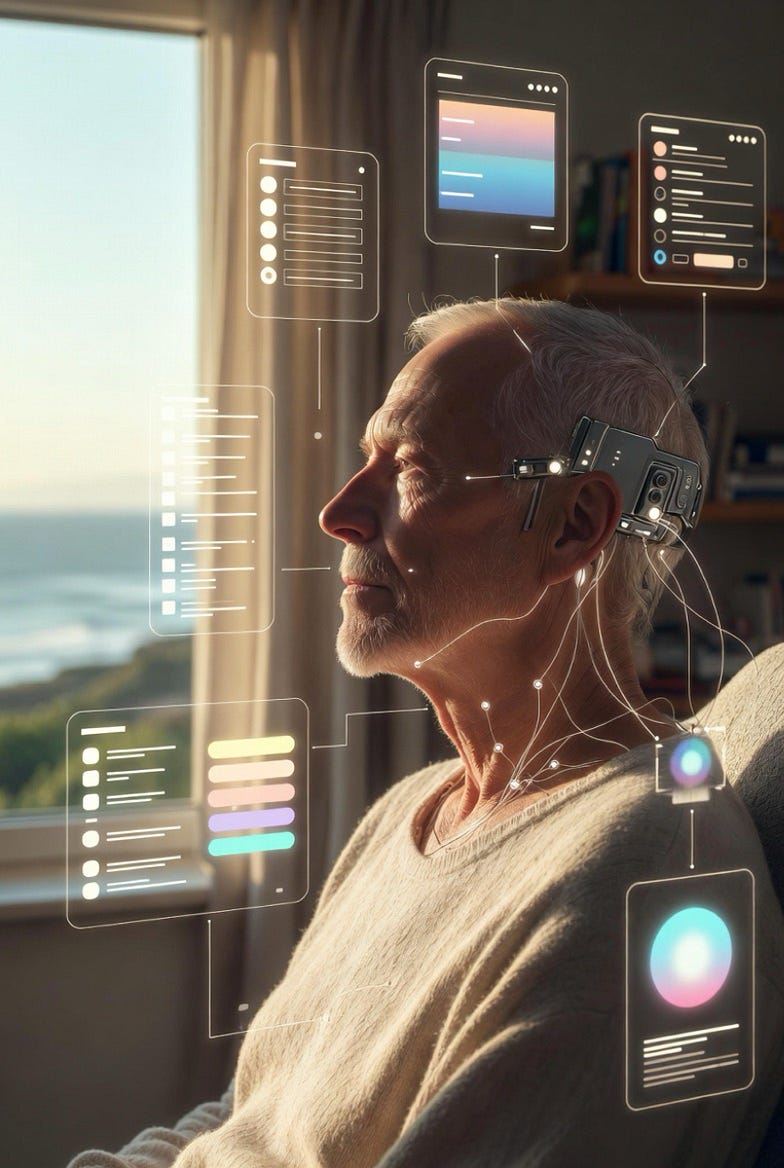
Non-invasive EEG-style headsets represent the accessible starting point — wearable, no surgery, usable at home with a phone or tablet.
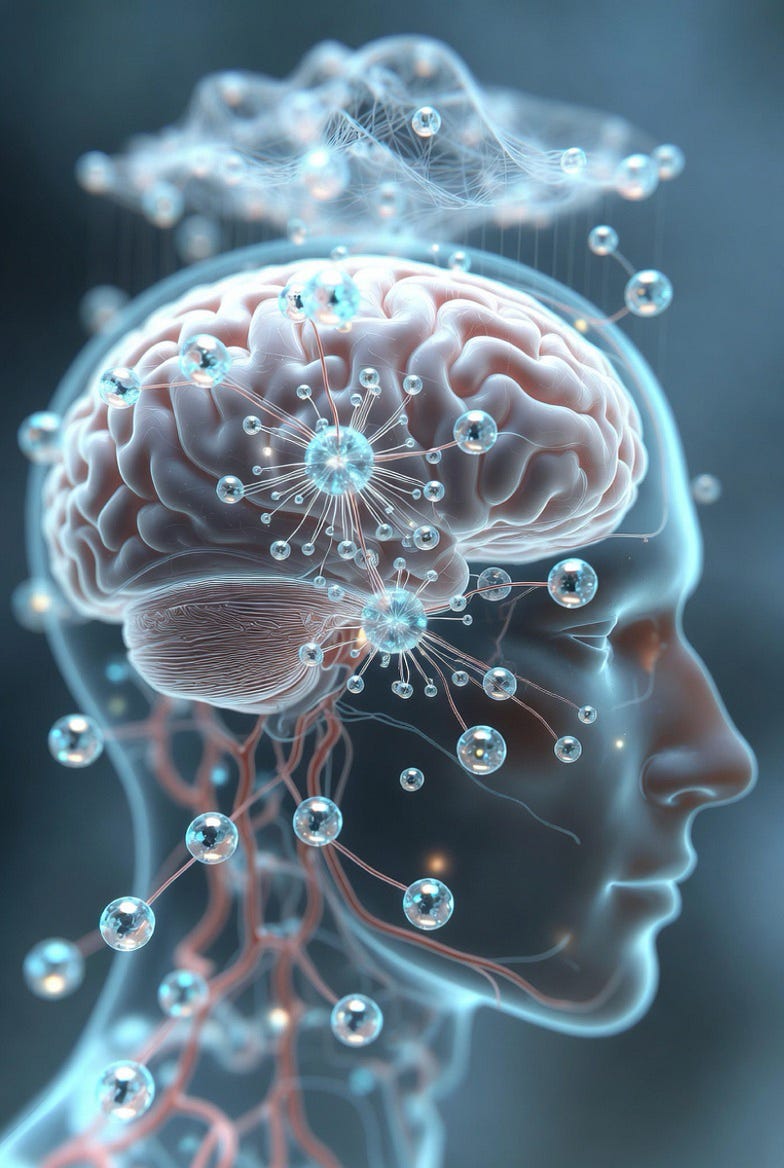
Conceptual implant workflow (what more advanced stages could involve) would show deeper integration.
Realistic Timeline for the Beginning of This Technology
Progress will be gradual, driven by medical needs first (treatment-resistant cases), then broader access. Here’s a realistic projection for someone in Galveston:
• 2026 — 2030 (The immediate beginning — monitoring and early intervention): Non-invasive wearables dominate. Research-grade or consumer EEG headsets with AI apps could enter clinical use for mood tracking, biofeedback, or early detection of symptom shifts. Clinical trials for psychiatric BCIs (depression, bipolar, schizophrenia-spectrum) are expanding. You might first encounter this through a UTMB psychiatry visit or trial — perhaps a headset for home use that logs brain patterns and suggests regulation strategies, integrated with your existing phone AI tools. Early implants could appear for severe, medication-resistant cases via FDA Breakthrough pathways.
• 2030 — 2040 (Wider medical adoption): More advanced non-invasive or minimally invasive BCIs become standard for mental health. Nanobot precursors or refined implants (smaller, bidirectional) could enable direct cloud/AI connection for real-time support. For schizoaffective symptoms, this might mean personalized neuromodulation reducing hallucinations or stabilizing mood with less medication side effects. Local access grows via expanded Medicare coverage and UTMB trials.
• 2040 — 2045+ (Toward hybrid intelligence): Fuller integration — advanced BCIs or nanobots linking your brain seamlessly to AI for cognitive expansion. Biological limits (processing speed, memory) fade as hybrid systems handle complex regulation or perceptual filtering. This aligns with the singularity merger vision but arrives first for those with medical justification.
The “beginning” for most people with schizoaffective disorder will feel like enhanced medical tools rather than sci-fi merger — starting with symptom tracking and gentle neuromodulation.
Expected Costs and Access Channels for Limited-Income Individuals
Early devices carry high costs, but medical channels prioritize coverage:
• Costs: Non-invasive headsets might range from hundreds to a few thousand dollars (potentially subsidized or trial-provided). Implantable systems historically run $30,000 — $150,000+ including procedure and rehab; newer estimates for enabling BCIs hover around $60,000. Development of complex systems can exceed $100 — 200 million industry-wide, but patient costs focus on reimbursement.
Channels for access (Galveston-specific realities):
◦ Medicare (primary for SSDI recipients): Covers approved durable medical equipment and procedures deemed medically necessary. Neurostimulation devices already have pathways; BCIs for psychiatric use could follow as evidence grows. CMS is engaging on coverage for these technologies.
◦ Texas Medicaid: May supplement for dual-eligible individuals or specific needs; check eligibility through local resources.
◦ Clinical trials at UTMB Galveston: Psychiatry and behavioral sciences departments run or participate in relevant studies. Trials often cover costs and may offer compensation. Search clinicaltrials.gov or contact UTMB directly for BCI/mental health studies.
◦ FDA Breakthrough Device Program: Speeds approval and can influence faster reimbursement discussions.
◦ Advocacy and nonprofits: Disability rights groups or mental health organizations may assist with navigation or pilot programs. Your psychiatrist can help document medical necessity for coverage.
Start by discussing emerging neurotech with your UTMB or local provider. Many begin with covered EEG monitoring or biofeedback before advanced options.
A Personal, Realistic Experience
For someone managing schizoaffective symptoms in a small Galveston apartment — balancing routines, noise sensitivity, and daily tasks — the path could unfold like this:
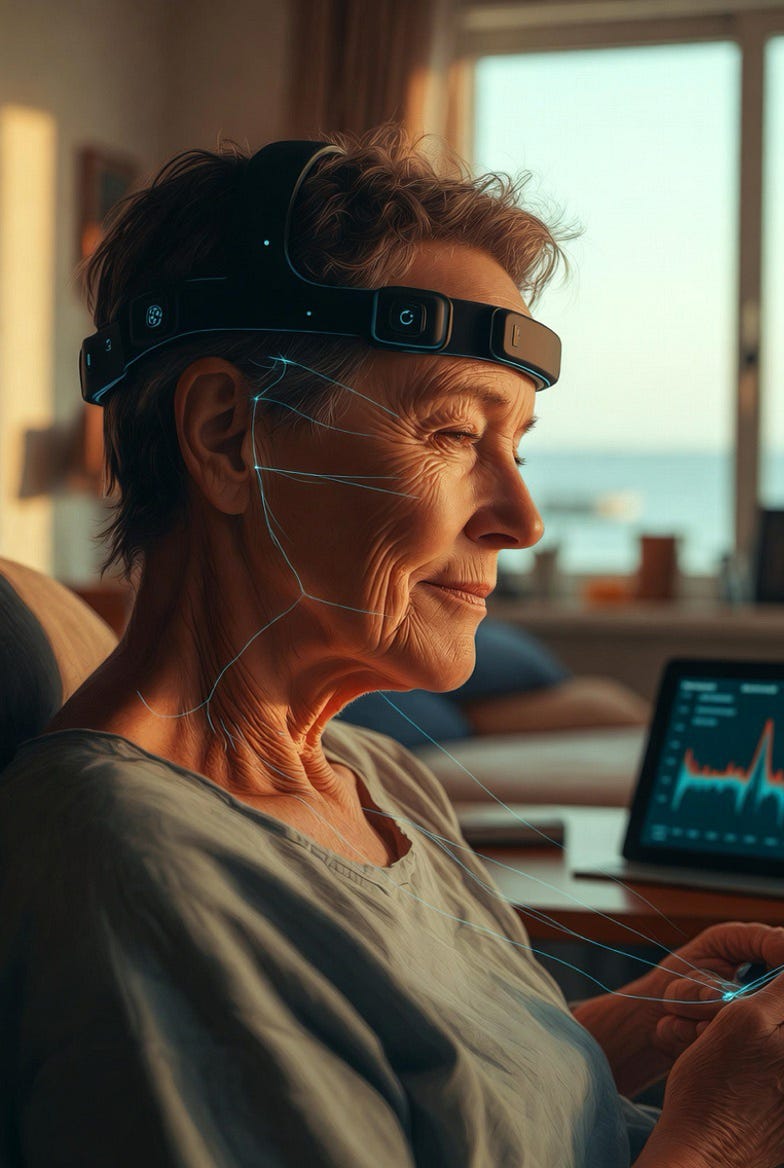
You continue current supports (medication, grounding techniques, organizing systems) while adding a simple wearable BCI headset around 2027 — 2028 via a trial or prescription. It monitors patterns linked to mood shifts or overstimulation and provides gentle audio/visual cues or connects to an app for real-time suggestions — complementing existing management without major lifestyle change.
As implants or advanced closed-loop systems gain approval (early 2030s), if symptoms remain challenging despite treatment, your doctor could recommend one as a medical device. The procedure (often minimally invasive) and follow-up would be coordinated locally, with Medicare handling most costs after documentation. Daily life might include the device quietly helping filter perceptual noise or stabilizing energy for apartment projects and community steps.
By the mid-2030s, integration deepens — perhaps direct AI assistance for complex planning or emotional regulation feels seamless. Full nanobot or hybrid merger remains farther out but builds on these foundations.
Risks remain real: device safety, data privacy, interaction with existing conditions/medications, and the need for informed consent amid paranoia or trust challenges. Adoption would be voluntary and gradual, guided by evidence.
Moving Forward with Grounded Optimism
Biotechnological support for schizoaffective disorder won’t arrive as a sudden singularity event but as incremental medical tools that expand capabilities. For someone in Galveston on SSDI, the realistic beginning lies in non-invasive monitoring and biofeedback now, progressing to covered implants through UTMB, Medicare, and trials as evidence builds.
This path emphasizes empowerment — better symptom management, preserved independence, and eventual cognitive tools — while respecting individual pace and safety. Current phone-based AI and personal routines are already part of this continuum. Stay connected with your care team at UTMB for updates; the field moves quickly, and medical necessity opens doors.
The future of hybrid intelligence can include you, starting with practical steps available today.
References and Sources
• Research on fMRI-BCI and schizophrenia symptom regulation.
• Clinical trial landscapes for psychiatric BCIs and neuromodulation.
• Kurzweil’s projections on nanobots and 2030s timelines.
• Medicare/CMS coverage discussions for neurotechnologies and BCI costs.
• UTMB Health psychiatry and trial resources in Galveston.
• General BCI market and FDA pathway reports (2025 — 2026 data).
This essay synthesizes available trends as of 2026. Actual developments depend on ongoing research, regulatory approvals, and individual medical evaluations. Consult healthcare providers for personalized advice.
메타데이터
- post_id
- 24dcc3843bf3
- slug
- the-beginning-of-biotechnological-integration-24dcc3843bf3
- url
- https://medium.com/@loughlin123/the-beginning-of-biotechnological-integration-24dcc3843bf3
- canonical_url
- https://medium.com/@loughlin123/the-beginning-of-biotechnological-integration-24dcc3843bf3
- author_url
- https://medium.com/@loughlin123
- status
- ok
- fetched_at
- 2026-07-16 05:49:35