In Defence Of Drag
Womanface!
In Defence Of Drag

Drag pageants are huge across Latin America, Thailand and the Philippines — they are now global in scale with international representation.
Womanface!
We are now past a peak trans movement since around 2007, probably fuelled more by a medical establishment cashing in on pushing hormones and ops on teenagers rather than Ru Paul’s Drag Race. Indeed, “rapid onset gender dysphoria” (ROGD) as documented by Abigail Shrier among others, applied more to teenage girls identifying as boys that had become quite a trend, before losing momentum (teen trans medicalisation is now increasingly outlawed in countries such as the UK). Gender based teen angst was quite common before medicalised procedures in the 20 thcentury when such girls were described as tomboys rather than “trans” (a generalised umbrella term with multiple meanings). The peak trans period identified here probably exploded with the rise of internet social media, rubber stamped by politicians parroting platitudes “trans women are women” and similar; debatable dictums that have now lost their lustre and may not be vote winning.
Peak trans was and to some extent remains a time when men, claiming to be women were entering women’s prisons, medical spaces or sports, sometimes engaging in sexual abuse or helping to topple athletic records formerly held by women, born as such. This remains contested ground and diplomacy seems the best way forward.
Whereas that was a time when brave protests by women such as tennis ace Martina Navratilova were quickly stiffled and replaced by apologies for any “hurt” caused, today there is a growing sorority of women who will not apologise in a gender critical framework championed by a sisterhood, including best-selling author J. K. Rowling. The open trans-skepticism displayed by such campaigners sometimes claims that drag is an adoption of “womanface” akin to the former “blackface”. Why, ask campaigners like Australian Kirralie Smith is male to female trangenderism not treated with the same scorn as “cultural appropriation”? Should not men, getting disguised as women in entertainment be as guilty of womanface as former entertainers who used blackface? As Madeleine Kearns headlines — “If blackface is racist, then ‘womanface’ is sexist.”
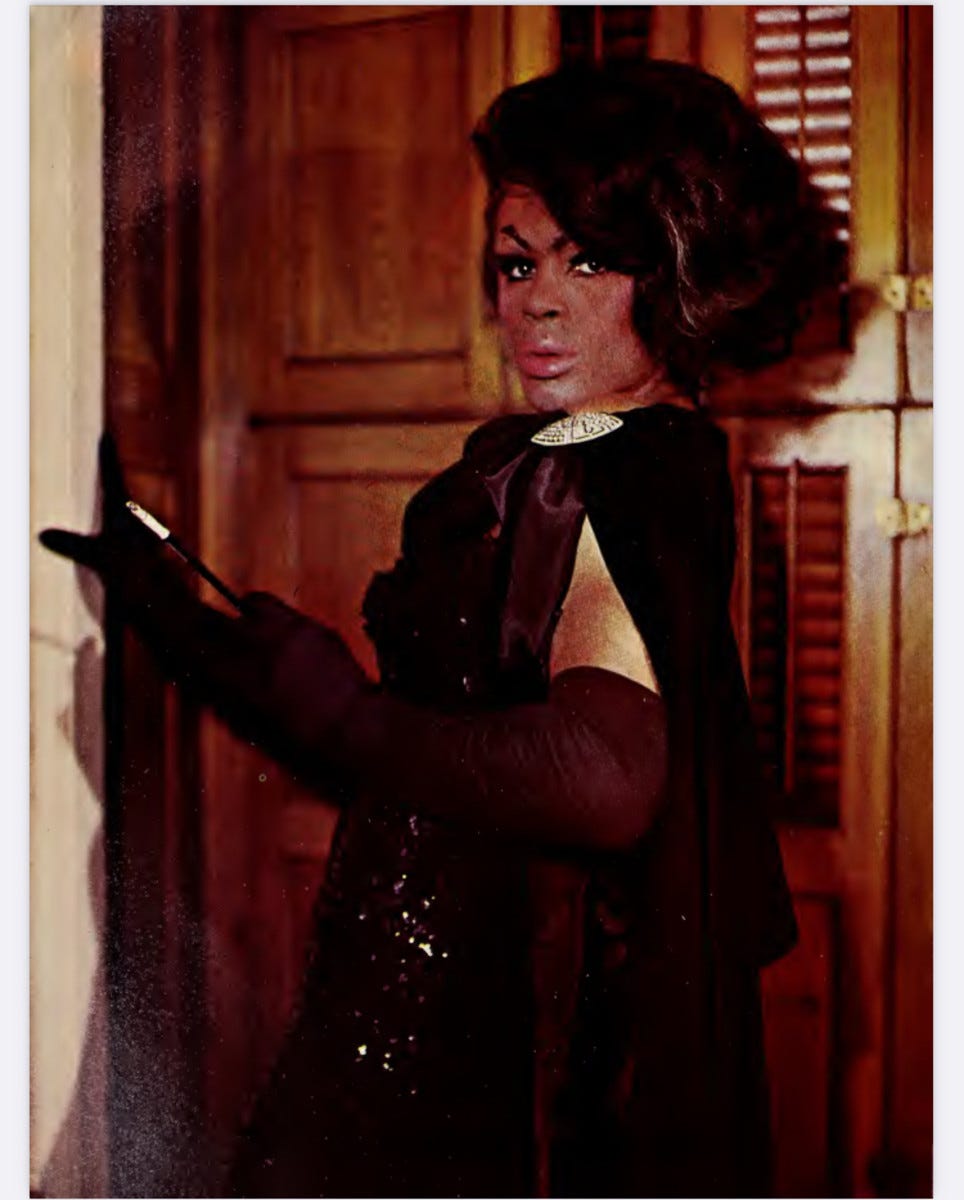
“Kick” Wilde, a black drag perfomer at a time it was somewhat underground. Drag empowered US black performers in the 1960s.
Arguments against perceived “appropriation”
The following reasons suggest that broadly, drag cannot be compared to blackface let alone the domain of “cultural appropriation” that isn’t necessarily immoral in so many ways.
- Drag does not deny that sex is real. Globally, drag by professional queens other than in parts of the West, is seen either as by men or a third gender similar to being eunuchs or gays rather than real women.
- Drag has existed within cultures that were homogenous and not segregated racially such as in Shakespearian England when all female roles were played by boys and men.
- Drag is international — it is not just a US or West European phenomenon but has existed in other cultures such as Japan, China and India. It remains mainstream in parts of South America, Thailand and the Philippines. It cannot be adequately subjected to parochial arguments based on offense or value judgments, since drag is widely appreciated as mostly benign in consequence (it doesn’t kill people or animals).
- Related to above, in mixed societies, drag is multiracial. It is enjoyed and practised by black, white and Asian races and others in-between. It spreads across languages, religions, cultures and even sexualities. Many drag queens are heterosexual and not necessarily gay.
- Given that in the West at least, beauty pageants and sexualised female entertainment is now seen as sexist as they “objectify women”, any vacuums created in this space seem to be increasingly given over to alternatives such as drag and “Pride”, sweeping many parts of the world. Women are now often too “important” to play purely ornamental roles.
- Most drag does not patronise or belittle women and even if it sometimes parodies them, women often enjoy such performances as much as men.
- Some forms of drag as in other entertainments serve to humour and educate couples and communities — enhancing romance, children and families.
Let us take these points in turn.
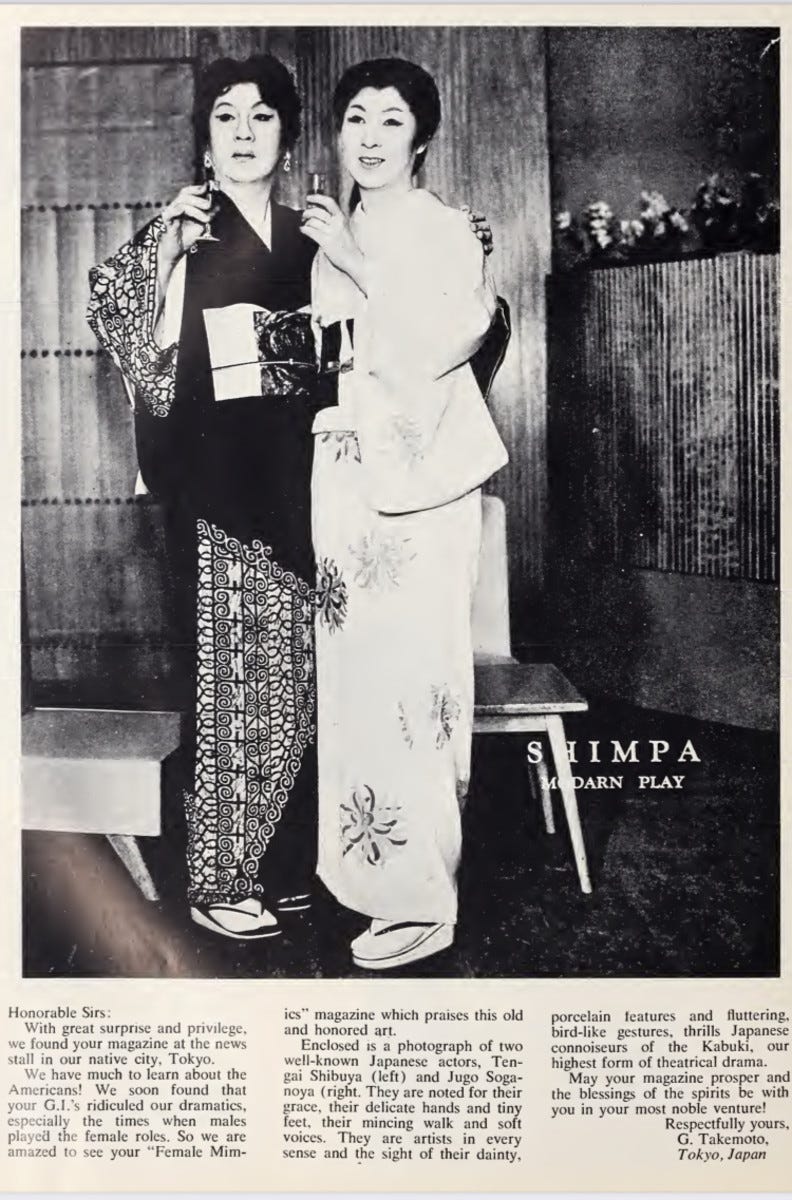
A heartfelt Japanese letter celebrating traditional drag theatre.
1. Sex is real
Drag does not deny that sex is real. J. K. Rowling laid down some principles in her statement on Twitter issued 19 thDec 2019:
“Dress however you please. Call yourself whatever you like. Sleep with any consenting adult who’ll have you. Live your best life in peace and security. But force women out of their jobs for stating that sex is real?”
Based on this, drag is not a campaign movement with political sloganeering. As practised in nightclubs, entertainment venues, some educational or religious settings and increasingly on our screens, most drag is about visual motifs, beauty, comedy and some subversion and sexuality without setting out an overarching philosophy or outlook. At its core is disguise, entertainment, glamour and an amplification of popular culture such as music. This is especially the case considering drag is historical, since 500BCE to the modern age. At no time was drag trying to overturn the functions and relations of the sexes and family life. If anything, it was part and parcel of society, its values and culture.

Philippine drag icon Paolo Ballesteros with his partner and daughter.
2–4 Drag is a diverse global phenomenon
Drag isn’t monolithic. Historically, many cultures had their own versions. In the Ancient Greco-Roman sphere, theatrical or priestly functions involved men in drag. Shakespearean acting engaged males in female roles as it was legally not acceptable for women to be public entertainment (for reasons that merit attention). India, Korea, China and Japan had and continue to have drag based entertainment and culture. In south India, multitudes of men and boys dress as women to honour the goddess Bhagavati during annual festivities in at least one local temple. In boys schools around the world and in the military, female theatrical or entertainment roles are often taken up by boys and men, in the absence of girls or women.
The Instagram accounts of famous drag queens have impressive follower counts, reflecting many nationalities including those where drag may be frowned on. US Based Ru Paul has an Instagram follower count of 5.1 million, Phillippino Paolo Ballesteros has 2.4 million and other names include several relatively unknown local stars who remain popular such as Evelina Grand from Russia or Eshan Dias from Sri Lanka.
Ever since the time that drag started exploding in the US from the 1960s and even before — artists were multicultural including black, white and increasingly Asian (e.g. Vivienne Pinay). There was generally no racism within the drag community that had to operate somewhat covertly until the 1970s.
Drag remains culturally significant even in cultures that are relatively homophobic such as in Pakistan, Iran and Afghanistan, not forgetting Russia. In some Islamic cultures as in Medieval Britain, women may not perform provocatively to the male gaze but such performances may instead be “sub-contracted” to men and boys such as Bacha bazi. Though now often outlawed, Bacha bazi often remains with its unfortunate consequences of sexual abuse. Although Russian law now discourages “LGBT”, perhaps driven by a hostility to Western culture, drag remains very popular in nightclubs resorted to by the wealthy. In Russia, feminine beauty portrayed by men often commands an audience.
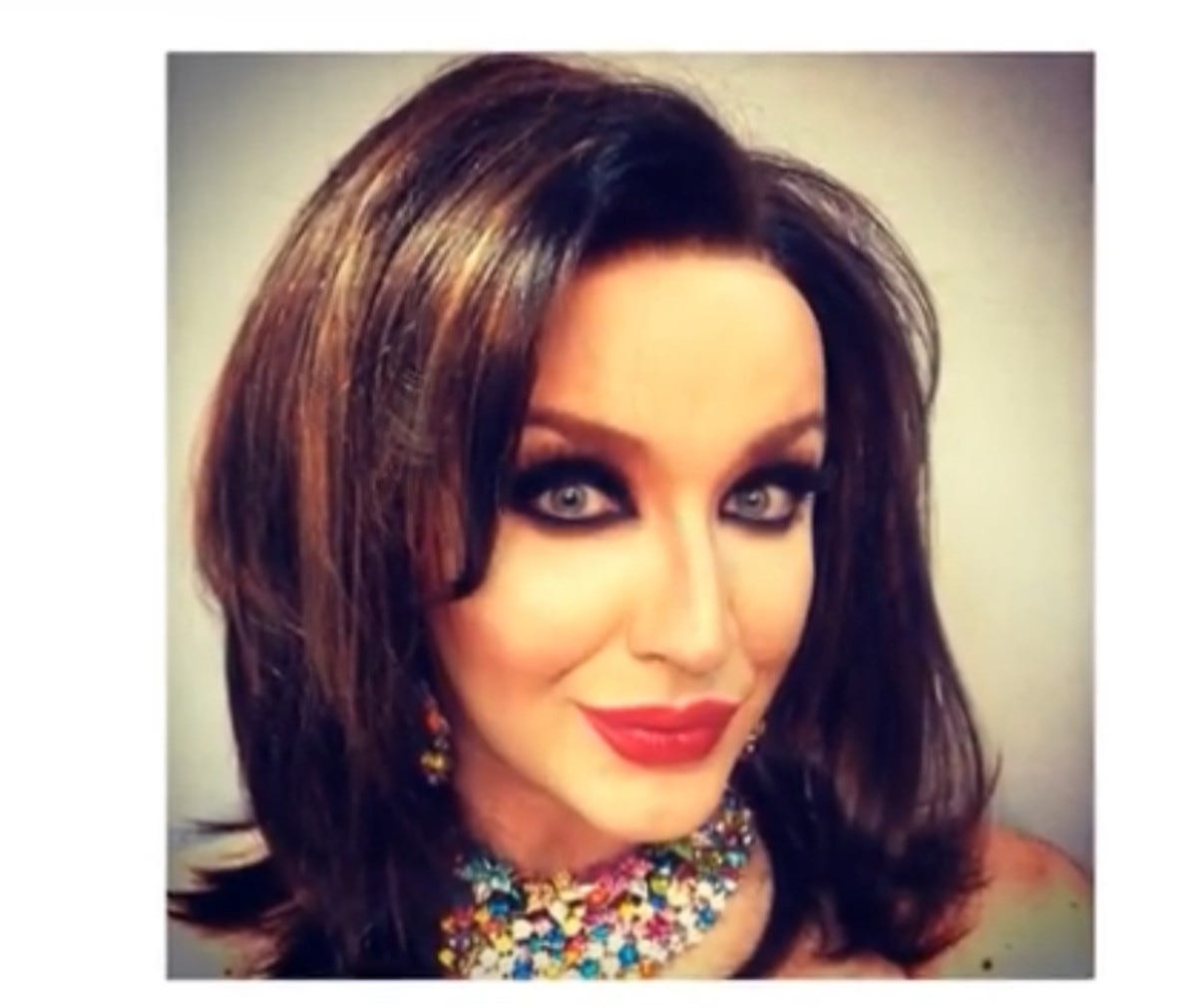
From Russia, Evelina Grand (his stage name) commands huge performance fees.
5–7 From Pageants to Pop
For some reason, women’s beauty pageants are now discouraged in the West. They are seen as demeaning and sexist. Whereas pageants like Miss World remain popular, they are less televised and some have been dogged by controversy since standards of sexism, misogyny and religious sensitivities around the world have varied greatly, leading to hostilities from the media or particular countries and communities. However drag pageants such as “Miss International Queen”, “Miss Gay Universe” in their multiple forms (rooted in the US) continue to flourish. RuPaul’s pageants have now gone international and don’t necessarily suffer the same slurs as cis-women pageants in interesting cultural twists. Drag has now gone mainstream from the US to the UK, Germany, Spain and now India. It was always huge in the Philippines and Thailand.
In Asian cultures, unlike in the West, they tend to legally recognise three sex categories rather than the sex binary. Most drag performers are in an intermediate category between men and women so the claim that they are actual women does not arise, creating conflicts with women’s sex based rights, medical and judiciary needs. Most drag queens identify as men, even when some may constitute trans women.
Drag remains a huge part of the modern, global entertainment industry and accusations of appropriation or woman-face only apply within localised debates among the chattering classes. Given an insatiable appetite for women’s beauty and fashion by men as well as women — it looks like many men are taking over feminine roles and beauty for these purposes as suggested in the pages of Vogue where drag is given more prominence than would suit some of its traditional, female readership.
Most drag does not belittle women. Indeed a great deal of drag represents imitation as the sincerest form of flattery. Most lip synching contests and similar are performed as an homage to female stars such as Lady Gaga, Taylor Swift or Marylin Monroe.
The twin German drag act Mary (Mary Morgan played by George Preusse) and Gordy (Gordy Blanche played by Reiner Kohler) famous in the 1980s played to packed family audiences with heterosexual men and women. Both presented illusions of feminine beauty, parody, comedy and entertainment but this clearly did not raise the hackles of societal sensitivities at that time. It is clear that drag in that context functioned as family friendly entertainment, popular with married couples.
Whereas drag queen story time is rightly scrutinised and somewhat controversial — drag played a big role in English children’s theatre in the form of traditional pantomime dames. Furthermore, drag queens were sometimes involved in children’s education from the 1970s onwards and may have a continuing role to play in certain contexts.

Mary Morgan played by George Preusse entertains a predominantly German heterosexual audience around the 1980s.
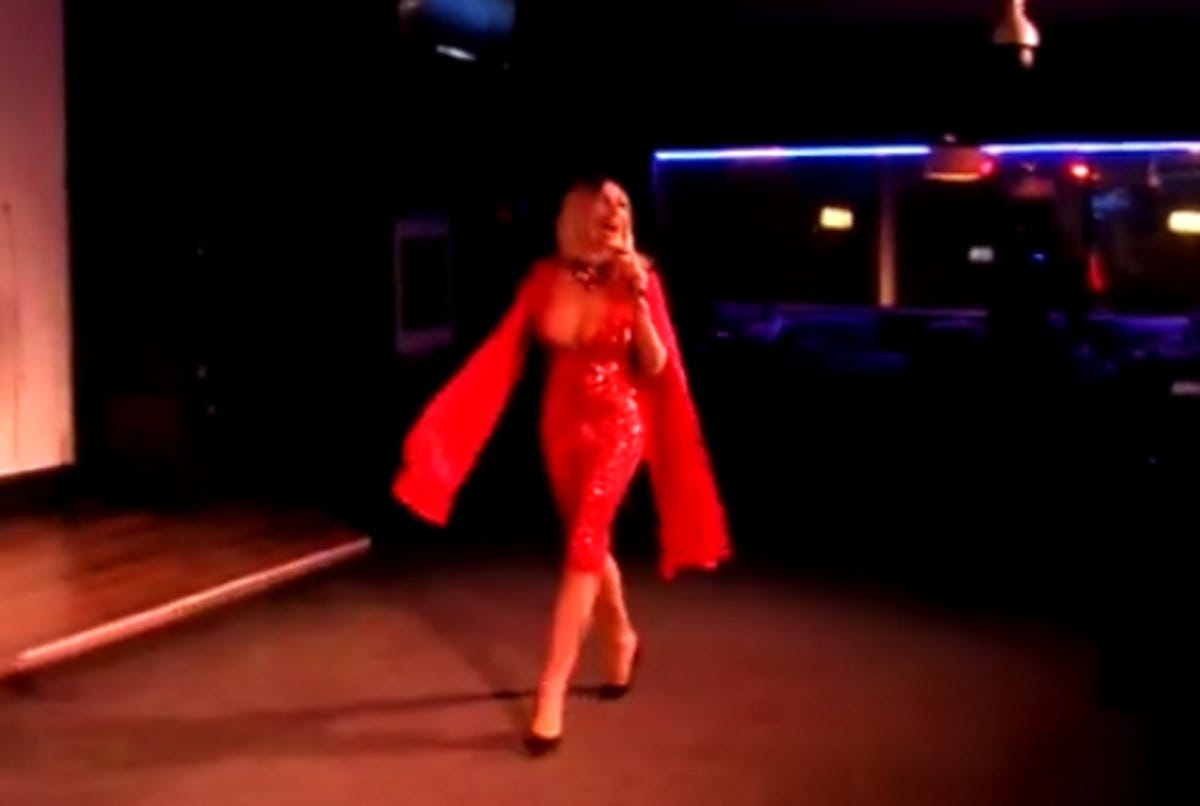
A Russian drag performer in a nightclub setting.
Coda
Drag is not without its controversies as a global movement. Before considering accusations of sexism and “appropriation”, maybe we should ask — so what? The fact is, except in Western cultural contexts where accusations and counter-accusations based on racist, sexist or other biases fly to and fro, the whole point of entertainment and theatre is based on presentation, disguises and parody that transcends race, religion and cultural sensitivities. Drag is worldwide despite opinions to the contrary. For example, with regards to “appropriation” if staging a theatrical performance, sometimes the right sorts of actors may not be available, and some others may have to take on the role.
Mimicry in nature at its many different levels is designed to help organisms survive, by guile for concealment, attack and defence in worlds of hunters and the hunted. Human societies and cultures are organised on similar principles, maybe with some values thrown in.
It may well be correct that some drag is sexist — but mostly it is a form of imitation based on an insatiable appetite or need for feminine presence and beauty by men and crucially, many women too. Drag entertainment is often family friendly and conducted based on commercial principals. Mostly, it is quite benign and does not rely on violence. Nor does it envision any particular sexuality per-se. Historically at least, it was part of a hetero-normative culture and remains so in many parts of the world.
In a night club in Russia, romantic couples will sit around their tables watching an attractive looking woman with exaggerated feminine charms singing lustily. It’s an open secret that she is a man! That is part of the attraction and subversion that may at some level, serve to bring people together. It results in entertainment for crowds with stars earning huge fortunes, while others struggle to compete and only dabble in it for pocket money, maybe slipped in their breasts in boozy bars.
For better or for worse, women now play a less important role in mass entertainment such as revues or chorus-girl performances in leg and hip swinging theatricals like the Cancan. In most societies women have more responsibilities including raising their families. To some extent, drag acts may have taken up the slack.
In the meantime, it is clear that drag is not in the same league as racist minstrel shows in being patronising and hateful. If it is, why does it remain popular with many men as well as women for the fashions if not the entertainment at a global scale?
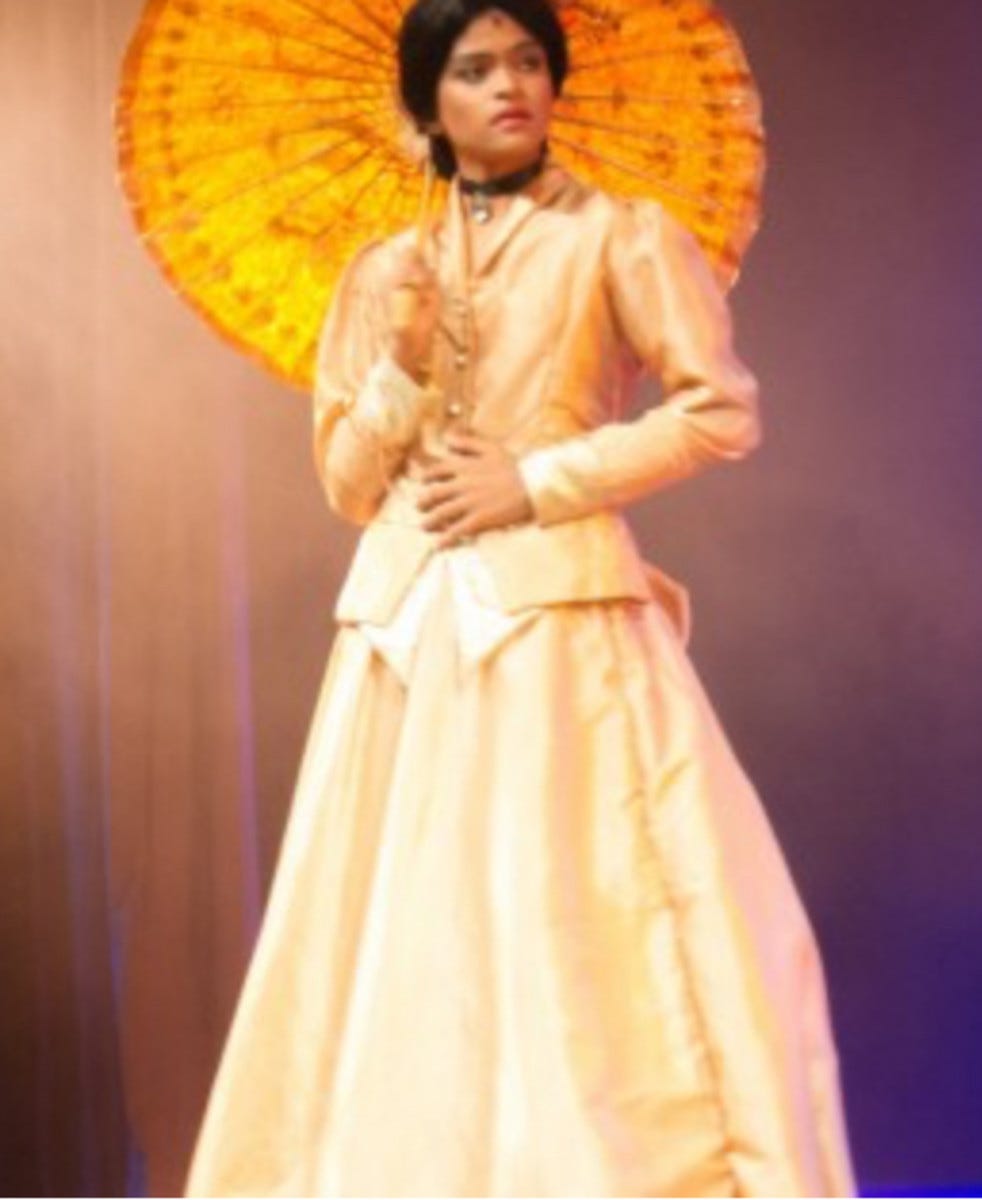
A boy plays a woman’s role in a rendition of “Around the world in eighty days” at a tropical Sri Lankan school. Politics don’t enter here — this is from a boys school and duty calls.
Bibliography
Shrier, Abigail 2021. Irreversible Damage — The transgender craze seducing our daughters. Regnery publications, NY.
Kearns, Madeleine, April 2023. If blackface is racist, then ‘womanface’ is sexist. Nationalreview.com.
Bulliet, C. J. 1928. Venus Castina — Famous female impersonators celestial and human. Bonanza Books, NY.
Originally published at https://hubpages.com on July 2, 2025.
메타데이터
- post_id
- 24e52697643e
- slug
- in-defence-of-drag-24e52697643e
- url
- https://medium.com/@tenochtitlan/in-defence-of-drag-24e52697643e
- canonical_url
- https://medium.com/@tenochtitlan/in-defence-of-drag-24e52697643e
- author_url
- https://medium.com/@tenochtitlan
- status
- ok
- fetched_at
- 2026-06-27 07:40:21