Think back to February 2020…
Why Law Firms and Knowledge Workers Are About to Feel the Shockwave
Think back to February 2020…
Most people remember the moment the world “snapped.” A few early warnings, a handful of people paying attention, and then — fast — normal life collapsed into something nobody would’ve believed a month prior.
I think we’re in that same phase again.
Not with a virus — this time with AI.

And I’m writing this because I keep having the same conversation with people I care about:
“So… what’s the deal with AI?”
I usually give the polite version. The “cocktail party” version. The version that doesn’t make me sound like I’ve lost my mind.
But the gap between what most people think is happening and what is actually happening is now too big to ignore.
I’ve watched this hit my world first
I’ve spent years building AI-driven systems in the real world — especially around law firms, intake, marketing, and lead conversion. Not theory. Not demos. Production systems with real consequences, real compliance constraints, real clients, real revenue.
Through Big Voodoo Interactive and Sentillian, I’ve built and deployed:
• AI call-handling and intake automation (the kind that can actually hold a conversation and qualify a lead)
• transcription + call recording + lead scoring
• routing and escalation logic (human handoff when it matters)
• multi-language workflows
• content + distribution systems that tie marketing directly to measurable case outcomes
• agentic layers that behave more like operators than chatbots
And here’s the part people outside tech don’t fully grasp yet:
The reason so many builders are sounding alarms isn’t because we’re making a prediction.
It’s because this already happened to us first.
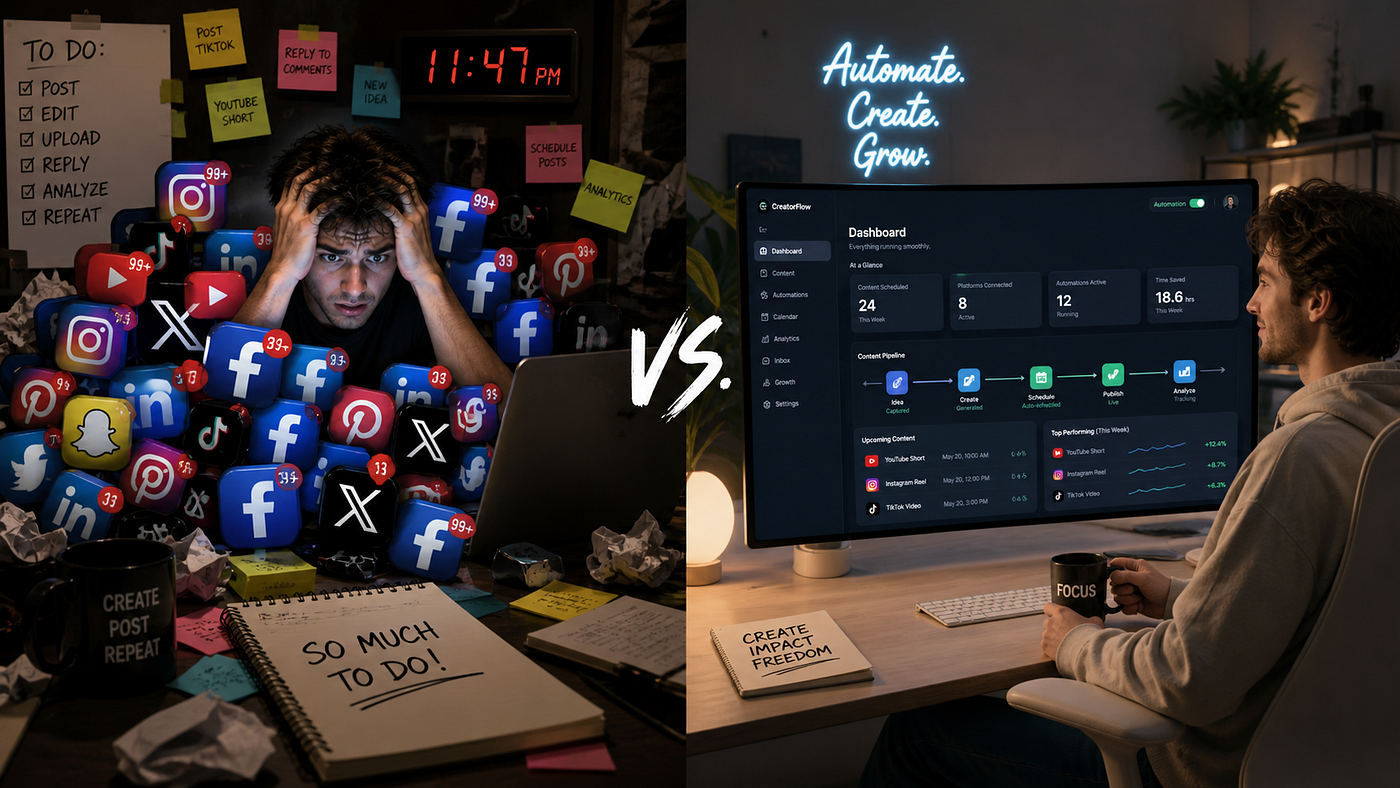
The shift isn’t “AI is a tool” — it’s “AI is a worker”
For a while, AI was like having an assistant who needed supervision. Helpful, but inconsistent. You’d go back and forth, correct it, steer it, rewrite half of it.
That era is ending.
What’s arriving now (and improving fast) is closer to:
you describe the outcome, and the work shows up.
Not “a rough draft.” Not “a suggestion.”
A finished deliverable.
In my world that looks like:
• I describe an intake flow and the agent drafts the questions, edge cases, disclaimers, and logic
• I describe a campaign and it generates scripts, variations, targeting angles, and tracking structure
• I describe a software module and it scaffolds it, tests it, iterates, and returns something usable
And the scariest part isn’t speed. It’s judgment.
The models are starting to feel like they have taste: making decisions that aren’t just technically correct, but directionally right. That “human-only” gap is getting thinner.
Why tech got hit first (and why law is next)
AI got very good at code early because code is the lever. If AI can build software, it can build tools, automation, workflows, and eventually… better AI systems.
That’s why the first wave hit engineers and product teams.
But the next wave is going after structured knowledge work:
• law
• finance
• accounting
• consulting
• marketing
• analysis
• customer support
If your job mostly happens on a screen — reading, writing, deciding, summarizing, researching, communicating — AI is coming for large parts of it.
Not “someday.” It’s already started.
“I tried AI and it wasn’t that good.”
I hear this constantly, especially from professionals.
And honestly? A year or two ago, that was a fair critique. Hallucinations, sloppy output, low trust.
But the people making this argument usually haven’t used the best tools seriously and recently — or they used them like Google and concluded “meh.”
The power isn’t in quick questions. It’s in real workflows:
• Give it the full contract and ask for landmines + negotiation language
• Give it the medical records and ask for timeline + liability flags
• Give it discovery and ask for themes, contradictions, missing docs, and deposition targets
• Give it case intake calls and ask for lead quality scoring + next-step scripting
That’s what we do in practice.
And once you see it working inside a real operation — intake, qualification, follow-up, conversion — you stop thinking “toy.”
You start thinking: operational advantage.
This is what it means for jobs
I’m going to be blunt: a lot of entry-level white-collar work is exposed.
Not because AI replaces “one skill,” but because it becomes a general substitute for cognitive output:
• drafts
• summaries
• research
• first-pass analysis
• first-pass communication
• coordination tasks
• repetitive decision trees
• structured writing
In the legal world specifically, the danger zone is obvious:
junior associate work, paralegal-style doc labor, intake qualification, basic drafting, basic research.
Does that mean lawyers vanish? No.
But it does mean the shape of law firms changes — fewer people doing more, faster, with AI doing the first 80% and humans handling the last 20%: strategy, judgment, accountability, and court.
The winners won’t be the ones who “avoid AI”
They’ll be the ones who operationalize it.
This is the part I care about most — because it’s not just doom.
If you’re early, AI is leverage:
• you can run a leaner team
• you can deliver faster
• you can test more ideas
• you can outwork competitors without hiring armies
• you can give clients better responsiveness and better outcomes
At Big Voodoo and Sentillian, this has been the whole game:
don’t “play with AI,” build systems that turn AI into measurable results.
What you should do (practical, not hype)
• Use AI daily, not occasionally.
• Stop treating it like search. Treat it like labor.
• Push it into the ugliest, most time-consuming parts of your job.
• Build a workflow where the human approves and the AI produces.
• Get comfortable iterating prompts like you’d iterate instructions to a teammate.
And if you run a business:
• build compliance and auditability into the workflow
• assume liability still lands on you
• design human handoff paths for critical decisions
• instrument everything (tracking, scoring, outcomes)
The bigger picture
Jobs are only the first visible shockwave.
The real story is that we’re building something that scales intelligence the way the industrial revolution scaled physical labor.
That has upside that sounds like science fiction:
accelerated medical discovery, better education, cheaper access to expertise, faster innovation.
It also has risks that are just as real:
mass displacement, concentration of power, surveillance, manipulation, and dangerous capability democratization.
I’m not writing this to panic anyone.
I’m writing this because I’ve watched the ground move under my own feet — and I know what that feels like right before everyone else notices.
We’re past the point where this is a fun dinner conversation about the future.
The future is already here.
It just hasn’t knocked on everyone’s door yet.
And it’s about to.
메타데이터
- post_id
- 24f1f08577e9
- slug
- think-back-to-february-2020-24f1f08577e9
- url
- https://medium.com/@jacobdelhagen/think-back-to-february-2020-24f1f08577e9
- canonical_url
- https://medium.com/@jacobdelhagen/think-back-to-february-2020-24f1f08577e9
- author_url
- https://medium.com/@jacobdelhagen
- status
- ok
- fetched_at
- 2026-07-22 18:48:22