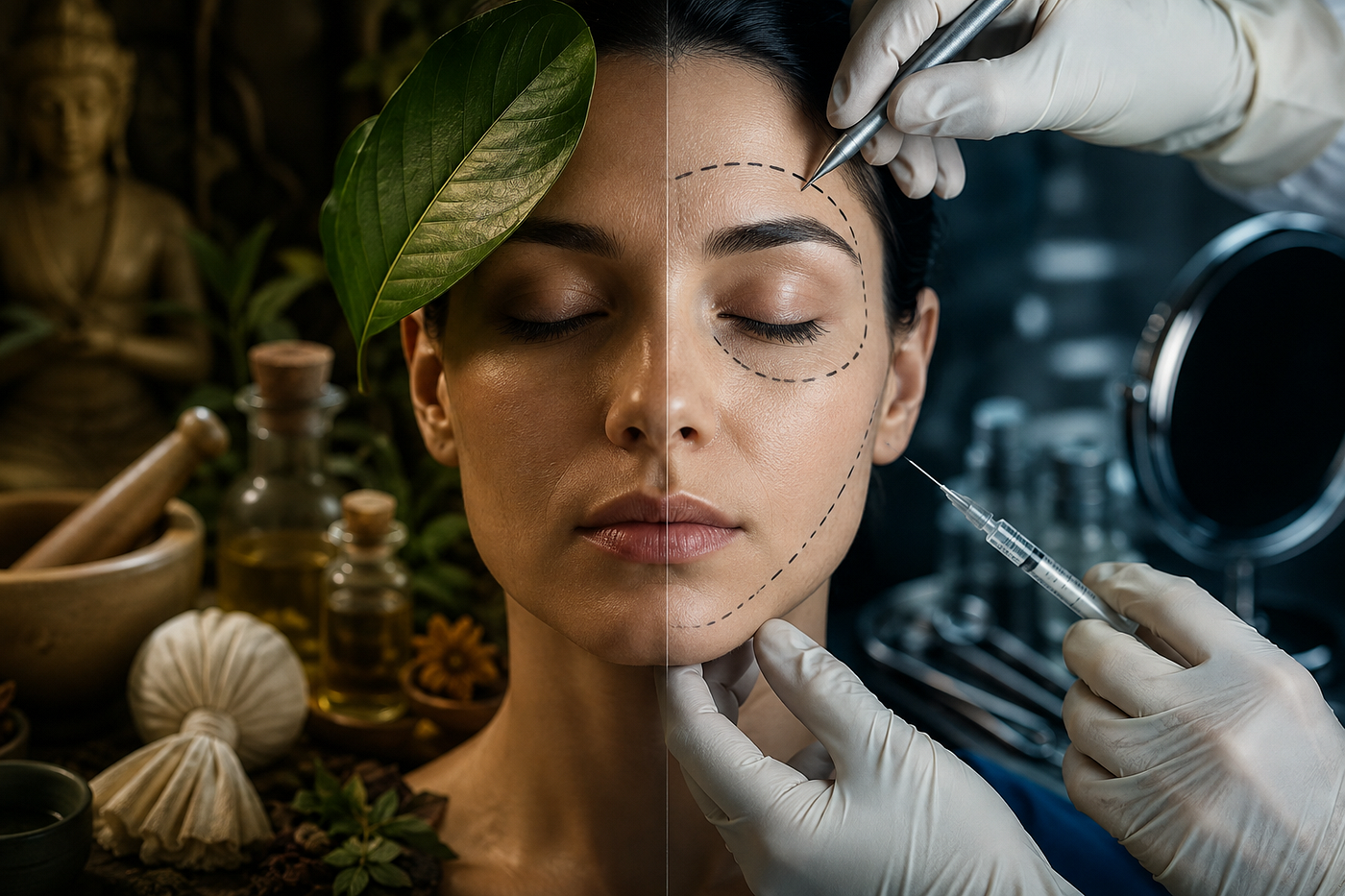
How an industry rooted in healing turned into a high-stakes sport of optimized aesthetics.
I was recently reading about Arjuna Samarakoon’s “500K Steps” campaign — a grueling endurance walk across Sri Lanka’s 323-kilometer Pekoe…
How an industry rooted in healing turned into a high-stakes sport of optimized aesthetics.
I was recently reading about Arjuna Samarakoon’s “500K Steps” campaign — a grueling endurance walk across Sri Lanka’s 323-kilometer Pekoe Trail. What struck me most wasn’t just the sheer physical milestone, but the fact that the campaign was explicitly designed to reject superficial vanity; it was an effort to fund trail infrastructure, support rural villages, and drive environmental conservation. It was movement anchored in deep, collective purpose.
But as I scrolled through the updates, catching myself looking down at my own smart ring to check an arbitrary daily step score, a uncomfortable realization hit me.
Somewhere along the line, wellness stopped being a private practice of listening to our bodies or moving with real intention. For most of us, it has become a public-facing performance.
The Rise of the “Optimized Human”
Wellness is no longer just the absence of illness. It is a multi-trillion-dollar industry that sells us a dazzling promise: with the right gear, the right powders, and the right routines, you can optimize every single cell of your existence.
We are told that if we are tired, we need an infrared sauna blanket. If we are anxious, we need a weighted eye mask and a subscription to a premium meditation app.
We have rebranded basic human needs — like rest, hydration, and movement — and sold them back to ourselves at a premium markup.
The subtle trap of this optimization mindset is that it turns health into a checklist. We treat our bodies like machines that need constant upgrades, tuning, and maintenance. If we miss a day of green juice or skip a workout tracked on our smart rings, we feel a strange, modern stroke of guilt. We aren’t just failing our health; we are failing our brand.
The Aesthetics of Calm
Social media has fundamentally altered how we experience self-care. True self-care is often incredibly boring, quiet, and deeply unphotogenic. It looks like going to bed at 9:00 PM, paying off a credit card bill, setting a hard boundary with a toxic friend, or sitting in an uncomfortable therapy session.
But you can’t easily post a photo of a boundary. You can’t put a vintage filter on a difficult emotional breakthrough.
So instead, we perform the parts of wellness that translate beautifully to a screen. We photograph the matcha lattes, the pristine yoga mats, and the organized supplement drawers.
This creates a frustrating paradox: we engage in wellness activities to reduce our stress, yet the pressure to curate, document, and maintain the aesthetic of a “healthy life” becomes a primary source of anxiety. We are working overtime to prove how relaxed we are.
Reclaiming the Unglamorous and Free
If your self-care routine requires a major financial investment or an audience to feel valid, it might not be self-care anymore. It might just be consumerism disguised as healing.
To break out of the performance loop, we have to strip wellness down to its raw, unglamorous essentials.
- Real rest doesn’t have a luxury logo. Sleeping in an extra hour or taking a nap on an old couch is completely free and infinitely more restorative than buying another sleep supplement.
- Movement belongs to you, not an algorithm. Walking around your block in mismatched sweatpants counts just as much as a high-end boutique fitness class.
- Disconnection requires actual absence. True peace often starts when you leave your phone in another room, intentionally choosing not to document your quiet moment.
The next time you are tempted to buy into a new wellness trend, ask yourself a simple question: Would I still do this if I couldn’t tell anyone about it?
If the answer is no, put your wallet away. Take a deep breath. Sit still for five minutes. It won’t look pretty on an Instagram feed, but your soul will thank you for it.
Read More about the 500K Steps:
메타데이터
- post_id
- 250c658fe521
- slug
- how-an-industry-rooted-in-healing-turned-into-a-high-stakes-sport-of-optimized-aesthetics-250c658fe521
- url
- https://medium.com/@projecttele2026/how-an-industry-rooted-in-healing-turned-into-a-high-stakes-sport-of-optimized-aesthetics-250c658fe521
- canonical_url
- https://medium.com/@projecttele2026/how-an-industry-rooted-in-healing-turned-into-a-high-stakes-sport-of-optimized-aesthetics-250c658fe521
- author_url
- https://medium.com/@projecttele2026
- status
- ok
- fetched_at
- 2026-08-12 21:32:53