Why Cheesy Shrimp Egg Rolls Leak or Turn Greasy
By Mary EVERLY
Why Cheesy Shrimp Egg Rolls Leak or Turn Greasy
By Mary EVERLY
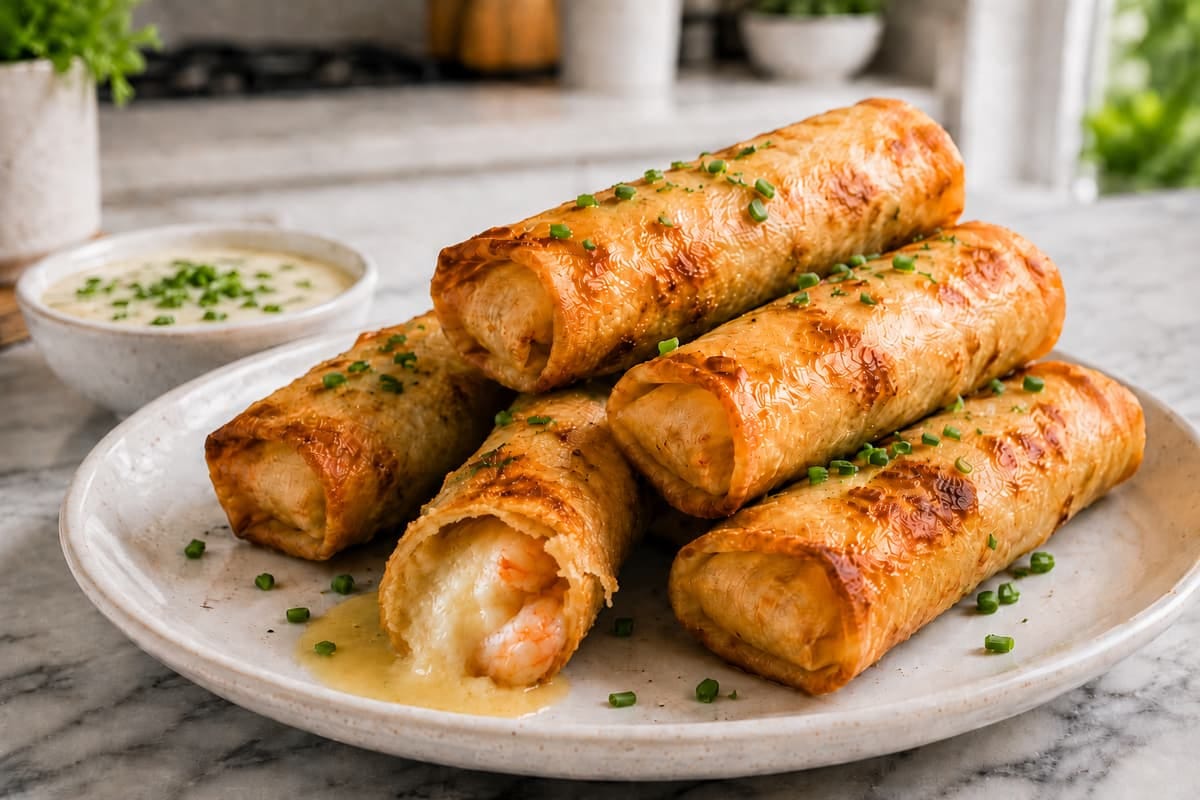
Photo: Updated Recipes
A shrimp egg roll can look deeply golden and still disappoint the moment you pick it up.
The wrapper may feel oily instead of light. Melted cheese can escape into the fryer. Steam from the shrimp may soften the crust from inside, while a seam begins to open before the filling has fully set.
These problems are often blamed on frying temperature alone.
But most egg rolls begin failing before they ever reach the oil.
Too much filling stretches the wrapper. Excess moisture creates steam. A weak structure gives melted cheese and shrimp juices somewhere to escape.
The oil matters, but it cannot repair a roll that was already under pressure.
The Problem Begins Before Frying
A crisp egg roll depends on whether the wrapper can close naturally around the filling.
When it is stretched too tightly, the corners and seam become weak points. Once the roll enters hot oil, the filling heats, the cheese softens, and moisture begins turning into steam.
That creates pressure from inside.
A well-assembled roll should feel compact and secure, not swollen or strained. The wrapper should close without pulling against the filling.
A stronger seal can help, but it cannot rescue a wrapper that has been stretched around too much filling.
Overfilling Creates Pressure
Adding more shrimp and cheese may seem like a way to make the egg rolls more generous.
In practice, overfilling often weakens the result.
Shrimp release moisture as they cook. Cream cheese softens, while mozzarella melts into the spaces around the seafood. As the filling heats, that moisture and melted cheese need somewhere to expand without pressing against the seam.
When the wrapper is packed too tightly, a small opening can quickly become a leak.
Overfilling also changes the eating texture.
A balanced egg roll gives the wrapper enough presence to remain crisp around the creamy center. A heavily packed roll can feel dense, greasy, and difficult to bite cleanly.
The goal is contrast:
- a crisp, delicate wrapper;
- tender shrimp;
- a warm, creamy filling.
More filling does not always improve that contrast. Often, it works against it.
Moisture Weakens the Wrapper
Raw shrimp are useful here because they cook only once.
Precooking them would expose them to heat before frying and then again inside the wrapper. By the time the crust became golden, the shrimp could already be firm.
Using raw shrimp protects their tenderness, but it makes moisture control more important.
Shrimp that are not fully thawed, drained, and dried bring extra water into the roll. As that water heats, it becomes steam.
That steam can soften the inside of the wrapper, loosen the cheese filling, and increase pressure near the seam.
The filling itself matters too. Cream cheese should be soft enough to mix but not warm or runny. A loose filling begins weakening the wrapper before it reaches the fryer.
The important principle is simple: the wrapper should enter the oil flexible and dry, with a filling that is creamy but stable.
The Oil Must Set the Crust at the Right Pace
Hot oil gives the wrapper structure.
When the temperature is too low, the crust forms slowly. During that delay, the wrapper absorbs more oil and moisture continues building inside.
The result may look browned but still feel heavy or greasy.
Crowding the pan can create the same problem. Each added roll lowers the oil temperature, making it harder for the wrapper to crisp quickly.
Oil that is too hot causes the opposite failure.
The outside darkens before the raw shrimp in the center have enough time to cook. A beautiful crust can hide an unfinished filling.
The goal is not simply high heat. It is steady heat.
The wrapper and shrimp need to finish at roughly the same pace, with the cheese melting inside rather than escaping into the fryer.
That balance can vary depending on the wrapper, shrimp size, oil depth, pan, and stovetop.
The First Roll Is More Useful Than the Clock
A written frying time can only be a guide.
The first roll gives you information about what is actually happening in your kitchen.
Once it is golden, let it rest briefly and cut it open. Check both the wrapper and the shrimp.
If the crust has darkened before the shrimp are fully opaque, the outside is cooking too quickly. If the wrapper looks pale or feels oily, the oil may need more time to recover.
When the shrimp are cooked through and the wrapper is crisp and evenly browned, the frying pace is working.
This makes the first roll a practical calibration test.
It accounts for differences in wrapper thickness, shrimp size, oil depth, and burner strength that a fixed time cannot predict perfectly.
The first roll is not wasted.
It helps protect the rest of the batch.
Crispness Can Be Lost After Frying
A properly fried egg roll can still soften after it leaves the oil.
Freshly fried wrappers continue releasing steam. When the rolls are placed flat on an absorbent surface, moisture can collect underneath and soften the bottom.
Airflow matters.
Allowing steam to escape helps the wrapper remain crisp while the filling settles. Covering the rolls while they are hot does the opposite, trapping moisture against the crust.
The dipping sauce should stay separate for the same reason.
A cool garlic dip creates a fresh contrast with the warm filling, but pouring it over the egg rolls would immediately soften the wrapper.
Keeping the sauce alongside the rolls preserves the crisp texture until each bite is dipped.
The Best Egg Roll Is Built Around Restraint
Crispy cheesy shrimp egg rolls do not need the maximum possible amount of shrimp or cheese.
They need enough room to close securely.
They need moisture kept under control.
They need steady heat that sets the wrapper before it becomes greasy.
When those parts stay balanced, the shrimp cook once, the cheese melts without flooding the center, and the wrapper becomes deeply golden while remaining light.
The first bite should bring a delicate crunch, followed by tender shrimp and a warm garlic-cheese filling.
Ready to put these principles into practice? The complete Crispy Cheesy Shrimp Egg Rolls with Garlic Dip recipe includes exact ingredient quantities, sealing instructions, frying guidance, batch timing, and a printable recipe card.
메타데이터
- post_id
- 252dfc54a44f
- slug
- why-cheesy-shrimp-egg-rolls-leak-or-turn-greasy-252dfc54a44f
- url
- https://medium.com/@UpdatedRecipes/why-cheesy-shrimp-egg-rolls-leak-or-turn-greasy-252dfc54a44f
- canonical_url
- https://medium.com/@UpdatedRecipes/why-cheesy-shrimp-egg-rolls-leak-or-turn-greasy-252dfc54a44f
- author_url
- https://medium.com/@UpdatedRecipes
- status
- ok
- fetched_at
- 2026-06-10 18:55:46