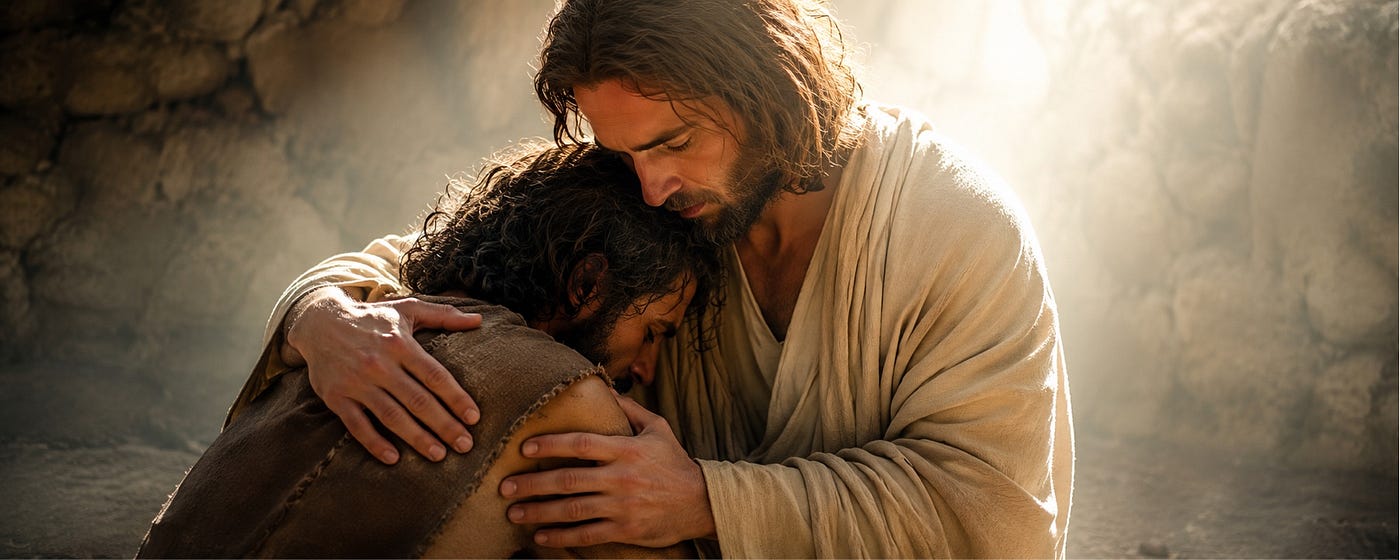
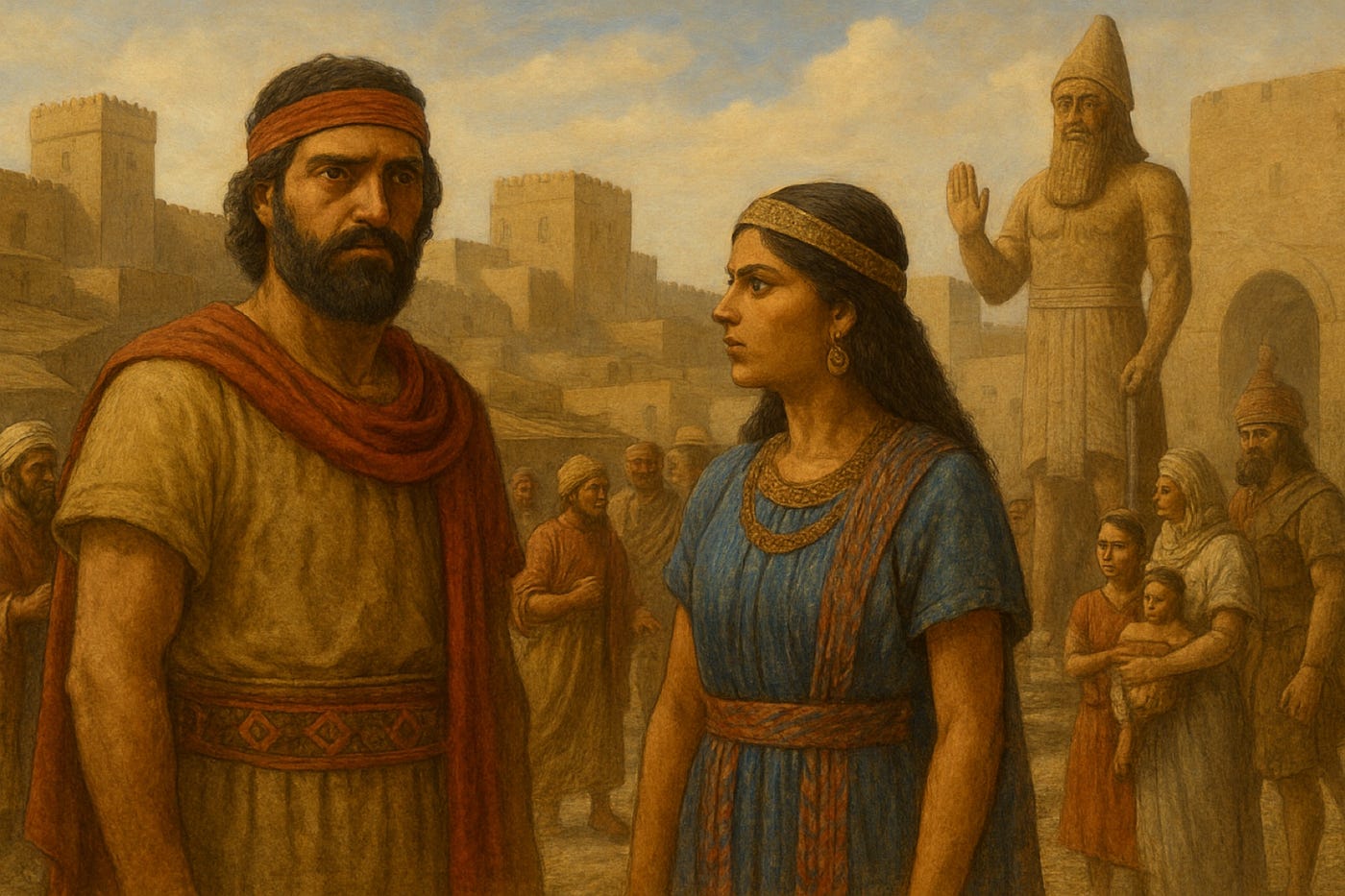
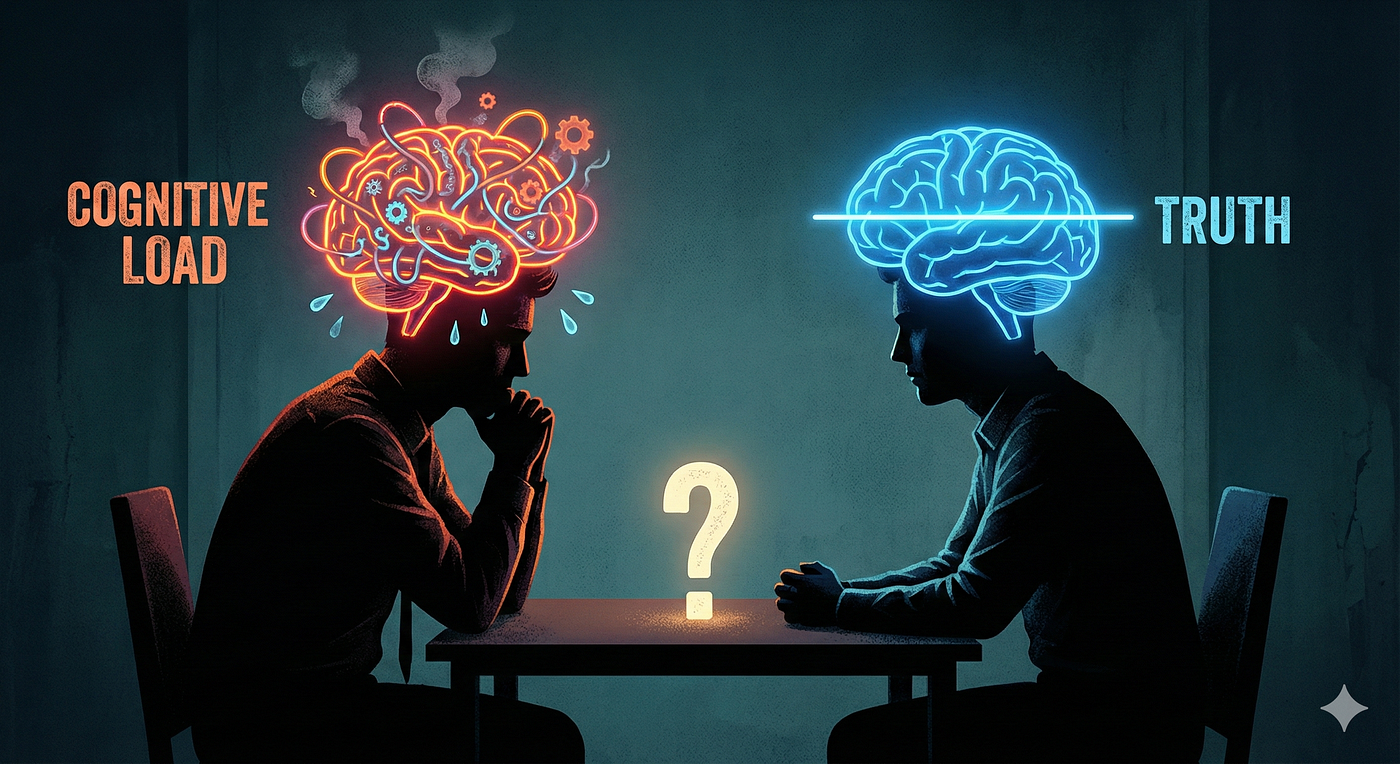
Is Man truly free or entirely conditioned?
The Freedom/Bondage of the Will
Is Man truly free or entirely conditioned?
There’s no easy way of discussing this highly complex topic. Behavioral science is an entire discipline; therefore, a single article, however long, may not be exhaustive in addressing it. I will, however, attempt to only lay out what is most helpful, as well as directly answer the more integral and fundamental questions regarding our topic of today.
One thing everyone agrees on is that, biologically speaking, we are products of many things beyond our active and voluntary will. Firstly, the very operation of our birth, being caused by the sexual interaction of two parties, none of whom we are; and furthermore, our entry into existence being totally by God’s sovereign will, beyond the will of any man, are very significant indicators and portrayals of this fact of reality.
Evidently, many factors seek to condition us into acting one way or another, and by so doing, may have us set into certain temperaments and personality types. And so, the question is whether we are entirely bound to these, or are responsible for what we become by consistent use of the will and repetitive action. For some, this is an easy question until deep reflection points out how much our experiences, knowledge, learned behaviors, genetics, and many phenotypical factors affect us. Many criminals have been discovered to have traits that predispose them to violence in their genetics, which implies that even the raw materials you have to work with, making you a “good person,” are deficient in many people like you. Addictions also have been discovered to be more than resulting from repetitive actions, but with stronger chemical & neurological basis, again proving that some people are more liable to lose control than some others.
Michael Jackson might have been born with a biological advantage in his larynx, but would he have been the greatest artiste in the absence of the strict work ethic imbibed into him by his father, as talent evidently is not enough? Moreover, how much of his destiny as an artiste was tied, in the first place, to something non-voluntary, even that biological advantage I spoke of, i.e. the physical ability to produce sonorous sounds; or as a performer and dancer, if he was born at a different era, with no Fred Astaire or James Brown to be inspired by?
So then, biology worked with timing, parental discipline, cultural environment, and opportunity, to produce the greatest performer ever; it wasn’t entirely innate and based on non-influenced personal decisions and choices.
To take it further, who determines who gets what in life but God, who makes one MJ the greatest performer, and another MJ the greatest basketball player?
Are we mere automatons, the product of the decisions of Divine providence alone, working through the environment for good or evil; or is there a Divinely provided lacuna, an allowance in which we are truly responsible, and able to make free choices not fatalistically determined or physically imposed?
Now that the question is understood, let’s try to answer briefly.
There are different angles to address this from. Firstly, from the socio-biological angle, the possession of raw materials and their utility are two different things. While we cannot argue against the fact of our being heavily conditioned and influenced by things both beyond us and composing us, these remain raw materials and not forced utility. Though it might be harder for some to tend towards one behaviour or the other than the next person, we all still possess choice and knowledge, on some level, of what is right or wrong; and the moral responsibility to act according to this knowledge remains. This is very significant, as the hurdle of personal difficulty is not sufficient excuse to act against moral conscience. However, because of what we are about to discuss next, even though the degree of conditioning might vary in its result on our temperaments, personalities, and choices from one person to another; and some might even be stronger than others in their striving to live beyond what seeks to impose on them physically, there is a sense in which we all, inadvertently, still fail.
Spiritual conditioning, i.e. bondage of the will to sin.
The question we’re discussing gets tougher when we do understand that, at the fall of Man, he became bound under sin. Now, beyond our understanding of social behavior, this adds a new layer of difficulty. The problem with this layer is that, as great as moral goodness is, it cannot present a cure or solution to this condition. Sin is a corruption of man’s spiritual nature, and whatever goodness is produced in this state is insufficient to undo the corruption it stemmed from. This condition in no way means that all sinners will always be the worst version of themselves they possibly can be, or do the most terrible things they are capable of; but it does mean that Man, as a sinner, is unable to desire God in truth, and unwilling to know Him correctly unto salvation without God’s grace reaching him first. His good deeds, even in cases where they are present, remain in some way polluted in motive, operation, and result; as well as powerless unto salvation.
Now, even after he becomes saved, when his inability to know God is removed by faith in Jesus Christ, and his good actions now have true impact in God’s sight, man still remains in a world of senses, constantly having his biology and rational soul bombarded with impulses seeking to condition him for the worse (which we call temptations), and the question remains:
Is Man free to make decisions, or will he remain bound to the conditions that fiercely impose upon his will and actions?
The Bible does recognize the continuing reality of these impulses, for which God sends His Spirit to the believer. Scriptures that repeatedly teach on the contradiction that exists between the Flesh and Spirit intimates us of this reality. And to the degree either is yielded to, they have a strong influence on the subsequent condition of a person’s behaviour and life, as well as even the expression of your own will, to such a commanding degree that one may eventually think they have no control (Gal. 5:17). Because it is often easier to make a different choice from the louder one at earlier stages of the imposition of these factors on the will than at later stages.
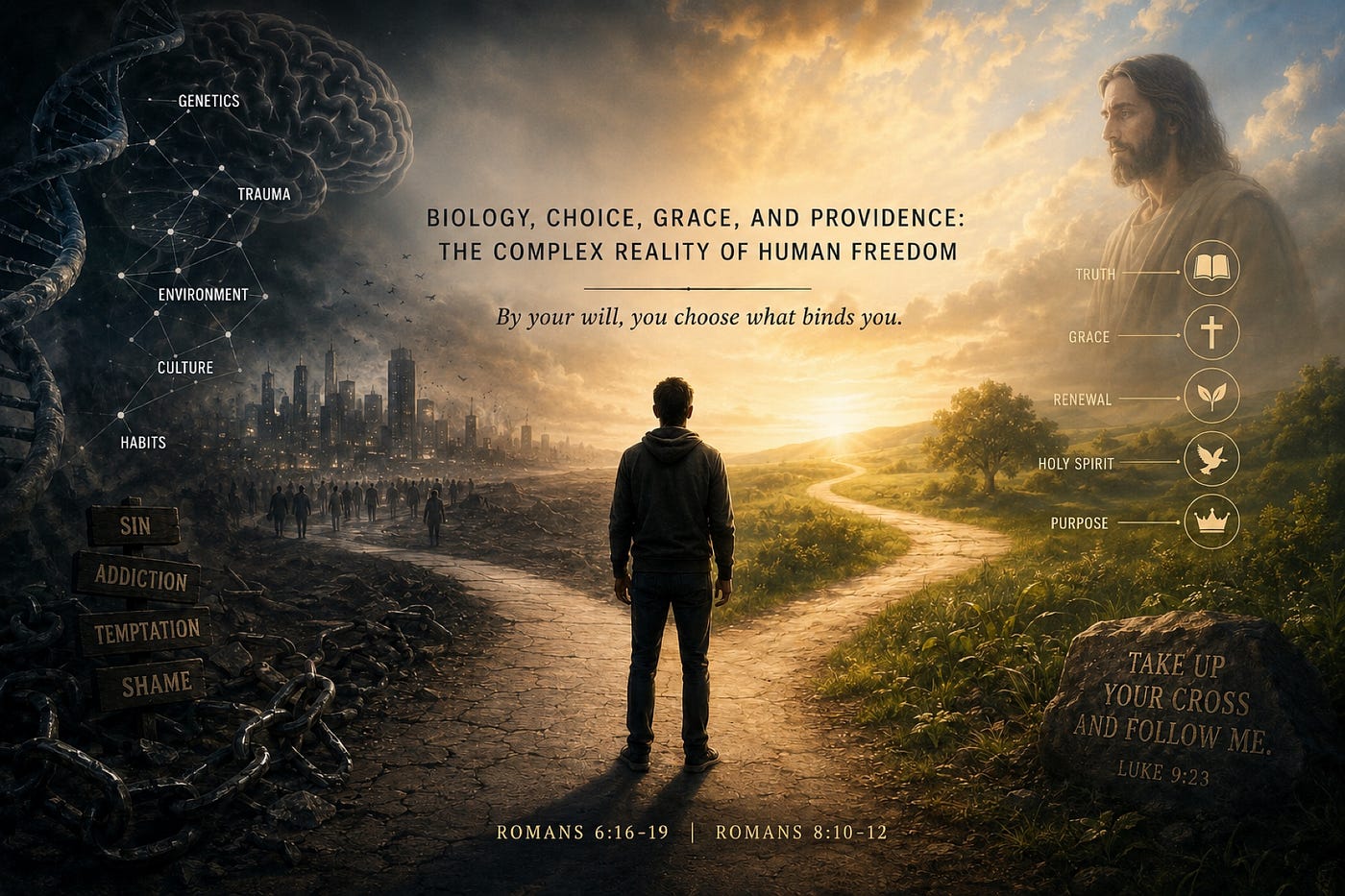
Simply put: “By your will, you choose what binds you.” And though such conditioning over time is difficult to break by will, it is, however, not impossible: the will remains, despite the conditioning of behaviour. It might require a stronger work to recondition a person in the opposite direction; by again yielding the will (however weak it is at this point) to a different system of belief and action, deliberately and consistently [alluded to in Romans 6:16–17].
“Know ye not, that to whom ye yield yourselves servants to obey, his servants ye are to whom ye obey; whether of sin unto death, or of obedience unto righteousness?
But God be thanked, that ye were the servants of sin, but ye have obeyed from the heart that form of doctrine which was delivered you.
Being then made free from sin, ye became the servants of righteousness.
I speak after the manner of men because of the infirmity of your flesh: for as ye have yielded your members servants to uncleanness and to iniquity unto iniquity; even so now yield your members servants to righteousness unto holiness.”
— Romans 6:16–19 (KJV)
Sometimes, the battle of conditioning is not strictly Good vs. Evil, but even more subtle: “My conditioned perception of good vs. God’s intended way.” And evidently, God’s purpose for us is to, by the Spirit, put these impulses to death, however strong they may be, even as Jesus says, “Take up your cross and follow me.” This itself is an indication that we have some responsibility in this matter, even if the power to execute doesn’t come from ourselves.
This also indicates that we who believe are not absolutely and totally bound to the dictates of our human conditioning (especially when we are saved), although it may feel as if we are.
“And if Christ be in you, the body is dead because of sin; but the Spirit is life because of righteousness.
But if the Spirit of him that raised up Jesus from the dead dwell in you, he that raised up Christ from the dead shall also produce life in your mortal bodies by his Spirit that dwells in you.
Therefore, brethren, we are not debtors to the flesh, to live after the flesh.”
— Romans 8:10–12
God’s cure to our actions based on worldly conditioning is action based on His spiritual operation. And His Spirit, by His word, is given to enable you to live beyond the conditioning of both your biology and the socio-physical systems of the world. God truly understands how much you’ve had to overcome to arrive at the same position of good which the next person might have attained with relatively more ease, and He does not judge us using the template of others.
In view of all these, where is the place of providence?
I’m assuming you have read the previous article and first part of this thought, which explains how humans make their own choices by participating in God’s supply of being and existence.
Concerning general social behavior, God does providentially endow people with gifts, abilities, and experiences He intends to use for good, despite the imperfections that exist within our world. People sometimes attain to this best in spite of, or because of, these experiences. In other cases, people sometimes fail to attain to this best designed for them, also because of, or despite, these conditions they experience in life. However, nothing that happens to anyone at any point in their life is beyond the knowledge and power of God.
Now, concerning the spiritual state and fate of people, all that we have discussed today and in the previous post therefore teaches us that, if we practically yield to God willingly, we will have great lives which become a portrayal of God’s invisible sovereign choice and eternal decree of our salvation. And on the contrary, if we refuse His operations by His Spirit, overriding the weak conditioning of our flesh to do evil, then we also partake of His providential power of being and existence supplied to creatures, using them immorally. And in doing so, present ourselves to be nothing but what the eternal God eternally knows us to be; and by His amoral supply of the power of being used wrongly, He is rightly said to have providentially created such unto damnation and judgement, which is the fate of all the wicked.
메타데이터
- post_id
- 2537dd44e2fb
- slug
- is-man-truly-free-or-entirely-conditioned-2537dd44e2fb
- url
- https://medium.com/@victoryolaleye/is-man-truly-free-or-entirely-conditioned-2537dd44e2fb
- canonical_url
- https://medium.com/@victoryolaleye/is-man-truly-free-or-entirely-conditioned-2537dd44e2fb
- author_url
- https://medium.com/@victoryolaleye
- status
- ok
- fetched_at
- 2026-06-09 15:37:30