The Rise of Digital Citizenship: Why the Future Internet May Need More Than Just Users
Imagine explaining today’s internet to someone living in the year 1995.
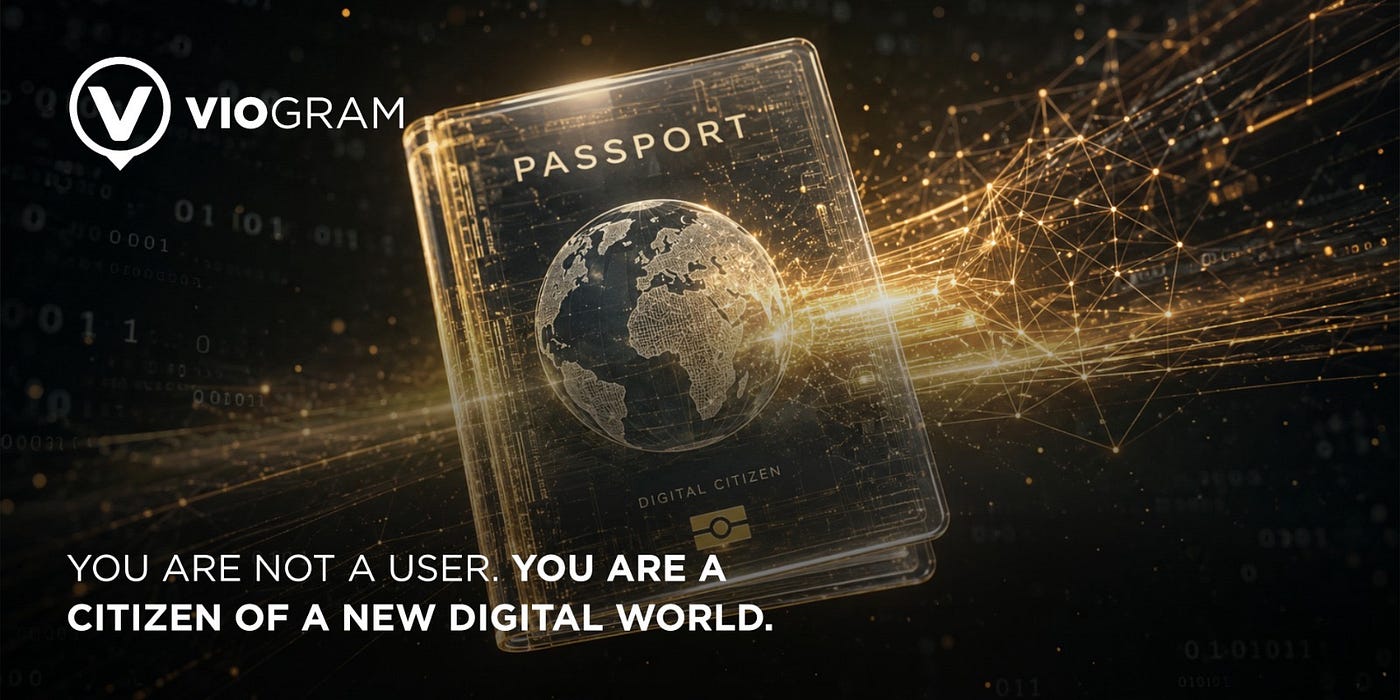
The Rise of Digital Citizenship: Why the Future Internet May Need More Than Just Users
Imagine explaining today’s internet to someone living in the year 1995.
You would tell them that billions of people now spend a significant portion of their lives inside digital environments. They communicate, work, learn, shop, build businesses, entertain themselves, form communities, and even earn their livelihoods online. Entire careers are created through digital platforms. Entire industries operate through digital networks. Some people spend more waking hours interacting with digital systems than they do interacting with physical institutions.
To someone from that era, such a reality would sound extraordinary.
Yet for us, it has become normal.
Perhaps that is why we rarely stop to consider how dramatically the internet has evolved. What began as a network for sharing information has slowly transformed into something much larger. The internet is no longer merely a technological tool. It has become a social environment, an economic environment, and increasingly, a cultural environment. In many respects, it now resembles a civilization layer that sits alongside the physical world.
And yet, despite this transformation, there is something strangely outdated about the way most digital platforms still describe the people who inhabit them.
They call them users.
At first glance, there seems to be nothing wrong with that word. It has been part of internet vocabulary for decades. But the longer one thinks about it, the more inadequate it begins to feel. A user is someone who accesses a system, consumes a service, and then leaves. The term implies a transactional relationship between an individual and a platform.
That description may have made sense when the internet was primarily a collection of websites and online services. It makes far less sense today.
Consider the creator who spends years building a community around a shared interest. Consider the merchant whose business depends entirely on digital commerce. Consider the educator who reaches students across continents. Consider the community leader who organizes thousands of people around a cause, an idea, or a movement. Consider the millions of individuals who contribute reviews, recommendations, knowledge, conversations, support, creativity, and engagement into the digital spaces they occupy every day.
None of these people feel like mere users.
They are contributors.
They are builders.
They are participants.
And perhaps most importantly, they are helping shape the environments in which they exist.
That distinction matters because throughout history, societies have always depended on participation. Cities grow because people contribute to them. Economies function because people engage in them. Communities thrive because individuals invest their time, energy, and effort into sustaining them.
The internet is no different.
Every post, comment, review, recommendation, discussion, collaboration, and interaction contributes to the vitality of a digital ecosystem. Without people, platforms are nothing more than infrastructure. Algorithms may organize information, but they do not create culture. Technology may provide the framework, but it does not create community. Human participation remains the force that transforms digital systems into living environments.
This reality raises an interesting question: if people are doing far more than simply using digital platforms, is the concept of a user still sufficient?
Or are we gradually moving toward something else entirely?
The idea of Digital Citizenship emerges from this question.
Digital Citizenship is not about passports, governments, or legal status. It is about recognizing that people increasingly participate in digital societies in ways that resemble citizenship more than consumption. Citizens do more than access a system. They contribute to it. They influence it. They help sustain it. They share responsibility for its growth and evolution.
When viewed through that lens, the future of the internet begins to look very different.
The next generation of digital platforms may not compete solely on features, speed, or scale. They may compete on how effectively they empower participation. The most successful ecosystems may be those that recognize people not merely as consumers of value but as contributors to it.
This is one of the ideas that sits at the center of Viogram’s long-term vision.
The Participation Economy is built upon a simple observation: people create value every day through their engagement, interactions, communities, knowledge, creativity, and contributions. These activities are not peripheral to the digital economy. They are part of its foundation. Yet many existing systems continue to treat participation as a byproduct rather than a core component of value creation.
Viogram challenges that assumption. It asks what happens when participation itself becomes a recognized part of the ecosystem. What happens when individuals are viewed not merely as traffic moving through a platform, but as active participants helping shape the economic and social environment around them?
The answer may extend far beyond any single platform.
As artificial intelligence becomes more capable and digital systems become more sophisticated, the importance of meaningful human participation may actually increase. Technology can automate processes, generate content, and optimize systems, but it cannot replace the uniquely human qualities that give communities their meaning. Trust, belonging, shared identity, collaboration, and culture remain fundamentally human phenomena.
This is why the idea of Digital Citizenship feels increasingly relevant. It reflects a broader shift in how people relate to digital environments. The internet is no longer simply a place we visit. It is a place where we increasingly live portions of our lives. And if that is true, then participation may become one of the defining concepts of the next era of internet evolution.
Perhaps future generations will look back on the early decades of social media and find it curious that people were described merely as users. They may see the internet not as a collection of platforms but as a network of interconnected digital societies shaped by the people who participate within them.
And if that future arrives, we may discover that we were never merely users after all.
We were citizens of a new digital world. We simply had not yet found the language to describe it.
메타데이터
- post_id
- 2545f70a1fcc
- slug
- the-rise-of-digital-citizenship-why-the-future-internet-may-need-more-than-just-users-2545f70a1fcc
- url
- https://medium.com/@viogramlabs/the-rise-of-digital-citizenship-why-the-future-internet-may-need-more-than-just-users-2545f70a1fcc
- canonical_url
- https://medium.com/@viogramlabs/the-rise-of-digital-citizenship-why-the-future-internet-may-need-more-than-just-users-2545f70a1fcc
- author_url
- https://medium.com/@viogramlabs
- status
- ok
- fetched_at
- 2026-06-09 15:37:30




