The 20-Year Echo: Finishing What My Teachers Started
How the voices of my past inspired me to return to academia and fulfill my destiny.
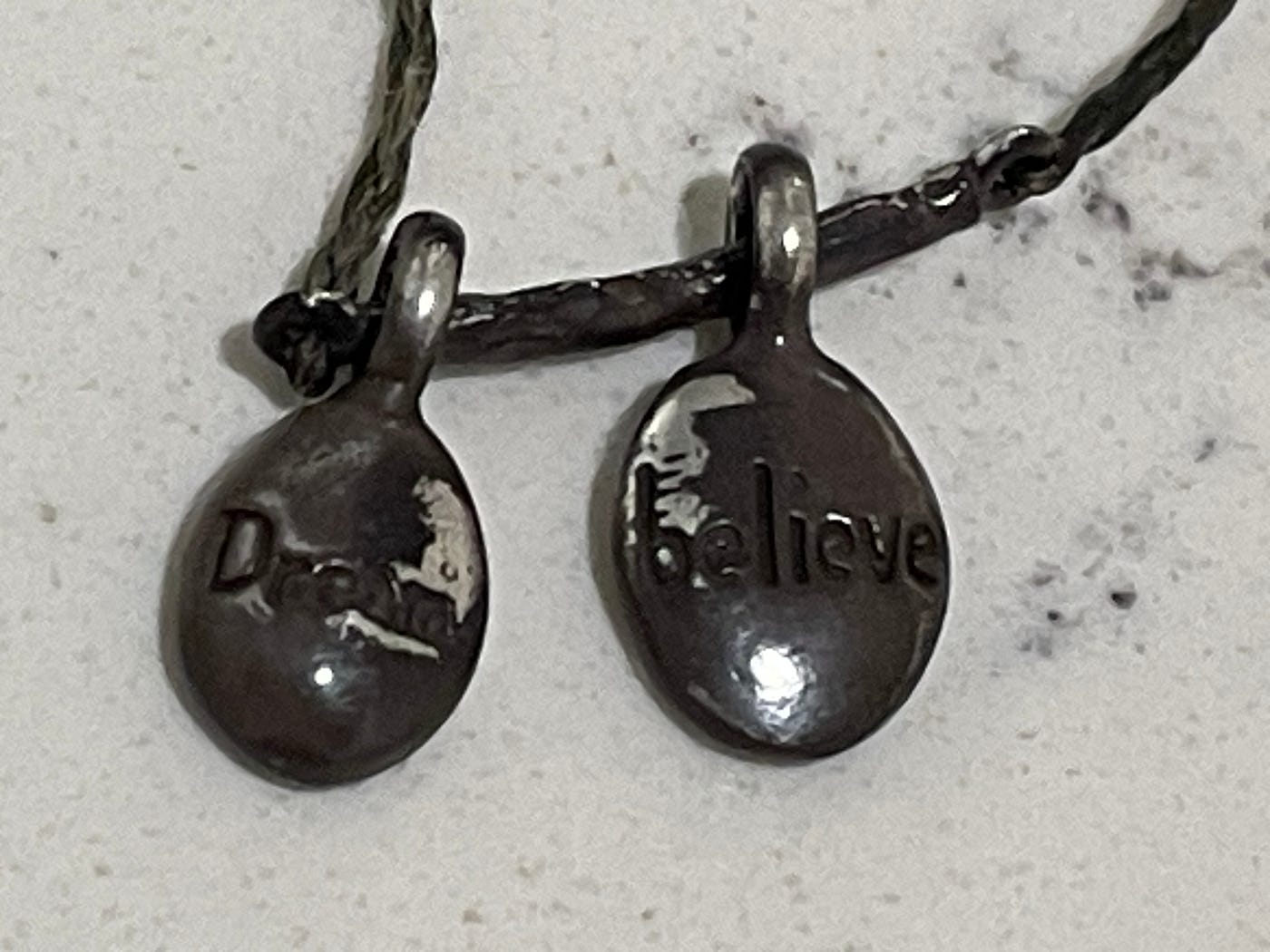
Dream of a meaningful culture. Believe it will transpire.
FULL CIRCLE: INSTALLMENT FOUR OF EIGHT
The 20-Year Echo: Finishing What My Teachers Started
How the voices of my past inspired me to return to academia and fulfill my destiny.
Important Note: Please dismiss, ignore, and brush aside any automated prompts to ‘follow’ or ‘join’ or ‘create an account’ since these algorithmic directives are the requirements for this platform, NOT my own. As such, my personal essays are hosted on MEDIUM for their website’s elegant design and book-like architecture, which introduces my insightful prose as a literary addendum or the written codex to my theatrical discourses on “The Pedagogy of Moky Huynh.” With that preamble stated, let the inward dialogue commence…
Throughout my journey, cinematic gems about impassioned teachers who uplifted their students had invigorated me to dance with life.
These ageless and conscientious films included: Stand and Deliver (starring James Olmos as Jaime Escalante), To Sir With Love (starring Sidney Poitier as Mark Thackeray), The Miracle Worker (starring Anne Bancroft as Anne Sullivan), and my timeless favorite, Dead Poets Society (starring Robin Williams as the iconic John Keating). In each of these movies, these magnanimous teachers were invariably challenged with intractable odds (e.g., narrow-minded staff and faculty or extraordinary circumstance, such as Hellen Keller’s blind-deaf infirmity). Yet in spite of the grueling and uphill battle, these noble-minded teachers continued to utilize their unique abilities to awaken their students. Whether they were poor and at-risk or affluent and privileged, these students were able to flourish and elevate as a corollary of their teachers’ committed support. And I aspired to do the same. I wanted to emulate their devotion. I wanted to educate via my artistry, for education — was in my veins. It was embedded in my DNA, subconsciously expressed through my speeches and monologues. But instead of the classroom, I had developed my teaching in the space of the theatre. I was an artist at heart with a propensity to educate. I wanted to galvanize my students to passionately strive toward their highest capacity. But in order to do this, I needed legitimacy — in the form of a college degree. There was no way around it, given the infrastructure. Without that sheepskin, my credibility was dubious as it pertained to academia. Therefore, the solution to my quandary was crystal clear. It was time to go back and finish what I started almost 20 years ago… or 18 years to be exact.
[embed]Act 2, Scene 1: The Moment is Eternal from The Pedagogy of Moky Huynh (412K views)
Additionally, my decision to return to school was fueled by my empathy for hard- working parents and underprivileged kids. I didn’t feel guilty, but when I learned of a parent who sacrificed without fail (laboring more than one job) to put their children through school, it deeply affected me, striking a chord within my conscience — and even more so, when I would read about a student who studied rigorously for a shot at a scholarship in the daunting face of poverty. I truly venerated them, for they inspired me to ruminate the likelihood of graduating. Put simply, this salient opportunity was screaming boisterously into my ears, and I couldn’t ignore it any longer. It was rather uncanny as that same intense feeling to drop out of school when I was 23-years-old was now beseeching me to return to college and fulfill my destiny. Thus, at the ripe, old age of 41, I headed back to USC in the fall of 2016, spiritually determined to conclude my final semester.
Why USC? It was a quintessential match in terms of personality. I adored the University of Southern California. It was a part of me like a dear and cherished friend who expanded my horizons. I especially loved the company of squirrels that exuberantly pranced around the campus. But the nurturing evening breezes that accompanied my strolls — as I ambled about the school amid its slumber — was my beloved memory. This celebrated university was a sheer and fervent game-changer. USC had profoundly changed the trajectory of my life, not just once… but twice.
The first defining change occurred in 1996 when I transferred from the University of Washington. It was a qualitative school imbued with great potential — but I never felt connected. I did, however, appreciate the scenery where the university resided, quaintly nestled in the hub of Seattle. The verdant trees and Rocky Mountains were aesthetically pleasing, and I earnestly welcomed the endless rainfall that romanticized the city — but taken as a whole, the overall culture didn’t fit my personality. Yet conversely, the City of Angels, a.k.a., Los Angeles, felt so familiar, like a long-lost friend. And USC became my personal guide to this urban metropolis. It far exceeded my preconceived ideas, for the City of Angels was so much more than sunny weather. It was so much more than the glitz of Hollywood. In a nutshell, Los Angeles was a melting pot in progress. I was smitten by the Angelenos, captivated by their diversity and multiculturalism. It wasn’t a utopia by any means, but the cultural ingredients were there, which had the makings of a peaceful revolution, albeit the Rodney King riots in 1992. In the midst of it all, USC, from my perspective — epitomized a catalyst for change.
20 years later, I experienced my second watershed. The fall of 2016 was one of the happiest and memorable periods of my life, thanks in large to USC. Yet ironically, I felt appallingly nervous on my first day back to the university. It felt as if a trillion butterflies were fluttering wildly amid my stomach. But then it happened. That dreadful sense of apprehension quickly dissipated into bliss and rapture. I actually felt excited, which was totally unexpected. On the surface, not much had really changed besides the technology in school, and of course, my pronounced age. But the monumental change that took me by surprise was my keen and vivid interest in communication classes, in particular, the school of journalism. This was somewhat of a revelation since communications was initially my back-up plan, my alternative major because the film department had rebuffed my application. Yet now, after all these years, this indispensable and paramount field of study had taken center stage as a direct result of my experiences in the real world. It was fundamentally pertinent to social change, which my four illustrious professors eloquently asserted during my final semester as a USC undergrad.
When I reminisce about the past, the first teacher that encouraged me to see the broader picture was Mr. Kelly. I was ten-years-old when he underscored the vital importance of doing what we loved in the looming future as adults, irrespective of the hurdles. In junior high, or middle school, it was Mrs. Fleming, my social studies teacher, who allowed me to stand up in front of her students and declaim my humorous anecdotes, which fortified my confidence as a raconteur. Then I encountered Ms. Stroud in my senior year in high school who inspirited me to be explosive and dynamic when I danced poetically to the music of my heart. Soon afterward, during my junior year at USC (before the impending drop-out), Rabbi Mordecai Finley enlightened me about the nature of the Holocaust, which came to fruition through a methodical and systematic approach. This particular piece of knowledge opened my eyes to the menace of blind conformity and utter cowardice.
And finally in 2016, four astute professors officially wrapped up my academic education at USC as an undergraduate student. Professor #1 (Mike Ananny) informed me about the networked press and how it tied into our freedom and democracy. Professor #2 (Evan Brody) exposed me to the salient questions surrounding new media in the digital age and its ramifications on our global society. Professor #3 (Lian Jian) challenged me with social science research (e.g., the Stanley Milgram and Solomon Asch experiments) and inadvertently foreshadowed the sampling bias that transpired in public opinion polls regarding the 2016 presidential election. And lastly, the guru, Professor #4 (Robert Scheer) dared me to examine our society from a multitude of angles: Is any war justifiable? Is art dead? Why is history important? Are whistleblowers considered heroes? Is the 4th Amendment still upheld in light of mass surveillance? Does the death penalty actually offer a sense of retribution? And the zillion dollar question: are we willing to struggle for a principle that we believe in, no matter the adversity? Clearly, these four professors along with the other teachers that I splendidly mentioned had all engaged me in “critical thinking.” Their teaching integrity and original style had made me want to come to class and pay close attention to their broad-minded, incisive lectures instead of decompressing on my smartphone. They truly understood the root of education. And because of them and teachers alike, the educational system in spite of its schisms and fissures could still provide our culture with much needed light and direction. It could potentially pull us from the muck and stupidity that mired humankind.
With that in mind, the ultimate and foremost education in the world is a comprehensive study. It amalgamates disparate elements to produce a richer, multifaceted wealth of information and wisdom. For example, Barack Obama’s biracial identity enabled him to personally relate to black and white individuals. This racial synthesis helped enhance his understanding of our convoluted world. The same conception also applies to education: real world and academic. I was incredibly blessed to experience both realms in a specific sequence: 4½ years of collegiate studies, wisely ensued by 18 years in the real world (the metropolitan wilderness), and finally — one unforgettable semester — at USC. This process of coming full circle had attributed enormously to my perceptive worldview. Yet oddly enough, I realized that my bachelor’s degree wasn’t actually the finish line. It was in fact — only the beginning, as my assigned vocation toward graduate school was coming into view. In other words, life won’t turn out like we expect, it will turn out even better… if we dance with life, especially when it rains.
PREVIOUS ESSAY: *Alienated by Originality*
NEXT ESSAY: Once every other month… because QUALITY invariably supersedes vacuous quantity.**
PERTINENT LINKS BELOW:
*The Pedagogy of Moky Huynh: Official Website*
메타데이터
- post_id
- 256e0bf4e98b
- slug
- the-20-year-echo-finishing-what-my-teachers-started-256e0bf4e98b
- url
- https://medium.com/@mokyhuynh_atrojanredux/the-20-year-echo-finishing-what-my-teachers-started-256e0bf4e98b
- canonical_url
- https://medium.com/@mokyhuynh_atrojanredux/the-20-year-echo-finishing-what-my-teachers-started-256e0bf4e98b
- author_url
- https://medium.com/@mokyhuynh_atrojanredux
- status
- ok
- fetched_at
- 2026-06-14 11:28:49





