Why Altius Is Not Just Another Fast Blockchain
At first glance, it would be easy to place Altius in the same category as every other blockchain infrastructure project that promises more…
Why Altius Is Not Just Another Fast Blockchain

At first glance, it would be easy to place Altius in the same category as every other blockchain infrastructure project that promises more speed, lower latency, and better scalability. The market has seen that story many times before. Every cycle produces new systems that claim to be faster, more efficient, or better designed than the last generation. On the surface, Altius could easily be mistaken for another version of that same pitch. But that reading misses what is actually interesting about the company. Altius is not really making a generic speed argument. It is making a more specific and more structural argument about execution.
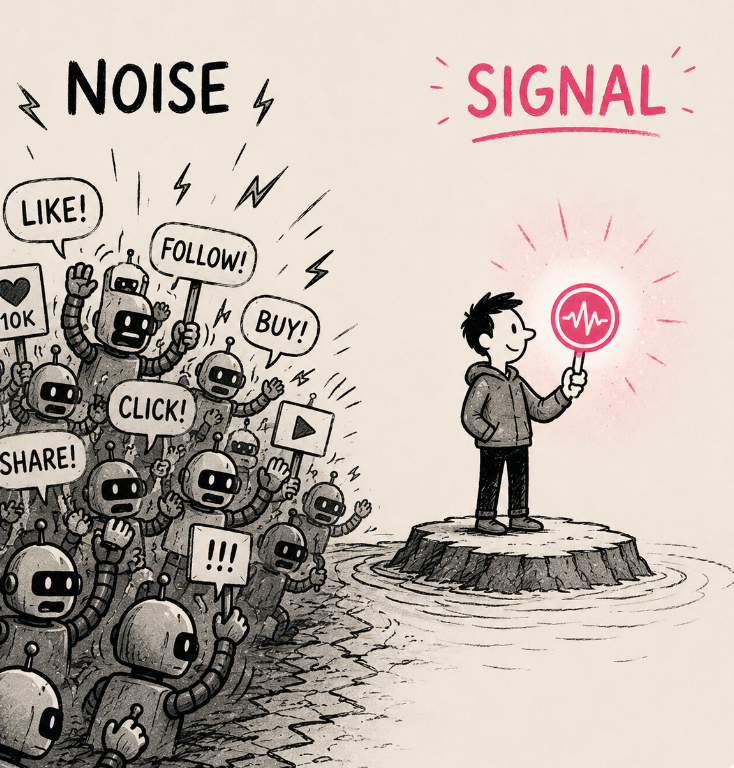
That distinction matters because the market has changed. A few years ago, it was often enough to present a blockchain as “high performance” and let the phrase do most of the work. Investors, users, and even builders were willing to infer a lot from broad claims about throughput. But the market is becoming harder to impress with speed alone. It has seen too many benchmark numbers that did not translate into production conditions, too many systems that looked strong in theory and fragile under load, and too many performance narratives that turned out to be more about marketing than infrastructure. In that environment, simply sounding fast is no longer enough. The more serious question is where the performance comes from and whether the architecture behind it actually changes the constraint.
This is where Altius becomes more interesting than a standard “fast blockchain” story. The company’s thesis is not just that blockchains should go faster. Its thesis is that the real bottleneck sits in execution, and that execution itself needs to be rethought if blockchain infrastructure is going to behave more like real infrastructure and less like a fragile system that performs well only in ideal conditions. That is a different level of argument. It is not just asking for more output. It is asking whether the logic of execution, as it exists in many systems today, is too narrow to support the kind of demand the market increasingly wants blockchains to handle.
That is a much more mature claim than the usual performance pitch. A generic fast-chain narrative usually centers on the output side of the equation. It wants to show a bigger number, a lower latency figure, a cleaner benchmark. But Altius is more interesting if you read it from the constraint side instead. The important question is not simply how fast the system can appear at its best. The important question is whether the core processing path of the system has actually been widened in a meaningful way. That is why the company matters more as an execution thesis than as a speed thesis. It is trying to address the bottleneck itself rather than just produce a more attractive performance headline.
This is also why Altius fits naturally into the broader shift we have already been seeing across the market. The industry is becoming less impressed by peak TPS as a standalone metric and more focused on sustained throughput, worst-case latency, fee stability, and behavior under real load. Stablecoins are pushing blockchain infrastructure toward more serious financial use cases. Execution is increasingly being recognized as one of the real constraints in the system. In that context, Altius starts to look less like a project trying to win an old race and more like a project positioning itself for a different one. It is not just trying to shout louder in the speed discourse. It is trying to align itself with a more demanding and more mature version of the market.
That is an important strategic difference. Many blockchain projects still try to win by presenting themselves as complete ecosystems, complete chains, or total alternatives to everything that came before. Altius, by contrast, becomes more compelling when it is understood as a focused bet on execution quality. The company’s story is stronger when read as a thesis that execution can become its own infrastructure category, not just one feature buried inside a chain narrative. That framing matters because it implies a different kind of opportunity. If execution is where real bottlenecks live, then the company solving execution does not need to win every broader chain war to become valuable. It only needs to become meaningfully better at the layer that increasingly determines whether blockchain systems feel reliable or brittle.
In that sense, Altius should not be read as “another blockchain that says it is fast.” It should be read as a company betting that the market is finally becoming honest about what performance actually means. Performance is not a single number. It is not just a benchmark. It is not something that can be understood through an isolated best-case scenario. Performance is the quality of behavior under pressure. It is what happens when transaction density rises, when state grows, when activity clusters, when applications become more demanding, and when users stop treating the system as an experiment and start relying on it like infrastructure. If that is the standard, then the real question is no longer who can claim to be fast. The real question is who has reworked the architecture enough to make fast performance believable.
This is where Altius has a chance to stand apart. The company only really makes sense if you believe the market is moving away from performance theater and toward execution quality. If that shift is real, then Altius is not competing in the shallowest version of the blockchain conversation. It is stepping into the part of the stack where the next serious wave of differentiation is likely to happen. The opportunity is not just to be faster in the abstract. It is to become part of the infrastructure that determines whether blockchains can support more serious demand without collapsing into the same familiar tradeoffs.
That is why I would not describe Altius as “just another fast blockchain,” even if that is the easiest way to misunderstand it. The more accurate reading is that Altius is trying to sell a different architecture for performance. It is making the case that execution deserves to be redesigned, that better execution can create a more durable form of scale, and that the market is finally reaching a point where that argument matters more than another big number. That does not automatically make the thesis right. But it does make it more interesting than the usual infrastructure pitch.
And that may be the most important point of all. The blockchain market has heard enough promises about speed. What it needs now is a clearer understanding of where performance breaks, why it breaks, and which projects are actually trying to solve the right problem. Altius becomes worth paying attention to not because it speaks the language of speed, but because it seems to understand that the real issue is no longer speed in the abstract. The real issue is execution quality. And that is a much harder, more important, and ultimately more valuable problem to go after.
메타데이터
- post_id
- 2575359bbe92
- slug
- why-altius-is-not-just-another-fast-blockchain-2575359bbe92
- url
- https://medium.com/@ny_joker_eth/why-altius-is-not-just-another-fast-blockchain-2575359bbe92
- canonical_url
- https://medium.com/@ny_joker_eth/why-altius-is-not-just-another-fast-blockchain-2575359bbe92
- author_url
- https://medium.com/@ny_joker_eth
- status
- ok
- fetched_at
- 2026-07-11 15:31:54