AI Industry Trends 2026: The Shift from Model Race to System Integration
Artificial intelligence is entering a new phase.
AI Industry Trends 2026: The Shift from Model Race to System Integration
Artificial intelligence is entering a new phase.
Among the many signals shaping AI industry trends 2026, one shift is becoming increasingly clear:
The center of gravity in AI is moving away from pure model capability and toward system integration.
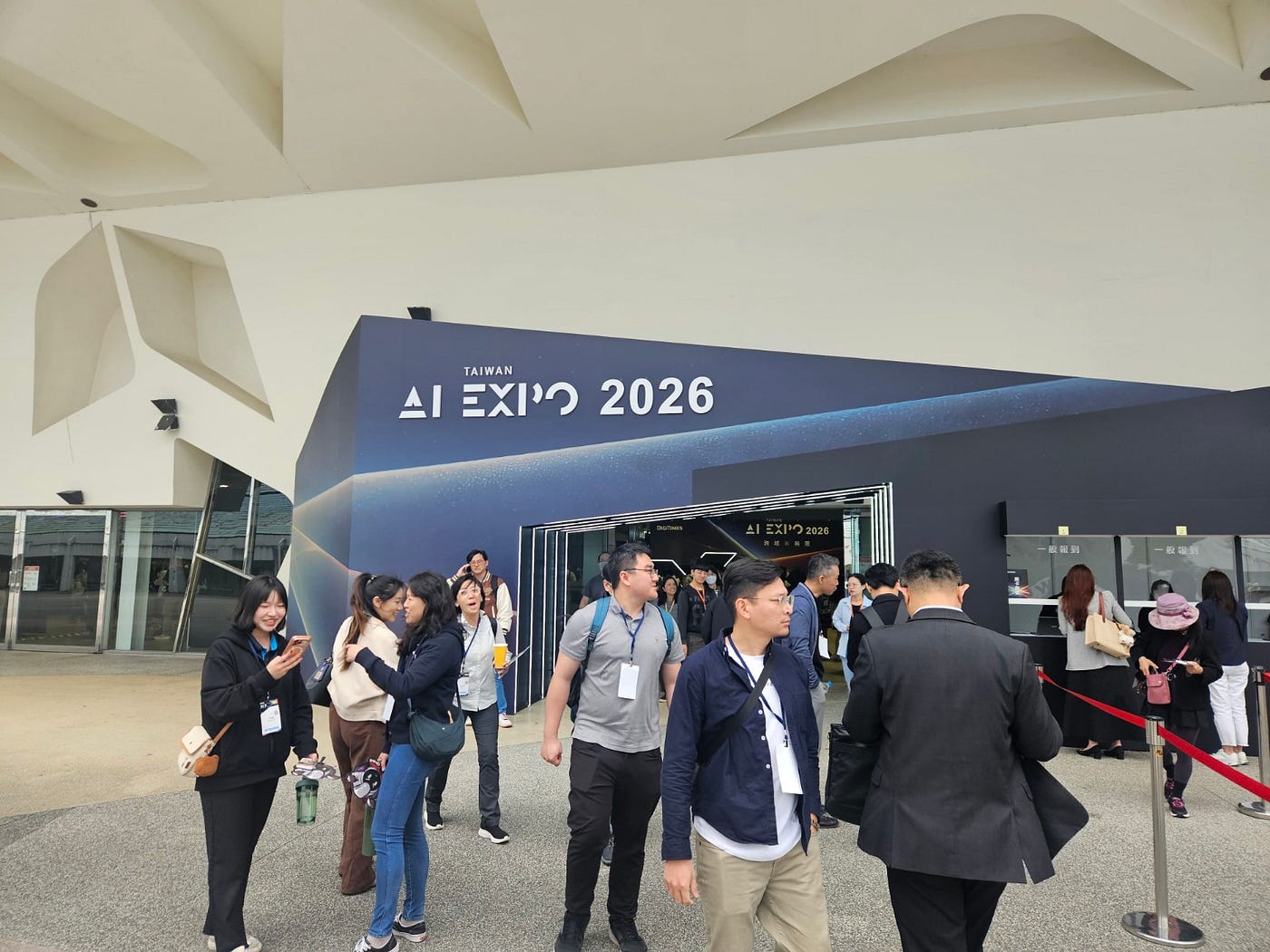
After visiting AI EXPO Taiwan, I was reminded that while the global conversation often focuses on model performance — parameters, benchmarks, reasoning ability, and AGI timelines — the questions companies are asking today are becoming more practical:
How can AI be deployed reliably? How can AI integrate with existing workflows? How can organizations generate measurable ROI from AI investments?
AI is moving from experimentation to implementation.

AI is becoming an engineering discipline
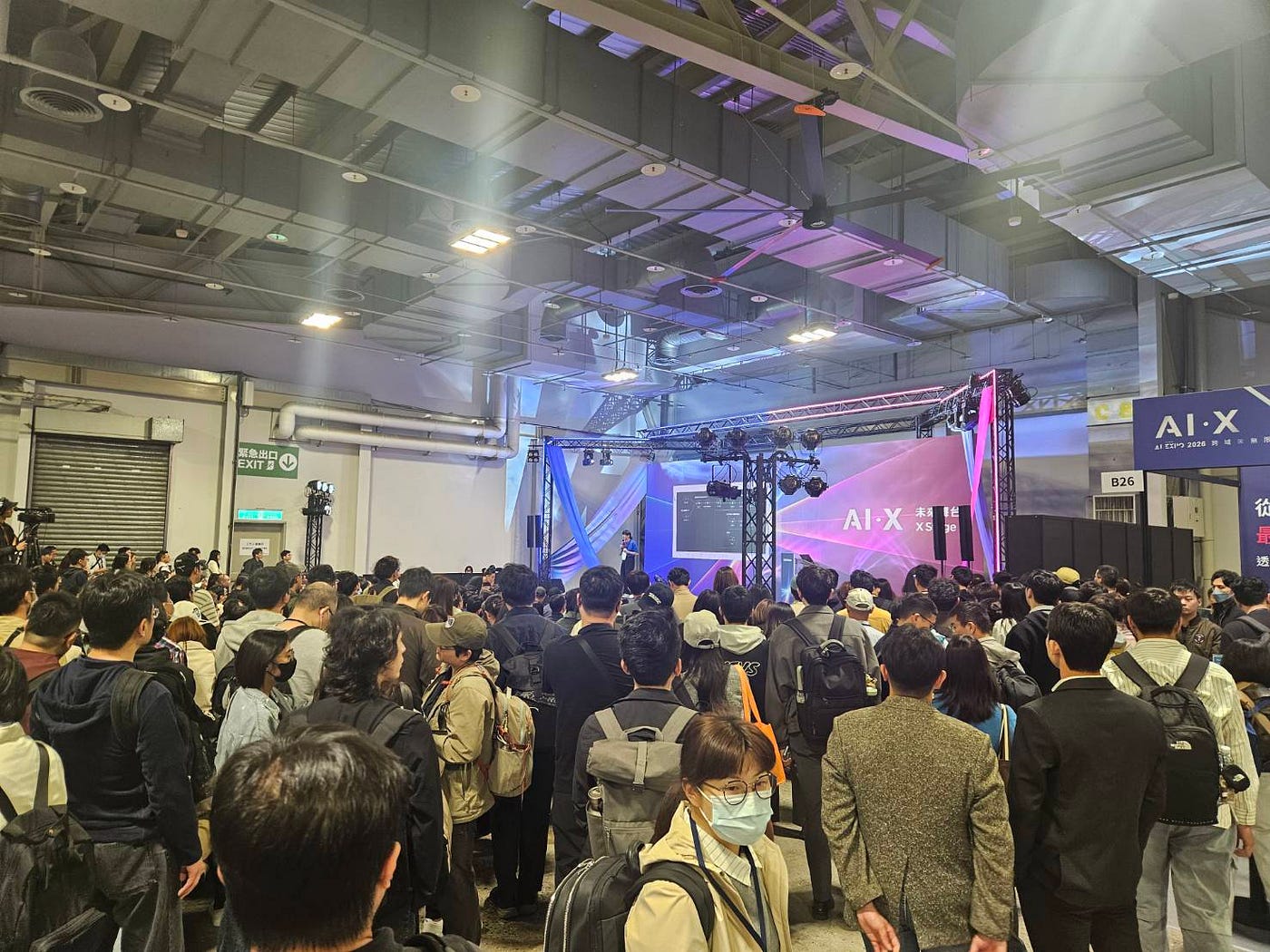
Events like AI EXPO Taiwan provide a useful cross-section of the regional innovation ecosystem. The exhibition brings together technology vendors, system integrators, startups, manufacturers, research institutions, and global cloud providers.
From infrastructure and data platforms to enterprise applications and industry-specific solutions, the entire AI stack is visible in one place.
Across many booths, the emphasis was not on theoretical model capability, but on real-world deployment:
workflow automation knowledge integration system reliability data connectivity operational scalability
In other words, AI is increasingly becoming an engineering discipline rather than purely a research discipline.
As technologies mature, competitive advantage often shifts from theoretical performance to practical usability.

Integration is the real bottleneck for enterprise AI adoption
One of the clearest signals shaping AI industry trends 2026 is that most enterprises already have access to powerful models.
What they lack are systems capable of integrating AI into real operational environments.
Key challenges include:
connecting AI to internal knowledge bases integrating with ERP and CRM systems managing data permissions and governance maintaining reliability in production environments
Many solutions at the exhibition focused on architectural approaches such as:
Retrieval-Augmented Generation (RAG) workflow orchestration platforms knowledge integration frameworks agent-based automation systems
Organizations are not simply looking for intelligence — they are looking for systems that can operate reliably at scale.
AI adoption is increasingly an engineering problem rather than a purely scientific one.

Physical AI is emerging as a major opportunity
Another major theme visible across the exhibition is the rapid expansion of AI into the physical world.
Applications included:
manufacturing AI computer vision robotics sensor integration edge AI digital twins
Physical AI requires tight integration between software and hardware, as well as real-world deployment experience.
These requirements align closely with Taiwan’s traditional strengths in electronics manufacturing, industrial computing, and embedded systems.
In the context of AI industry trends 2026, physical AI represents a convergence between machine intelligence and engineering execution.
Success depends not only on model performance, but also on system reliability and deployment capability.

The AI ecosystem is becoming increasingly modular
Another structural pattern shaping AI industry trends 2026 is the emergence of a more modular AI technology stack.
The ecosystem is increasingly divided into distinct layers:
compute layer model layer data layer workflow layer application layer
Different companies are specializing in different layers of the value chain, including:
GPU orchestration platforms MLOps infrastructure data pipelines agent frameworks vertical industry AI solutions
As the ecosystem matures, innovation is no longer concentrated in a single technological breakthrough.
Instead, competitive advantage increasingly comes from how effectively these layers are integrated into cohesive systems.
Taiwan’s role in the next phase of AI
Viewed through the lens of AI industry trends 2026, Taiwan’s strategic positioning appears increasingly clear.
Taiwan is unlikely to compete directly in developing the largest frontier foundation models.
However, Taiwan has strong structural advantages in enabling large-scale AI deployment through:
system integration expertise hardware ecosystem depth industrial application experience engineering-driven implementation
This mirrors Taiwan’s historical role in the broader ICT industry, where its strength lies in making advanced technologies scalable and widely deployable.
Taiwan may not define every breakthrough in artificial intelligence, but it plays a critical role in making those breakthroughs operational.

The next phase of AI competition
The first phase of AI development demonstrated what machine intelligence can achieve.
The next phase focuses on ensuring those capabilities can operate reliably in real-world systems.
AI industry trends 2026 suggest we are entering this transition.
Future competition may not be defined solely by which model is most advanced, but by which organizations can integrate AI most effectively into everyday workflows.
The future of AI is not only about intelligence itself, but about how intelligence becomes usable infrastructure.
Read the original article
This article was originally published on Taiwan Tech Dispatch:
https://whitehsu.blog/2026/03/30/ai-industry-trends-2026-ai-expo-taiwan/
Stay connected
If you are interested in:
Taiwan’s technology ecosystem AI industry structure global supply chain shifts startup and innovation trends
Follow and Subscribe Taiwan Tech Dispatch for future insights.
https://www.linkedin.com/newsletters/taiwan-tech-dispatch-7355532535025586178
You can also connect with me on LinkedIn for more analysis on AI, startups, and global technology trends.
메타데이터
- post_id
- 2588878a9763
- slug
- ai-industry-trends-2026-the-shift-from-model-race-to-system-integration-2588878a9763
- url
- https://medium.com/taiwan-tech-dispatch/ai-industry-trends-2026-the-shift-from-model-race-to-system-integration-2588878a9763
- canonical_url
- https://medium.com/taiwan-tech-dispatch/ai-industry-trends-2026-the-shift-from-model-race-to-system-integration-2588878a9763
- author_url
- https://medium.com/@WhiteHsu
- status
- ok
- fetched_at
- 2026-08-20 10:48:30