Merchandise Export Incentive Scheme: Maximising Government Export Benefits
India’s export sector plays a crucial role in driving economic growth, generating employment, and strengthening the country’s position in…
Merchandise Export Incentive Scheme: Maximising Government Export Benefits
India’s export sector plays a crucial role in driving economic growth, generating employment, and strengthening the country’s position in global trade. To support exporters and improve international competitiveness, the Government of India has introduced several export promotion measures under the Foreign Trade Policy (FTP). Among these initiatives, the **Merchandise Export Incentive scheme** has been a significant policy tool for encouraging merchandise exports by reducing the financial burden on exporters.
Although India’s export incentive framework has evolved over time with policy reforms and the introduction of WTO-compliant mechanisms, businesses continue to benefit from various Export Schemes and Incentives that improve cash flow, lower operational costs, and enhance global competitiveness. Understanding these schemes enables exporters to make informed decisions while ensuring regulatory compliance.
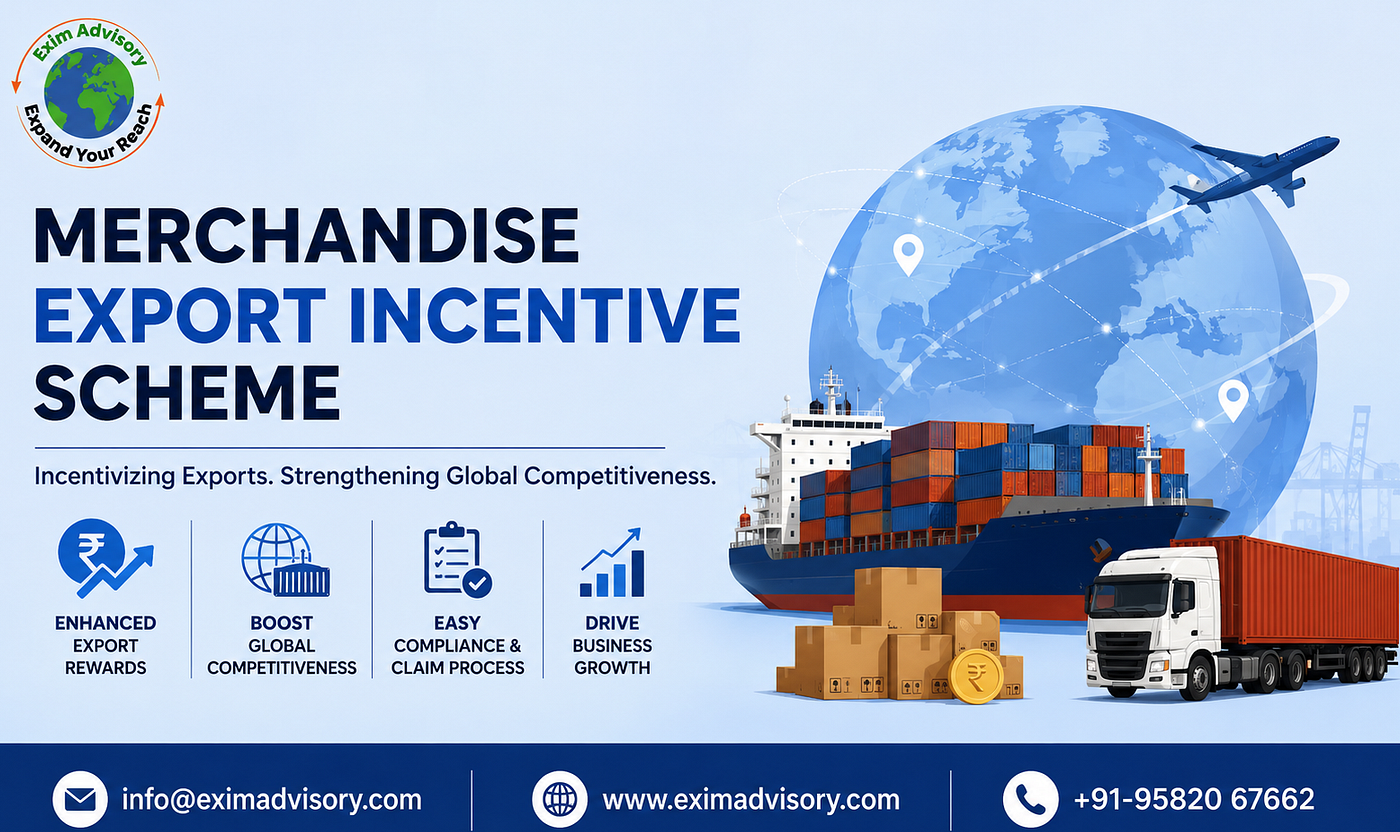
Understanding the Merchandise Export Incentive Scheme
The Merchandise Export Incentive scheme was introduced to reward exporters of notified goods by providing incentives that improved their competitiveness in international markets. The objective was to offset infrastructural inefficiencies and associated costs that exporters often faced while shipping products overseas.
Over time, India’s export promotion policies have undergone significant reforms. Several earlier incentive schemes have been replaced or restructured to align with international trade obligations and World Trade Organization (WTO) requirements. Today, exporters should carefully evaluate the applicable benefits available under the current Foreign Trade Policy, including schemes such as the Remission of Duties and Taxes on Exported Products (RoDTEP), Duty Drawback, Advance Authorisation, EPCG, and other notified export promotion measures.
Despite these policy changes, the principles behind the Merchandise Export Incentive scheme continue to highlight the importance of government support in strengthening India’s export ecosystem.
Importance of Export Incentives for Indian Businesses
Global trade is highly competitive, and exporters frequently encounter challenges such as fluctuating freight costs, compliance expenses, infrastructure limitations, and changing international regulations. Government-backed Export Incentive Scheme programs help businesses manage these challenges by reducing overall export costs and encouraging greater participation in international trade.
These incentives contribute to:
- Improving price competitiveness in overseas markets.
- Supporting manufacturing and value addition.
- Encouraging export diversification.
- Strengthening foreign exchange earnings.
- Promoting investment in export-oriented industries.
- Expanding India’s global trade presence.
For manufacturers and merchant exporters alike, selecting the appropriate export promotion scheme can significantly improve long-term business performance.
Merchant Export Incentive Scheme and Its Relevance
Many businesses search for information regarding the Merchant Export Incentive scheme while exploring export benefits. Merchant exporters play an important role in India’s export supply chain by sourcing products from domestic manufacturers and supplying them to international buyers.
Although merchant exporters may not manufacture goods themselves, they remain eligible for several export-related benefits, provided they satisfy the conditions prescribed under applicable government schemes. The availability of incentives depends on factors such as product classification, export destination, policy notifications, and compliance with DGFT and Customs regulations.
Proper planning helps merchant exporters maximize available benefits while avoiding documentation errors that could delay claims or approvals.
Key Export Schemes and Incentives Available Today
India offers multiple **Export Schemes and Incentives** that support exporters across different industries. Some of the major schemes include:
RoDTEP Scheme
The Remission of Duties and Taxes on Exported Products (RoDTEP) refunds embedded taxes and duties that are not otherwise refunded under existing mechanisms. It is designed to improve export competitiveness while complying with WTO norms.
Duty Drawback
This scheme provides refunds of specified customs duties paid on imported inputs used in manufacturing exported goods.
Advance Authorisation Scheme
Businesses can import inputs duty-free for manufacturing export products, helping reduce production costs and improve pricing.
Export Promotion Capital Goods (EPCG) Scheme
The EPCG Scheme allows exporters to import capital goods at concessional or zero customs duty, subject to prescribed export obligations.
Duty Free Import Authorisation (DFIA)
Eligible exporters may import specified inputs without paying applicable customs duties when those inputs are used in manufacturing export products.
Collectively, these Export Schemes and Incentives enable businesses to improve operational efficiency while remaining globally competitive.
Compliance Requirements for Export Incentive Claims
Claiming benefits under any Export Incentive Scheme requires careful compliance with regulatory procedures. Exporters should maintain accurate documentation throughout the export process.
Common documentation includes:
- Import Export Code (IEC)
- GST registration details
- Shipping Bills
- Commercial invoices
- Packing lists
- Bill of Lading or Airway Bill
- Bank Realisation Certificate (where applicable)
- Product classification details
- Supporting declarations required under DGFT or Customs regulations
Maintaining organized records helps minimize disputes during audits and verification.
Common Challenges Faced by Exporters
Many exporters miss valuable benefits because of avoidable compliance issues. Some of the most common challenges include:
- Incorrect product classification.
- Errors in export documentation.
- Delay in filing applications.
- Lack of awareness regarding applicable incentive schemes.
- Frequent policy updates.
- Incorrect declaration of export products.
- Difficulty understanding DGFT notifications.
Professional advisory support significantly reduces these risks while ensuring exporters remain compliant with current regulations.
Why Professional Guidance Matters
Export incentive regulations involve multiple government agencies, including the Directorate General of Foreign Trade (DGFT), Indian Customs, GST authorities, and other regulatory bodies. Policy amendments and procedural updates require continuous monitoring.
Professional consultants help businesses:
- Identify eligible export benefits.
- Interpret Foreign Trade Policy provisions.
- Prepare accurate documentation.
- Ensure timely application filing.
- Minimize compliance risks.
- Respond to regulatory queries.
- Maximize legitimate incentive claims.
Timely expert assistance also helps businesses avoid delays that could affect cash flow and export commitments.
How Exim Advisory Supports Exporters
Exim Advisory provides end-to-end advisory services for businesses seeking to benefit from government export promotion initiatives. Its experienced professionals assist exporters with scheme selection, documentation, regulatory compliance, DGFT procedures, and customs-related guidance.
The firm’s services include:
- Export incentive eligibility assessment.
- Documentation support.
- DGFT advisory.
- Customs compliance assistance.
- Export policy consultation.
- Ongoing regulatory updates.
- End-to-end export compliance management.
With professional support, exporters can confidently navigate complex regulatory requirements while focusing on expanding their international business.
Current Policy Perspective
India continues to strengthen its export ecosystem through digital governance, simplified compliance procedures, trade facilitation initiatives, and export promotion measures under the Foreign Trade Policy. The government regularly updates export regulations to improve ease of doing business while ensuring alignment with international trade commitments.
Exporters should remain informed about policy notifications issued by DGFT, the Ministry of Commerce and Industry, and the Central Board of Indirect Taxes and Customs (CBIC). Staying updated helps businesses claim available benefits correctly while avoiding procedural lapses.
Conclusion
The Merchandise Export Incentive scheme reflects India’s long-standing commitment to supporting exporters and enhancing global trade competitiveness. Although the export incentive landscape has evolved, various Export Schemes and Incentives continue to provide valuable financial and operational benefits for manufacturers and merchant exporters.
Businesses seeking benefits under any Export Incentive Scheme should carefully evaluate their eligibility, maintain accurate documentation, and comply with applicable regulatory requirements. Likewise, understanding the role of the **Merchant Export Incentive scheme** and related government initiatives enables exporters to make informed strategic decisions.
With expert guidance from Exim Advisory, businesses can navigate export regulations efficiently, identify the most suitable incentive opportunities, and strengthen their position in international markets through compliant and sustainable export practices.
메타데이터
- post_id
- 25fa045c756f
- slug
- merchandise-export-incentive-scheme-maximising-government-export-benefits-25fa045c756f
- url
- https://medium.com/@eximadvisory6/merchandise-export-incentive-scheme-maximising-government-export-benefits-25fa045c756f
- canonical_url
- https://medium.com/@eximadvisory6/merchandise-export-incentive-scheme-maximising-government-export-benefits-25fa045c756f
- author_url
- https://medium.com/@eximadvisory6
- status
- ok
- fetched_at
- 2026-08-11 18:41:33




