Minari: Movie Review
Winning 2 awards at the Sundance Film Festival and multiple others for its cast members, Minari is a notable gem that has come out during…
Minari: Movie Review
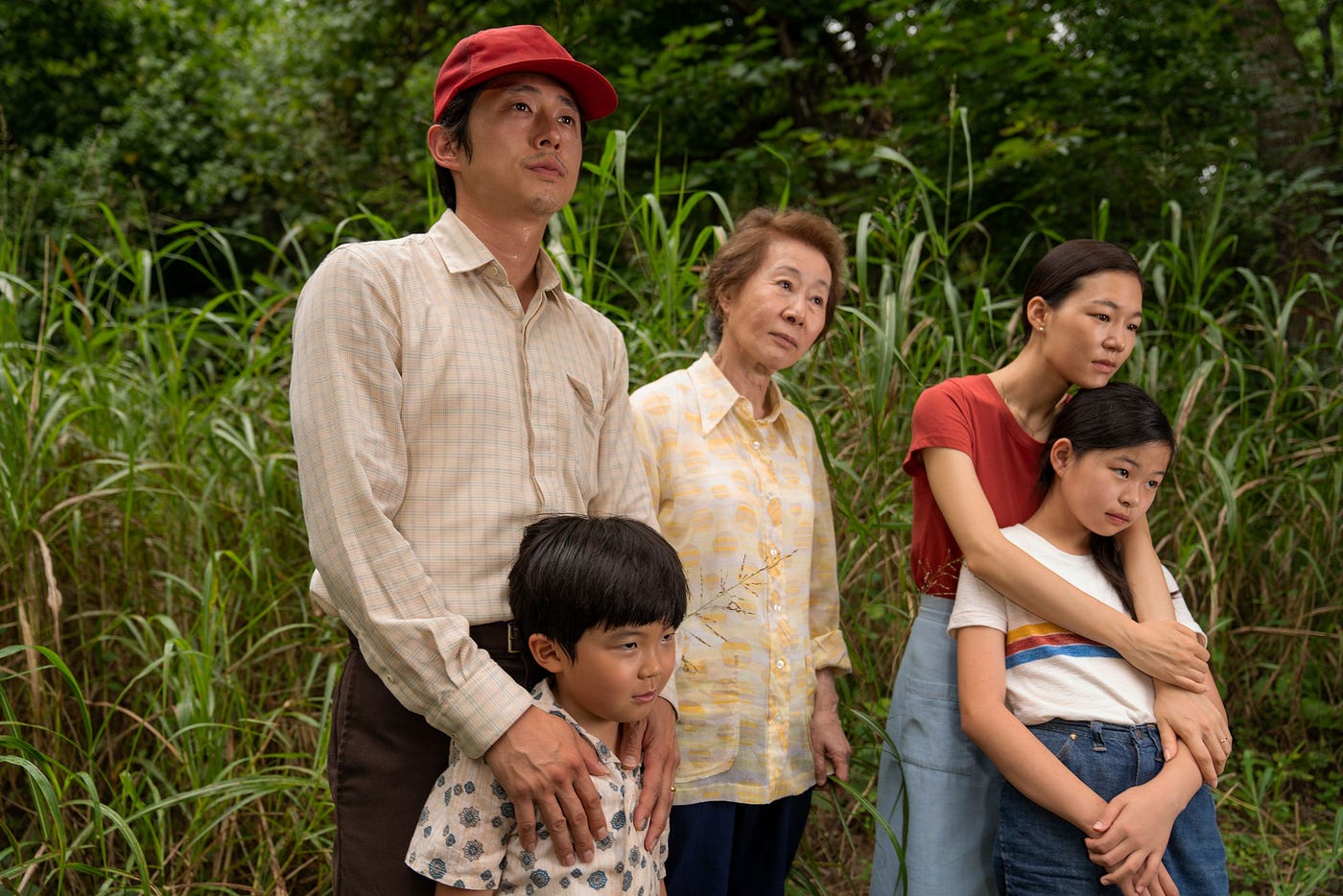
Winning 2 awards at the Sundance Film Festival and multiple others for its cast members, Minari is a notable gem that has come out during the pandemic which has the same charm as The Farewell with the storytelling of films like *Eighth Grade and [The Florida Project](https://web.archive.org/web/20220114200241/https://a24films.com/films/the-florida-project)*. Starring Steven Yeun and Yeri Han, a Korean-American family moves into Arkansas with the hopes of achieving the American Dream through a small home farm. When the family is finally starting to become comfortable living in their 3-bedroom trailer in the middle of their Arkansas farm, the arrival of their eccentric and fun-loving grandmother played by Youn Yuh-jung halfway through the movie reveals how the resilience of family ultimately shapes one home.
I rate Minari an 8/10 because of the vulnerability that came through the director’s storytelling in this semi-biographical film by Lee Issac Chung. Throughout the movie, I found pieces of myself and my family within this Korean-American family and believe that without Chung’s childhood memories, this film would not be as successful as it is. In his NPR interview, Chung references the emotional responses that his crew members and himself had while shooting certain scenes for the movie.
The saddest scenes to me would be the next morning where grandmother has a stroke or when the flammable rubble in the trash can topples. I don’t believe that both these scenes including the grandmother are a coincidence when taken into consideration how Chung based the film grandmother on his own, “she’s also bringing a sense of history to the family is the way I feel.. And that kind of comes from personal life.”
Minari tells a story not based on a family but the relationships that bond that family — the small detail of not revealing the family name allows for audiences to watch the characters as if they were any other next-door family. Until the end, most of the movie is filled with ordinary scenes such as going to Sunday Church or working at the farm. Most of the charm within Minari is from the characters’ interactions with one another and what they do as a family, which is a common characteristic amongst coming-of-age movies. It is not until the arrival of the grandmother when the dynamics of the family starts to change — Jacob and Monica’s disagreements with their finances and the farm heighten, David is more-than-less welcoming to their new houseguest, and Anne is given more responsibilities as she now looks over both David and their grandmother at home.
Monica throughout the film is threatening the idea of moving away to California with her grandmother, and looking back, these are the moments in the film where it is clear this was not a story of immigration but family. We watch the sacrifices that both Jacob and Monica make for their family add tension into their relationship, a counter-productive cycle.
The ending of the film may leave audience members unsatisfied as we watch Jacob and David pick minari in a nearby creek. In the same NPR interview, director Chung says that he started writing the story of Minari by “[spending] the whole afternoon just writing memory after memory..minari, this Korean plant..that my grandmother planted, ended up being the only thing that thrived on that farm.” After the destruction of the farm shed, it would be easy for the family to leave on a hopeless note and leave America to never come back again.
However, so much is revealed prior to the ending — when the fire ensued. David overcomes his fear of running when he runs to tell his grandmother to come back, his first time showing affection towards her. Jacob calls for Monica amidst the fire, prioritizing her over the farm crops.
The end scene with the minari being picked in the creek captures the resilience of family and has for the entire movie. With farming typical produce like cabbages and turnips, Jacob and the rest of the family didn’t see minari as an essential crop to grow on the farm. And with all of the products being destroyed in the fire, the minari remains intact and resides in a nearby creek — planted by their grandmother after arriving from Korea. With minari being a plant typically used in Korean households, I view the ending as the family realizing that they can strive for the American dream without running away from their roots. Korea, they now know, will always be there and another home to them. Because home is more than a location, it is where family is. Their family coming from Korea is what made Korea home, and now, they are ready to make America their home as well.
메타데이터
- post_id
- 25fb8517b7e6
- slug
- minari-movie-review-25fb8517b7e6
- url
- https://medium.com/@jessicanguyen858/minari-movie-review-25fb8517b7e6
- canonical_url
- https://medium.com/@jessicanguyen858/minari-movie-review-25fb8517b7e6
- author_url
- https://medium.com/@jessicanguyen858
- status
- ok
- fetched_at
- 2026-07-22 02:17:40