Mold Problems in Residential Homes
Mold in residential homes is one of those things people usually don’t notice until it’s already been sitting there for a while. It rarely…
Mold Problems in Residential Homes
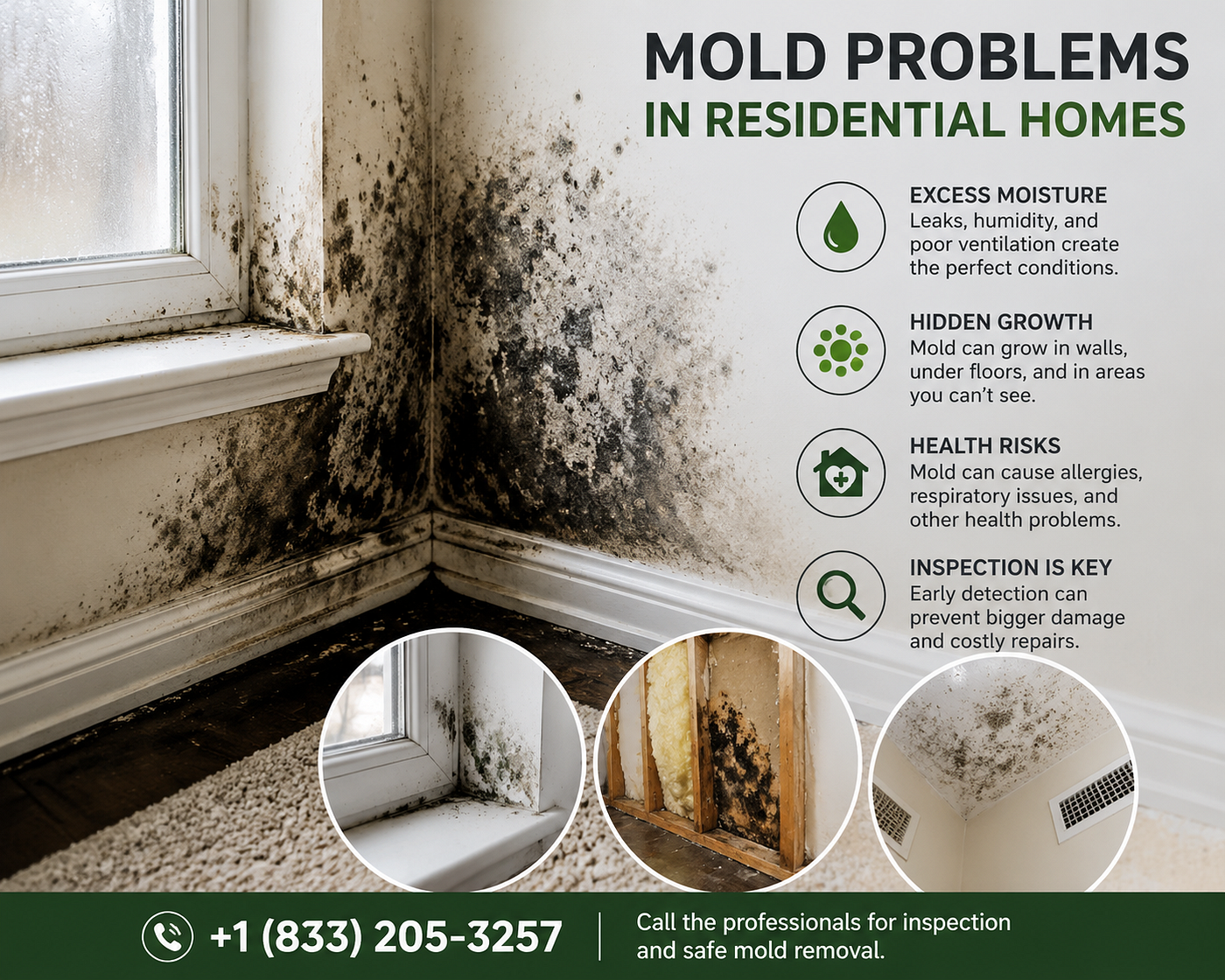
Mold in residential homes is one of those things people usually don’t notice until it’s already been sitting there for a while. It rarely starts in an obvious way. Most of the time it’s just a faint smell in one room, something slightly damp that doesn’t quite go away, or a corner of the bathroom ceiling that starts looking a bit “off” and darker than the rest. Easy to ignore at first, honestly.
📞 +1 (833) 205–3257
If things start feeling like they’re beyond a quick wipe-down or DIY cleaning, this is usually the point where people call professionals before it spreads further.
How It Usually Starts (and Why People Miss It)
Then it slowly becomes harder to ignore.
After a while, you start noticing patterns. Like the smell is stronger in the morning. Or it shows up more after hot showers. Or certain rooms just feel heavier, if that makes sense. Not every home has the same story, but moisture is almost always behind it in some way.
A small roof leak that nobody thought much about. A bathroom fan that doesn’t actually pull air out properly. Basement humidity that just sits there all year. It’s rarely one big dramatic moment, more like small things stacking up quietly.
Hidden Places Where Mold Likes to Grow
One thing I’ve noticed is mold doesn’t really respect “clean” houses or “messy” houses. It just needs the right conditions.
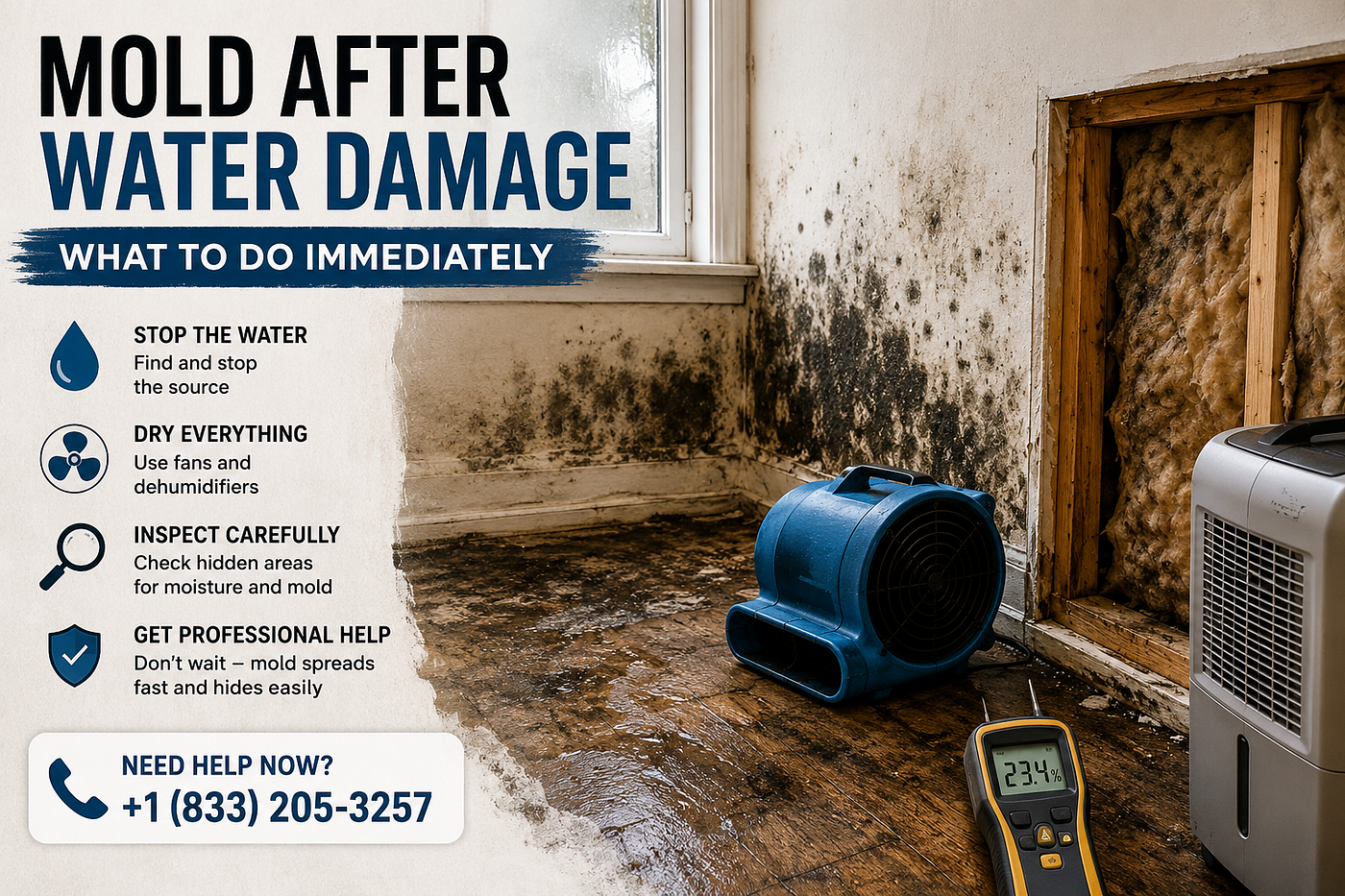
Behind drywall is probably the most common place people miss it. You can have a wall that looks totally fine on the outside, but inside it’s a different story, especially if there was a slow leak from a pipe or condensation building up over time.
Bathrooms are obvious hotspots, but HVAC ducts can be sneaky too. You don’t really think about air systems carrying moisture until you smell something musty when the AC kicks on.
Sometimes it shows up under carpet near exterior walls. Or behind kitchen cabinets where a small plumbing drip was happening for months without anyone seeing it. Even window seals can be a weak point if water keeps getting in slowly.
When It Doesn’t Look “Serious” but Still Is
The tricky part is mold doesn’t always look dramatic. People imagine black walls and obvious growth, but a lot of the time it’s just discoloration, light spotting, or nothing visible at all while the smell is already there.
That’s usually when people feel confused. They clean, air things out, run dehumidifiers, but something still feels off.
And it’s frustrating because it doesn’t behave like normal dirt. You can scrub it and it comes back if the moisture is still there.
Humidity and Everyday Habits That Make It Worse
Humidity plays a bigger role than most expect.
Showers without ventilation, cooking without airflow, even drying clothes indoors can slowly push moisture levels up. In some homes it’s not a leak at all, just daily life building up damp air over time.
I’ve seen cases where people repaint stains thinking it’s solved. It looks better for a short time, but if the source is still active, it comes back through again. That’s usually when it gets annoying because it feels like nothing is working.
Health Signs People Often Ignore
Some people notice irritation in the eyes or throat, or just feel a bit “off” at home but better outside.
It’s not always strong symptoms. Sometimes it’s subtle enough that it gets blamed on allergies, dry air, or just being tired. So it goes on longer than it should.
Basements and Persistent Moisture Problems
Basements are kind of their own category.
Cool, dark, slightly damp spaces that don’t always get enough airflow. Even a small amount of groundwater seepage can keep things slightly wet all year without anyone noticing immediately.
Once wood, insulation, or drywall gets affected, it doesn’t just dry out on its own in many cases. It tends to hang around unless something actually changes in the environment.
Why Early Attention Matters
If there’s one thing I’ve learned, it’s that waiting doesn’t really help.
Mold doesn’t pause. It either stays the same for a while or slowly spreads depending on conditions. Catching it early usually means less damage and fewer surprises later.
Sometimes it’s not about panic. It’s just being honest with what you’re seeing and smelling in the home.
📞 Professional help line: +1 (833) 205–3257 📞 Even a quick inspection can usually clear up whether it’s surface-level or something hidden deeper that needs attention.
메타데이터
- post_id
- 263ca924efd5
- slug
- mold-problems-in-residential-homes-263ca924efd5
- url
- https://medium.com/@mold-remediation/mold-problems-in-residential-homes-263ca924efd5
- canonical_url
- https://medium.com/@mold-remediation/mold-problems-in-residential-homes-263ca924efd5
- author_url
- https://medium.com/@mold-remediation
- status
- ok
- fetched_at
- 2026-06-20 20:29:01