What Makes a Vaccine Effective?
Understanding vaccine effectiveness and why protection isn’t always the same
What Makes a Vaccine Effective?
Understanding vaccine effectiveness and why protection isn’t always the same
Photo by Braňo on Unsplash
Have you noticed that people who receive the measles vaccine rarely ever develop measles, while someone who has been vaccinated against COVID-19 can still become infected?
This sometimes leads people to assume that vaccines like those for measles “work,” while COVID-19 vaccines do not. But that isn’t the full story.
To be honest, it is less about whether the vaccines work and more about knowing how they work.
What Does “Vaccine Effectiveness” Actually Mean?
When people hear that a vaccine is “95% effective” or “70% effective,” it’s easy to assume that a higher number automatically means a better vaccine.
In reality, vaccine effectiveness can measure several different things.
Scientists may evaluate how well a vaccine prevents infection, symptoms, severe disease, hospitalisation and even death. A vaccine that does not completely stop infection can still be extremely valuable if it significantly reduces the risk of serious illness.
This is why vaccine effectiveness should always be viewed in context.
Photo by Fusion Medical Animation on Unsplash
The Pathogen Matters
One of the biggest factors influencing vaccine effectiveness is the pathogen itself.
Some pathogens are relatively stable and change very little over time. Others mutate rapidly, producing new variants that may partially evade existing immunity.
For example, the measles virus remains genetically stable, which is one reason why the measles vaccine provides long-lasting protection. Influenza viruses, on the other hand, mutate frequently. This constant change makes it more difficult for vaccines to keep up, requiring updated formulations each year.
Simply put, some diseases are easier targets than others.
The Type of Vaccine Matters
Not all vaccines are made using the same technology. Different vaccine platforms stimulate the immune system in different ways.
Some common types include:
1. Live Attenuated Vaccines
These contain weakened versions of the pathogen that can still trigger a strong immune response. A well-known live attenuated vaccine is MMR, which protects against measles, mumps, and rubella.
Because they closely resemble natural infections, they often generate long-lasting immunity.
2. Inactivated Vaccines
These contain killed pathogens that cannot replicate. Examples of inactivated vaccines are polio (IPV) and hepatitis A.
These vaccines are very safe but sometimes require booster doses to maintain protection.
3. Subunit Vaccines
Subunit vaccines like hepatitis B and HPV contain only specific pieces of the pathogen, such as proteins or sugars.
Since they expose the immune system to only selected components, they often require multiple doses.
4. mRNA Vaccines
These vaccines deliver genetic instructions that allow cells to temporarily produce a harmless antigen. The most famous examples of mRNA vaccines are the COVID-19 vaccines developed by Pfizer-BioNTech and Moderna.
They can generate strong immune responses while avoiding the need to introduce the pathogen itself.
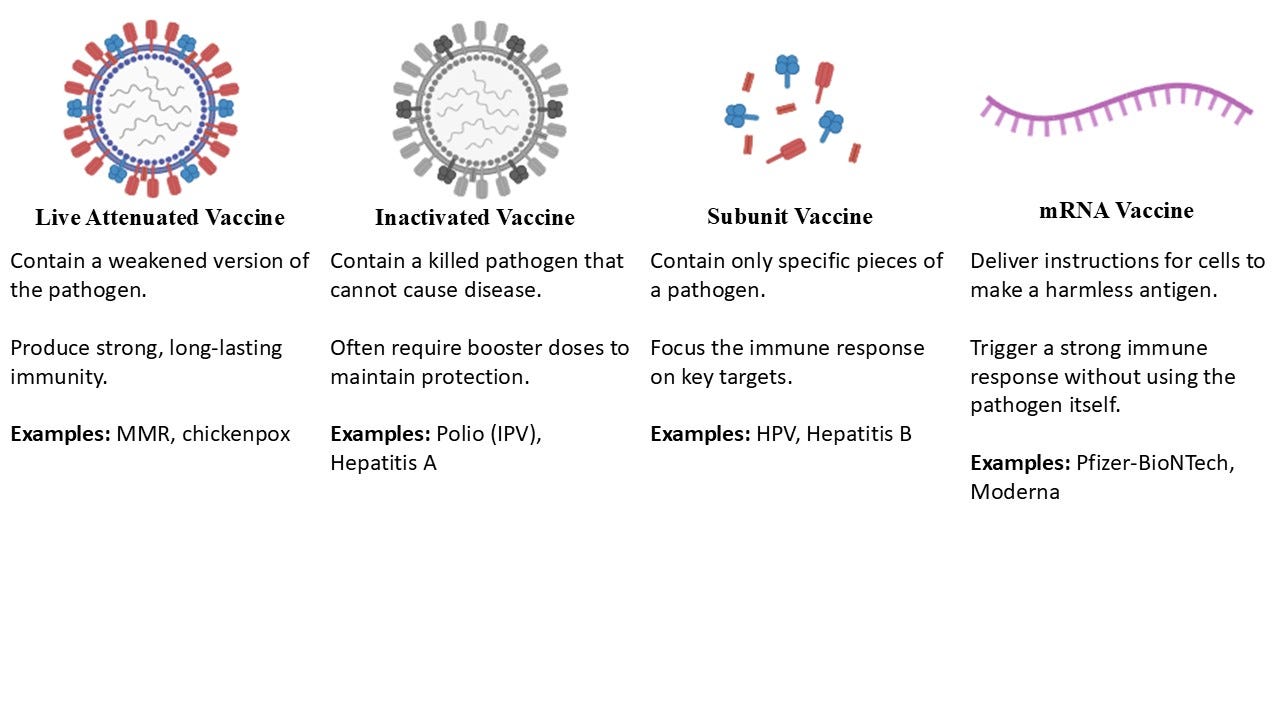
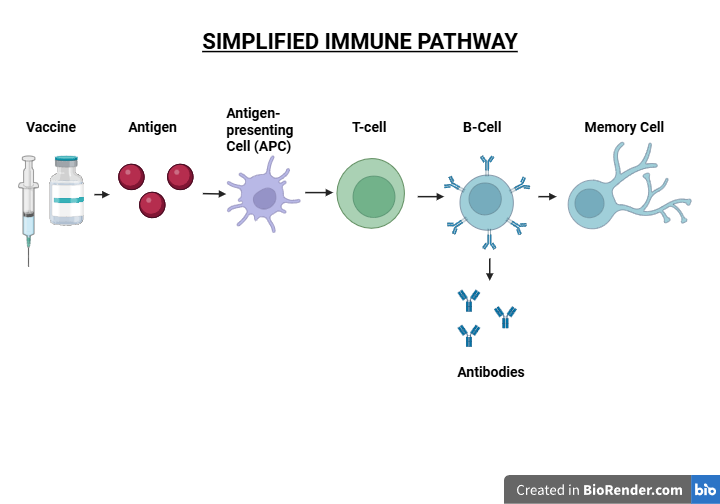
Different Types of Vaccines (Created Using BioRender.com)
Your Immune System Matters Too
Vaccines do not act in isolation; they rely on the individual’s immune system to generate protection.
Several factors can influence how well someone responds to a vaccine:
- Age
- Genetics
- Biological sex
- Nutrition
- Sleep
- Stress
- Underlying medical conditions
For example, older adults often produce weaker immune responses because the immune system naturally becomes less efficient with age, a process known as immunosenescence.
This is one reason certain vaccines are specially formulated for older populations.
Why Some Protection Fades Faster
Another important factor is the durability of immune memory. Some vaccines stimulate memory B and T cells that persist for decades. Others produce immune responses that gradually decline over time.
This is why:
- Measles vaccination may provide lifelong protection.
- Tetanus boosters are recommended every ten years.
- Influenza vaccines are updated annually.
The goal is not simply to generate immunity but to maintain it.
Can a Vaccine Still Work If You Get Sick?
Absolutely.
One of the most common misunderstandings about vaccines is the idea that infection after vaccination means the vaccine failed. Vaccines do not always create a perfect barrier against infection.
Instead, many vaccines work by reducing the severity of the disease. A vaccinated person may still become infected, but they are often far less likely to become seriously ill, require hospitalisation, or die from the disease.
This is still considered a successful outcome.
What Makes a “Good” Vaccine?
A good vaccine is not necessarily the one with the highest percentage reported in a headline. A good vaccine should be safe and produce reliable protection. It should reduce severe disease and work across large populations. Most importantly, it should have benefits that outweigh the risks.
Sometimes a vaccine with moderate effectiveness can still have an enormous public health impact.
Why This Matters
Throughout this mini-series, we’ve explored how vaccines interact with the immune system — from triggering immune responses and creating memory cells to maintaining protection through booster doses.
Understanding why vaccines differ in effectiveness helps us appreciate that vaccination is not a one-size-fits-all process.
Every pathogen is different. Every immune system is different. Every vaccine is designed to solve a unique biological challenge.
Photo by CDC on Unsplash
Final Thoughts
One of the biggest lessons from immunology is that protection is rarely absolute.
Vaccines do not create invincibility. Instead, they give the immune system a significant advantage before encountering a disease.
Some vaccines provide decades of protection. Others require occasional booster doses. Some prevent infection almost entirely, while others focus on reducing severe illness.
What they all have in common is that they help the immune system prepare before the real threat arrives.
And that preparation has saved countless lives.
If you’ve made it this far, thank you for following this vaccine mini-series.
We’ve explored what happens after a vaccine enters the body, why side effects occur, how immune memory forms, why booster shots are needed, and why vaccine effectiveness can vary.
Hopefully, the next time you hear the word vaccine, you’ll have a clearer picture of the remarkable biology working behind the scenes—and a deeper appreciation for one of the most powerful tools in modern medicine.
If you enjoy exploring the science behind everyday life, feel free to follow along :)
메타데이터
- post_id
- 267f0915861f
- slug
- what-makes-a-vaccine-effective-267f0915861f
- url
- https://medium.com/@harinee1999/what-makes-a-vaccine-effective-267f0915861f
- canonical_url
- https://medium.com/@harinee1999/what-makes-a-vaccine-effective-267f0915861f
- author_url
- https://medium.com/@harinee1999
- status
- ok
- fetched_at
- 2026-06-09 15:37:30