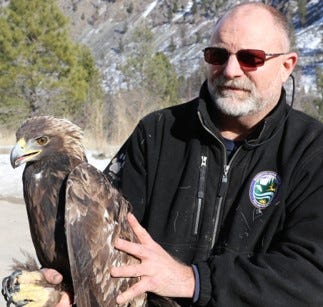
Protecting Washington’s cliff-nesting raptors through shared stewardship
Partners across Washington work together to protect peregrine falcons and other sensitive raptor species during their most vulnerable time…
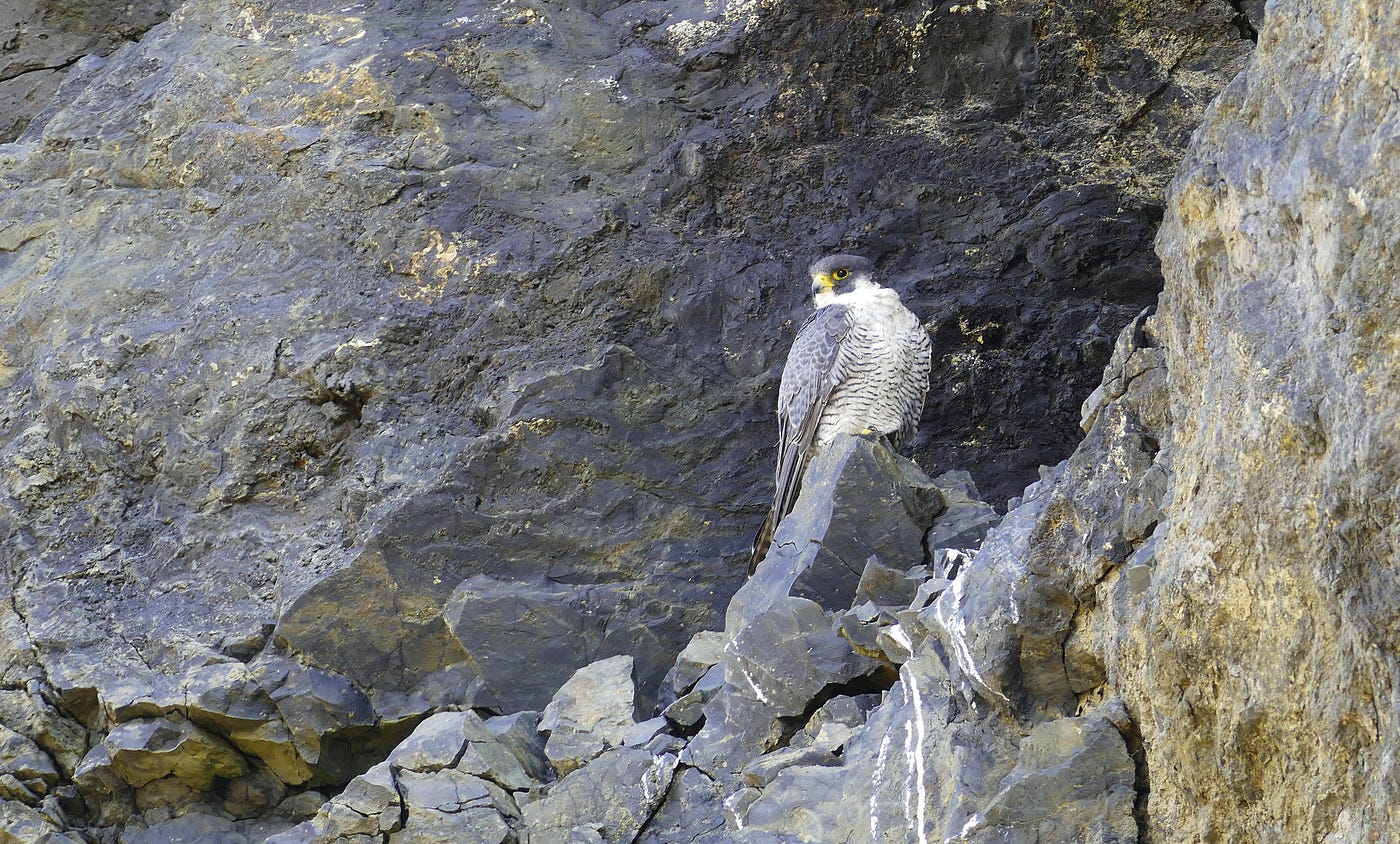
Temporary recreation closures help support the ongoing conservation of peregrine falcons and other sensitive raptors across Washington. Photo by WDFW.
Protecting Washington’s cliff-nesting raptors through shared stewardship
Partners across Washington work together to protect peregrine falcons and other sensitive raptor species during their most vulnerable time of year.
Collaboration is essential for effective wildlife conservation and public lands stewardship. A partnership between Washington state and federal agencies, with support from outdoor recreation groups, is protecting iconic raptors during their nesting season.
Each year between February and August, land managers implement temporary recreation closures at a small number of climbing and recreation sites in western and southwest Washington to help protect nesting peregrine falcons and other sensitive raptors during the breeding season. Temporary closures focus on sites where nesting habitat overlaps with recreation access points. Closure timing varies by site and nesting activity, and restrictions are lifted once biologists determine nesting birds are no longer at risk.
Peregrine falcons and other cliff-nesting raptors often nest on high ledges, rock faces, and canyon walls that are also popular areas for rock climbing, hiking, and other recreation. During nesting season, repeated human activity near active nests can cause adult birds to abandon nesting areas. Human disturbance can disrupt incubation and brooding, increase stress on nesting birds, and in some cases contribute to nest failure.
The Washington Department of Fish and Wildlife (WDFW) and partners including Washington State Parks and Recreation Commission, the U.S. Forest Service, Bureau of Land Management, Department of Natural Resources, climbing and outdoor recreation groups, and other local land managers work together each season to implement temporary recreation closures to protect nesting birds while helping maintain access to nearby recreation opportunities where possible.
“Seasonal buffers and temporary closures can reduce recreation-related disturbance to sensitive nesting raptors,” said WDFW wildlife biologist Stefanie Bergh. “Even small disturbances near active nests can impact nesting success during incubation and while chicks are being raised.”
Peregrine falcon decline and recovery
Peregrine falcons are among the most recognizable birds of prey in North America and are known for their remarkable speed. While hunting, peregrines dive through the air at speeds of more than 200 miles per hour, making them one of the fastest animals on earth.
After World War II, peregrine falcon populations declined sharply across North America following the widespread use of the pesticide dichloro-diphenyl-trichloroethane, or DDT, which caused eggshell thinning and significantly reduced nesting success. As a result, peregrine falcons were listed as an endangered species by the U.S. Fish and Wildlife Service in 1970 and by the Washington Fish and Wildlife Commission in 1980, when only five breeding pairs were known in Washington.
After DDT was restricted and ultimately banned, peregrine falcon populations began rebounding through coordinated conservation efforts, habitat protections, monitoring, and public support. The species was removed from the federal endangered species list in 1999, and continued recovery in Washington led to its delisting by the Washington Fish and Wildlife Commission in 2016.
Despite this recovery, peregrine falcons and other raptors remain sensitive to disturbance during breeding season, requiring continued partnerships with land managers and conservation and outdoor groups, particularly during peak spring and summer recreation.
“These birds have made an incredible recovery in Washington, and that success is tied to years of conservation work and strong partnerships,” said Bergh. “Cooperating with seasonal closures is an important way people can directly help support continued conservation of these birds during a critical stage of their life cycle.”
Although peregrine falcons are no longer listed as endangered, recent monitoring has documented localized declines in some global populations, including multiple population segments in Washington. Peregrine falcons also remain classified as “protected wildlife” under state law and rules, and continue to be protected under the Migratory Bird Treaty Act.

More information about specific recreation closures is available on seasonal recreation closures for nesting raptors webpage. Photo by Bill Hebner.
Recreation and conservation working together
WDFW partners with state and federal agencies and consults outdoor recreational groups like the Washington Climbers Coalition to carefully implement these seasonal recreation closures to align with the peregrine falcon nesting cycle. In Washington, peregrine falcons may begin occupying nesting territories and courtship sites in late winter and begin laying eggs in early spring.
Recreation area closures are lifted once chicks are able leave the nest, which is typically between July and August in Washington. At most locations, closures affect only specific routes or cliff faces, while surrounding trails, viewpoints, and recreation areas remain open unless otherwise posted.
Outdoor recreation organizations and local user groups play an important role in the continued conservation of peregrine falcons and other raptors by sharing information within their communities and encouraging visitors to stay informed about seasonal nesting activity.
“This work is a great example of what collaboration and shared stewardship can look like,” said Meryl Lassen with Washington State Parks. “Recreation groups, biologists, and land managers are all working together toward the same goal of protecting wildlife while helping people continue to enjoy incredible outdoor spaces across Washington.”

Despite this the recovery of peregrine falcons in Washington, they remain highly sensitive to disturbance during breeding season. Photo by WDFW.
Help protect nesting raptors
Visitors are reminded that drones can be very harmful to nesting raptors. Never operate a drone near known raptor nesting sites and, when possible, avoid drone use in areas anywhere raptors are present. Raptors may aggressively defend nesting territories and can strike drones in flight, which can injure birds and damage or destroy equipment. More information about responsible drone use is available on the U.S. Fish and Wildlife Service website.
The public can also support wildlife conservation by reporting observations and submitting photographs of species of greatest conservation need, including peregrine falcons, through WDFW’s online reporting tool.
Through continued coordination and shared stewardship between agencies, recreation groups, and outdoor communities, these temporary closures help support ongoing conservation of peregrine falcons and other sensitive raptors across Washington.
Current seasonal closure areas
Recreationists should always check the most current closure information before heading out and follow posted signs when visiting each area. Closure dates are subject to change.
Beacon Rock State Park — South Face
- Location: Stevenson (Skamania County)
- Closure: Feb. 1–July 15, 2026
- Details: Beacon Rock’s South Face is closed to rock climbing. Other recreation in the area remains open unless otherwise posted.
- Land manager: Washington State Parks
Cape Horn Trail — Cape Horn Falls Section
- Location: Washougal (Skamania County)
- Closure: Feb. 1–July 15, 2026
- Details: The Cape Horn Falls section of the trail is closed to recreation. The remainder of the trail is open year-round unless otherwise posted.
- Land manager: U.S. Forest Service
Deception Wall — Olallie State Park
- Location: North Bend (King County)
- Closure: March 1–Aug. 1, 2026
- Details: Deception Wall is closed to rock climbing. Other recreation in the area, including the Palouse to Cascades State Park Trail, remains open unless otherwise posted.
- Land manager: Washington State Parks, U.S. Forest Service
Chadwick Hill — Watmough Bay
- Location: Lopez Island (San Juan County)
- Closure: Feb. 1–Aug. 1, 2026
- Details: Closed to recreation between Chadwick Hill summit and Watmough Bay. When climbing is permitted, only traditional style climbing and natural anchors are allowed.
- Land manager: Bureau of Land Management
Turn Point — Lighthouse View Section
- Location: Stuart Island (San Juan County)
- Closure: Feb. 1–Aug. 1, 2026
- Details: Closed to recreation on Lighthouse View Trail off Lighthouse Road.
- Land manager: Bureau of Land Management
Eagle Cliff Trail — Cypress Island
- Location: Cypress Island (Skagit County)
- Closure: Feb. 1–Jul. 15, 2026
- Details: Entirety of Eagle Cliff trail closed to access from both Eagle Harbor and Pelican Beach.
- Land manager: Washington Department of Natural Resources
메타데이터
- post_id
- 268bccd64653
- slug
- protecting-washingtons-cliff-nesting-raptors-through-shared-stewardship-268bccd64653
- url
- https://medium.com/@wdfw/protecting-washingtons-cliff-nesting-raptors-through-shared-stewardship-268bccd64653
- canonical_url
- https://medium.com/@wdfw/protecting-washingtons-cliff-nesting-raptors-through-shared-stewardship-268bccd64653
- author_url
- https://medium.com/@wdfw
- status
- ok
- fetched_at
- 2026-06-18 07:02:39