Scientific Review of the PBS NOVA Episode “Rain Bombs”
Disclosure: this article includes text generated with the assistance of an AI writing program.
Scientific Review of the PBS NOVA Episode “Rain Bombs”
Disclosure: this article includes text generated with the assistance of an AI writing program.
The NOVA documentary episode titled “Rain Bombs” premiered on Wednesday, 22 April 2026 on the PBS network. The following is a critique of many scientific inaccuracies that were incurred in this production.
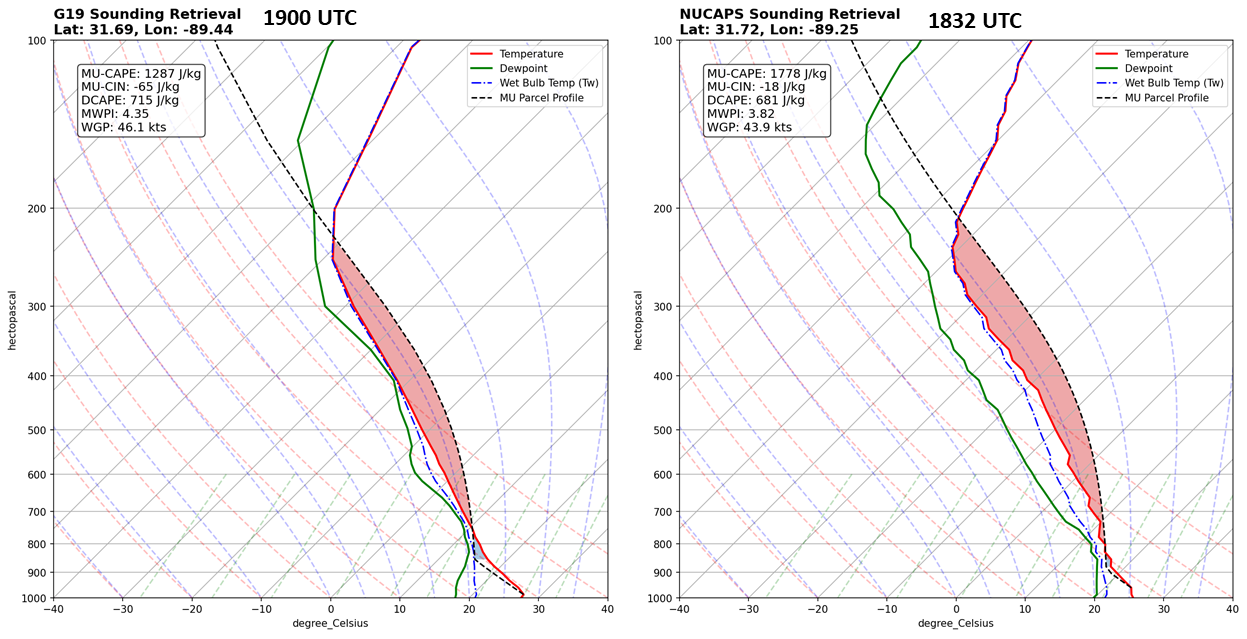
Introduction While the PBS NOVA episode “Rain Bombs” aims to educate the public on the severe and often devastating impacts of intense convective windstorms, the narrative relies heavily on dramatization and several scientifically inaccurate or misleading explanations. Specifically, the documentary misrepresents historical meteorological data, mischaracterizes the microphysical processes that drive downbursts, and presents unverified claims regarding the impact of climate change on derecho intensity. Furthermore, it presents a flawed comparison of international satellite capabilities. This critique outlines five primary areas where the documentary’s explanations diverge from established atmospheric science and recorded meteorological data. 1. Exaggeration of Wind Speeds in the Bayesian Sinking Event ● Documentary Claim: “August, 2024: a superyacht, called the Bayesian, sinks off the coast of Sicily. CCTV from the shore that night catches the vessel’s mast, lights barely visible, in the 100-mile-per-hour wind gusts and rain…” ● Scientific Critique: This statement constitutes a significant factual error regarding the meteorological conditions present during the sinking of the Bayesian. Actual meteorological observations recorded near the location of the sinking did not exceed 53 mph. By falsely citing “100-mile-per-hour wind gusts,” the documentary dramatizes the event, misleading the viewer about the threshold of wind speeds required to cause maritime disasters and misrepresenting the specific atmospheric dynamics of that incident. 2. Mischaracterization of the Role of Large Hail in Downburst Formation ● Documentary Claim: The program consistently implies that severe downbursts are primarily associated with or directly caused by the presence of “large hail” within a thunderstorm. ● Scientific Critique: This implication contradicts the fundamental physical processes of downdraft initiation. As detailed in the doctoral dissertation **Examination of the Physical Process of Severe Convective Windstorms (Pryor 2022), intense downbursts are actually fostered by precipitation cores composed of graupel and small hail, not necessarily large hail. The thermodynamic power of a downdraft increases in proportion to the relative concentration of smaller particles. Smaller particles possess a larger surface-area-to-volume ratio, which maximizes the rates of melting and evaporation/sublimation. It is this rapid phase change that extracts latent heat from the surrounding air, cooling it efficiently and driving the negative buoyancy required for a severe downdraft. 3. Misunderstanding of Downdraft Mechanics and Causality ● Documentary Claim: “…in a rain bomb, the rain and hail aren’t just falling to the ground, they’re being thrown down by hurricane-force vertical winds.” ● Scientific Critique: This statement reverses the causal relationship between precipitation and downdraft velocity. Hurricane-force vertical winds do not “throw” the precipitation down; rather, it is the precipitation itself that forces the intense downdraft. Higher precipitation contents, precipitation in the form of ice (graupel/small hail), and high concentrations of small particles are the forcing mechanisms. As these particles melt and evaporate, they create a significant temperature deficit between the precipitation-infused air parcel and the ambient environment. This temperature deficit generates negative buoyancy (potential energy), which is then converted into downward kinetic energy (the downdraft). The documentary’s description portrays the wind as an independent entity acting upon the rain, ignoring the thermodynamic reality that the phase changes of the precipitation create the wind. 4. Unverified Claims Regarding Climate Change and Derecho Intensity ● Documentary Claim: “ANDREAS PREIN: Derechos already became more powerful over the last 40 years, because the air is warmer, over the U.S., nowadays, than it was in the 80s.” ● Scientific Critique: This statement presents a hypothesis as established fact, which is highly misleading. There is currently no direct, consensus evidence that derechos are inherently increasing in intensity due to a warming climate. As noted in Examination of the Physical Process of Severe Convective Windstorms (Pryor 2022), citing Corfidi et al. (2025), a warmer environment does imply greater atmospheric moisture and conditional instability. However, this is counterbalanced by other factors. Increased moisture yields more widespread low-level cloudiness, which negatively impacts surface heating, storm initiation, and subsequent derecho development. Corfidi et al. conclude that “the net change in instability… likely would be minimal.” While a warmer climate will likely cause a spatial shift — specifically, the poleward migration of the temperature gradients (and therefore, the corridors of maximum derecho frequency) along the periphery of heat waves — claiming a definitive historical increase in power over the last 40 years lacks rigorous scientific substantiation. 5. Misleading Implications Regarding U.S. Satellite Capabilities ● Documentary Claim: “So far, the U.S. has no equivalent geostationary satellite system, but there are plans for future deployment.” ● Scientific Critique:** While factually true that the U.S. does not currently operate a geostationary microwave sounder (like the European MTG-S), the documentary frames this in a way that implies an overall inferiority or critical gap in the U.S. NOAA satellite system. This narrative completely fails to account for the technical superiority of the U.S. polar-orbiting constellation. Until the very recent launch of the European METOP-SG, the NOAA Joint Polar Satellite System (JPSS) possessed a distinct advantage with the Advanced Technology Microwave Sounder (ATMS). The ATMS represents a significant technological leap over the legacy Advanced Microwave Sounding Unit (AMSU) flown on the current generation of EUMETSAT METOP satellites. The ATMS provides a unified instrument architecture, an expanded channel suite (22 channels), superior spatial resolution, and a wider continuous swath. Most importantly for severe weather forecasting, the superior radiometric sensitivity and spatial sampling of the ATMS allow meteorologists to achieve significantly better detection and resolution of the massive ice-phase precipitation cores (specifically graupel, small hail, and aggregates) that are the primary forcing mechanisms for severe convective downbursts.
References
Corfidi, S. F., R. H. Johns, and J. S. Evans, 2025: About derechos. Facts About Derechos — Very Damaging Windstorms.
Google. (2026). Gemini [Large language model]. https://gemini.google.com
Pryor, K. L., 2022: Examination of the physical process of severe convective windstorms [Doctoral dissertation, University of Maryland, Baltimore County]. MD-SOAR. https://mdsoar.org/items/5685e292-bd0b-4eb1-8108-9c8dad6ad760
메타데이터
- post_id
- 269e6907b2ed
- slug
- scientific-review-of-the-pbs-nova-episode-rain-bombs-269e6907b2ed
- url
- https://medium.com/@kpryor_47737/scientific-review-of-the-pbs-nova-episode-rain-bombs-269e6907b2ed
- canonical_url
- https://medium.com/@kpryor_47737/scientific-review-of-the-pbs-nova-episode-rain-bombs-269e6907b2ed
- author_url
- https://medium.com/@kpryor_47737
- status
- ok
- fetched_at
- 2026-06-09 14:34:10