The Artisan Writer in the Age of AI
Better not faster
The Artisan Writer in the Age of AI
Better not faster

All illustrations by Jason McBride
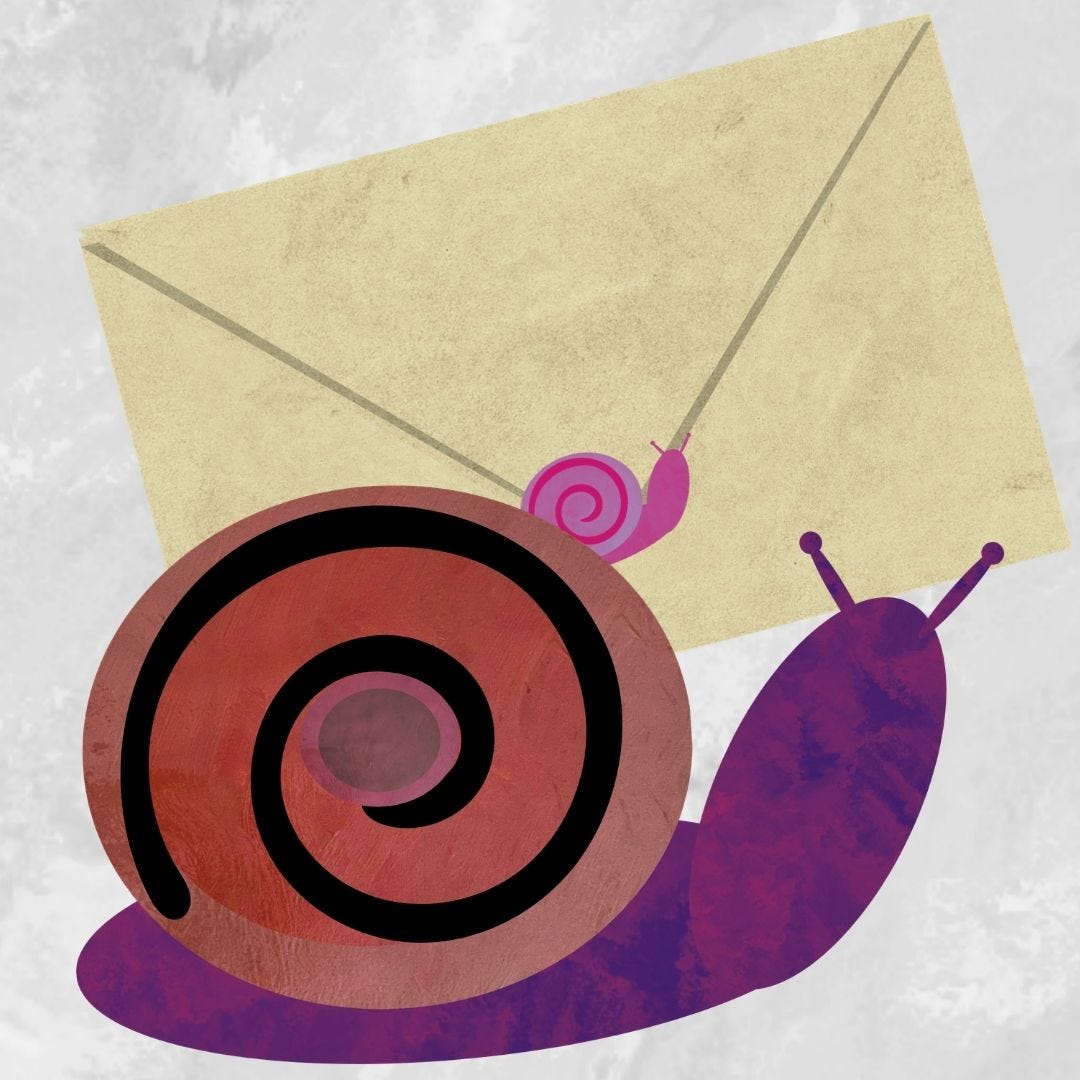
The best way for a writer to ensure that they are replaced by AI is to compete with the machines on speed. You will always lose. AI can produce the same consistent level of slop at speeds impossible for even the fastest typist to keep up with.
Writing is thinking, and the hard truth is that as a writer, you can only work so fast and produce good work.
Yet, there are thousands of articles written every day, urging you to write faster, aiming to teach you how to write a book in a week, an article in fifteen minutes, and other questionable claims.
There’s a cold calculus behind this need for speed. Many writers claim that quantity beats quality on the internet. Whether you get paid per completed post, per views, per page read, or by the number of clicks, the more stuff you churn out, the more eyeballs you can attract. Plus, the more stuff you create, the more chances you have of going viral.
This has always been dubious advice, but in the age of AI, it’s malpractice. It’s a recipe for failure. You can only write at this kind of blistering pace for so long. At some point, you will burn out. You will get sick, be injured, or have a family emergency. When your focus as a writer is pure speed, you aren’t writing for people. You are writing for the algorithms, and the algorithms don’t give a shit about you or your health. The second you stop feeding the beast, some other sucker will replace you, or even more likely, someone with an AI assistant will replace you.
AI cannot replace a human writer working to connect with other humans, but it can easily replace a writer who churns out 500-word clickbait articles to game search engines, without giving a second thought to human readers.

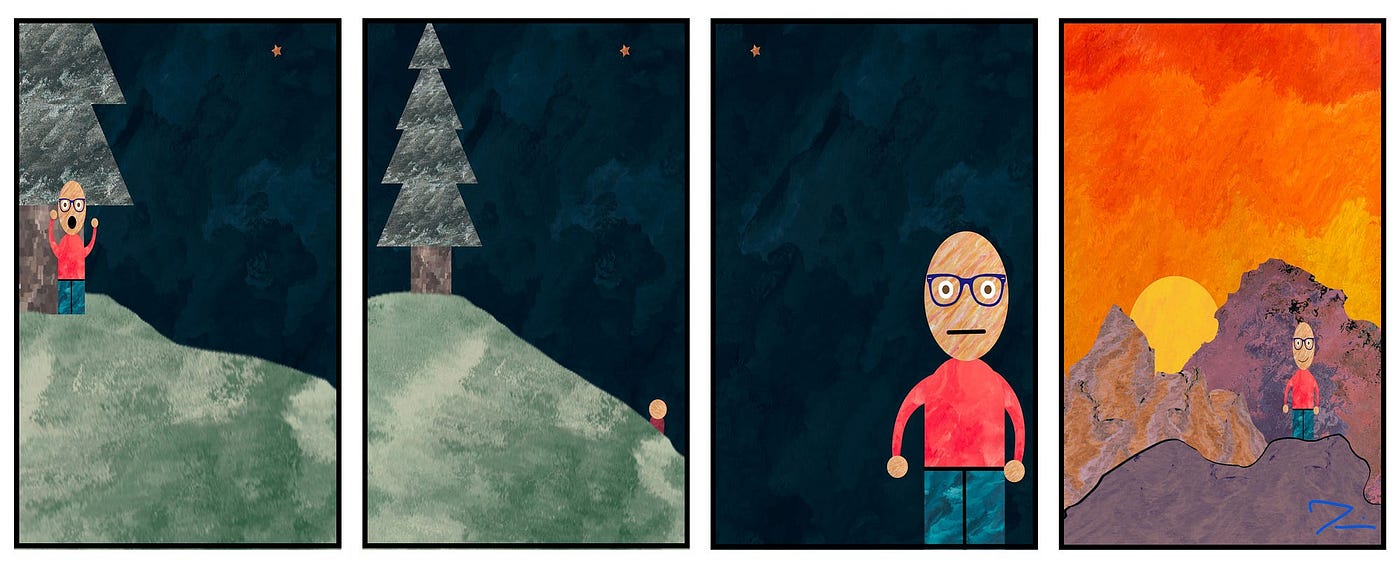
Haiku comic by Jason McBride
Another Way to Write
There is a logic behind writing lots of things. The more you write, at least when writing with intention, the better you get at your craft. Also, it is easier to make a living as a writer when you have a backlist of some kind to bring in new readers.
But the focus is all wrong when thinking only about speed and quantity.
Building a sustainable career as a writer is much easier when you focus on making work readers love. If you choose to be an artisan instead of a human assistant to an AI overlord.
No matter what kind of writer you are, there is a simple, but not easy, path to making a living that doesn’t require you to sacrifice your health.
I’ve been a working writer for more than thirteen years. For most of that time, I’ve made a full-time wage on part-time hours. I’m not a genius, I barely make any “passive” income, and I don’t even write every day.
For most of my career, I made most of my income from client work. The only reason I’ve survived thirteen years as a working writer is that early on, I was forced to double my prices.
For a few years, I was charging what I thought was a respectable rate, $50 for a 500-word article, or about ten cents a word.
I naturally write fairly fast, and that meant I could often make $100 an hour. But it was often gruelling work, and while I always strived to do my best work, because of time constraints, I found that I cared less about how the client and their audience received my work and more about moving on to the next paycheck.
Then I was invited to take part in a special program on one of the platforms I used to find clients. The catch was that I needed an offer that was at least $100.
I worried that I would lose all my repeat clients. But I also felt like this could be a lucky break. Reluctantly, I doubled my prices.
At first, I was right. Almost all of my repeat clients left, I was too expensive for them.
But in a couple of weeks, I gained a handful of new clients, fewer than I had before, but because I had doubled my prices, I only needed half as many clients.
The new clients were easier to work with, kinder, and rarely needed anything done fast. I was able to take more time on each project and produce better work, investing more time in understanding what my client’s audience needed and wanted, all while working fewer hours.
I became a much better writer, and I started making much more money.
Over time, I kept raising prices. This allowed me to keep taking on fewer and fewer clients and gave me the freedom to explore more personal, creative projects, like making poetry comics.

Haiku comic by Jason McBride
It was like I was a woodcarver who realized they could make more money and have more fun, making high-quality chainsaw-carvings instead of making tens of thousands of toothpicks.
It was during this time that I became an artisan writer. I cared more about the experience I was creating for each reader than about how fast I could pump out content. I stopped seeing what I was making, whether it was client work, blog posts for copywriting services, or my creative projects, as content. I was a craftsman making high-quality work. Art, not content.
What is an Artisan Writer?
While being an artisan writer has been my business model for the past five years, I didn’t have the vocabulary to describe myself as an artisan writer until recently.
I stumbled across author Johnny B. Truant’s book, *The Artisan Author*. He described more eloquently, and with more experience, the same ethos I was already practicing. Truant’s book focuses on authors and contrasts the artisan approach with the rapid release strategy so many indie authors use to try and make the Amazon algorithm love them.
But the same principles from Truant’s book work for writers of all stripes, whether you’re a blogger, freelance copywriter, or author. The way for a more enjoyable and financially stable career is to put quality or quantity, and human readers over algorithms.
It’s much more fun to be a writer building relationships with readers than one who is always seeking new eyeballs to please the ever-changing whims of the algorithmic gods.
This entire approach of quality of craft and quality of relationships over speed and trend chasing works because, over time, you will accumulate enough true fans that you don’t need algorithms.
True fans are readers who will follow you anywhere, read everything you write, and are proud to share your work with the world.
The concept of true fans comes from an old article written by Kevin Kelly, the founder of Wired, way back in 2008. Kelly talks about a creator only needing 1,000 true fans to have a viable career.
1,000 True Fans? Does That Really Work?
The logic of 1,000 true fans is simple. If you have 1,000 fans who love your work and happily pay you $100 over the course of a year, you can make a good living as an artist.
If you do a Google search for 1,000 true fans, you will find more than 1,000 articles telling you why Kelly’s theory is wrong.
The thing is, most people misunderstand what Kelly was saying. 1,000 true fans doesn’t mean 1,000 likes or 1,000 followers. It’s also more of a shortcut to help creators see in a concrete way that they can create for a small audience and be happy, and do not need millions of fans to make a creatively fulfilling life.
This concept does work for writers. Truant, the author of The Artisan Author, is a prime example. He makes a good living as an indie-published author. His books do not appeal to everybody. I would argue his audience is actually fairly narrow. But his fans are passionate, and eagerly snap up everything he publishes.
If you are a blogger or a freelancer, this concept of writing high-quality stuff for a narrow, well-paying audience also works.
If you have 1,000 clients that pay you $100 a year, you have a solid business. But you can also make that same living with 500 clients who each pay you $200 a year. Even better, if you can find ten clients who love your work and who each pay you $10,000 over the course of a year, less than $1,000 a month, you make a high income, and you improve your quality of life.
In today’s economy, perhaps there is a need to take into account inflation. Perhaps you need 1,000 true fans who each pay you $200 a year.
When you take into account fees charged by platforms like Amazon, Substack, Patreon, Stripe, Gumroad, and Fiverr, you quickly see that creators often pay a kind of platform tax. You only keep most of the sale, somewhere between 60% and 80%.
This means you need more fans, or you need fans to pay you more to get the math to work. This is also why more and more creators in every industry are moving to direct sales.
Again, the math will vary from writer to writer, but the core principle of 1,000 true fans holds.
You don’t need a Super Bowl arena full of fans to make it as a writer; you just need enough people to fill a theater.
You can picture 1,000 people in your mind.
The real magic of the 1,000 true fan theory is that not everyone who likes your work will become a true fan. When you start writing for your true fans, you will also pick up a lot of casual fans. They won’t follow you everywhere or buy everything you make, but they will read your stuff when they come across it, and they will buy some of your wares.
Casual fans are like the sun’s corona, where your true fans are the photosphere. From Earth, when we look towards the sun (please don’t look directly at the sun), we see the photosphere. It’s the brightest part and gives us the most warmth. But there are many other parts of the sun, and all of its radiation helps us see and live down on the surface of the Earth. During a solar eclipse, we can see a halo around the moon; that halo is the sun’s corona. It’s vital, but often invisible.
Your casual fans will be like that.
Your true fans make sure you can have a steady income over time, and your casual fans help pad your bank account. If a true fan happily forks over $100 a year to you, a casual fan might be paying $10 or less a year for your work. It all adds up. Plus, sometimes casual fans slowly become true fans over time.
Going back to Johnny B. Truant. I am not one of his true fans. I’m a casual fan. I like his writing, and I’ve several of his books. The money he gets from me is a bonus for him. But I know some of his true fans, and it’s easy to see how they keep his business growing year after year.

Haiku comic by Jason McBride
I don’t yet have 1,000 true fans. But I remember when I figured out I had my first true fan. One of my readers found me through my newsletter. Then they bought the two zines and two books I had already published.
When I raised the cost of my newsletter, but kept the price the same for existing readers, this reader emailed me to ask how they could pay the new, higher price. Today, they buy multiple copies of every book I publish so they can gift them to different people in their lives.
Today, when I’m working on a new book, I have this reader in mind.
I’ve been fortunate enough to find enough true fans to take on less client work. I started my newsletter and publishing books in 2019. This year is the first year where I will make more from that creative work than I will from client work.
I still need client work to pay my bills, but I see a time coming when that will not be the case.
My growth has been slow and uneven. But the more attention I give to my readers, the more I treat readers like people and not points of data, the better my work becomes, the more I enjoy it, and the more stable my writing business becomes.
More Truth About Numbers
Remember our friends who insist on speedrunning writing? There is some kernel of truth in their talk about the importance of quantity.
The more books, articles, blogs, or whatever it is that you create, that you have for sale, the more there is for your true fans and casual fans to buy. The more possible ways there are for readers to find you.
It’s okay to write fast if that’s comfortable for you. But it’s also okay to write slowly.
When you prioritize the art, the quality of your work, you are being an artisan. When you focus on human connection over algorithmic virality, the more patient your readers will be with you.
When you build an audience who loves you and appreciates the quality of your work, they are happy when you publish something, and do not hold you to a strict publishing schedule.
But that doesn’t mean you can take a George R.R. Martin approach to publishing. You do need to eventually put out a book or a post to show your audience that you still care about them. But you don’t have to publish a book a week or a post every day. But one book every twenty years makes it awfully hard to earn a living from your work.

Your writing path will be different from mine. It will be unique to you. There are things about you that your readers love. I cannot promise that you will be able to quit your day job and write full-time. But neither can anybody else.
A lot of your ability to make a living from your work will depend on your tenacity and business skills.
I can promise you that if you focus on your craft, you will find some true fans and you will enjoy writing a helluva lot more.
Isn’t that why you got into writing? Because there was something about the process that put you into a kind of trance, where the rest of the world melted away for an hour or so while you worked.
Don’t let AI or the speedrunning, quantity-over-quality zealots fool you. Writing is not a get-rich-quick scheme. At its best, being a writer is learning how to think while connecting with other curious humans. The financial remuneration is often slow in coming.
But if you’re patient, work hard, and are a little lucky, you can still make a good living as a writer.
There’s enough slop in the world. We don’t need you to add to it. But we do need you to add your uniquely human voice.
Why not give being an artisan writer a chance? All you have to lose are your algorithmic shackles.

Jason McBride is a poet-cartoonist and author of several weird, beautiful books. His most recent book is “Haiku Comics from the Anthropocene.” If you enjoyed this post, you’ll love his newsletter, featuring poetry comics about nature, creativity, mindfulness, and living a weird, slow, fully human life.
메타데이터
- post_id
- 26af8e564695
- slug
- the-artisan-writer-in-the-age-of-ai-26af8e564695
- url
- https://writingcooperative.com/the-artisan-writer-in-the-age-of-ai-26af8e564695
- canonical_url
- https://writingcooperative.com/the-artisan-writer-in-the-age-of-ai-26af8e564695
- author_url
- https://medium.com/@jasoncmcbride
- status
- ok
- fetched_at
- 2026-10-02 15:28:32