Kathmandu Air Pollution and Health: Why PM2.5 Is More Dangerous Than Dust
Air pollution in Kathmandu is not just about dirty roads or dusty clothes. It is a health issue that people feel in daily life.
Kathmandu Air Pollution and Health: Why PM2.5 Is More Dangerous Than Dust
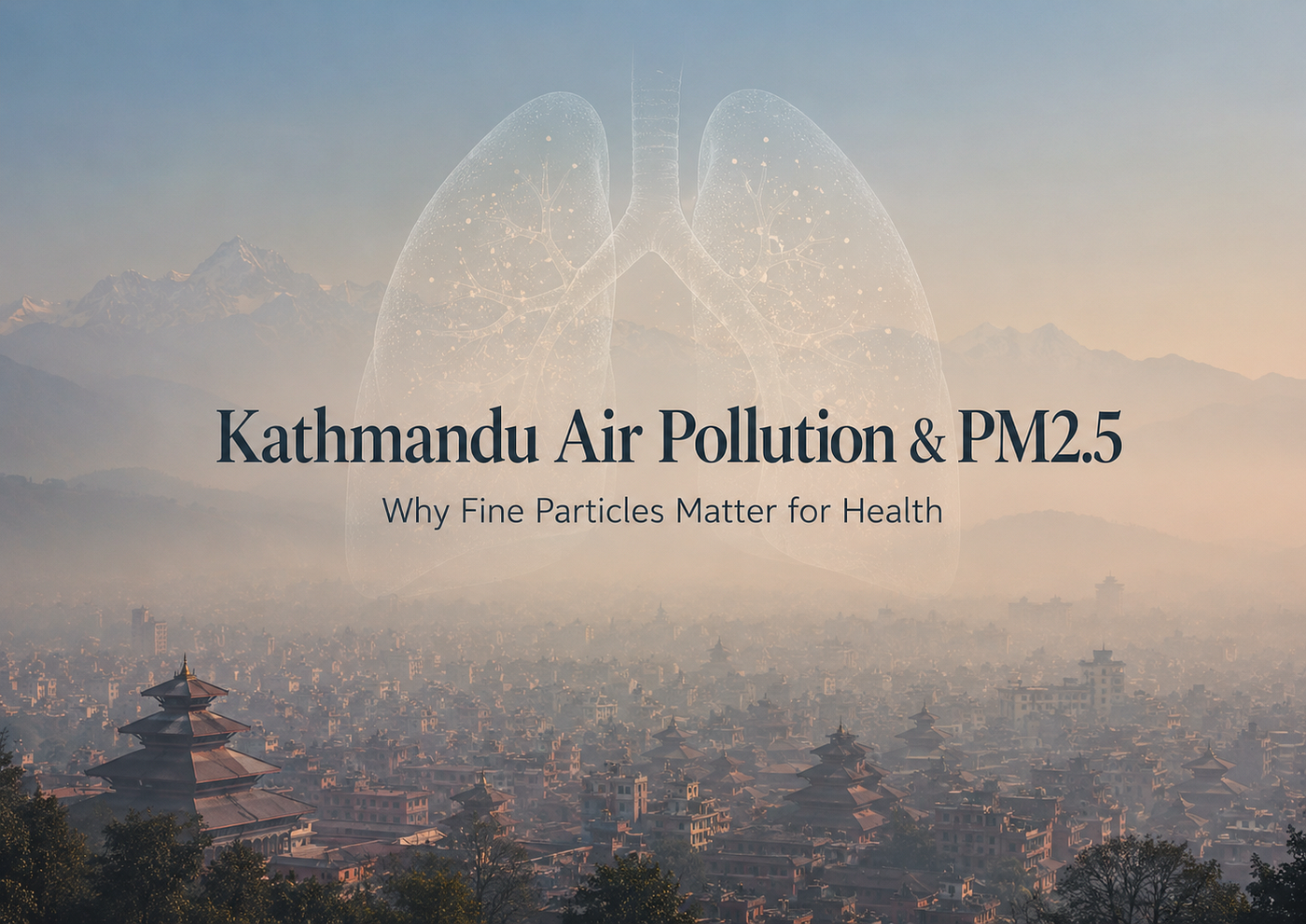
Air pollution in Kathmandu is not just about dirty roads or dusty clothes. It is a health issue that people feel in daily life.
Many of us notice the dust first. We see it on roads, windows, bikes, furniture, clothes, and floors. But the most dangerous part of air pollution is not always the dust we can see. Some of the biggest health risks come from very tiny particles that stay in the air and enter deep into the body.
One of the most important pollutants to understand is PM2.5.
Dust and PM2.5 Are Not the Same Thing
Kathmandu has a serious dust problem. Road work, construction, dry weather, traffic, broken roads, and open spaces all add dust to the air.
This visible dust is irritating. It can make your eyes burn, throat feel dry, and nose feel blocked. It also makes homes and offices dirty very quickly.
But visible dust and PM2.5 are not the same.
Larger dust particles are heavier. They fall to the ground faster and are often trapped by the nose and throat when we breathe. The body can remove some of this through coughing, sneezing, or mucus.
PM2.5 is different.
PM2.5 means particles that are 2.5 micrometers or smaller. These particles are so small that we cannot see them clearly, but they can stay suspended in the air for a long time. They can come from traffic smoke, burning, industrial pollution, cooking smoke, seasonal haze, and polluted outdoor air.
That is why the air may look normal sometimes but still be unhealthy.
Why PM2.5 Is More Dangerous
PM2.5 is dangerous because of how small it is.
When we breathe larger dust, much of it may get trapped in the nose or throat. But PM2.5 can travel deeper into the lungs. These fine particles can reach the tiny air sacs where oxygen exchange happens.
This is where the health concern becomes more serious.
PM2.5 exposure is linked with breathing problems, heart-related risks, and worsening symptoms for people who already have asthma, allergies, sinus problems, or other respiratory conditions.
Short-term exposure can cause discomfort such as coughing, throat irritation, wheezing, chest tightness, eye irritation, and breathing difficulty. Long-term exposure can increase the risk of more serious health problems, especially when people are exposed again and again over many months or years.
Who Is More at Risk?
Air pollution affects everyone, but some people are more vulnerable.
Children are at higher risk because their lungs are still developing. Elderly people may also feel the effects more because their bodies may not handle pollution stress as easily. People with asthma, heart disease, diabetes, high blood pressure, allergies, or sinus issues may also be more sensitive to polluted air.
Pregnant women should also be careful because long-term exposure to polluted air can affect both mother and baby.
This does not mean everyone should panic every time the AQI rises. But it does mean we should take air pollution seriously, especially during dry months, winter haze, and days when Kathmandu air feels heavy.
Why Kathmandu Feels Worse During Some Seasons
Kathmandu’s air pollution is not the same every day.
During dry months, dust stays in the air longer because there is less rain to settle it. During winter, cold air can trap pollution closer to the ground, making morning and evening air feel heavier.
The valley’s geography also plays a role. Kathmandu is surrounded by hills, so polluted air does not always move away quickly. When there is little wind or rain, dust and smoke can stay trapped for longer.
This is why many people feel that the air is worse in the morning, evening, and winter season.
How PM2.5 Enters Indoor Spaces
Many people think staying indoors means they are fully safe from pollution. But in Kathmandu, outdoor pollution can easily enter rooms.
PM2.5 and fine dust can come inside through windows, doors, balconies, ventilation gaps, clothes, shoes, and daily movement. Traffic smoke and dust from nearby roads can also enter homes, schools, clinics, and offices.
This is why a room can look clean but still feel heavy or stale.
Indoor sources can also add to the problem. Cooking smoke, incense, candles, smoking, damp rooms, carpets, curtains, and bedding can all affect indoor air quality.
So the real issue is not only outdoor air. Indoor air also needs attention.
What Can Kathmandu Do at City Level?
The biggest solution has to start outside, at the source.
Kathmandu needs cleaner public transport, stricter vehicle emission checks, better road maintenance, proper construction dust control, less open burning, better waste management, and more serious enforcement.
Construction sites should not be allowed to leave dust unmanaged. Old smoke-emitting vehicles should not run freely. Roads should not remain broken for months. Waste burning should not be treated as normal.
Air pollution will not reduce through awareness posts only. It needs consistent action from government, businesses, transport operators, builders, and citizens.
What Can Individuals Do?
We cannot fix Kathmandu’s pollution alone, but we can reduce our exposure.
On bad air days, check AQI before going out. Use a proper mask when the air is dusty or polluted. Avoid walking beside heavy traffic for long periods. Keep windows closed when the air outside feels smoky or dusty. Avoid burning waste. Reduce indoor smoke from incense, cigarettes, and unnecessary burning.
Inside homes and offices, keep dust sources under control. Clean fabrics, bedding, carpets, and surfaces regularly. Ventilate when outdoor air is better, not when the outside air is visibly dusty.
For indoor air, an air purifier can also be useful, especially in rooms where dust, smoke, or fine particles enter easily. It will not solve Kathmandu’s outdoor pollution, and it should not be treated as a medical cure. But a good air purifier with proper particle filtration can help reduce airborne particles inside a room.
This is where brands like Clean Air Nepal become relevant for people looking for air purifiers and replacement filters in Nepal. The important thing is to choose based on room size, filter availability, filtration type, and long-term use.
Final Thoughts
Kathmandu’s visible dust is irritating, but PM2.5 is the bigger health concern because it is smaller, harder to see, and able to travel deeper into the lungs.
This is why air pollution should not be judged only by how dusty the road looks. The invisible particles matter too.
Cleaner air in Kathmandu will require serious city-level action: better transport, better roads, better construction control, better waste management, and stronger enforcement.
At the same time, people can protect themselves by checking AQI, avoiding unnecessary exposure, reducing indoor smoke, keeping indoor spaces cleaner, and using air purifiers where needed.
Air pollution is not just an environmental problem. It is a daily health issue. And the more we understand PM2.5, the better we can protect ourselves and push for cleaner air in Kathmandu.
메타데이터
- post_id
- 26b965188f53
- slug
- kathmandu-air-pollution-and-health-why-pm2-5-is-more-dangerous-than-dust-26b965188f53
- url
- https://medium.com/@sangya.s/kathmandu-air-pollution-and-health-why-pm2-5-is-more-dangerous-than-dust-26b965188f53
- canonical_url
- https://medium.com/@sangya.s/kathmandu-air-pollution-and-health-why-pm2-5-is-more-dangerous-than-dust-26b965188f53
- author_url
- https://medium.com/@sangya.s
- status
- ok
- fetched_at
- 2026-06-28 04:42:08