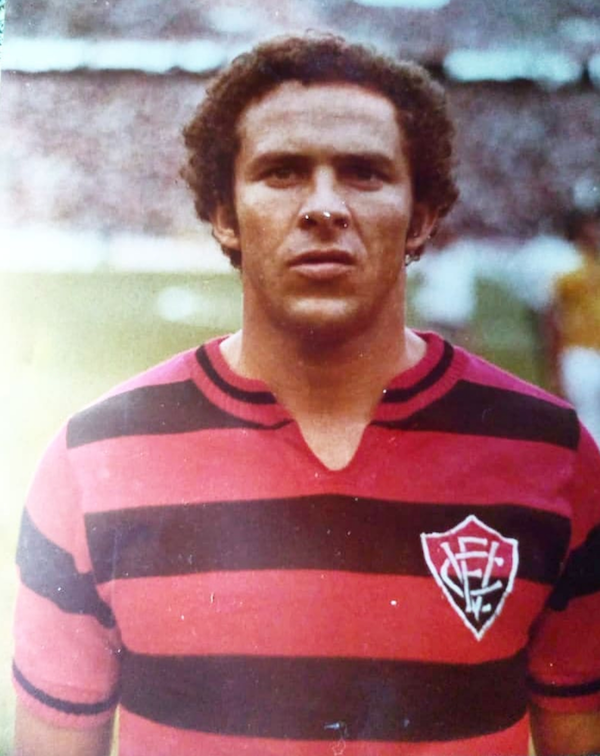
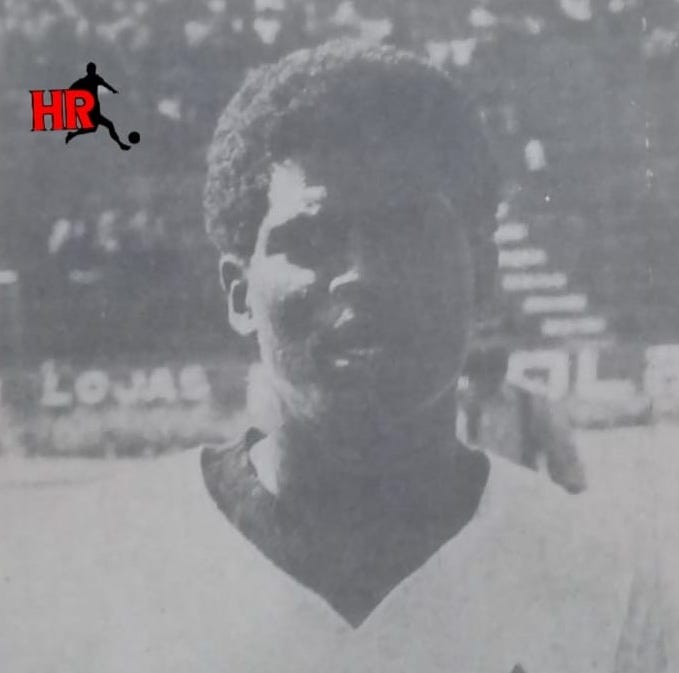
A Keeper’s Heart in Red and Black: The Story of Gelson Fogazzi
The Story of Gelson Fogazzi, One of Vitória’s Defining Goalkeepers
A Keeper’s Heart in Red and Black: The Story of Gelson Fogazzi
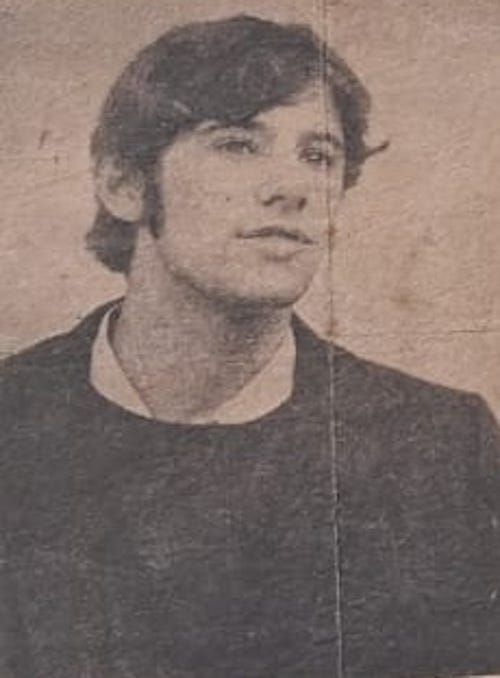
Gelson Fogazzi
In 2007, American author, pastor, and inspirational speaker John C. Maxwell published a personal development and leadership book called “Talent is Never Enough”. In it, he makes the claim that talent gives a person potential but does not guarantee success. Success, argues Maxwell, only manifests when talent is paired with “talent-plus” traits; most notably: belief, focus, preparation, and character. Without these essential traits, talent, like the unharvested fruit of a neglected orchard, will die on the vine of indifference before its season ever arrives.
Indeed, in the world of high-stakes, competitive football, there are many cases of young, talented footballers born with prodigious skill and promise that never manage to fulfill their potential. Instead, they find their professional aspirations discarded in the dustbin of history’s “what ifs” and almosts. This phenomenon is, perhaps, most visible in Brazil — a football-crazed country boasting a population of over 200 million.
Given the sport’s immense popularity and the country’s massive size, it is not an exaggeration to suggest that Brazil boasts more footballers per-capita than any other place in the entire world. Their athletes fuel not only the state’s excellent domestic leagues, but also the elite pipelines of Europe, North America, and Asia.
This dynamic creates an unmatched demand for Brazilian footballers that drives millions of youths from every corner of the country to stake their hopes, dreams, and futures on the uncertain lottery of professional football. Many of them have genuine talent, and can earnestly boast being amongst the best in their neighborhood, city, or state; but precious few actually reach the coveted level of national recognition.
Those who endure and advance often recognize early that talent alone is never enough. A close look at the stories of footballers whose names are etched in the lore of Brazilian football reveals athletes sustained by work ethic, character, and resolve long after raw ability has been exposed and tested.
Talent is what fans and scouts see when they watch these gifted players glide across the pitch from the stands or on television. What carries them through the long middle — when attention fades and pressure accumulates — is far less visible.
One such individual who understood the importance of melding his natural ability with subtle intangibles was Esporte Clube Vitória legend Gelson Fogazzi. Like most exceptional footballers, his raw talent was apparent from a young age, but it was the traits he inherited from his loving parents, and the values cultivated by his tight-knit community, that laid the foundation for the success that would follow.
That foundation, rooted in his father’s diligence, his mother’s altruistic spirit, and the collective ethos of his family’s steadiness and patience, allowed him to move through pressure without ever internalizing it — and, in doing so, to excel on the biggest stages of Brazilian football.
Gelson Fogazzi Rocha was born in the waning days of spring on May 22nd, 1952 in Porto Alegre. Broadly speaking, the south of Brazil has always produced great footballers, and the city of Porto Alegre — nestled at the confluence of history and passion — was no different. It is the home to two of the country’s biggest clubs — Grêmio and Internacional — both of which have a rich history of producing players that go on to play for the Brazilian national team.
The rivalry between these clubs, “Grenal”, is recognized as one of the fiercest in the country, the continent, and the world. Natives of Porto Alegre are raised in the crucible of that rivalry. Gelson, for his part, was, from birth, a gremista. It was a tradition he inherited from his father, Euclides, and a creed he carried without question.

Gelson’s father, Euclides (right)
“My father was a fan of Grêmio; and from the age of 2 I would go with him to Estádio Olímpico,” said Gelson. “There I was, very young, very small — like a baby — screaming ‘Grêmio! Grêmio! Grêmio!’”
While Gelson’s passion for football began in the stands as a supporter, it quickly migrated to the pitch when he realized he had an innate talent for the game at 6 years old. Most children that age are preoccupied with the prospect of scoring goals and tallying assists. But Gelson was different — he was a goalkeeper.
“I believe goalkeepers are born goalkeepers,” said Gelson. “The other goalkeepers become goalkeepers when they’re 13 or 14 because they can’t play football properly. They are not good. But I was born a goalkeeper. As a boy I would damage my knees from throwing myself on the ground, clean the blood, and do it again! There is a saying: ‘A goalkeeper is either crazy or something else’. I am crazy!”
Gelson was, indeed, crazy for football and, specifically, goalkeeping. He was absolutely smitten with the sport, playing for hours on end whenever he had the opportunity. It began with the boys in his hometown — a small, rural village called Vila Nova that lived off of the seasonal harvest of peaches, grapes, and plums.
As a child he was responsible for smashing grapes with his feet for the production of wine. And, in his preteen years, he spent his days helping his father in the local woodshop, while his mother — Alice — worked as a beautician at a nearby salon. Neither of his parents had much formal schooling, but they made certain that their children, both Gelson and his younger sister Rosane, received a good education.

Gelson’s mother, Alice
Life in Vila Nova was simple and serene; young Gelson loved it. His neighborhood was called Três Meninas (3 girls), and it housed not only his immediate family, but also much of his extended clan. Growing up there held great historic significance for the Fogazzis, as the settlement was founded by his great grandfather, Joaním, a first generation Italian-Brazilian.
“When my great grandfather arrived in Brazil from Italy he built this neighborhood. He had many children and many siblings — 3 sisters and 4 brothers. He divided up the land he acquired amongst them. The men worked and developed the land, while the women worked in other industries. The neighborhood, Três Meninas, was named after my great grandfather’s three sisters — Lúcia, Laura, and Lilly. So everything about my upbringing was strongly rooted in family.”
That family provided Gelson with the core values that would endure throughout his life and career, both on and off the pitch. “Politeness, honesty, kindness, those are the principles my sister and I were taught — to be calm, to be peaceful, and to desire the well-being of all. I used these tenets my entire life.”
By the age of 13, Gelson had begun secondary school and was doing quite well with his studies. He had also joined the school’s football team — his first taste of organized competition. His first game turned out to be decisive.
“We played against Grêmio’s youth team in a friendly, and I was the highlight of the game. After that, I was recruited by Grêmio to join the club. It was at that moment that I knew I had the potential to be a professional player.”
Joining Grêmio’s youth setup changed Gelson’s life forever. And, for the remainder of his teenage years he practically ate, drank, and slept football.
“I grew up inside of the club,” said Gelson. “I was there all the time — 24 hours, 7 days a week. I slept at the training ground because it was easier than commuting back and forth to my home. Day in, day out, this was my life, this was my passion. So, from 13–20, Grêmio was the love of my life. And playing football was everything.”

Gelson (standing, 1st from left) with Grêmio
In the social landscape of Brazilian football in the 1960s, aspiring to play professionally was frowned upon by the broader society. Middle class and upper class families, especially, viewed footballers as lazy rascals preoccupied with a children’s game.
“Today…” said Gelson, “…things are different. Now you have pregnant mothers offering their babies to clubs while they’re still in the womb!” Despite these attitudes, Gelson’s parents always supported him and believed in him.
Their faith and patience was rewarded when Gelson began earning a living for his exploits on the pitch. “When I was 18 years old I was already able to buy my own car because I played for Brazil’s pre-Olympic and Olympic selection teams. So I was making money and I could support myself and help my parents.”
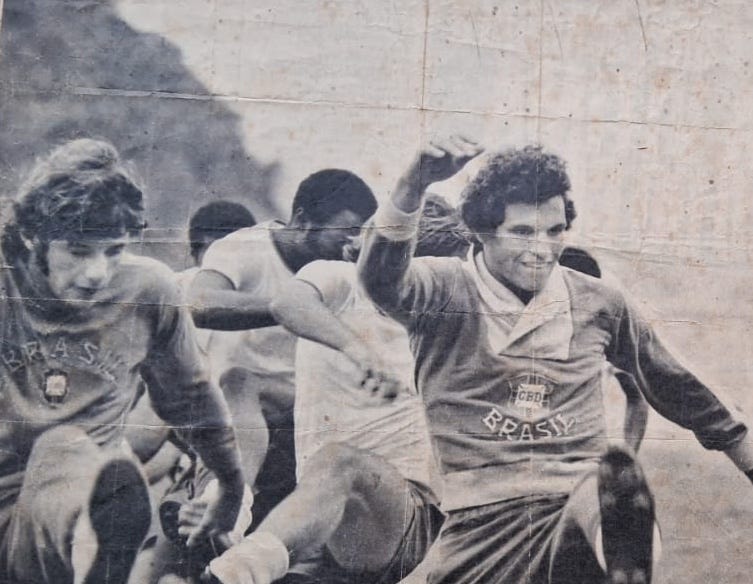
Gelson (far left), with Brazil’s pre-Olympic team
Gelson’s first taste of professional football came in 1970, when he was given the chance to play for the B-team by Grêmio’s then manager, Carlos Froner. The stage was a humble proving ground, and the opponent was modest — a small club in the state of Rio Grande do Sul called Cachoeira FC — but the occasion was important all the same. And, for Gelson, it was the opportunity of a lifetime.
“It was incredible, emotional, extremely touching — as you can imagine — because I was a kid, I was an 18 year old kid, and I was playing with grown men. So I was feeling absolutely fabulous. And I thought this would move me forward in my career at Grêmio…”
Unfortunately, fate had other plans. “As you know, when the coach changes, everything changes. This new coach that came in had his own way of working and brought in his own goalkeepers — so my career at Grêmio did not move forward.”
For many young, promising footballers an episode like this would have a devastating effect on their psyche — and understandably so. After all, Grêmio was Gelson’s boyhood club, the club he had loved practically since birth, the only footballing home he had ever known — and now, almost overnight, he was being discarded without ceremony. For some, that moment might have broken something essential.
But Gelson was different. Perhaps it was a result of the equanimity he inherited from his parents, maybe it was the resolute belief he had in his own abilities, or perhaps it was a combination of both. Whatever the reason, Gelson Fogazzi did not linger in disappointment. Instead, he quickly put the setback behind him and looked to the future.
And, as fate would have it, the future was imminent.
“The following week a man named Antônio Paninha from Internacional was looking for a goalkeeper. Apparently, he was told that the best available goalkeeper was the kid from Grêmio, which was me. So they came and knocked on my door at my house and told me that I needed to go to Internacional for a trial.”
Needless to say, Gelson, still a teenager, was ecstatic.
“I don’t know if I walked, ran, or flew, but I just know that I got there as fast as I could! I went totally nuts! I got dressed as quickly as possible and went for this trial. This was with the world champs — they had stars like Carlinho playing for them!”
Gelson, acutely aware of the magnitude of the moment, was determined to not let this opportunity slip away.
“I got into that goal and jumped from side-to-side, flew left and right, saving every shot I could! And I got selected. At this point I was still technically signed to Grêmio, and I was on trial at other clubs too like Flamengo. Then, a few months later, executives from Internacional came to my house with a big bag of money and a car saying ‘You need to play for us!’ And my mother — the ‘gringa’, as I call her — went crazy when she saw all that money! And that is how I wound up at Internacional.”
Gelson spent the next 5 years of his career split between Internacional and Remo — a smaller club located in the humid, distant port city of Belém, Pará — where he enjoyed two separate spells on loan in 1975 and 1976.
At Internacional, he was a regular in a goalkeeper rotation that featured 2 others. In 1975, Internacional’s best season during Gelson’s tenure with the club, the keepers he played with were Manga and Rafael. That year concluded in triumphant fashion, with Internacional clinching the Brasileirão title in a 1-nil victory over Cruzeiro.
“Becoming a Brazilian champion was incredible,” said Gelson. “I was very young, and the opportunity to play with Manga — who was the best goalkeeper in the world at that time — was amazing. I was on the bench for the final against Cruzeiro; but just being a part of the group of goalkeepers was, at that point, the highlight of my life.”
At the end of his loan at Remo in 1976, Gelson returned home to Porto Alegre from Pará to spend some time with his family and friends. While relaxing on the beach, representatives of Vitória approached him to join the club.
The negotiations for his new contract went smoothly enough, and, with that, Gelson was the new goalkeeper for Esporte Clube Vitória. At the moment, this seemed like just another stop on his professional journey. After all, Gelson had no real connection to the Northeast, let alone Salvador.
But, unbeknownst to him at the time, his decision to travel into the heart of an unfamiliar Brazil and don the red and black would define the prime of his career.
Making the full-time transition from Porto Alegre to Salvador is no small task for a player born and raised in the South of Brazil. Professionally, in the 70s, players from the Northeast received a fraction of the media exposure that players from the South commanded.
Indeed, most players selected to represent Brazil in international competition hailed from booming metropoles in the South like Rio de Janeiro, Rio Grande do Sul, and São Paulo, while precious few were born and raised in Northeastern states like Bahia.
Culturally, the differences were, perhaps, even more stark. The South was more industrialized and urbanized, while the Northeast was marked by chronic poverty — a consequence of neglect from the federal government. Also, the Northeast — especially Bahia — was and still is defined by Afro-Brazilian culture, while the South was heavily shaped by European migration.
And so, the contrast between the Northeast and South were anything but minor; and, for a young athlete entering the prime of his career, it was a formidable leap into the unknown. Indeed, many athletes suffer from culture shock, homesickness, and a corrosive sense of isolation when having to transition from the familiar world of their upbringing to an alien and demanding new environment. In some cases, the psychological toll can derail an otherwise promising career.
But not Gelson. Leaning on the easy-going nature he inherited from his parents, his innate talent, and his steady preparation for this moment; Gelson took the move in stride and steadied himself for the next chapter of his career.
And what a chapter it was.

Gelson (standing, 1st from left) with Vitória
It didn’t take long for Gelson to ingratiate himself to his new teammates at Vitória. They were aware of his reputation as an elite goalkeeper, and quickly saw his quality on the practice pitch, so his acceptance was both swift and unquestioned. “All the players were nice to me,” said Gelson. “They were all very friendly and made me feel at home.”
Gelson’s first 2 years at Vitória saw the club finish roughly mid-table — 24th out of 54 clubs in 1976, and 41st out of 62 clubs in 1977. Then, in 1978, everything changed when Aymoré Moreira was hired to lead the Rubro-Negra.
At the time, Moreira was revered in Brazil — every football fan and player knew his name. Naturally, the players were ecstatic when they received the news that he would be bringing his talents to Salvador.
True to his reputation, Aymoré Moreira did not disappoint. “He was a great manager,” said Gelson. “He had all the qualities that a coach needs to have. He would design his gameplan on the board — and he had buttons where he would lay out our team and the opposition team. From there he would predict every single play that could happen over the course of the game. Each player was given a series of if/then decisions so they knew exactly what they needed to do in every situation that could arise. He would put us in a position to be ready to score. He was so knowledgeable and he knew how to cover the entire game.”
Given Moreira’s exceptional coaching prowess, one might be forgiven for thinking his impact on the 1978 team left much to be desired. After all, they only finished 29th out of 74 clubs in the final Brasileirão table. But the work that he put in on the training pitch with the players over the course of that season laid the foundation for what would be a historic year for EC Vitória in 1979.
“That was the best Vitória team I played with,” said Gelson of the 1979 team. “We had Sena from Atletico Madrid, Wilton from Fluminense, and younger homegrown players like José Júlio and Monteiro. Everyone contributed — it was a great team.”

Gelson (standing, 1st from left) with Vitória
Indeed, over the course of that storied season, Vitória not only held their own against huge clubs like Flamengo and Corinthians, but they also received the opportunity to tour Saudi Arabia and Greece to play a series of friendlies against prestigious foreign competition.
That was a special experience, not only for Gelson and his teammates, but also for their manager, Moreira. “We played ten games in Saudi Arabia, winning all of them. Then in Greece, we played against Olympiacos and Panathinaikos — the two biggest clubs in that country — and won both of those games as well! Moreira was incredibly emotional and touched that we had won those games, because he had worked in Greece for several years. It was an amazing tour — only winning all the time!”
By season’s end, Vitória had fought their way to 9th in the Brasileirão table, their best finish in almost a decade. It was a testament to the alchemy that occurs when a talented group of players with excellent chemistry is harnessed by a masterful coach with a clear and disciplined vision.
Gelson would go on to play 3 more seasons with Vitória, leaving the club in 1982 to return to the south of Brazil to join Joinville EC in Santa Catarina.
“The coach of Joinville at the time wanted to purchase me. Placar called me the best goalkeeper in Brazil, so I was highly sought after. I thought, ‘if the price is right, why not?’ So, after two wins against Recife and Flamengo the owners of Joinville invited me to dinner and finalized the deal at a salary that was good for me and a transfer fee that was acceptable to Vitória.”
Gelson arrived in Santa Catarina at the height of his game, in the prime of his career, as one of the best goalkeepers in the country. He was, undoubtedly, a player at the pinnacle of his powers.
Unfortunately, after just a few seasons at Joinville, his career was tragically cut short by an accident that left multiple fingers injured beyond complete repair. With his playing career over, he returned to Bahia to fulfill a long-held dream to open a churrascaria.
The venture was initially prosperous, and business was good; but the pull of football was too great to ignore. “While operating the restaurant I took several coaching courses to receive my license. And, from there I’ve worked at many clubs throughout Bahia. I spent 6 years at Itabuna, bringing many players from the youth team through to the first team. At that point, I had to close my restaurant, because I didn’t have enough time to run the churrascaria and coach. So I’ve been coaching full-time, exclusively, for many years now.”
By the time Gelson left Vitória in 1982, he had accumulated hundreds of appearances for the club, all of which came in a starting capacity. By any reasonable measure, and by any objective standard, Gelson Fogazzi Rocha is a Vitória legend.
As recognition of his enduring legacy Vitória recently hosted a celebration at the Barradão to celebrate the 5 goalkeepers with the most appearances in club history. “I was among them,” said Gelson with pride. “It was a very touching celebration, and I was given a commemorative Vitória shirt with my name on the back.”

Gelson’s commemorative shirt given to him by Vitória during a celebration of his service to the club
It was a final, fitting tribute to a career built not on talent alone, but on the bedrock of character, work ethic, and resolve — a beautiful moment where the institution formally acknowledged one of its own.
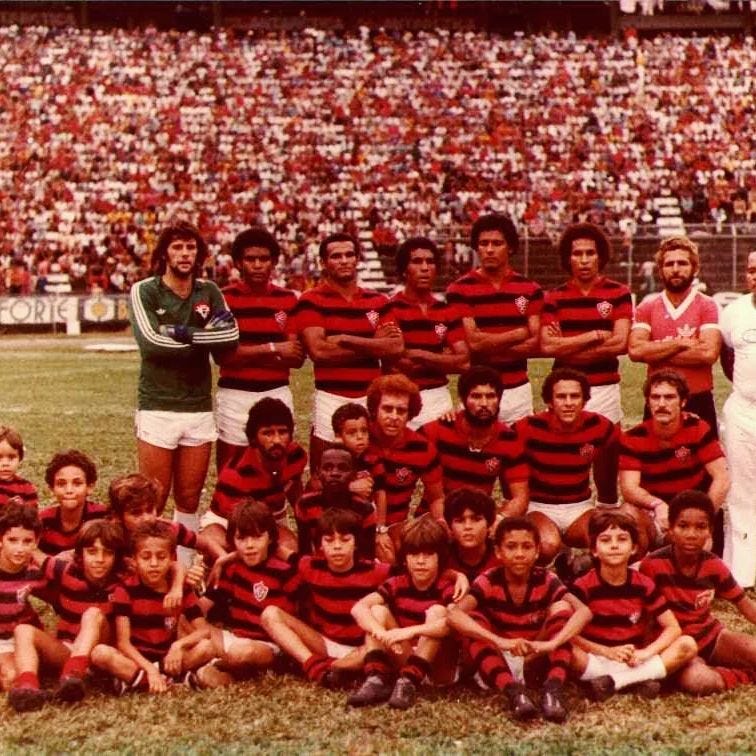
Gelson (standing, 1st from left) with Vitória
메타데이터
- post_id
- 26bcac4dd53c
- slug
- a-keepers-heart-in-red-and-black-the-story-of-gelson-fogazzi-26bcac4dd53c
- url
- https://medium.com/@josephpressiv/a-keepers-heart-in-red-and-black-the-story-of-gelson-fogazzi-26bcac4dd53c
- canonical_url
- https://medium.com/@josephpressiv/a-keepers-heart-in-red-and-black-the-story-of-gelson-fogazzi-26bcac4dd53c
- author_url
- https://medium.com/@josephpressiv
- status
- ok
- fetched_at
- 2026-06-09 15:37:30