Why traditional SaaS metrics break for AI products
In the previous post, I argued that AI doesn’t kill SaaS margins by default — bad pricing does.
Why traditional SaaS metrics break for AI products
In the previous post, I argued that AI doesn’t kill SaaS margins by default — bad pricing does.
But that raises a deeper question: If AI really changes SaaS economics at a structural level, why do so many teams fail to notice it early?
The answer is uncomfortable.
Because most SaaS teams are measuring AI products with metrics designed for a completely different economic reality.
TL;DR
• Most SaaS metrics were designed for fixed-cost software.
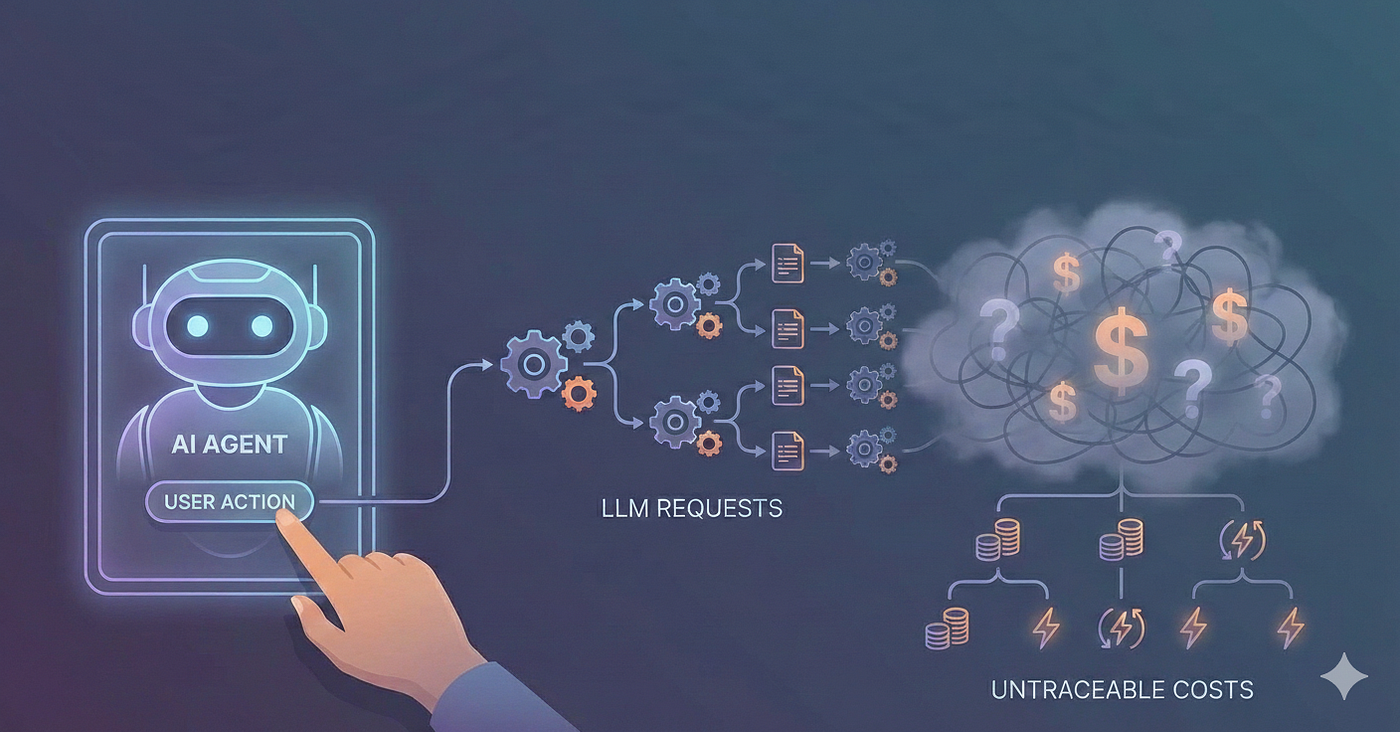
• AI introduces variable, action-level costs that classic metrics can’t see.
• ARPU, retention, cohorts, and LTV can look healthy while margins quietly degrade.
• In AI products, the most important cost signals appear inside sessions, not at month-end.
- Measuring AI with traditional SaaS analytics is like flying with instruments calibrated for another aircraft.

AI-native metrics emerge from the system’s behaviour — not from monthly dashboards
The Hidden Assumption Behind SaaS Metrics
Classic SaaS analytics rests on one silent assumption: usage is cheap.
Historically, this was true.
Once the product was built:
- serving one more customer cost very little
- infrastructure scaled ahead of demand
- margins moved slowly and predictably
This assumption shaped everything:
- ARPU focused on revenue, not cost
- retention assumed economic symmetry between users
- cohorts tracked behavior, not cost intensity
- LTV assumed stable margins over time
These metrics weren’t “wrong”.
They were perfectly optimized for the old world. AI breaks that world.
What AI Changes at the Measurement Level
AI introduces three shifts that traditional SaaS metrics were never built to handle:
-
Costs become variable, not fixed
-
Costs attach to actions, not customers
-
Costs move faster than revenue signals
In an AI-powered product:
- two users can generate radically different costs
- one workflow can be cheap or expensive depending on behaviour
- margin degradation can happen before any revenue metric reacts
AI doesn’t just change products. It changes where and when economics reveal themselves.
Concrete Examples: How SaaS Metrics Fail in AI Products
These aren’t edge cases. They’re patterns I keep seeing across AI-powered SaaS teams.
Example 1: ARPU Is Growing — But Gross Margin Is Quietly Falling
What the dashboard shows:
- ARPU is up double digits
- AI feature adoption looks strong
- Expansion revenue appears healthy
What the dashboard hides:
- AI inference cost per active user grew faster than revenue
- A small group of customers doubled their usage
- Contribution margin per customer declined
From a classic SaaS perspective, this looks like success.
From an AI economics perspective, it’s an early warning sign.
Why the metric fails:
ARPU measures revenue concentration. It says nothing about cost concentration.
Example 2: Retention Improved — And So Did Cost Volatility
What product teams celebrate:
- higher retention after launching AI features
- increased engagement
- more frequent usage
What finance notices later:
- higher COGS volatility
- unpredictable gross margin month to month
- cost spikes around a small set of “power users”
The users who love AI the most are often the most expensive ones.
Why the metric fails:
Retention assumes all retained users are economically equal. AI makes that assumption false.
Example 3: Cohorts Look Healthy — Until You Segment by Cost
A standard cohort chart shows:
- strong retention curves
- improving engagement over time
Then someone overlays AI cost per user.
Suddenly:
- early cohorts are relatively cheap
- later cohorts are significantly more expensive
- usage patterns evolved faster than pricing
Nothing “broke” in the product. The economics shifted underneath the cohorts.
Why the metric fails:
Cohorts track behaviour. They don’t track how expensive that behaviour is.
Example 4: LTV Feels Precise — Until You Realize It’s Backward-Looking
The classic formula still looks clean:
LTV = ARPU × Gross Margin / Churn
The problem is timing.
In AI products:
- gross margin can change faster than churn
- usage intensity shifts within weeks
- cost structures evolve before customer behaviour does
By the time LTV degrades, margin damage has already happened.
Why the metric fails:
LTV assumes margin stability. AI removes that assumption.
Example 5: Monthly Dashboards Miss In-Session Cost Explosions
An AI workflow:
- retries prompts
- expands context
- triggers tool calls
- loops through agent logic.
All of this can happen in a single user session.
The cost spike:
- doesn’t show up in daily revenue
- only appears later in cloud or LLM bills
- gets averaged out in monthly dashboards
Why the metric fails:
Traditional analytics were built for slow-moving costs. AI costs can explode in minutes.
Example 6: One Power User Distorts the Entire Margin Profile
In classic SaaS:
- power users are great
- they cost roughly the same as everyone else
In AI SaaS:
- one user can generate 10× or 100× the cost
- averages hide the tail
- margin risk concentrates invisibly
Everything looks fine — until it isn’t.
Why the metric fails:
Averages smooth growth. AI risk lives in the distribution.
The Pattern Across All These Failures
The problem isn’t bad execution.
It’s a mismatch between:
- what SaaS metrics were designed to observe, and
- where AI economics actually happen
Classic metrics:
- aggregate too much
- move too slowly
- ignore cost attribution at the action level
They optimize for growth visibility — not for economic truth.
Why This Creates Pricing Blindness
When teams can’t see:
- cost per action
- cost per workflow
- cost per feature or segment
pricing decisions get made:
- by intuition
- by benchmarks
- by competitive pressure
That’s how “free” AI happens. That’s how unlimited plans sneak in. That’s how margins erode quietly.
Not because teams don’t care, but because their instruments don’t show the danger.
The Real Problem Isn’t Metrics — It’s Measurement Lag
SaaS teams aren’t careless. They’re just looking at dashboards built for a world where:
- usage was cheap
- costs were predictable
- margins moved slowly
AI breaks all three. When costs change inside a single session, monthly metrics become post-mortems, not controls.
Where This Leads Next

At this point, a natural question emerges: If traditional SaaS metrics can’t surface AI cost dynamics, what should we be measuring instead?
Not tools yet. Not dashboards yet.
First — AI-native metrics.
To be continued…
메타데이터
- post_id
- 26cd1d70d47b
- slug
- why-traditional-saas-metrics-break-for-ai-products-26cd1d70d47b
- url
- https://medium.com/measuring-ai/why-traditional-saas-metrics-break-for-ai-products-26cd1d70d47b
- canonical_url
- https://medium.com/measuring-ai/why-traditional-saas-metrics-break-for-ai-products-26cd1d70d47b
- author_url
- https://medium.com/@a.maklakov
- status
- ok
- fetched_at
- 2026-06-11 17:15:47