Rain or Shine, Both Are Good: What Actually Ruins a Rainy Day
Rain or Shine, Both Are Good: What Actually Ruins a Rainy Day
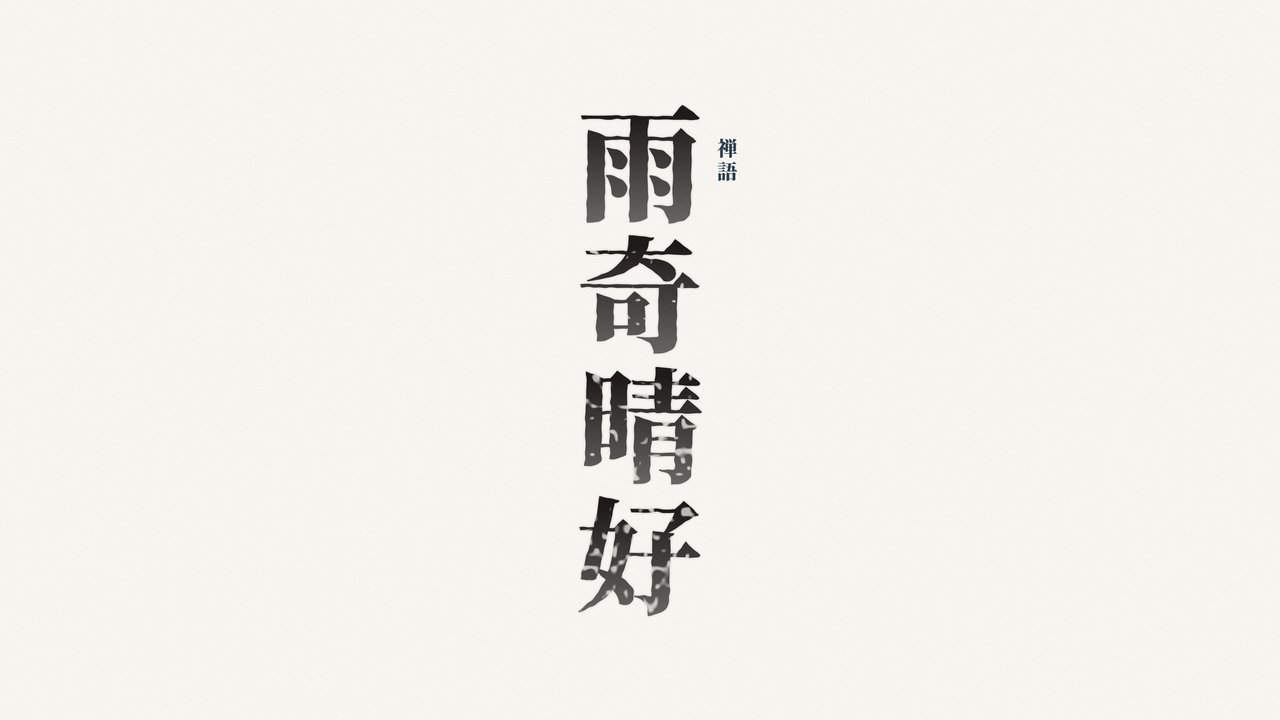
The Zen phrase ukiseikou (雨奇晴好) comes from a line of poetry by the Song-dynasty poet Su Dongpo (Su Shi), written about the scenery of Mount Lu: rain makes the mountain strange and wonderful (ki), and clear skies make it beautiful (kou) — either way, it’s good. The core insight: the weather itself carries no verdict of good or bad. The judgment “today is ruined because it’s raining” isn’t coming from the sky — it’s coming from the interpretation laid on top of it. It applies directly to any day that doesn’t go as planned, or any situation that looks, on its face, unfavorable.
Source: A line from a poem by Su Dongpo (Su Shi, 1037–1101), also used as a Zen-adjacent phrase in tea-ceremony settings. That it comes from a Su Dongpo poem is consistent across sources, though the specific poem’s title is harder to confirm.
What the Phrase Actually Says
Ki (奇) means unusual, in a way that turns out to be interesting rather than simply bad. Kou (好) means beautiful or desirable. Whether Mount Lu was rained on or lit by clear sun, the poem says, its scenery carried its own particular charm either way.
Read at face value, it can sound like simple consolation — “rainy days aren’t so bad.” But the weight of the phrase isn’t really about comfort. It’s a more direct question: who, exactly, is attaching the label “good” or “bad” to a fact you had no control over in the first place?
What’s Actually Happening
It’s raining. That’s a fact. “It’s raining, so my plans are ruined.” “It’s raining, so I feel low.” “It’s raining, so today is a wash.” All of these are interpretations added on top of the fact, not the fact itself. Ukiseikou quietly points at the gap between the two.
What’s happening Whose judgment is this, really? It is raining A fact — no one can change it Therefore today is “ruined” An interpretation — this can be changed The rain-slicked stones look beautiful, the greenery looks more vivid Also an interpretation — and one you can choose instead
The same rain supports the interpretation “today is ruined” just as easily as it supports “today has its own particular charm.” Since the weather itself isn’t going to change, the only thing actually available to choose is which interpretation you pick up.
Where This Shows Up at Work
- A meeting gets rescheduled at the last minute, or a document gets sent back for revisions right before a deadline. The event itself can’t be undone, but whether you file it as “wasted time” or “caught in time” is still a choice.
- Market conditions turn against the plan. The unfavorable conditions are simply given, but whether you notice the opportunities visible only from inside that downturn — a competitor pulling back, a chance to rebuild costs — depends on which side of the situation you’re looking at.
- A team member’s illness derails a planned handoff. “The schedule fell apart” and “we just found out how much this depended on one person” are two readings of the exact same event.
In each case, the event itself can’t be changed, but the label attached to it can. This isn’t a demand for forced optimism, and it isn’t pretending the downside doesn’t exist. It’s simply the observation that most events have more than one face, and which face gets your attention is a choice you actually get to make.
Two Questions for Practice
- In a situation you currently read as “bad,” where does the unchangeable fact end, and where does your own added interpretation begin?
- Looking at that same fact, what’s a different, unexpected angle (ki) worth noticing?
A Related Idea
A related Zen-adjacent phrase describes a life split between reading old texts in a mountain hut on rainy days and working the fields on clear ones — seikou udoku (晴耕雨読), “farm when it’s clear, read when it rains.” Both phrases share the same underlying move: the focus isn’t on the weather as a given condition, but on how one chooses to meet it.
Source
- “Ashita Tsushin,” “The Zen Phrase ‘Ukiseikou (雨奇晴好)’”
메타데이터
- post_id
- 26e65ef8d3eb
- slug
- rain-or-shine-both-are-good-what-actually-ruins-a-rainy-day-26e65ef8d3eb
- url
- https://medium.com/@mk3372/rain-or-shine-both-are-good-what-actually-ruins-a-rainy-day-26e65ef8d3eb
- canonical_url
- https://medium.com/@mk3372/rain-or-shine-both-are-good-what-actually-ruins-a-rainy-day-26e65ef8d3eb
- author_url
- https://medium.com/@mk3372
- status
- ok
- fetched_at
- 2026-07-26 01:38:54