Why Pharmaceutical Companies Are Investing Heavily in AI Applications in Pharma 2026?
Introduction
Why Pharmaceutical Companies Are Investing Heavily in AI Applications in Pharma 2026?
Introduction
One of the most groundbreaking periods in the history of the pharmaceutical industry is taking place today. It is easier and quicker than ever to conduct advanced research and improve outcomes in developing new drugs and serving patients thanks to emerging technologies.
The industry has never been as competitive as it is now due to the growing demands in healthcare. In response to this, the majority of pharmaceutical companies will invest in integrating advanced technologies into their operations to improve research and product development and better serve patients.
The increasing demands in healthcare and the technologies known as **AI applications pharma 2026** are streamlining labor-intensive, high-cost processes. These applications allow companies to make better product lifecycle decisions. AI applications are more extensive and more innovative than ever in research labs and manufacturing plants.
Advances in Pharma Technology and Development
Pharmaceutical companies have had to accept long, expensive, and highly regulated processes to develop new drugs. New technologies have the potential to change that.
Now, sophisticated and modern methods and technologies allow for biological research to be conducted in a fraction of the time and with a fraction of the labor needed in the past. Large amounts of data can be analyzed to show trends and select the most promising research candidates. This greatly reduces the time and cost needed to develop new treatments and improves the outcomes of research conducted.
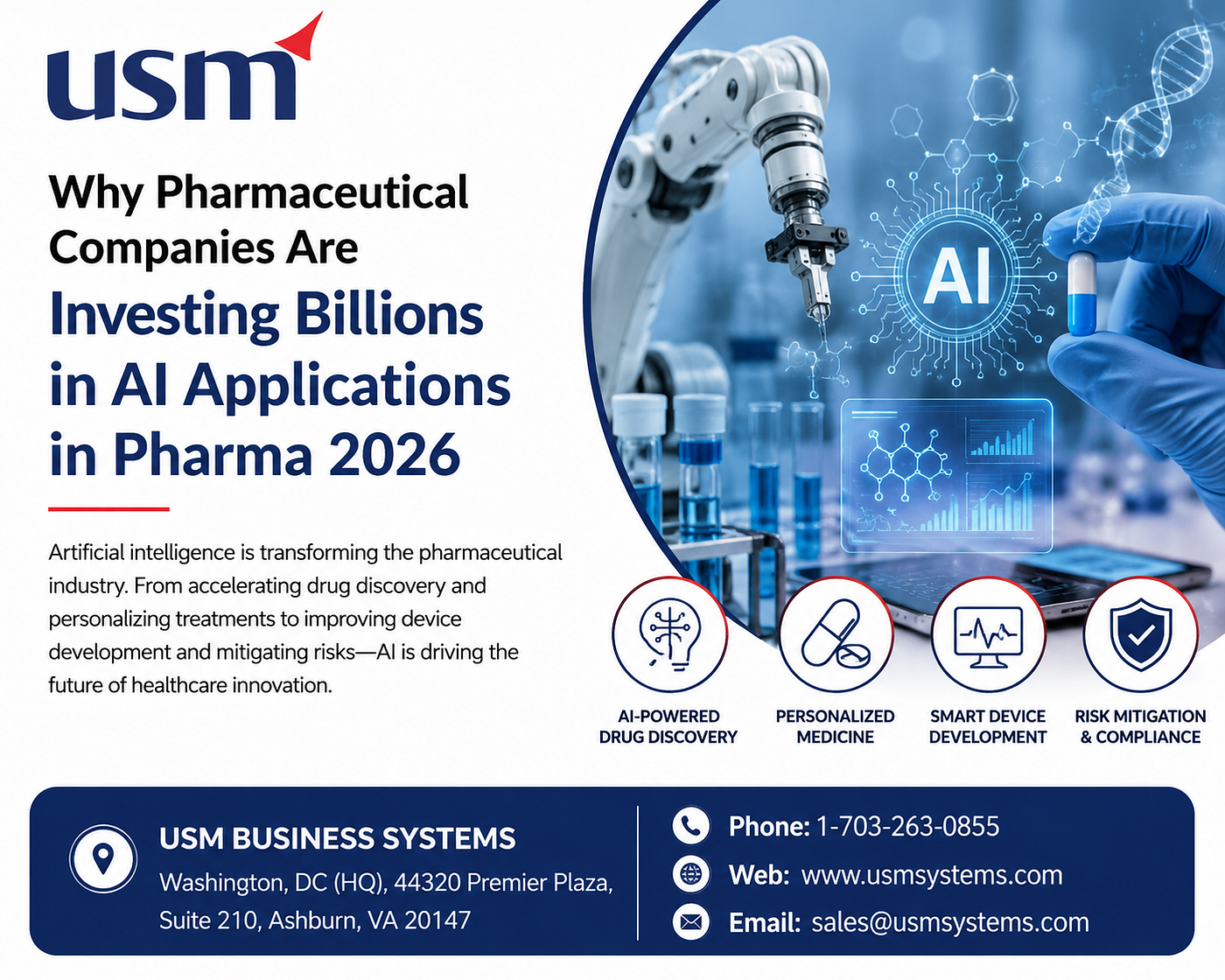
One field undergoing rapid change is **AI drug discovery healthcare:**
These systems sift through mountains of biological, chemical, and clinical data to identify potential drug candidates. By accelerating the initial phases of discovery, AI enables pharmaceutical companies to concentrate their resources on drug candidates with the highest potential to succeed.
Digital technologies are enhancing cross discipline collaboration within research teams, healthcare workers, and regulatory staff. The cloud and the ability to share data in real time enable rapid and responsive organizational actions.
The Role of Pharma Device Design & Development
Pharmaceutical therapies are delivered to patients through devices. As healthcare evolves to become more patient-centric, organizations are designing more devices that are smarter and more connected to fulfill their therapeutic goals.
This approach to the design and development of devices and products also has the potential to greatly enhance therapeutic efficacy and promote better decision-making for healthcare practitioners.
The newer approach to device design and development focuses on the ease of use and reliability of the device while meeting regulatory standards.
Pharmaceutical companies are adopting novel design strategies to fulfill the needs of clinical and end users of the device. This includes the various forms of device digitization that enable remote monitoring and real-time reporting.
Another device design and development trend is the integration of **AI personalized medicine pharma**, which allows for the construction of devices and pharmaceutical products to meet highly specific patient needs.
Pharma Device Software Innovation
Pharmaceutical and healthcare systems have all but made the inclusion of software a standard part of their offerings. Software development has supported more sophisticated monitoring, diagnosis, and management systems, as well as greater operational efficiency and the capability to provide better care.
The development of software and systems used in healthcare has made huge strides in automation, security, and system interoperability with healthcare services. Modern systems build the capability to receive data from different systems and provide feedback to assist workflow and management from a clinical and operational perspective.
Further advantage may be taken of the AI systems in the automation of quality management and the software and systems used to support the management of regulatory compliance.
AI systems have influenced diagnosis, and the next improvements in **GenAI medical diagnosis** may provide even further assistance to the clinician in the interpretation of complex clinical data and the identification of clinical risks.
Software automation may reduce the operational demands of a system, thus allowing a firm to focus its resources on the care of its patients.
Pharmaceutical Development Risks and Mitigation
The application of new technologies and systems to pharmaceutical product development carries great promise, but they bring their own risks. The development and deployment of technology and systems must be compliant with applicable regulations and managed within the constraints of data security and within the expectations of the market.
The application of quality management systems integrated throughout the lifecycle of product development may manage some of the risks. The early identification of a system to monitor and control may prevent the occurrence of significant quality issues.
With today’s reliance on the digital world and connected devices, cybersecurity is extremely important. In the digital healthcare world, security frameworks, audits, and employee training are crucial for the protection of patient and proprietary data.
To minimize challenges, predictive analytics can be used. Derived data can be employed for preemptive changes, resulting in a decrease in development timelines, enhancements to product integrity, and a winning edge with regard to regulations.
Another key method of risk reduction is collaboration with professional technology partners. These associates provide a depth of knowledge and skill in the areas of device engineering and software design, as well as proficiency in the field of regulations.
Conclusion
The pharmaceutical industry is entering a new era where innovation is no longer optional — it has become a necessity. From speeding up research and improving drug development to supporting better patient care, Artificial Intelligence is helping pharmaceutical companies solve problems that once seemed impossible.
Companies that are willing to embrace these technologies today are likely to see significant benefits in the years ahead. They can bring products to market faster, make smarter business decisions, and deliver better healthcare outcomes for patients.
If you’re exploring how AI can create value for your pharmaceutical business, now is a great time to start the conversation. **Book an executive AI briefing to explore AI use cases for your business **and discover practical ways AI can help drive innovation, improve efficiency, and support long-term growth.
메타데이터
- post_id
- 2704d59e5197
- slug
- why-pharmaceutical-companies-are-investing-heavily-in-ai-applications-in-pharma-2026-2704d59e5197
- url
- https://medium.com/@sankarsingala80/why-pharmaceutical-companies-are-investing-heavily-in-ai-applications-in-pharma-2026-2704d59e5197
- canonical_url
- https://medium.com/@sankarsingala80/why-pharmaceutical-companies-are-investing-heavily-in-ai-applications-in-pharma-2026-2704d59e5197
- author_url
- https://medium.com/@sankarsingala80
- status
- ok
- fetched_at
- 2026-06-17 08:20:12