Beyond Carbon Counting: How Water, Oceans, and Environmental Justice Are Reshaping Climate Strategy
Introduction
Beyond Carbon Counting: How Water, Oceans, and Environmental Justice Are Reshaping Climate Strategy
Introduction
As we approach the midpoint of what the UN has designated the “decisive decade” for climate action, July 5, 2026, brings a cascade of research revealing uncomfortable truths about our climate response. Today’s developments expose three critical fault lines in global sustainability efforts: the growing gap between climate commitments and implementation capacity, the underappreciated role of water systems in climate stability, and the persistent inequalities that threaten to undermine even our most ambitious decarbonization pathways. From UK homeowners unable to install heat pumps despite government mandates, to newly discovered rock glaciers emerging as critical water reserves, to research confirming that residual emissions will perpetuate air quality injustices for decades — the message is clear. Technical solutions exist, but systemic barriers, incomplete scientific understanding, and embedded inequalities demand a fundamental evolution in how we approach ESG integration and climate finance. For ESG professionals, these developments underscore an urgent need to move beyond carbon tunnel vision toward holistic frameworks that address water security, ocean health, implementation barriers, and environmental justice as core — not peripheral — elements of climate strategy.
Global Picture: The Implementation Reality Gap
Today’s news reveals a troubling pattern: the distance between climate ambition and on-the-ground reality continues to widen, even as scientific understanding deepens. The UK’s green technology adoption barriers exemplify a phenomenon spreading globally — policy frameworks that mandate transitions without adequately addressing the practical, financial, and infrastructural prerequisites for implementation. This isn’t merely a British problem; it reflects systemic challenges in translating national climate commitments into household-level action.
Simultaneously, we’re witnessing what might be termed “climate policy fatigue” as US states walk back their own environmental legislation. This retreat isn’t happening in a vacuum — it reflects political pressures, economic anxieties, and the complex realities of balancing near-term costs against long-term climate benefits. The convergence of these implementation challenges with cutting-edge ocean science creates a paradox: our understanding of climate systems grows more sophisticated even as our collective capacity to act appears to fragment.
Perhaps most significantly, today’s research on ocean carbon storage mechanisms and the Atlantic Meridional Overturning Circulation (AMOC) reveals that even our “worst-case” climate models may miss critical interactions. The finding that warming itself — rather than circulation changes — dominates reductions in marine carbon storage under high-mitigation scenarios fundamentally alters how we should evaluate ocean-based climate solutions and blue carbon markets. For ESG strategists, this underscores a vital lesson: complexity cannot be simplified away, and single-metric approaches to climate risk inevitably produce blind spots that translate into material financial and reputational exposure.
ESG Applications: Recalibrating Corporate Climate Strategies
For corporations and investors navigating ESG integration, today’s developments demand immediate strategic recalibration across several dimensions. First, the residential green technology barriers in the UK illuminate a critical business opportunity and risk. Companies in the building technology, energy, and finance sectors must recognize that technical product availability means nothing without addressing affordability, installation capacity, grid infrastructure, and consumer education. ESG leaders should evaluate their green technology offerings not just on carbon reduction potential but on accessibility metrics — what percentage of the target market can actually afford and implement the solution?
The rock glacier research and coastal flooding data together paint a picture of accelerating physical climate risks that current corporate disclosure frameworks inadequately capture. Under TCFD recommendations, companies must assess climate-related risks across various scenarios. However, most scenario analysis focuses on temperature and precipitation changes, not on critical threshold effects like the 12-fold increase in once-rare coastal flooding events or the disappearance of traditional glacier-fed water sources. Financial institutions with exposure to coastal real estate, water-intensive industries, or mountain region tourism must urgently update their physical risk models to incorporate these non-linear threshold effects.
The environmental justice research on residual emissions presents perhaps the most challenging ESG application. It confirms that even under aggressive decarbonization scenarios, air quality inequalities will persist, concentrated in the same historically marginalized communities. For companies serious about their “S” (Social) commitments, this means carbon neutrality alone is insufficient. Investor pressure increasingly demands “just transition” plans that explicitly address how decarbonization pathways will reduce — not perpetuate — environmental health disparities. This requires granular community-level impact assessment and stakeholder engagement that goes far beyond current ESG reporting norms.
Standards & Frameworks: Water, Carbon, and the Measurement Challenge
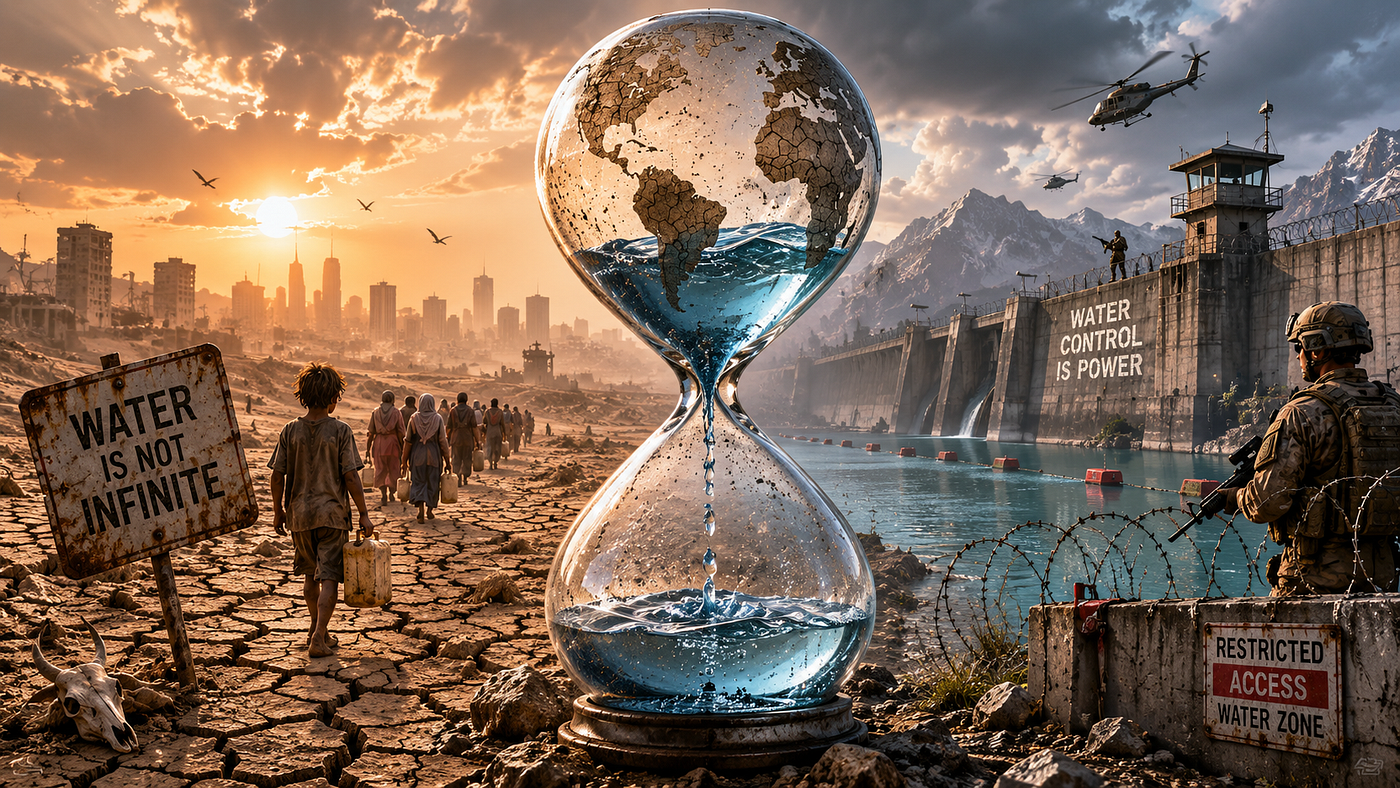
Today’s developments highlight critical gaps in existing ESG standards and frameworks that practitioners must navigate carefully. The ISO 14046 water footprint standard and emerging Task Force on Nature-related Financial Disclosures (TNFD) guidelines take on new urgency in light of the rock glacier findings. As traditional mountain glaciers disappear, companies dependent on glacier-fed watersheds face material water security risks that standard water stress indices don’t capture. ESG analysts should demand that companies in water-intensive sectors (agriculture, beverages, textiles, semiconductors) explicitly address glacier-dependent water sources in their ISO 14046 assessments and TNFD disclosures.
The ocean protection and marine carbon storage research directly challenges how we apply ISO 14064 greenhouse gas accounting and the GHG Protocol. Current carbon accounting standards struggle with ocean-based sequestration, treating marine ecosystems as boundary-external factors rather than integral components of corporate carbon strategies. The finding that ocean protection quality matters more than quantity — that 30% coverage means little without effective management — should inform how investors evaluate blue carbon projects and ocean-based climate solutions. GRI 305 (Emissions) disclosures should be expanded to require companies claiming ocean carbon credits to demonstrate additionality, permanence, and ecological integrity beyond simple area calculations.
The climate misinformation legacy and state policy reversals raise fundamental questions about the reliability of forward-looking ESG disclosures. SASB standards and the proposed SEC climate disclosure rules assume good-faith corporate reporting, but the persistence of misinformation campaigns suggests the need for enhanced verification mechanisms. ESG rating agencies and investors should implement heightened scrutiny for companies in fossil fuel and related industries, requiring third-party verification of climate-related claims and explicit disclosure of lobbying activities and trade association memberships that might undermine stated climate commitments.
Emerging Markets Perspective: Turning Constraints Into Climate Leadership
For emerging and developing economies, today’s news presents a counterintuitive opportunity: the implementation challenges facing developed nations create space for leapfrog strategies that avoid their mistakes. The UK’s green technology adoption barriers stem partly from legacy infrastructure — housing stock designed for fossil fuel heating, electrical grids optimized for centralized generation. Emerging markets building new infrastructure can design integrated systems from the ground up, avoiding the costly retrofit challenges plaguing wealthy nations.
The environmental justice research offers a powerful framing for developing nations in climate finance negotiations. If even aggressive decarbonization in wealthy countries perpetuates air quality inequalities, the global South has a compelling case for climate finance mechanisms that prioritize just transitions and community health outcomes, not merely carbon metrics. This could reshape Article 6 carbon market negotiations and Green Climate Fund priorities toward interventions that deliver immediate local health benefits alongside emissions reductions.
The ocean protection findings are particularly relevant for Small Island Developing States (SIDS) and coastal emerging economies. Rather than treating the 30x30 commitment as a coverage target, these nations can position themselves as blue economy innovation leaders by demonstrating high-quality marine protection that integrates climate adaptation, biodiversity conservation, and sustainable livelihoods. This creates opportunities for premium pricing in blue carbon markets and preferential access to ocean-focused climate finance.
Conclusion & Action Steps
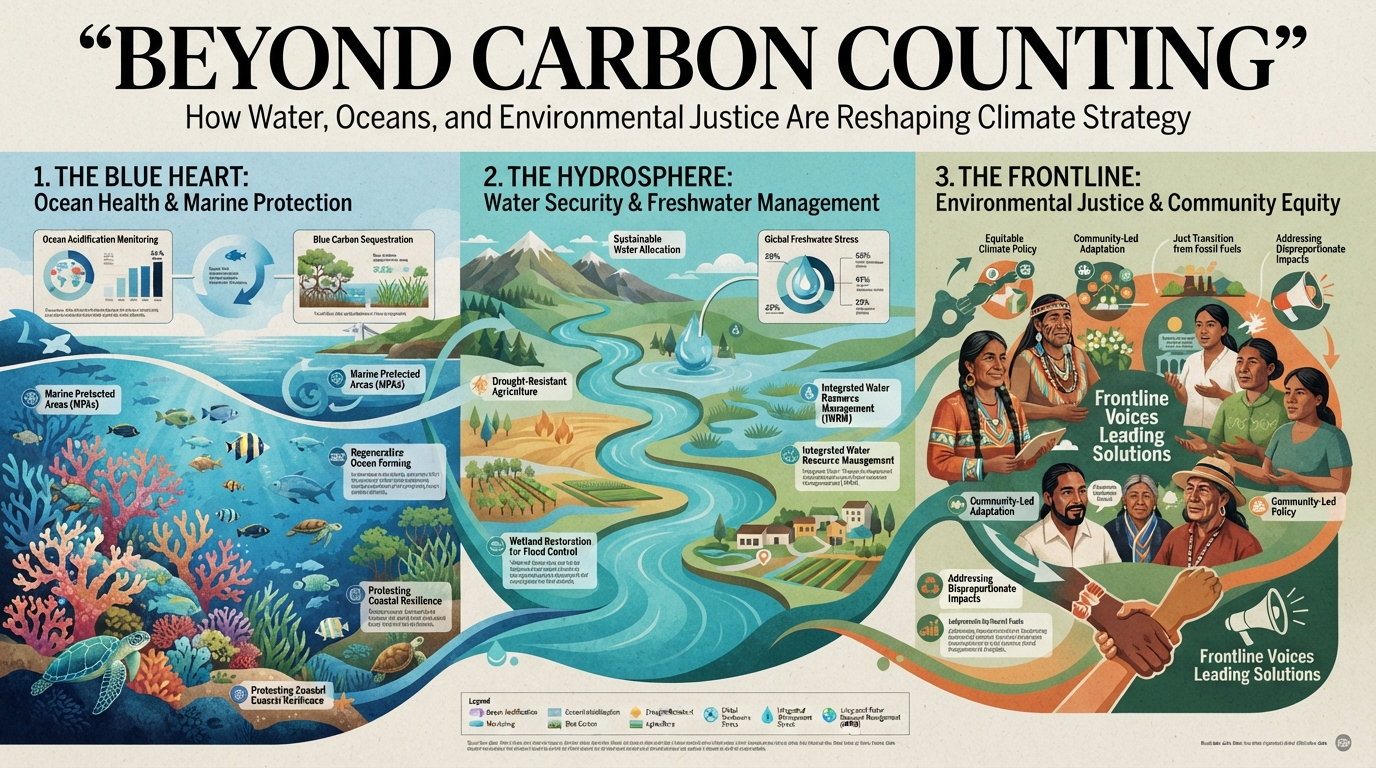
Today’s climate developments demand that ESG professionals move beyond carbon-centric frameworks toward integrated approaches addressing water security, ocean health, implementation barriers, and environmental justice. The scientific clarity about climate system complexity stands in stark contrast to the fragmented, incomplete nature of our response — a gap that represents both material risk and transformative opportunity.
Immediate action steps: (1) Expand TCFD scenario analysis to include non-linear water and coastal flood risks revealed in today’s research; (2) Integrate environmental justice metrics into Scope 1, 2, and 3 emissions reduction strategies, ensuring decarbonization pathways reduce rather than perpetuate air quality disparities; (3) Demand enhanced verification and lobbying disclosure from high-emitting sectors with documented misinformation histories; (4) Apply quality-over-quantity principles from ocean protection research to all nature-based climate solutions; (5) Develop implementation feasibility assessments for green technology investments, addressing affordability and infrastructure constraints that determine real-world impact. The path to 2030 requires not just ambitious targets, but honest reckoning with the barriers preventing their achievement.
Berat Arda Dedekoca MBA, Cekirdek GLOBAL
메타데이터
- post_id
- 2706f63b87b8
- slug
- beyond-carbon-counting-how-water-oceans-and-environmental-justice-are-reshaping-climate-strategy-2706f63b87b8
- url
- https://medium.com/cekirdek-global-insights/beyond-carbon-counting-how-water-oceans-and-environmental-justice-are-reshaping-climate-strategy-2706f63b87b8
- canonical_url
- https://medium.com/cekirdek-global-insights/beyond-carbon-counting-how-water-oceans-and-environmental-justice-are-reshaping-climate-strategy-2706f63b87b8
- author_url
- https://medium.com/@cekirdekglobal
- status
- ok
- fetched_at
- 2026-07-09 00:50:33